



Cisco and NVIDIA have announced a project for a pluggable optical form factor, USFP, capable of supporting 400 Gb/s per lane. Cisco is also unveiling the Silicon One G302 switching chip, rated at 51.2 Tb/s.[1] These announcements address a key challenge for AI infrastructure: accelerators must exchange data quickly enough for the installed computing power to be genuinely usable. They do, however, concern separate components and timelines.
GPUs need to receive and share data
When processing is spread across several accelerators, part of the work depends on exchanges between machines. Waiting for data or for results from another node can slow down the entire computation. Adding GPUs is therefore not always enough to speed up a task if the network or storage is already limiting how fast they are fed.
The difficulty lies in locating the bottleneck. A saturated link, occasional congestion, poor traffic distribution or overly slow storage can all produce similar symptoms. The response must be based on measurements of the workload actually being run, before choosing faster equipment.
G302 powers the rack network while USFP prepares the optics
The G302 is aimed at top-of-rack switches, which connect servers to the data centre network. Cisco is announcing 200 Gb/s SerDes electrical interfaces and expects first shipments before the end of 2026.[1] The 51.2 Tb/s figure refers to aggregate switching capacity, not the throughput of an individual connection.
USFP, developed with NVIDIA, is a proposed optical module form factor. The partners plan an open specification.[1] A distinction must therefore be drawn between the chip being presented and this optical development, rather than attributing already available 400 Gb/s lanes to the G302.
Three figures that describe different things
Throughput is expressed here in bits per second. Aggregate capacity does not correspond to the usable throughput guaranteed to an application.
| Metric | What it describes | What it does not prove |
|---|---|---|
| 51.2 Tb/s | Switching capacity of the G302.[1] | The throughput available to each server. |
| 400 Gb/s per lane | Target per-lane capacity for USFP.[2] | The immediate availability of a complete link. |
| 6.4 Tb/s aggregate | 16 lanes at 400 Gb/s in the USFP project.[2] | An equivalent speed-up of AI applications. |
Density also depends on the number of lanes
The Cisco blog describes 16 lanes at 400 Gb/s, i.e. 6.4 Tb/s aggregate, with a possible evolution to 32 lanes and 12.8 Tb/s. It compares this proposal with 1.6 Tb/s pluggable modules to claim a fourfold increase in bandwidth density.[2] This factor therefore does not stem solely from doubling the per-lane throughput.
Maintenance matters as much as peak throughput
Cisco highlights the retention of field-replaceable modules and established operating practices for pluggable optics.[2] For an operator, the ability to service a module can weigh on the choice of architecture, just as much as throughput or footprint.
Higher density must nonetheless be assessed against cooling, cabling and spare-part availability constraints. The number of interventions, replacement lead times and compatibility conditions can change the real cost of an infrastructure over several years.
Energy gains have yet to be measured on the complete system
Cisco mentions energy efficiency potentially improved by around 1.3 times thanks to 400 Gb/s SerDes.[2] This indication does not mean that a data centre’s total consumption will fall in the same proportion. Higher capacity may also come with an increase in processing volumes.
A meaningful comparison must specify the load, the throughput actually carried and the scope measured. It should include network equipment, optics and cooling. The announcements reviewed do not present an independent benchmark that would allow the gain to be generalised to all environments.
SMEs can draw a sizing method from this
Most SMEs do not need to prepare a network for these speeds right away. However, an organisation that runs several GPU servers or buys remote computing capacity needs to understand what is limiting its workloads. The network is part of the service to be assessed, even when it is managed by a provider.
An illustrative scenario is to compare the same task on one and then several servers, observing duration, GPU utilisation and network traffic. If the time saving remains small, the team also examines storage and how the work is distributed. This test helps establish a diagnosis; it does not prove that the network is necessarily to blame.
The key IT skill: Systems and Network Administration
This development directly calls on Systems and Network Administration. Professionals must understand the paths data takes and distinguish theoretical throughput from observed performance. A capacity stated on a datasheet is not enough to size a service.
Their role includes analysing congestion, latency and dependencies on storage or compute. They must also check interfaces, optical modules and compatible software versions. These checks help avoid an investment that would simply move the bottleneck elsewhere.
Finally, network administration involves monitoring and incident recovery. Metrics must make degradations visible before they have a lasting impact on workloads. Having maintenance access and replacement procedures remains essential, even on a very high-performance infrastructure.
The value of USFP will therefore depend on performance measured on applications, equipment compatibility and operating conditions. To size an infrastructure, the real limits of compute, network and storage must first be identified.
Further reading
Four CCCLX reads on data centres, data and AI infrastructure.
AI powers Nokia: data centres reshape the networking market
Google Cloud Storage Intelligence Advisor detects storage anomalies
Databricks extends Delta Sharing to AI and aims to break down data silos
AI voice agents: Oracle details a LiveKit architecture on OCI
Sources
- 01
Cisco (12 October 2026). “Cisco Advances Scalability and Openness at OCP 2026”. Announcement of the Silicon One G302 switch and the USFP development project with NVIDIA.
- 02
Gartner, B. and Eatherton, W., Cisco Blogs (12 October 2026). “Cisco and NVIDIA Announce USFP: Expanding the Path to AI Connectivity”. Details on lanes, aggregate capacity and the gains announced for the USFP form factor.

Europe accuses Anthropic of discrimination after Fable 5 is blocked
A US decision that sparks an international crisis The sudden suspension of access to Anthropic’s Fable 5 and Mythos 5 models outside the United States now goes well beyond technology. What initially looked like a national security measure is taking on a major...
Mobi Fold and Spotlight 2: Logitech aims to simplify everyday hybrid working
The office is everywhere, but the tools do not always keep up Hybrid working has profoundly changed professional habits. Video-conference meetings, frequent travel, days split between home, the office and coworking spaces: employees now move between multiple...
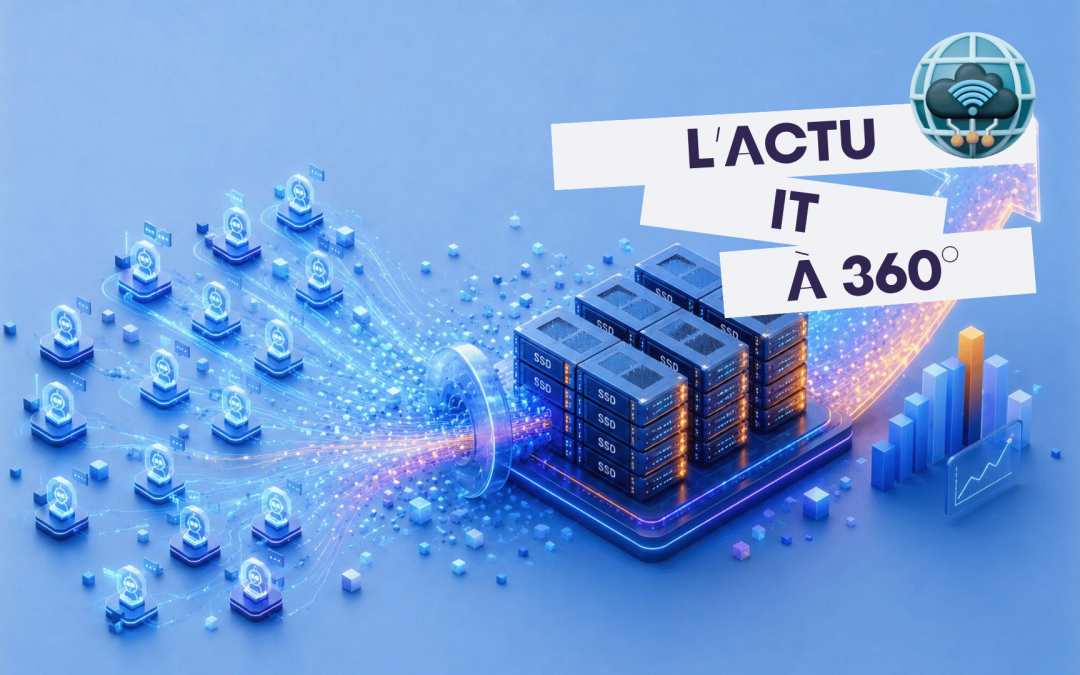
+80%: agentic AI triggers a record surge in enterprise SSD prices
Artificial intelligence is putting new strain on infrastructure Artificial intelligence is often associated with graphics processors and massive computing centres. Yet another essential component of digital infrastructure is coming under unprecedented pressure:...
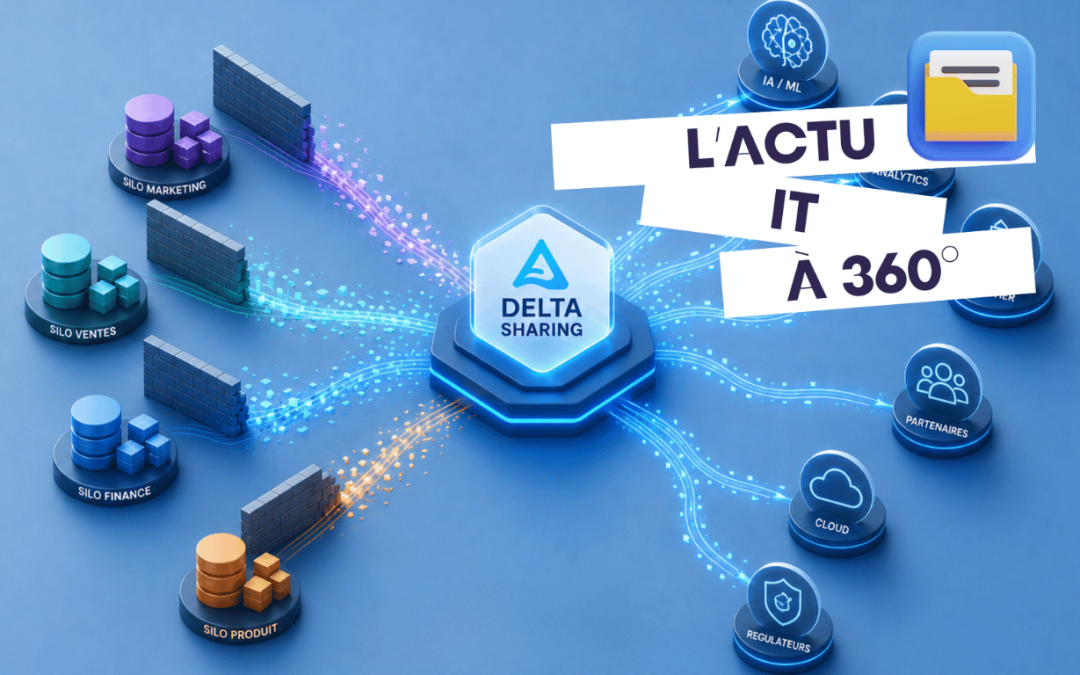
Databricks extends Delta Sharing to AI and aims to break down data silos
Data is no longer enough: intelligence must now be shared too Artificial intelligence is transforming the way companies use their data. Yet one major obstacle remains: the resources needed for AI projects are often scattered across different platforms, teams and...

RTX Spark: Nvidia accelerates the shift to AI-optimised PCs
Nvidia wants to redefine the PC for the age of artificial intelligence Unveiled at Computex 2026, the RTX Spark chip marks a new stage in the evolution of personal computers. With this Arm-based platform, Nvidia is not simply seeking to offer a more powerful...

WiFi 8 is arriving sooner than expected: what it means for businesses
A new generation of networking is already on the horizon While WiFi 7 is only just beginning to spread among businesses and consumers, the industry is already preparing the next step. TP-Link has just unveiled the first WiFi 8-compatible router, confirming that the...

Webedia-Elephant turns to Gemini Enterprise to industrialise generative AI
IT outages become a board-level issue Long regarded as mere technical incidents, service outages are now taking on a whole new dimension. According to a study by Oxford Economics for Splunk, Global 2000 companies suffer an average of 60 downtime incidents a year, at...

$600 billion lost: IT outages take on a new dimension
IT outages are becoming a boardroom issue Long regarded as mere technical incidents, service interruptions are now taking on a whole new dimension. According to a study conducted by Oxford Economics for Splunk, Global 2000 companies suffer an average of 60 downtime...

Lightwell: IBM and Red Hat tackle the open source patching headache
AI finds flaws faster than companies can fix them Artificial intelligence is profoundly transforming cybersecurity. While it makes it possible to detect vulnerabilities more quickly, it also creates a new challenge: the ability to fix a growing number of flaws within...

AWS strengthens OpenSearch to connect AI to enterprise data
AI agents are forcing the cloud to evolve The rise of agentic AI is profoundly transforming cloud infrastructure. Unlike traditional conversational assistants, intelligent agents must access data, interact with several systems and carry out tasks autonomously. To meet...