


IT outages become a board-level issue
Long regarded as mere technical incidents, service outages are now taking on a whole new dimension. According to a study by Oxford Economics for Splunk, Global 2000 companies suffer an average of 60 downtime incidents a year, at an estimated global cost of $600 billion. These figures illustrate a new reality: digital resilience has become a strategic issue that reaches far beyond the IT department.
A bill reaching record levels
The financial consequences of service outages are considerable. The study estimates that each Global 2000 company loses an average of $300 million a year because of system downtime. Every minute of downtime represents almost €13,000 in losses, or more than €775,000 per hour. The technology and energy sectors are among the most exposed to these risks.
Cyberattacks drive costs even higher
Lost revenue is no longer the only factor to consider. Regulatory fines linked to compliance requirements, notably under the GDPR or the EU’s DORA regulation, average €44 million per major outage. On top of this come ransoms paid during ransomware attacks, estimated at an average of €35 million. These costs are now among the main direct impacts associated with information system downtime.
The impact goes far beyond the technical sphere
The consequences of an outage are not limited to infrastructure. According to the study, almost 90% of executives surveyed report an increase in support requests and a sharp deterioration in customer experience after an incident. More than eight in ten companies say they have had to mobilise their teams on a massive scale to restore services, while 81% report losing customers following a major outage.
A direct threat to company reputation
Reputation is also becoming a critical factor. A major outage can take several months to fully restore the trust of customers and partners. The study also observes an average 3.4% fall in share price after a significant IT incident. At a time when companies are increasingly dependent on digital services, system availability is becoming central to their brand image.
AI helps prevent incidents… but also creates new risks
Faced with this growing number of outages, companies are investing heavily in observability and artificial intelligence. Almost 72% of ITOps and engineering teams now consider end-to-end observability a strategic priority. Annual spending on AI to prevent outages averages $24.5 million. However, this automation also brings new challenges: almost half of the leaders surveyed say they have already experienced outages caused by errors in automated, AI-driven systems.
Digital resilience becomes a competitive advantage
In an environment where services must remain accessible at all times, the ability to prevent, detect and quickly fix incidents is becoming a differentiating factor. Companies that invest in infrastructure monitoring, intelligent automation and resilient architectures are better equipped to limit the financial and reputational impact of outages. Digital resilience is no longer just a question of business continuity; it is becoming a genuine competitive advantage.
Understanding IT resilience is becoming essential
This development highlights a strategic skill: managing infrastructure and digital continuity. Future IT professionals need to master observability, cybersecurity, the cloud and disaster recovery mechanisms. As organisations become dependent on digital services, the ability to keep systems available is becoming as important as their performance.
360° IT News — decoding technology to understand the jobs of tomorrow.
Further reading
The growing number of service outages shows just how critical digital infrastructure has become for businesses. This pressure is pushing technology players to invest heavily in automation, observability and artificial intelligence to prevent incidents before they occur. On a related topic, read our article “Lightwell: IBM and Red Hat tackle the headache of open-source patching”, which examines how AI and automation could speed up the fixing of vulnerabilities and strengthen the resilience of information systems.
References
1. Oxford Economics & Splunk. (2026). The Hidden Cost of Downtime Report.
https://www.splunk.com
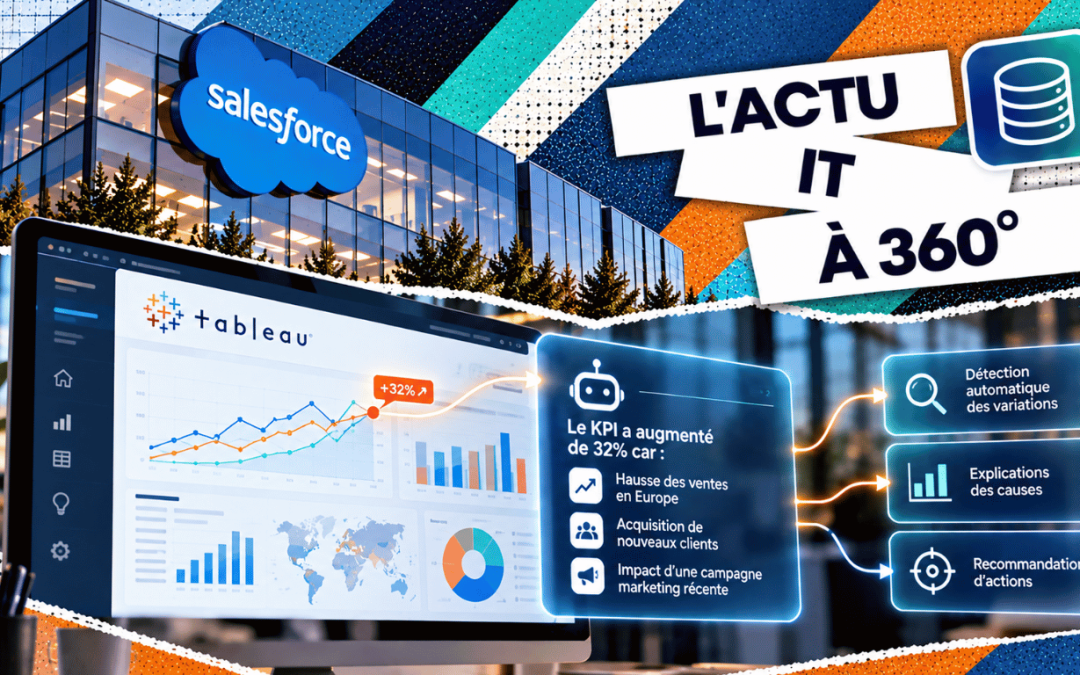
Salesforce wants to acquire Loops to help Tableau explain KPI changes
Salesforce has announced a definitive agreement to acquire Loops, an AI-based analytics platform, with the intention of integrating its technology into Tableau after closing.[1] The aim is to monitor metrics and bring out the factors associated with their changes. For...

Cisco and NVIDIA prepare 400 Gb/s-per-lane optical connections for AI infrastructure
Cisco and NVIDIA have announced a project for a pluggable optical form factor, USFP, capable of supporting 400 Gb/s per lane. Cisco is also unveiling the Silicon One G302 switching chip, rated at 51.2 Tb/s.[1] These announcements address a key challenge for AI...
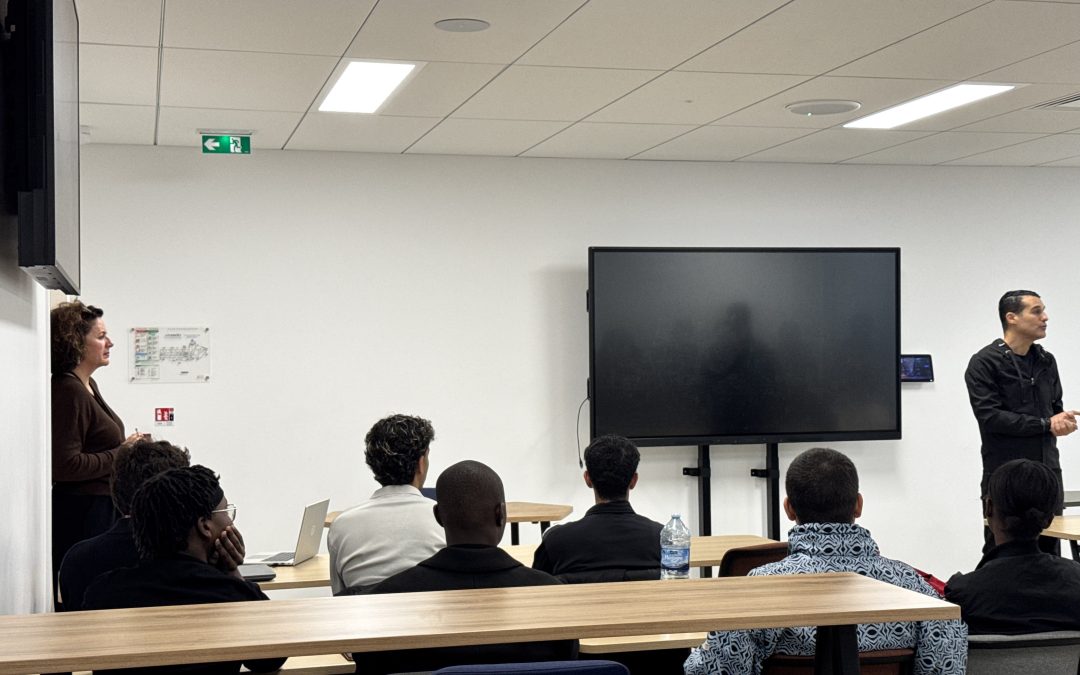
A new year begins at CCCLX!
The Paris-Villejuif campus welcomes CCCLX students for a new year of learning, projects and experiences at the heart of 360° IT.

VMware HyperArmor strengthens hypervisor protection against cyberattacks
Broadcom has unveiled VMware HyperArmor, a solution designed to protect the ESX hypervisor of VMware Cloud Foundation, with announced support for ESX 8.x and later versions.[1] The stakes go beyond the security of a single application: the hypervisor is a shared...

SolarWinds Avior: IT teams set the goals and agents coordinate the actions
SolarWinds has launched Avior, an agentic AI system designed to pursue operational goals in hybrid IT environments. Available since 14 October as part of a guided onboarding programme, it combines specialised agents with control mechanisms.[1] For technical teams, the...
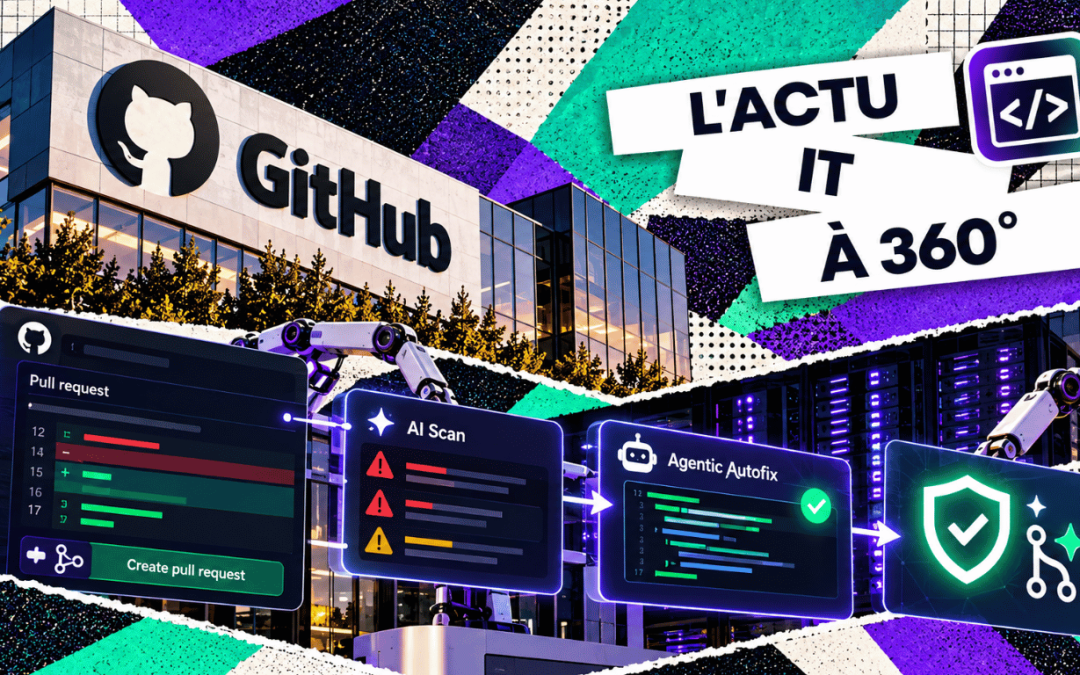
GitHub steps up vulnerability detection and remediation with AI Scan and Agentic Autofix
GitHub has announced the general availability of AI Scan for pull requests and Agentic Autofix for code scanning alerts.[1][2] These features bring AI assistance closer to the work of securing code. They do, however, operate on different scopes: proposed...

Cloudflare makes web security programmable with Workers
Cloudflare is bringing its secure web gateway closer to its Workers development platform. With Forward, available in public beta, businesses can add code to the processing of certain authorised HTTP requests.[2] For IT teams, this development opens up a...

Palo Alto Networks strengthens AI agent security around Claude Enterprise
PPalo Alto Networks has unveiled several updates to Prisma AIRS: protection of interactions with Claude Enterprise, analysis of the components used by agents and control of their exchanges with tools.[1] The stakes are concrete for businesses: preventing an assistant...
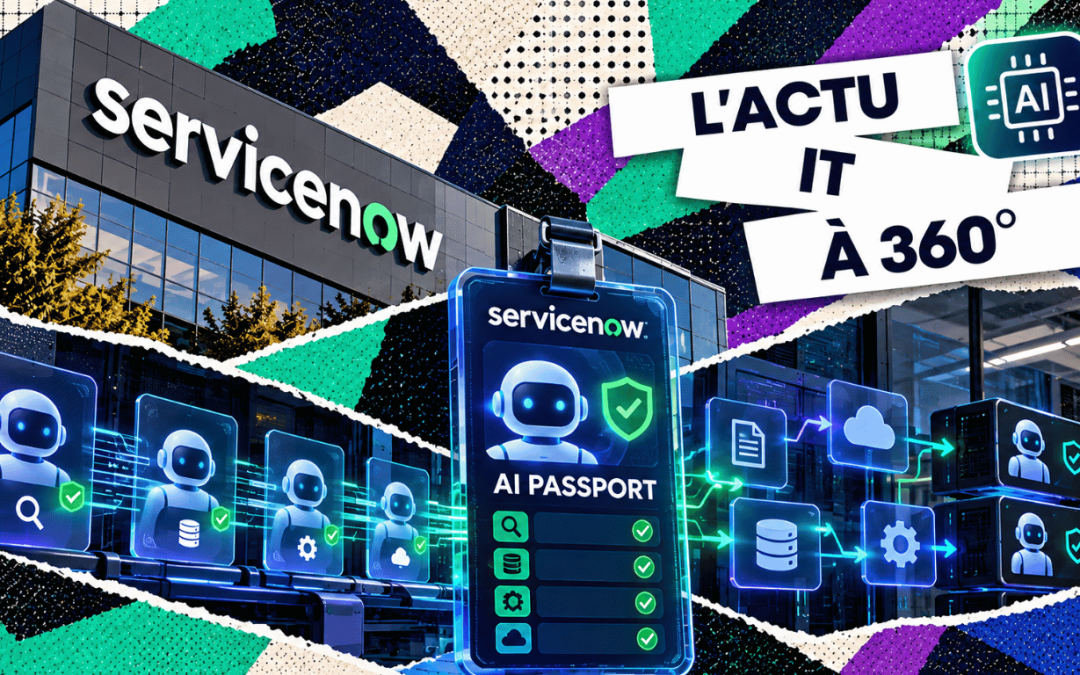
ServiceNow prepares AI Passport to control AI agents’ access rights
ServiceNow has announced AI Passport, a cryptographically signed authorisation credential designed to govern AI agents and MCP servers while workflows are running. It is scheduled to be available in the fourth quarter of 2026.[1] The image of a digital badge helps to...

SAP wants to acquire TechWolf to link tasks, skills and the transformation of jobs
SAP has announced an agreement to acquire TechWolf, an AI platform that links tasks, skills and changes in the labour market. Completion is expected in the fourth quarter of 2026, subject in particular to regulatory approvals.[1] The deal raises a practical...