


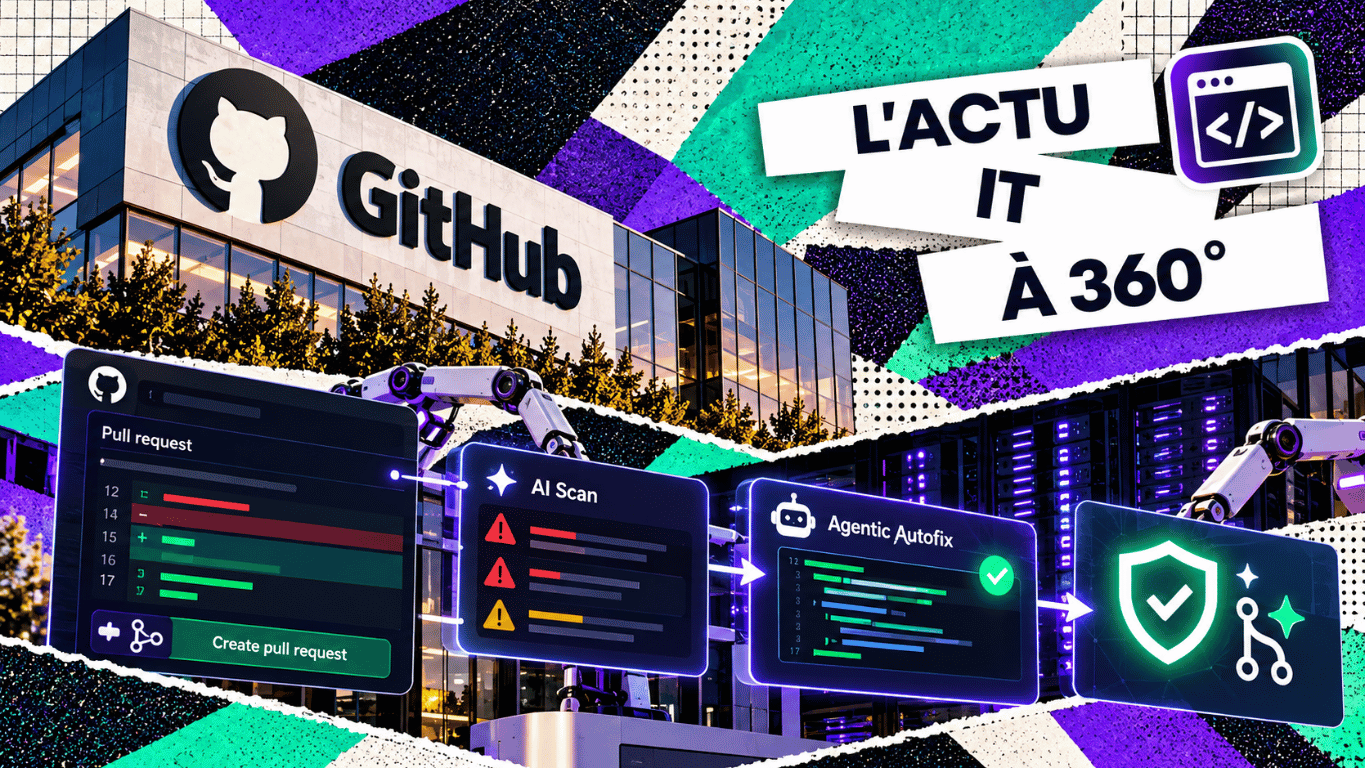
GitHub has announced the general availability of AI Scan for pull requests and Agentic Autofix for code scanning alerts.[1][2] These features bring AI assistance closer to the work of securing code. They do, however, operate on different scopes: proposed changes for the former, alerts on the default branch for the latter. For businesses, the challenge is to prepare fixes more effectively while keeping technical validation in place before they are merged.
AI Scan reviews changes before they are merged
A pull request is used to propose a change and have it reviewed before it is merged. AI Scan complements CodeQL there, notably for PHP, Bash, Terraform and certain less well-covered frameworks. Once enabled alongside code scanning, it surfaces findings flagged as AI-generated, sometimes accompanied by an explanation and a suggested fix.[1]
These findings remain advisory: they do not cause the code scanning check to fail and do not block merging via ruleset requirements. AI Scan does not process pull requests from forks or those created by Dependabot.[1] A team must therefore organise how these findings are read and dealt with, without assuming that their presence automatically holds up a release.
Agentic Autofix prepares a fix from an existing alert
Agentic Autofix can be assigned a code scanning alert located on the default branch. It explores the relevant files, proposes a change, re-runs CodeQL and can iterate before opening a draft pull request for review.[2]
GitHub explicitly excludes alerts that exist only in a pull request or another branch from this assignment to Copilot.[2] The two new features should therefore not be described as an automatic pipeline in which every AI Scan finding is immediately handed over to Agentic Autofix.
An alert disappearing on a new scan gives a useful indication about the targeted issue. It does not prove that the application retains all its expected behaviour, nor that the change introduces no other defect. Functional tests and a review of the change remain necessary.
Two paths and a human decision
The table distinguishes between the announced features and the responsibility of the team using them.
| Stage | What GitHub provides | Team check |
|---|---|---|
| Detection during review | AI Scan flags risks in proposed changes.[1] | Assess the risk and decide how to handle it before merging. |
| Preparing the fix | Agentic Autofix works on an alert from the default branch.[2] | Review the modified files and the relevance of the fix. |
| Validation | A new CodeQL scan accompanies the agent’s work.[2] | Also check business tests and side effects. |
Access conditions matter when choosing a pilot
AI Scan is available for public repositories; private or internal organisation repositories require GitHub Code Security or GitHub Advanced Security. A Copilot licence is not required.[1] Agentic Autofix is aimed at customers of these offerings on GitHub Enterprise Cloud, with administrative activation and a defined Copilot billing method.[2]
Both features consume Code Security AI credits; Agentic Autofix also uses GitHub Actions minutes.[1][2] Before rolling out, SMEs need to check their plan, the scope of repositories and the associated budget. The economic benefit will depend as much on review time as on the number of fixes actually accepted.
SMEs can evaluate results in two distinct situations
First illustrative scenario: a team modifies a PHP form and receives a finding in its pull request. The developer checks whether user input can actually reach the sensitive operation, examines the suggestion, then adds a test reproducing the case. A plausible answer from the AI is not enough to establish whether the risk exists or has gone away.
Second scenario: a code scanning alert already exists on the default branch of an eligible repository. The team assigns it to Agentic Autofix, then reviews the proposal. It checks that the fix does not inadvertently change access rights, accepted formats or business results. These scenarios are an evaluation approach, not published customer results.
The pilot can track the time to a validated fix, the proportion of suggestions retained and the regressions detected. Counting only closed alerts could mask an excessive verification workload or unsuitable changes.
Developers must understand the vulnerability as well as the fix
This development raises the bar for Web Programming and Management. Reading code remains essential to understand the path data takes, spot a fragile assumption and determine whether the fix addresses the root cause. Professionals must be able to explain why a change reduces the risk.
The skill is also reflected in the quality of tests. A case that fails before the fix and passes afterwards provides a useful benchmark, to be complemented by checks on legitimate uses. In particular, a stricter control must not prevent a necessary function from working or shift the vulnerability elsewhere.
Finally, the developer organises the review and documents decisions. They must know when to accept a suggestion, modify it or reject it. Delegating to an agent can speed up preparatory work, but command of the application remains essential to decide what gets merged.
Editor’s note
The progress to measure is a fix that is understood, tested and maintainable. These tools can help reduce research and preparation work; their real value will depend on the coverage of the scans and on teams’ ability to verify the proposals.
Further reading
Four CCCLX reads on assisted development and software security.
Sandbox, terminal, policies: GitHub puts guardrails on its code agents
Project Glasswing: Anthropic goes on the offensive against software vulnerabilities
Open-source security changes scale: IBM, Red Hat and Palo Alto join forces
With Code Layers, Figma brings design and development firmly together
Sources
- 01
GitHub Changelog (15 October 2026). “AI Scan for pull requests generally available”. Overview of the general availability, scope and terms of use of AI Scan.
- 02
GitHub Changelog (15 October 2026). “Agentic autofix for code scanning alerts general availability”. Details of how Agentic Autofix works, its access conditions and billing.
Europe accuses Anthropic of discrimination after Fable 5 is blocked
A US decision that sparks an international crisis The sudden suspension of access to Anthropic’s Fable 5 and Mythos 5 models outside the United States now goes well beyond technology. What initially looked like a national security measure is taking on a major...

Mobi Fold and Spotlight 2: Logitech aims to simplify everyday hybrid working
The office is everywhere, but the tools do not always keep up Hybrid working has profoundly changed professional habits. Video-conference meetings, frequent travel, days split between home, the office and coworking spaces: employees now move between multiple...
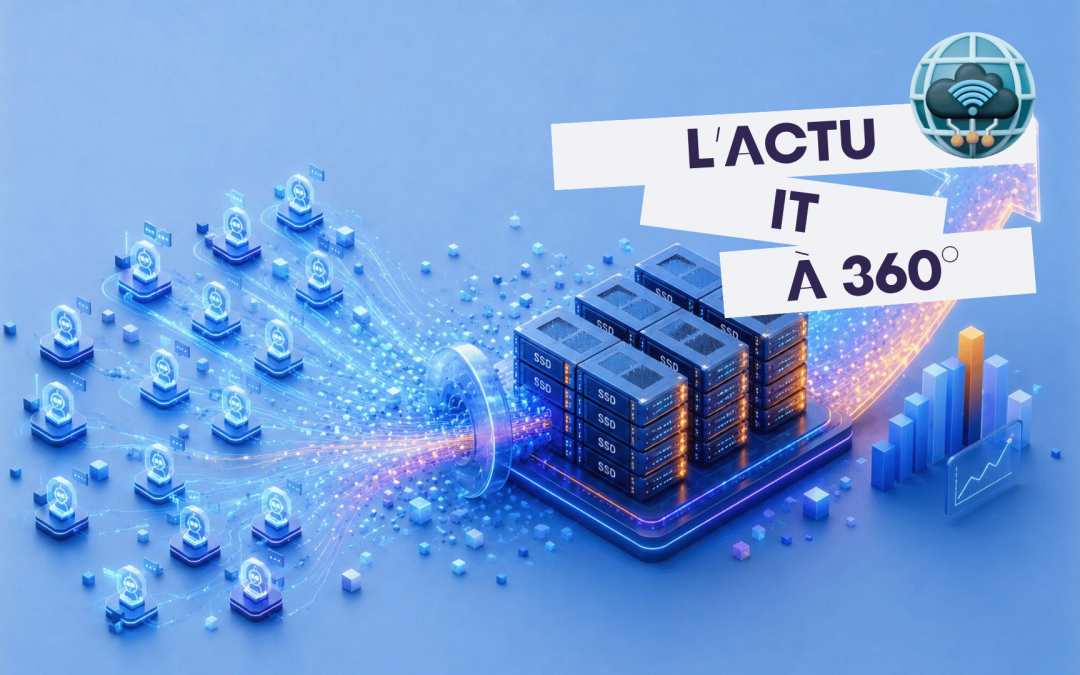
+80%: agentic AI triggers a record surge in enterprise SSD prices
Artificial intelligence is putting new strain on infrastructure Artificial intelligence is often associated with graphics processors and massive computing centres. Yet another essential component of digital infrastructure is coming under unprecedented pressure:...
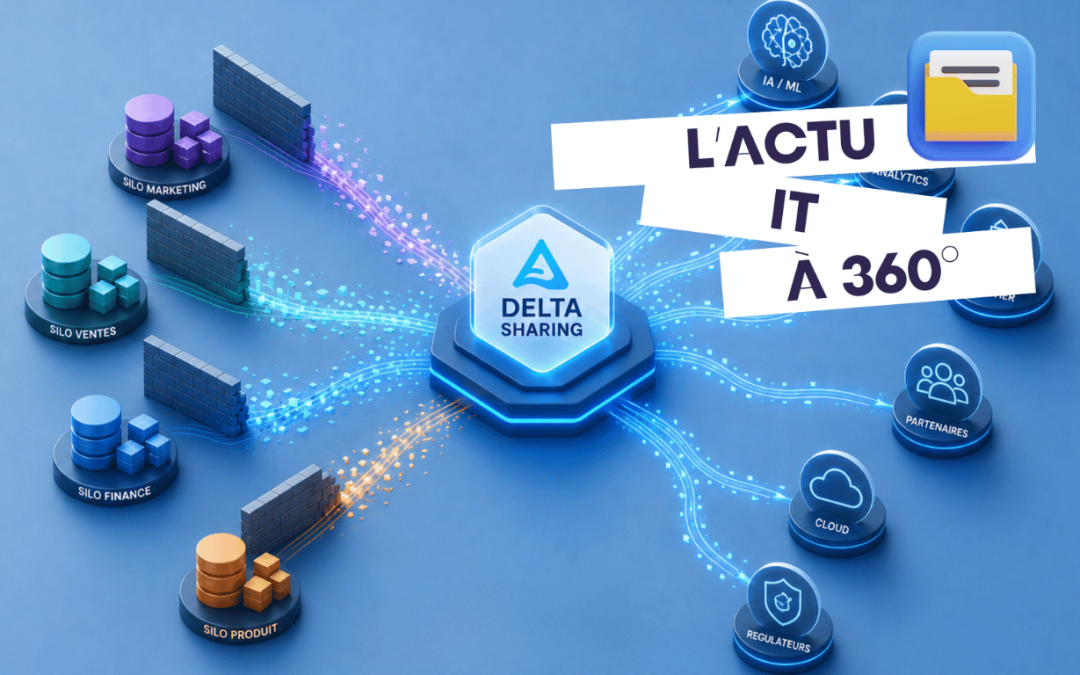
Databricks extends Delta Sharing to AI and aims to break down data silos
Data is no longer enough: intelligence must now be shared too Artificial intelligence is transforming the way companies use their data. Yet one major obstacle remains: the resources needed for AI projects are often scattered across different platforms, teams and...

RTX Spark: Nvidia accelerates the shift to AI-optimised PCs
Nvidia wants to redefine the PC for the age of artificial intelligence Unveiled at Computex 2026, the RTX Spark chip marks a new stage in the evolution of personal computers. With this Arm-based platform, Nvidia is not simply seeking to offer a more powerful...

WiFi 8 is arriving sooner than expected: what it means for businesses
A new generation of networking is already on the horizon While WiFi 7 is only just beginning to spread among businesses and consumers, the industry is already preparing the next step. TP-Link has just unveiled the first WiFi 8-compatible router, confirming that the...

Webedia-Elephant turns to Gemini Enterprise to industrialise generative AI
IT outages become a board-level issue Long regarded as mere technical incidents, service outages are now taking on a whole new dimension. According to a study by Oxford Economics for Splunk, Global 2000 companies suffer an average of 60 downtime incidents a year, at...

$600 billion lost: IT outages take on a new dimension
IT outages are becoming a boardroom issue Long regarded as mere technical incidents, service interruptions are now taking on a whole new dimension. According to a study conducted by Oxford Economics for Splunk, Global 2000 companies suffer an average of 60 downtime...

Lightwell: IBM and Red Hat tackle the open source patching headache
AI finds flaws faster than companies can fix them Artificial intelligence is profoundly transforming cybersecurity. While it makes it possible to detect vulnerabilities more quickly, it also creates a new challenge: the ability to fix a growing number of flaws within...
AWS strengthens OpenSearch to connect AI to enterprise data
AI agents are forcing the cloud to evolve The rise of agentic AI is profoundly transforming cloud infrastructure. Unlike traditional conversational assistants, intelligent agents must access data, interact with several systems and carry out tasks autonomously. To meet...