



SolarWinds has launched Avior, an agentic AI system designed to pursue operational goals in hybrid IT environments. Available since 14 October as part of a guided onboarding programme, it combines specialised agents with control mechanisms.[1] For technical teams, the question becomes a practical one: which tasks can be delegated, with what permissions, and with what proof that the service is working better?
A goal to pursue beyond the conversation
The documentation presents Avior as a tool that starts from a goal, builds an understanding of the environment and then coordinates the tools and actions needed to make progress.[2] This approach implies follow-up over time: a useful answer to a question is not enough to establish that an operational situation has improved.
For a company, setting a goal therefore requires more than a general instruction such as “improve the network”. The service concerned, the equipment included, a measurable indicator and the authorised changes all need to be defined. Without this framework, a local improvement can shift the problem elsewhere or degrade another application.
Uses that concern IT teams’ day-to-day work
SolarWinds notably cites alert correlation, handling configuration drift, tracking device backups and capacity monitoring.[1] These uses involve repetitive tasks that nonetheless require detailed knowledge of the infrastructure.
Grouping several alerts can make analysis easier, but incorrect grouping can also hide two independent incidents. Likewise, a configuration that differs from the baseline may be an error or an authorised change that is not yet properly documented. Automation must preserve these distinctions.
Three goals to turn into verifiable criteria
This grid suggests pilot criteria based on the announced uses, without presuming their effectiveness in any given infrastructure.
| Goal | Result to measure | Control to keep |
|---|---|---|
| Reduce noise | Fewer redundant alerts to review. | Check that separate incidents remain visible. |
| Track configurations | Identify drift within a defined scope. | Distinguish approved changes from errors. |
| Track backups | Spot devices without a recent copy. | Test restoration and protect the copies. |
Autonomy described as graduated according to risk
The vendor describes explicit human approvals for potentially dangerous actions, audit logs, least-privilege access and support for rollback.[1] The level of delegation must nevertheless be checked for each operation and each integration chosen.
A deterministic framework does not guarantee an accurate diagnosis
SolarWinds describes its execution framework as “deterministic”.[1] This term describes the mechanism announced to govern actions; it does not prove that every analysis produced by the AI will be correct. A controlled process can still rely on incomplete data, an outdated topology or a mistaken assumption.
Before approving an intervention, the operator must be able to review the evidence supporting it, its scope and its foreseeable consequences. Rollback must also be tested: restoring a configuration is not always enough to restore every interrupted session or process.
An SME can start with backup coverage
An illustrative pilot could target a few non-critical network devices and a simple goal: identify those whose configuration backup is missing or too old. The team would begin by checking the findings against data from its existing tools, without allowing any automatic changes to the devices.
It could then test a limited action, after approval, and verify that the resulting copy exists and is usable. The tests would include an unavailable device, insufficient permissions and incorrect inventory information. This scenario is a suggested assessment, not a published customer result.
The review should compare processing time, classification errors and the human interventions required. The press release does not provide quantified results that would allow the gains to be generalised.[1] Costs, compatible integrations and access conditions remain to be clarified for each project.
The administrator defines what agents can change
This development draws directly on Systems and Network Administration. Knowing the dependencies between applications, servers and devices makes it possible to set realistic goals. Professionals must also distinguish a satisfactory technical indicator from a service that employees can genuinely use.
Their role includes defining permissions and the conditions for intervention. An action that is acceptable in a test environment may be inappropriate in production. Maintenance windows, backups and escalation procedures must remain consistent with how critical the service is.
Finally, the administrator checks the results and keeps the documentation up to date. They must be able to challenge a diagnosis, suspend an action and take back control. Delegating to agents makes this understanding of the infrastructure all the more useful as several operations can be coordinated towards a single goal.
Editorial note
Avior’s value will be judged on goals achieved without degrading the service, with understandable decisions and controlled interventions. For an SME, a limited and measurable scope is a better starting point than delegating operations wholesale.
Further reading
Four CCCLX reads on monitoring, infrastructure and agent control.
Google Cloud Storage Intelligence Advisor detects storage anomalies
Azure Linux 4.0: is Microsoft preparing for life after Windows Server?
Sandbox, terminal, policies: GitHub puts guardrails on its coding agents
AI voice agents: Oracle details a LiveKit architecture on OCI
Sources
- 01
SolarWinds (14 October 2026). “SolarWinds Unveils Avior, Bringing Deterministic, Agentic AI to Enterprise IT”. Announcement of the launch of Avior, its operational uses and the control mechanisms presented by the vendor.
- 02
SolarWinds, Avior documentation (October 2026). “Avior release notes”. Documentation of the features, operational goals, proposed actions and levels of autonomy described for Avior.
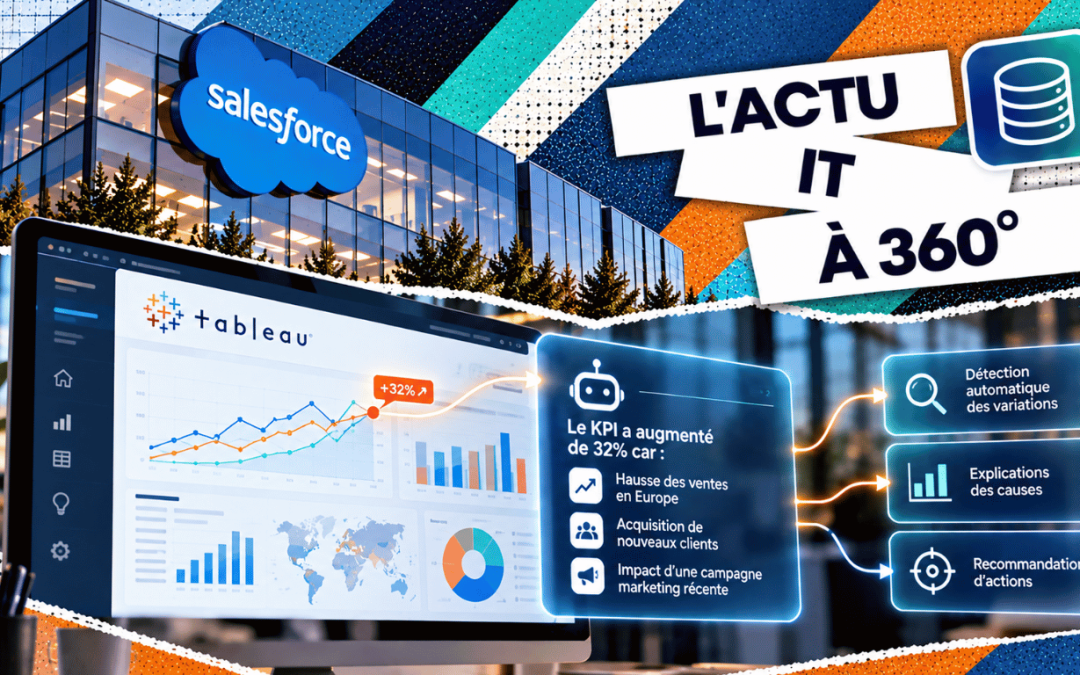
Salesforce wants to acquire Loops to help Tableau explain KPI changes
Salesforce has announced a definitive agreement to acquire Loops, an AI-based analytics platform, with the intention of integrating its technology into Tableau after closing.[1] The aim is to monitor metrics and bring out the factors associated with their changes. For...

Cisco and NVIDIA prepare 400 Gb/s-per-lane optical connections for AI infrastructure
Cisco and NVIDIA have announced a project for a pluggable optical form factor, USFP, capable of supporting 400 Gb/s per lane. Cisco is also unveiling the Silicon One G302 switching chip, rated at 51.2 Tb/s.[1] These announcements address a key challenge for AI...
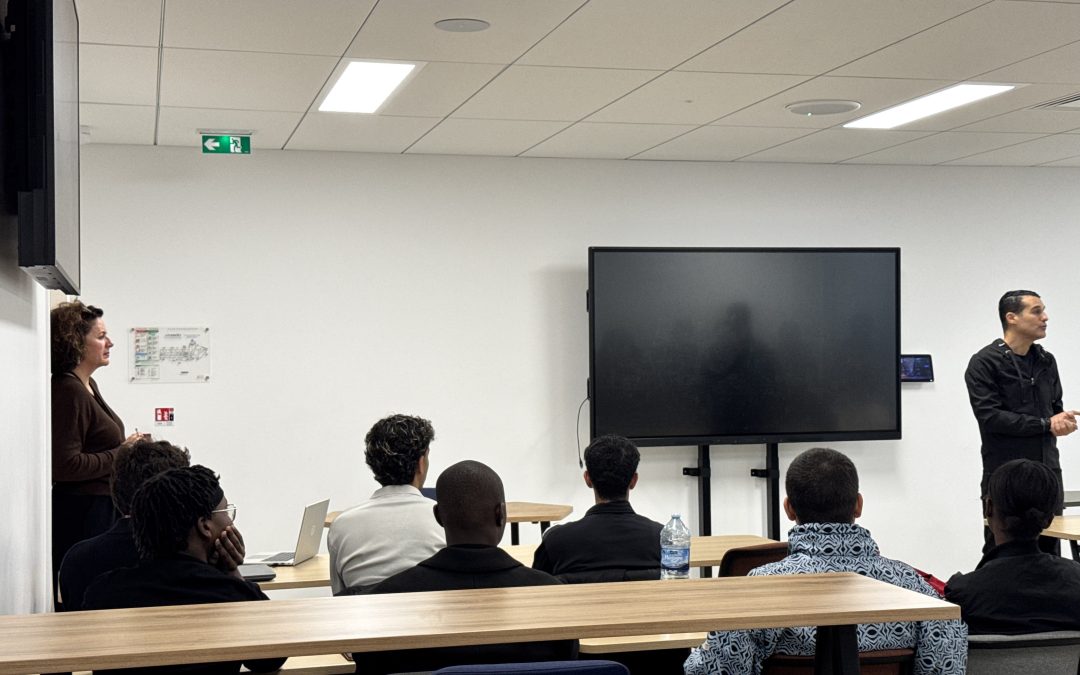
A new year begins at CCCLX!
The Paris-Villejuif campus welcomes CCCLX students for a new year of learning, projects and experiences at the heart of 360° IT.

VMware HyperArmor strengthens hypervisor protection against cyberattacks
Broadcom has unveiled VMware HyperArmor, a solution designed to protect the ESX hypervisor of VMware Cloud Foundation, with announced support for ESX 8.x and later versions.[1] The stakes go beyond the security of a single application: the hypervisor is a shared...
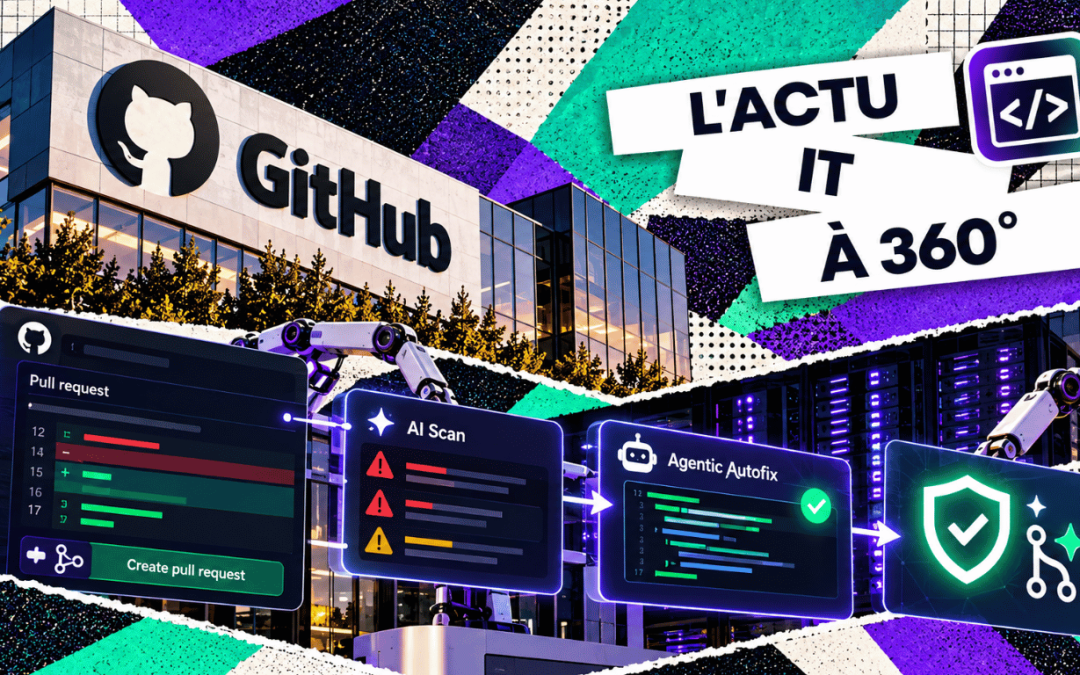
GitHub steps up vulnerability detection and remediation with AI Scan and Agentic Autofix
GitHub has announced the general availability of AI Scan for pull requests and Agentic Autofix for code scanning alerts.[1][2] These features bring AI assistance closer to the work of securing code. They do, however, operate on different scopes: proposed...

Cloudflare makes web security programmable with Workers
Cloudflare is bringing its secure web gateway closer to its Workers development platform. With Forward, available in public beta, businesses can add code to the processing of certain authorised HTTP requests.[2] For IT teams, this development opens up a...

Palo Alto Networks strengthens AI agent security around Claude Enterprise
PPalo Alto Networks has unveiled several updates to Prisma AIRS: protection of interactions with Claude Enterprise, analysis of the components used by agents and control of their exchanges with tools.[1] The stakes are concrete for businesses: preventing an assistant...
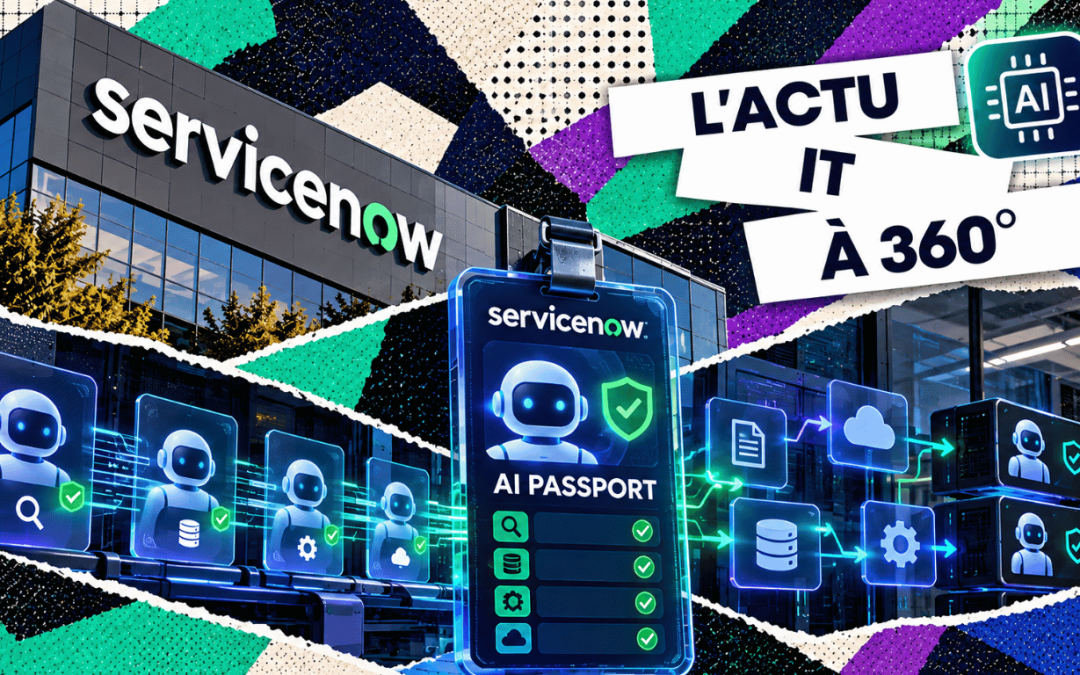
ServiceNow prepares AI Passport to control AI agents’ access rights
ServiceNow has announced AI Passport, a cryptographically signed authorisation credential designed to govern AI agents and MCP servers while workflows are running. It is scheduled to be available in the fourth quarter of 2026.[1] The image of a digital badge helps to...

SAP wants to acquire TechWolf to link tasks, skills and the transformation of jobs
SAP has announced an agreement to acquire TechWolf, an AI platform that links tasks, skills and changes in the labour market. Completion is expected in the fourth quarter of 2026, subject in particular to regulatory approvals.[1] The deal raises a practical...
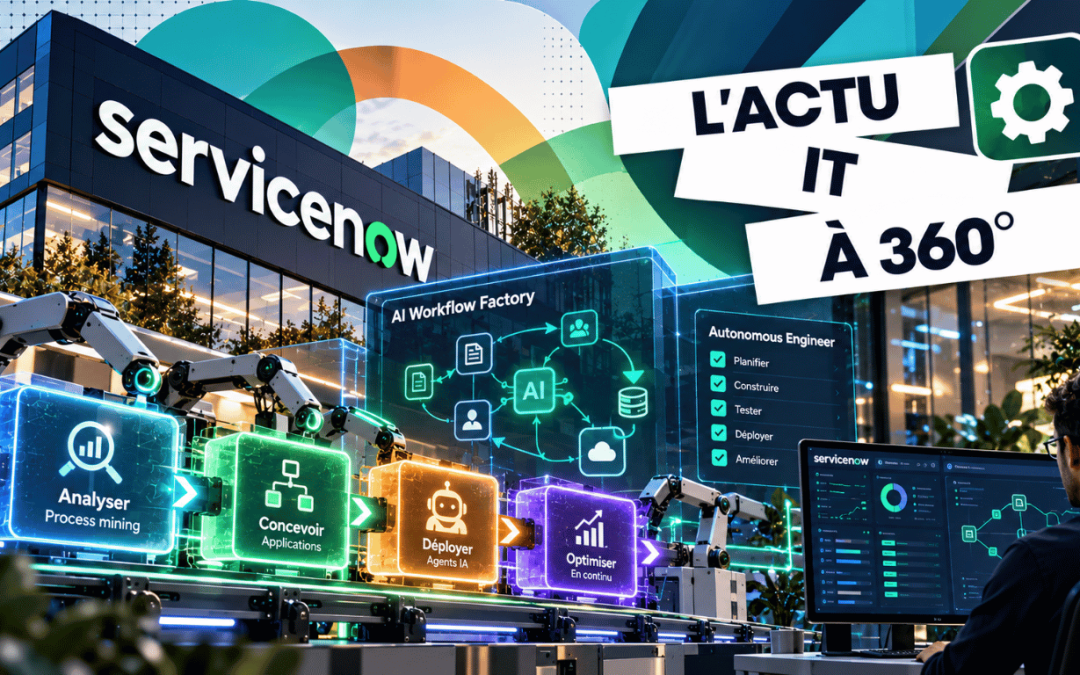
ServiceNow wants to turn process improvement into a continuous AI-driven loop
With AI Workflow Factory, ServiceNow aims to link the identification of inefficient processes with building and running their improvements. The announcement notably includes Autonomous Engineer, a tool designed to automate more of the implementation work.[1] For...