



PPalo Alto Networks has unveiled several updates to Prisma AIRS: protection of interactions with Claude Enterprise, analysis of the components used by agents and control of their exchanges with tools.[1] The stakes are concrete for businesses: preventing an assistant from passing on confidential information or following a malicious instruction it encounters while working. These controls should support the use of AI without being mistaken for a guarantee of absolute security.
An integration with Claude already described in August
The 15 October announcement highlights a direct integration with Claude Enterprise covering Claude Code, Claude.ai and Claude Cowork.[1] However, this connection had already been presented in a vendor article dated 5 August 2026.[2] The October news should therefore be read as a set of security updates rather than the first appearance of this integration.
The mechanism relies on “inference hooks”, checkpoints before the model processes content. According to the description published in August, Claude sends the content to Prisma AIRS, which assesses it against the configured security profile and returns a decision to allow or block it.[2]
This architecture places the check before inference, that is, before the model runs on the request. It does not mean that the data stays on the employee’s device: the inspection flow is itself part of the scope to examine during integration.
Protecting data and spotting hijacked instructions
Palo Alto Networks says it reuses its data loss prevention (DLP) policies to control, among other things, personal information, proprietary code and sensitive credentials. The vendor also describes mechanisms for detecting prompt injections and attempts to bypass rules.[2]
A prompt injection seeks to pass off untrusted content as an instruction the assistant should follow. A document to be summarised might, for example, contain a directive telling it to ignore its task. The difficulty lies in distinguishing information that should be analysed from instructions that must never override the work requested.
Three points of control along the agent’s path
This editorial grid distinguishes between the announced functions and the checks useful for assessing them.
| Component | Operational effect | Control question |
|---|---|---|
| Components | Analyse models and skills before deployment.[1] | Which versions and dependencies have been examined? |
| Interactions with Claude | Allow or block content before inference.[2] | Which data triggers a block, and how can this be checked? |
| MCP exchanges | Inspect tool inputs and outputs.[1] | Do all relevant flows actually go through the control? |
The software supply chain now includes skills
The announcement extends AI software supply chain analysis to agent skills and introduces controls designed to identify malicious code before deployment.[1] A skill can bundle instructions, resources and code to help an agent carry out a task. Adding one therefore changes what the system can do and the components it relies on.
Reviews must remain tied to a specific version. Updates and any new access requested must be checked.
Tool calls are another point of control
Prisma AIRS AI Gateway is designed to inspect MCP exchanges in both directions, block certain hidden instructions, mask sensitive data in outputs and enforce access policies.[1] MCP is a protocol that allows AI applications to connect to tools and resources.
For SMEs, testing a development assistant on a limited scope
An SME using Claude Enterprise could start with a pilot project using dummy data. It would test whether a fake secret placed in the context is blocked, then how the system behaves when faced with an unwanted instruction in a document. This scenario is a suggested qualification approach, not a published customer result.
The assessment should measure the threats detected, the legitimate requests blocked and the delay added to exchanges. It should also specify what happens if the inspection service becomes unavailable. The announcements consulted provide neither an independent detection rate nor a detailed availability timetable for each feature.
Professionals fine-tune the rules and check their effect
This development calls directly on Cybersecurity skills. Professionals must identify the information to be protected, define the access required and translate company rules into verifiable controls. A policy that is too vague can let sensitive data through or needlessly hinder work.
Their role includes preparing tests and analysing alerts. A block does not in itself prove that an attack was prevented; nor does the absence of an alert show that an interaction was safe. Results must be reviewed with users and application owners.
New tools and skill updates can change the risks. Controls must be maintained, permissions reviewed and incident handling organised, with the ability to take back control.
Protection will depend on how much real usage is covered
The value of Prisma AIRS lies in bringing several controls closer to how tasks actually unfold. Their effectiveness will depend on the flows inspected, the rules configured and maintenance practices. Allowing an interaction guarantees neither the accuracy of the response nor the appropriateness of the action: business validation remains necessary.
Further reading
Four CCCLX reads on component security and the control of agents in the enterprise.
Azure Linux 4.0: is Microsoft preparing for life after Windows Server?
Open-source security scales up: IBM, Red Hat and Palo Alto join forces
GitHub Copilot bulks up for business: coding agents come under IT control
AI voice agents: Oracle details a LiveKit architecture on OCI
Sources
- 01
Gilmartin, J., Palo Alto Networks (15 October 2026). “Agentic Innovation Meets Enterprise Control”. Overview of Prisma AIRS updates for interactions with Claude, the AI software supply chain and exchanges with tools.
- 02
Thellmann, S. and Hanumanula, S., Palo Alto Networks (5 August 2026). “Prisma AIRS: Unified Data Protection for Claude”. Description of the Prisma AIRS integration with Claude Enterprise and the pre-inference controls.

Salesforce wants to acquire Loops to help Tableau explain KPI changes
Salesforce has announced a definitive agreement to acquire Loops, an AI-based analytics platform, with the intention of integrating its technology into Tableau after closing.[1] The aim is to monitor metrics and bring out the factors associated with their changes. For...

Cisco and NVIDIA prepare 400 Gb/s-per-lane optical connections for AI infrastructure
Cisco and NVIDIA have announced a project for a pluggable optical form factor, USFP, capable of supporting 400 Gb/s per lane. Cisco is also unveiling the Silicon One G302 switching chip, rated at 51.2 Tb/s.[1] These announcements address a key challenge for AI...
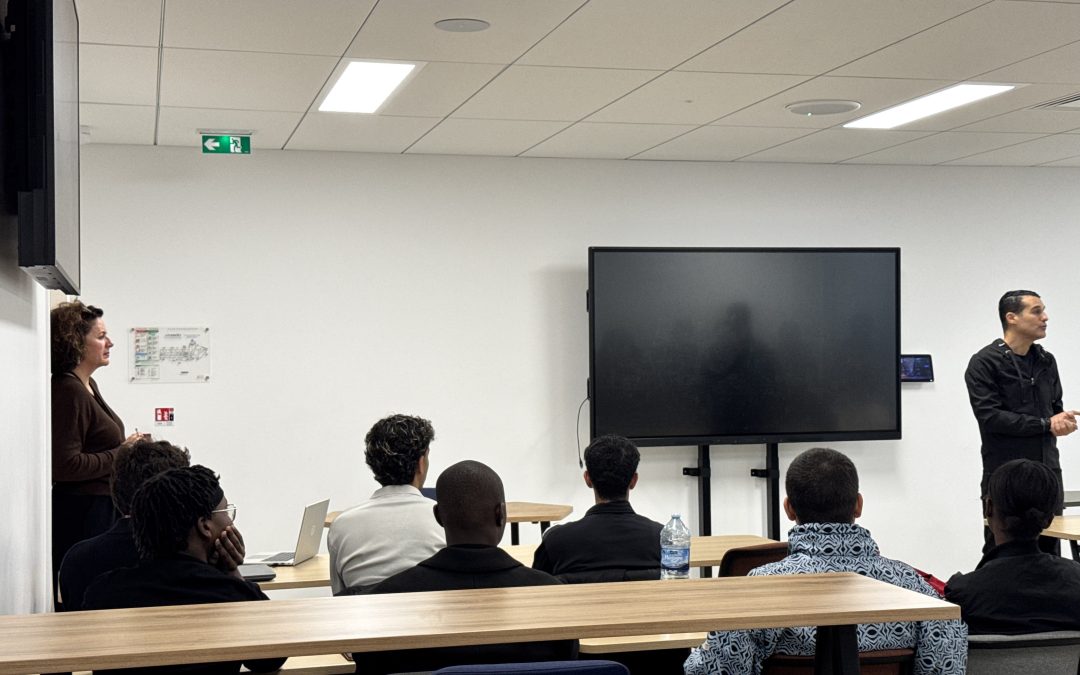
A new year begins at CCCLX!
The Paris-Villejuif campus welcomes CCCLX students for a new year of learning, projects and experiences at the heart of 360° IT.

VMware HyperArmor strengthens hypervisor protection against cyberattacks
Broadcom has unveiled VMware HyperArmor, a solution designed to protect the ESX hypervisor of VMware Cloud Foundation, with announced support for ESX 8.x and later versions.[1] The stakes go beyond the security of a single application: the hypervisor is a shared...

SolarWinds Avior: IT teams set the goals and agents coordinate the actions
SolarWinds has launched Avior, an agentic AI system designed to pursue operational goals in hybrid IT environments. Available since 14 October as part of a guided onboarding programme, it combines specialised agents with control mechanisms.[1] For technical teams, the...
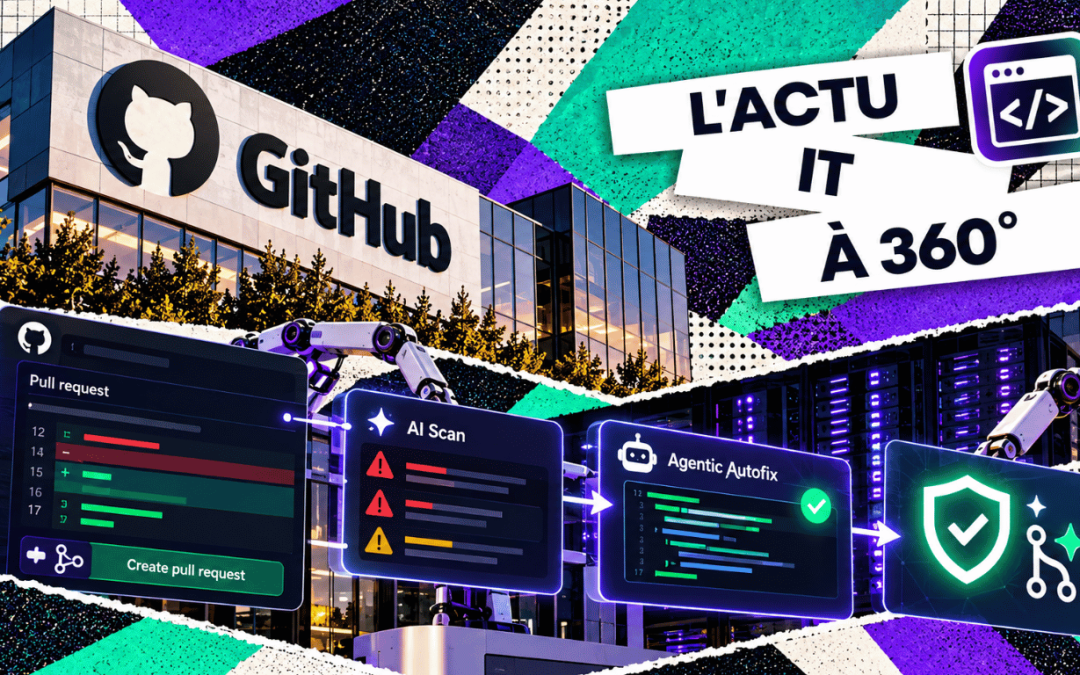
GitHub steps up vulnerability detection and remediation with AI Scan and Agentic Autofix
GitHub has announced the general availability of AI Scan for pull requests and Agentic Autofix for code scanning alerts.[1][2] These features bring AI assistance closer to the work of securing code. They do, however, operate on different scopes: proposed...

Cloudflare makes web security programmable with Workers
Cloudflare is bringing its secure web gateway closer to its Workers development platform. With Forward, available in public beta, businesses can add code to the processing of certain authorised HTTP requests.[2] For IT teams, this development opens up a...
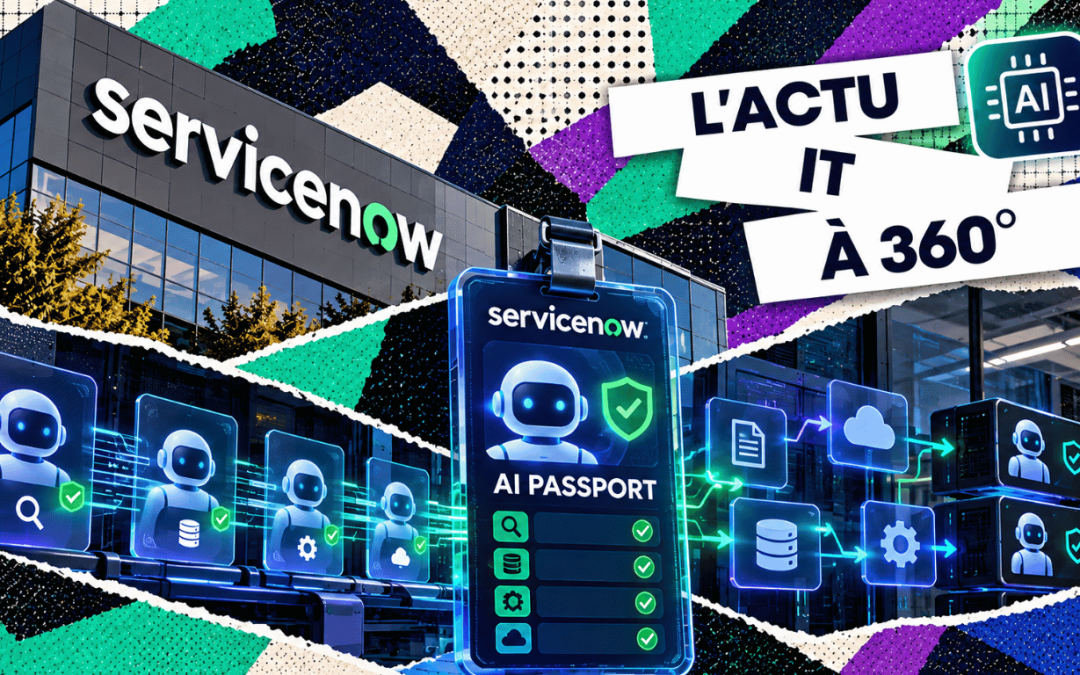
ServiceNow prepares AI Passport to control AI agents’ access rights
ServiceNow has announced AI Passport, a cryptographically signed authorisation credential designed to govern AI agents and MCP servers while workflows are running. It is scheduled to be available in the fourth quarter of 2026.[1] The image of a digital badge helps to...

SAP wants to acquire TechWolf to link tasks, skills and the transformation of jobs
SAP has announced an agreement to acquire TechWolf, an AI platform that links tasks, skills and changes in the labour market. Completion is expected in the fourth quarter of 2026, subject in particular to regulatory approvals.[1] The deal raises a practical...
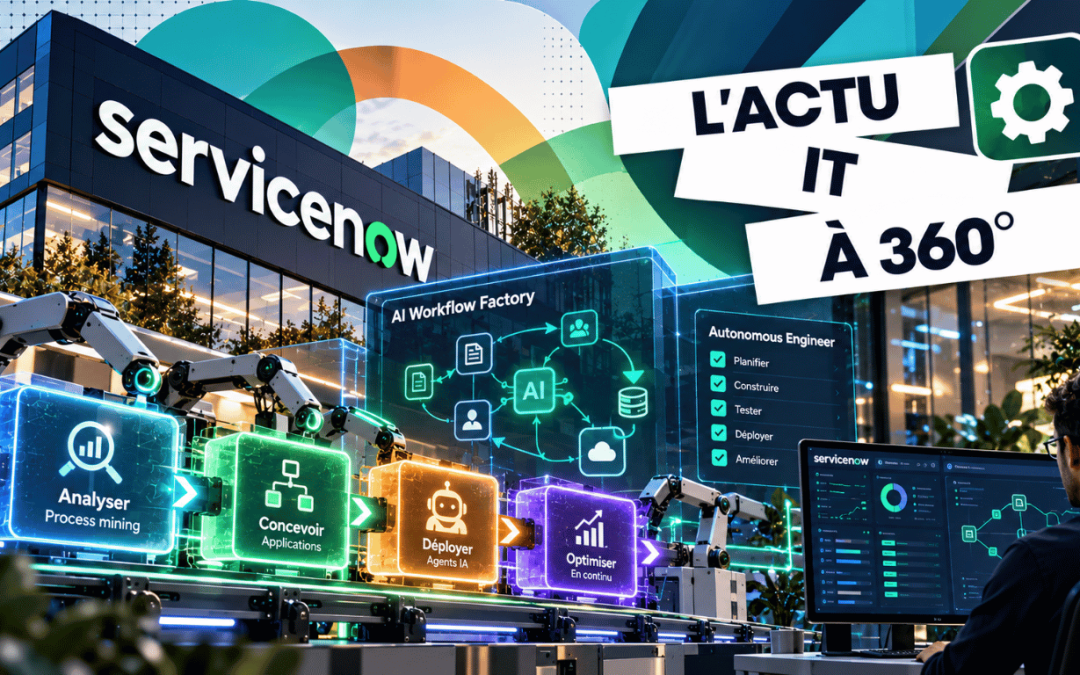
ServiceNow wants to turn process improvement into a continuous AI-driven loop
With AI Workflow Factory, ServiceNow aims to link the identification of inefficient processes with building and running their improvements. The announcement notably includes Autonomous Engineer, a tool designed to automate more of the implementation work.[1] For...