


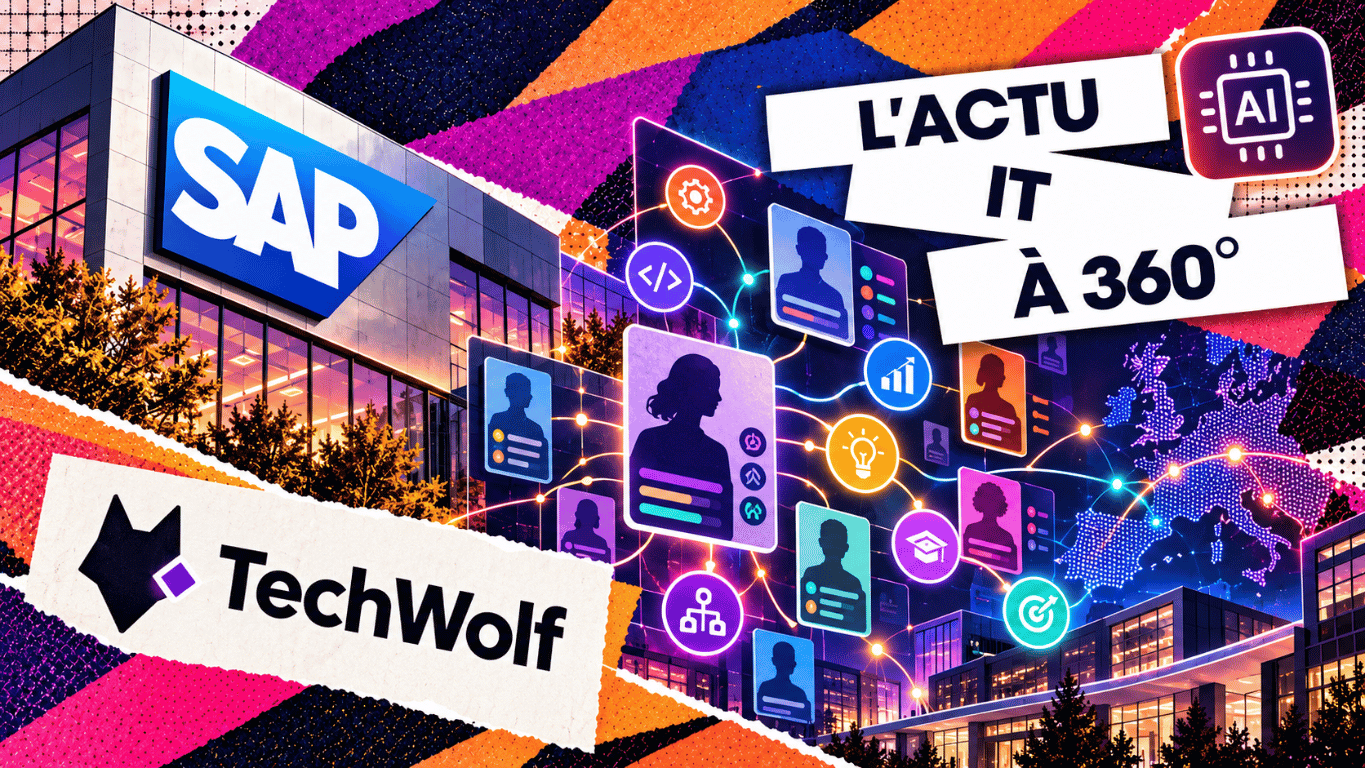
SAP has announced an agreement to acquire TechWolf, an AI platform that links tasks, skills and changes in the labour market. Completion is expected in the fourth quarter of 2026, subject in particular to regulatory approvals.[1] The deal raises a practical question: how can training and internal mobility be better prepared without reducing an employee’s abilities to the information recorded in software?
A graph to bring work and skills together
TechWolf draws on the HR and business systems already used by the organisation to build a context graph. This graph links the tasks associated with roles, skills, labour market information and company strategy.[1]
The aim is to match the activities actually carried out with the skills that can be associated with them. This approach seeks to complement inventories based solely on job titles.
In an IT team, for example, the same job title can cover user support, cloud administration or application integration. Skills may also be used beyond the usual boundaries between departments.
SAP is preparing closer integration with its HR ecosystem
SAP plans to integrate TechWolf into SuccessFactors and to use this information in scenarios linked to Joule, notably for workforce planning and talent management. New products are expected once the deal has closed.[1]
This integration could bring skills mapping closer to concrete decisions on training, mobility or how teams evolve. Its usefulness will, however, depend on the quality of the data and on how the results are interpreted.
Four uses to test against the quality of the information
This editorial grid presents possible benefits and the checks they call for. It does not describe gains already measured at a customer.
| Use | Intended operational effect | Control question |
|---|---|---|
| Training | Identify the know-how to develop for an activity. | Is the need confirmed by the person and their team? |
| Internal mobility | Identify skills that can be transferred between assignments. | Are aspirations and real experience taken into account? |
| Recruitment | Distinguish internal resources from the needs to be filled. | Is a skill missing from the system really missing? |
| Evolution of jobs | Analyse the tasks likely to change with AI. | Are the constraints and responsibilities of the work represented? |
An inferred skill remains a suggestion to be checked
Digital traces are incomplete. The activities visible in software can obscure informal mutual help, incident resolution or rarely used skills. They are therefore not an exhaustive measure of an employee’s value.
TechWolf states that, by default, employees can accept, reject or add to the skills suggested by the AI. The organisation can also opt for validation by the manager. The tool distinguishes between skills declared by the employee, assessed by the manager and inferred by the AI.[2] This information should not be merged into a single score.
For SMEs, start with a specific training need
An SME could map the tasks and skills involved in migrating an application to the cloud, then compare the results with employees’ experience to build a training pathway. This is a working scenario, not an SAP offering specifically announced for SMEs.
A limited pilot would make it possible to measure the relevance of the suggestions, the corrections made and the time needed to validate them. These results could then be compared, against the integration cost, with an approach based on interviews and a shared framework.
Before launch, the organisation should specify the data sources, access rights and the decisions the tool is meant to inform. A training recommendation must not become an individual assessment by default.
Data quality determines decision quality
The Data Management skill starts with identifying the sources, how up to date they are and what they actually make it possible to observe. Missing data does not mean that a skill is absent.
Teams must also harmonise vocabulary, preserve the provenance of information and distinguish people’s own statements from inferences produced by AI.
Finally, governance requires coordinating HR teams and users, defining how validation works and dealing with errors. The value of a skills graph depends on results that are reliable, explainable and useful to the people concerned.
Preparing jobs better without boxing people in
Mapping work at task level can help prepare training and mobility. It must, however, leave room for experience, aspirations and skills that are not visible in systems. The graph can inform a discussion about work; it should not replace it.
Further reading
Four CCCLX reads on data, data governance and integrating AI into organisations.
Talk to your database: Oracle improves its NL2SQL AI
Databricks extends Delta Sharing to AI and aims to break down data silos
Merck and Google Cloud: 1 billion for agentic AI
Two months, 1.1 billion dollars: River AI is already exciting investors
Sources
- 01
SAP News Center (6 October 2026). “SAP to Acquire TechWolf, Giving Enterprises Evidence-Based View of Work in the Age of AI”. Announcement of the agreement, the context graph and the planned integrations with SuccessFactors and Joule.
- 02
TechWolf (accessed 6 October 2026). “Who validates the AI’s suggestions, the employee or their manager?”. Explanations of validation by the employee, governance options and the different skill assessments.
PDFs, presentations, audio: Adobe wants to turn Acrobat into a content factory
Acrobat no longer just wants to open your documents For more than thirty years, Acrobat has mainly been used to read, create, edit, sign and share PDFs. Adobe now wants to give it a much broader role. On 9 September 2026, the company announced new capabilities based...
Salesforce plugs Claude into its CRM: Claudeforce prepares for life after the interface
What if the CRM soon no longer needed to be opened? For decades, using a CRM meant navigating between customer records, dashboards, menus and forms. With Claudeforce, Salesforce and Anthropic want to change this logic: rather than forcing users to go into Salesforce...
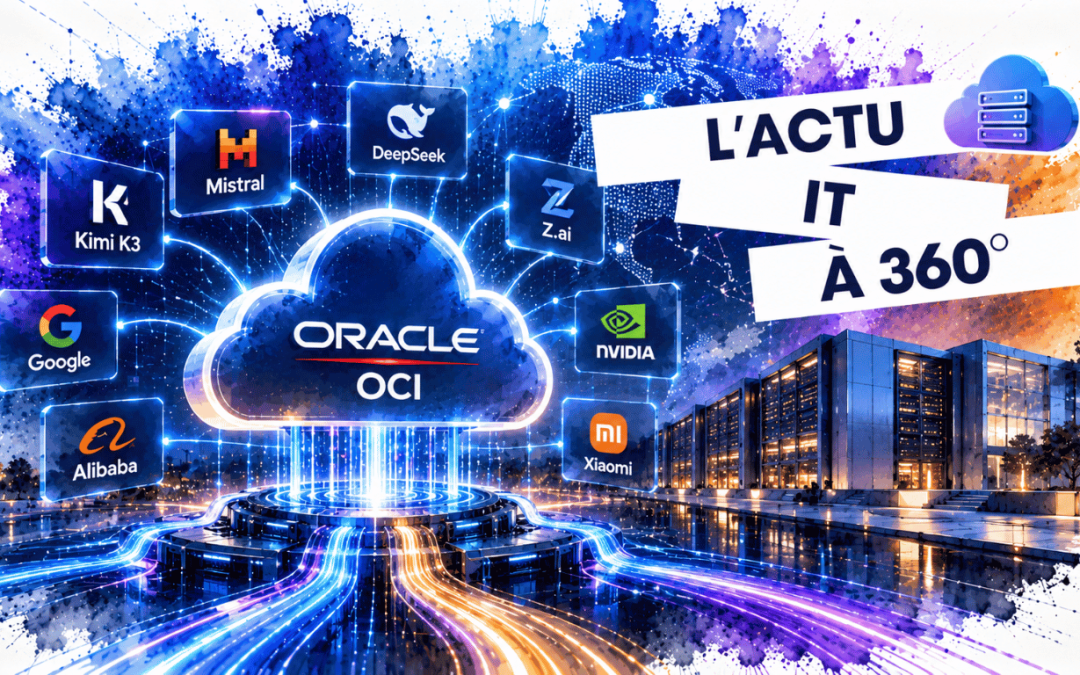
Kimi K3, Mistral, DeepSeek: Oracle turns OCI into an AI model hub
Oracle wants to make OCI a one-stop shop for AI Oracle is stepping up its efforts in the AI cloud battle by significantly expanding the catalogue of models available in OCI Enterprise AI. On 4 September 2026, the group announced in particular the integration of Kimi...
Agentic Data Cloud: Google rethinks data for the age of AI agents
AI agents are forcing Google to rethink data architecture AI agents promise to search for information, make decisions and act directly within company systems, but this autonomy depends on one essential condition: accessing the right data and, above all, understanding...
Google Cloud tackles the hidden bill of AI agents
AI agents raise a new problem: how much does a task really cost? As companies move from chatbots to AI agents able to work through multiple steps, the question of cost becomes much more complex. A chatbot generally handles a request and generates an answer, whereas an...
Workday, Navan, Avalara: ChatGPT Work moves into business software
ChatGPT Work is gradually leaving the chat window With GPT-6 Astra, OpenAI is no longer simply trying to improve the quality of ChatGPT’s answers. The company wants to bring its AI closer to the applications in which employees actually work. With the arrival of GPT-6...

From chip to cloud: Groq raises 350 million to scale up
Groq now wants to sell cloud rather than just chips Groq is pursuing a major strategic transformation. Long seen as one of Nvidia’s challengers thanks to its LPUs (Language Processing Units) specialised in artificial intelligence model inference, the group is now...
Muse Code: Meta launches its AI agent to tackle giant codebases
Meta wants to bring AI agents into complex software projects Meta is stepping up its efforts in AI-assisted software development with Muse Code, a new agent designed to work on large codebases, where traditional assistants can quickly lose the context needed to...
Qwen3.8-Max reportedly coded for 16 days without human intervention
Alibaba tests how far an autonomous AI developer can go Alibaba claims to have reached a new milestone in agentic software development with Qwen3.8-Max, its new flagship model launched in early August 2026. In an internal test, the model reportedly worked fully...
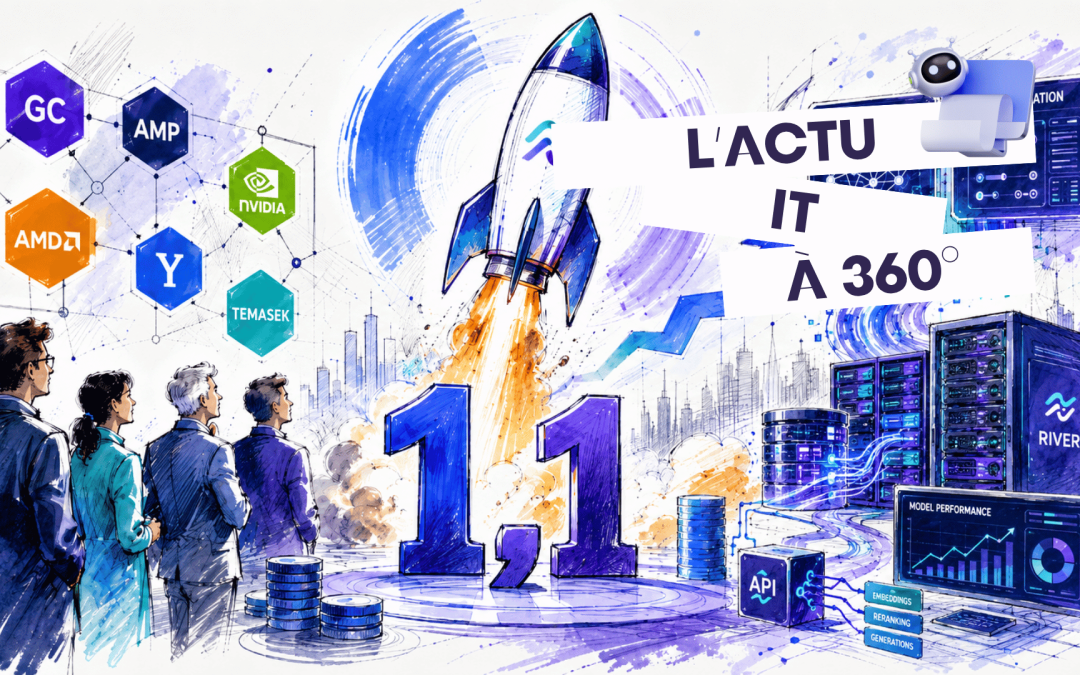
Two months, $1.1 billion: River AI is already exciting investors
A spectacular raise for a start-up barely out of the shadows Two months after emerging from stealth mode, River AI has just completed one of the most spectacular funding rounds of the year in artificial intelligence. The start-up founded by Igor Babuschkin, a former...