



Groq now wants to sell cloud rather than just chips
Groq is pursuing a major strategic transformation. Long seen as one of Nvidia’s challengers thanks to its LPUs (Language Processing Units) specialised in artificial intelligence model inference, the group is now focusing its efforts on GroqCloud, its cloud infrastructure dedicated to running AI models. This shift is part of a broader trend, that of neoclouds: specialist providers that build their infrastructure around the very specific needs of artificial intelligence rather than offering the vast catalogue of general-purpose services of AWS, Microsoft Azure or Google Cloud. Groq’s repositioning is already well under way: in June 2026 the company announced that it was operating 13 data centres across North America, Europe, the Middle East and Asia-Pacific, with more than five million developers using its infrastructure.¹
The shift to the neocloud was already in the making
Groq did not discover the cloud in 2026, since GroqCloud was launched back in 2024 following the acquisition of Definitive Intelligence, but its positioning has changed profoundly since then.² The non-exclusive licensing agreement signed with Nvidia in December 2025 was a turning point: Nvidia obtained a licence for some of Groq’s inference technologies, while founder Jonathan Ross, president Sunny Madra and several team members joined the GPU giant, with Groq remaining an independent company.³ In the following months, the company refocused its organisation around a much clearer ambition: to become a major cloud provider specialising in AI inference. This change is gradually transforming Groq from a player mainly identified with its hardware into a company selling computing capacity and inference services directly to developers and organisations.
Inference becomes the new jackpot of AI infrastructure
This strategy rests on a strong conviction: once models have been trained, their day-to-day use could require far more resources than their initial training. Groq estimates that inference could eventually require 15 to 20 times more computing capacity than training, particularly as conversational assistants, generative applications and autonomous agents that continuously send requests multiply.¹ The challenge is therefore no longer just to build the most powerful models, but to be able to run them quickly, at scale and at a cost low enough to make their use economically viable. Groq wants to occupy precisely this space with infrastructure optimised for real-time inference, and according to the company its cloud already processes several trillion tokens every week.
Neoclouds want to carve out a place alongside the hyperscalers
Groq is thus joining a market in which specialist players such as CoreWeave and Together AI are seeking to offer an alternative to the major cloud providers. The neocloud principle consists of building much more specialised infrastructure around AI workloads, with accelerators, networks and software optimised for training or inference, rather than trying to cover all of a company’s IT needs. The phenomenon is attracting massive amounts of capital: Together AI, for example, raised $800 million in July 2026, while several other specialist providers have completed major funding rounds in recent months.⁴ This momentum shows that the market expects a genuine layer of AI-specialised cloud to emerge, complementing or competing with the infrastructure offered by the hyperscalers.
For businesses, a new option emerges alongside AWS, Azure and Google Cloud
The appeal of neoclouds is particularly tangible for companies deploying artificial intelligence applications at scale. They may be looking for infrastructure offering more specialised capacity, lower latency or pricing better suited to their workloads, without necessarily moving their entire information system to a new provider. Groq highlights in particular the speed and cost-efficiency of its infrastructure for real-time inference applications, and its international expansion aims to bring computing capacity closer to users in order to reduce latency and meet certain data sovereignty requirements. In Australia, for example, Groq and Equinix announced a 4.5 MW infrastructure to deliver its inference services locally.⁵
Cloud Computing enters the era of specialised infrastructure
This transformation also shows how Cloud Computing skills are evolving. Cloud architects will no longer simply have to choose between AWS, Azure and Google Cloud, but may need to combine several providers depending on the nature of workloads, available hardware, data location, latency and the cost of inference. The rise of neoclouds therefore adds a new layer of complexity to multi-cloud architectures: a company could keep its business applications with a hyperscaler while running certain AI models on specialised infrastructure. Understanding distributed architectures, how AI accelerators work, inference APIs and data movement mechanisms then becomes essential to decide which infrastructure to use for each workload.
The battle for the AI cloud is only just beginning
Ultimately, Groq’s repositioning shows that the artificial intelligence revolution is not being played out solely between the labs developing the models. Another competition is taking place in data centres, where enough capacity must be built to run these models at scale while keeping their cost under control. Groq notably plans to continue expanding its infrastructure towards 200 MW by the end of 2027, a sign that its future now largely depends on operating a global inference platform.¹ Facing the hyperscalers and a new generation of extremely well-funded neoclouds, the question now is whether Groq can turn its long-standing expertise in AI accelerators into a genuine competitive advantage in the cloud.
360° IT News — decoding technology to understand the jobs of tomorrow.
Further reading
The infrastructure needed for artificial intelligence is also transforming traditional cloud architectures. Read our CCCLX article “The cloud prepares for autonomous agents: AWS evolves Lambda”, which analyses how AWS is adapting its serverless infrastructure to new agentic workloads.
References
1. Groq. (2026). Groq Raises $650M to Scale Its AI Inference Cloud Business.
https://groq.com/newsroom/groq-raises-usd650m-to-scale-its-ai-inference-cloud-business
2. Groq. (2024). Groq Acquires Definitive Intelligence to Launch GroqCloud.
https://groq.com/newsroom/groq-acquires-definitive-intelligence-to-launch-groqcloud
3. Groq. (2025). Groq and Nvidia Enter Non-Exclusive Inference Technology Licensing Agreement to Accelerate AI Inference at Global Scale.
https://groq.com/newsroom/groq-and-nvidia-enter-non-exclusive-inference-technology-licensing-agreement-to-accelerate-ai-inference-at-global-scale
4. TechCrunch. (2026). Neocloud Together AI raises $800M, leaps to $8.3B valuation.
https://techcrunch.com
5. Groq. (2025). Groq Expands to Asia-Pacific with Sydney Data Center to Power the Next Generation of AI Inference.
https://groq.com
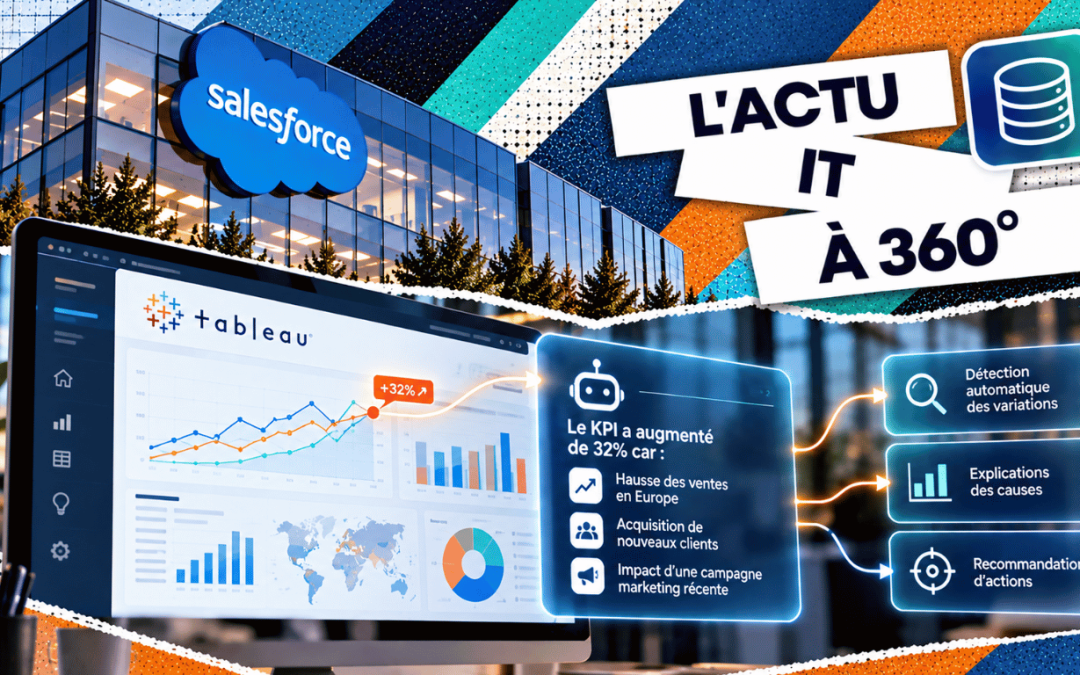
Salesforce wants to acquire Loops to help Tableau explain KPI changes
Salesforce has announced a definitive agreement to acquire Loops, an AI-based analytics platform, with the intention of integrating its technology into Tableau after closing.[1] The aim is to monitor metrics and bring out the factors associated with their changes. For...

Cisco and NVIDIA prepare 400 Gb/s-per-lane optical connections for AI infrastructure
Cisco and NVIDIA have announced a project for a pluggable optical form factor, USFP, capable of supporting 400 Gb/s per lane. Cisco is also unveiling the Silicon One G302 switching chip, rated at 51.2 Tb/s.[1] These announcements address a key challenge for AI...
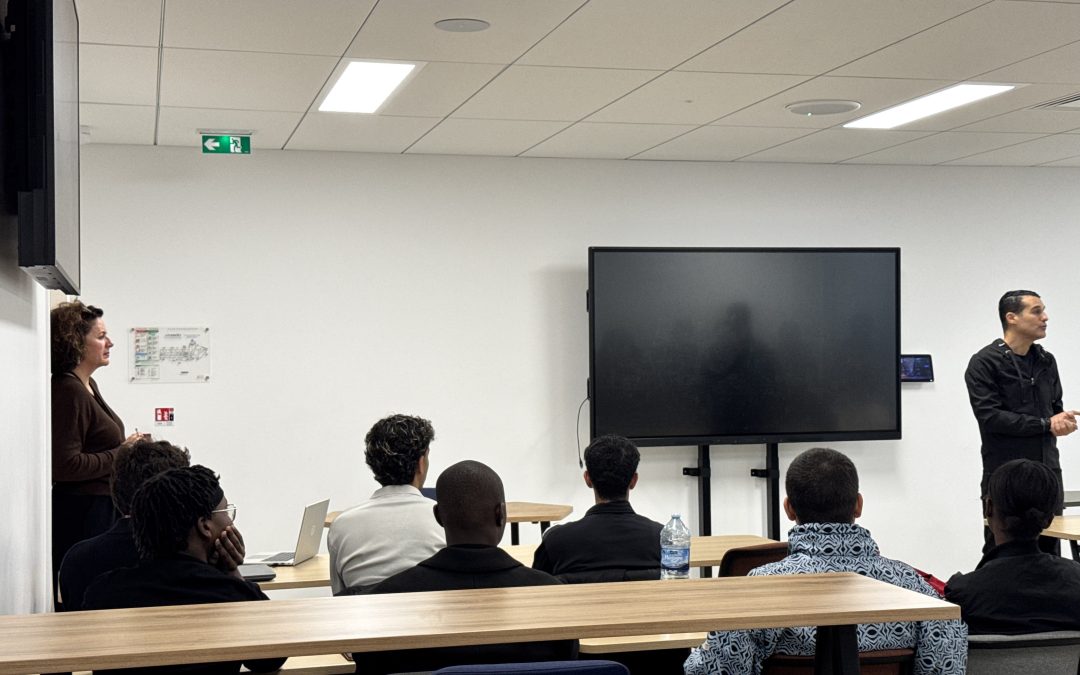
A new year begins at CCCLX!
The Paris-Villejuif campus welcomes CCCLX students for a new year of learning, projects and experiences at the heart of 360° IT.
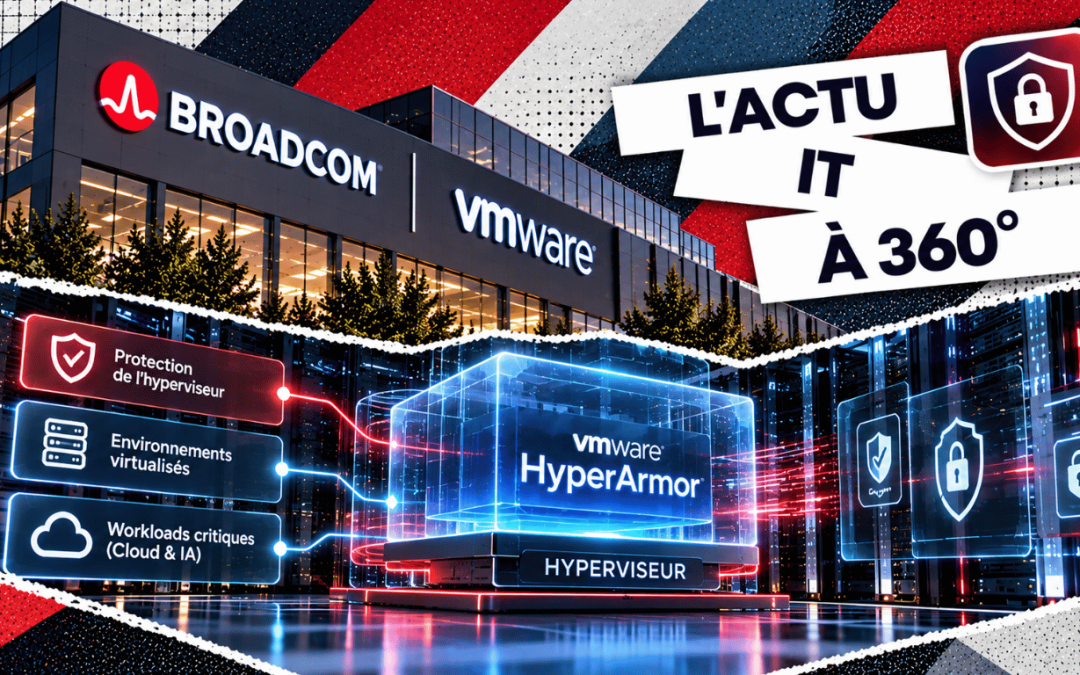
VMware HyperArmor strengthens hypervisor protection against cyberattacks
Broadcom has unveiled VMware HyperArmor, a solution designed to protect the ESX hypervisor of VMware Cloud Foundation, with announced support for ESX 8.x and later versions.[1] The stakes go beyond the security of a single application: the hypervisor is a shared...

SolarWinds Avior: IT teams set the goals and agents coordinate the actions
SolarWinds has launched Avior, an agentic AI system designed to pursue operational goals in hybrid IT environments. Available since 14 October as part of a guided onboarding programme, it combines specialised agents with control mechanisms.[1] For technical teams, the...
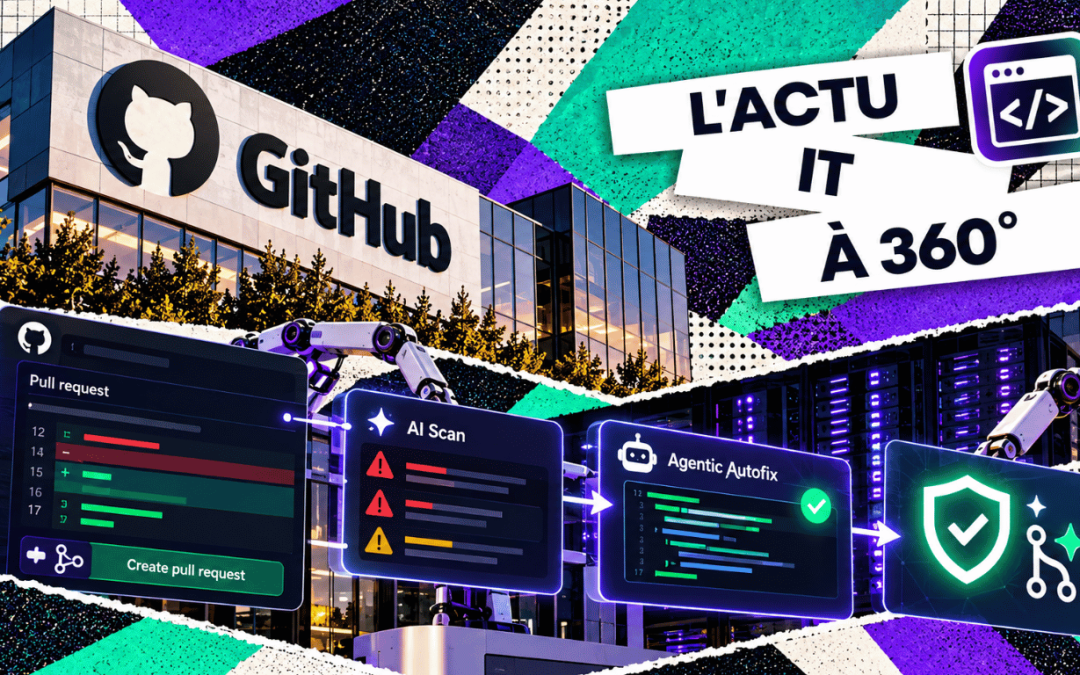
GitHub steps up vulnerability detection and remediation with AI Scan and Agentic Autofix
GitHub has announced the general availability of AI Scan for pull requests and Agentic Autofix for code scanning alerts.[1][2] These features bring AI assistance closer to the work of securing code. They do, however, operate on different scopes: proposed...

Cloudflare makes web security programmable with Workers
Cloudflare is bringing its secure web gateway closer to its Workers development platform. With Forward, available in public beta, businesses can add code to the processing of certain authorised HTTP requests.[2] For IT teams, this development opens up a...

Palo Alto Networks strengthens AI agent security around Claude Enterprise
PPalo Alto Networks has unveiled several updates to Prisma AIRS: protection of interactions with Claude Enterprise, analysis of the components used by agents and control of their exchanges with tools.[1] The stakes are concrete for businesses: preventing an assistant...

ServiceNow prepares AI Passport to control AI agents’ access rights
ServiceNow has announced AI Passport, a cryptographically signed authorisation credential designed to govern AI agents and MCP servers while workflows are running. It is scheduled to be available in the fourth quarter of 2026.[1] The image of a digital badge helps to...

SAP wants to acquire TechWolf to link tasks, skills and the transformation of jobs
SAP has announced an agreement to acquire TechWolf, an AI platform that links tasks, skills and changes in the labour market. Completion is expected in the fourth quarter of 2026, subject in particular to regulatory approvals.[1] The deal raises a practical...