


Alibaba tests how far an autonomous AI developer can go
Alibaba claims to have reached a new milestone in agentic software development with Qwen3.8-Max, its new flagship model launched in early August 2026. In an internal test, the model reportedly worked fully autonomously for around 16 days on a real software engineering project, without human intervention during its execution.¹ The experiment was not simply about generating a few functions from a prompt: Qwen3.8-Max had to start from an empty environment, organise its work, develop the project, run its own tests, detect problems and keep iterating over an exceptionally long period for an AI agent. Alibaba presents this demonstration as an illustration of the model’s ability to carry out so-called “long-horizon” tasks, which require keeping hold of an objective and coordinating numerous actions over several days.
265 commits and 127 pull requests produced by the agent
The announced result gives an idea of the scale of the experiment. As of 30 July 2026, after around 16 days of autonomous operation, the repository used for the test had 265 commits, 127 pull requests and 151 issues.² The model was working on “oh-my-cli”, an agentic framework able to evolve based on requests received, community feedback and its own tests. Its workflow included turning requirements into issues, assigning tasks, generating code, running unit and end-to-end tests, then fixing the defects detected. Alibaba has made the project publicly available on GitHub, allowing part of the traces produced during the experiment to be examined.
The real feat lies in the duration
Coding assistants have been able to generate code, explain a function or fix an error for several years, but sustaining a task over several days is a far more complex problem. An agent must keep the original objective in mind, understand the state of the project after hundreds of actions, detect its own mistakes and resume its work without constantly starting from scratch. Qwen3.8-Max relies in particular on a Mixture-of-Experts architecture with 2.4 trillion parameters, 95 billion of which are activated, as well as a context window of up to one million tokens.³ Above all, Alibaba highlights a closed-loop process in which the agent plans, executes, checks and then corrects its work, a mechanism that is gradually bringing these systems closer to a genuine autonomous software engineering process.
Qwen no longer just wants to write code
This demonstration is part of a broader market trend. Cursor, Claude Code, Codex and GitHub Copilot have gradually moved AI tools from simple autocompletion towards agents capable of exploring a repository, editing several files and running commands. Alibaba now wants to push this logic much further by making the length of autonomy a performance criterion. Qwen3.8-Max was also tested on reproducing a research paper: according to the Qwen team, the model worked for around five days, produced nearly 7,600 lines of code and ran 33 GPU training runs before proposing its own improvements.² These results come from Alibaba’s own evaluations and should therefore be distinguished from independent benchmarks, but they clearly show the direction AI labs are taking.
The developer becomes the supervisor of long-running agents
If agents genuinely become capable of working for several days on the same project, Web Programming and Management could undergo a major transformation. Developers do not disappear from the process: their role shifts towards defining the architecture, setting objectives, reviewing code, testing, security and validating the decisions taken by the agent. Knowing how to program will remain essential to spot a poor implementation or understand the consequences of a change, but a new skill is gradually being added: knowing how to delegate complex tasks to agents, monitor their progress and take back control when their decisions stray from the project’s requirements. A developer’s value could thus depend less and less on the number of lines written by hand and more on their ability to orchestrate and control systems capable of producing code at scale.
The 16 days still have to stand up to real-world conditions
Alibaba’s demonstration should nevertheless be treated with caution. The 16 days correspond to an experiment organised and documented by the model’s provider, and this duration is not enough to prove that an agent can replace a development team on any professional project. Key questions remain about the quality of the code produced, its maintainability, security, the real cost of such a long run and the system’s ability to work in far more complex environments. Industry observers point out that performance deserves to be assessed beyond the number of days of autonomy alone.⁴ The real breakthrough will come when these agents can maintain this level of autonomy in enterprise projects subject to production, security and human collaboration constraints.
From copilot to agentic developer
Above all, Qwen3.8-Max shows how fast AI-assisted development is evolving. After copilots able to suggest the next line, then agents able to modify an entire project, the industry is now experimenting with systems that can pursue an objective for several days. If this autonomy becomes reliable enough for production use, the change will be profound: the challenge will no longer simply be asking an AI to code a feature, but entrusting it with a complete assignment, letting it work and then evaluating the result. The 16 days claimed by Alibaba are therefore less a definitive proof of autonomy than a particularly strong signal of the direction software development is taking.
360° IT News — decoding technology to understand the jobs of tomorrow.
Further reading
Programming environments are also evolving towards agents able to take on a growing share of development. Read our article “ZCode wants to challenge Cursor and Claude Code: China enters the AI coding battle”, on Z.ai’s arrival in the market for agentic development environments.
References
1. Alibaba Group. (2026). Alibaba Unveils Qwen3.8-Max: Its Largest and Most Capable Flagship Model to Date.
https://www.alibabagroup.com
2. Qwen Team. (2026). Qwen3.8-Max: A New Bar for Coding and Cowork.
https://qwen.ai
3. Alibaba Cloud. (2026). Qwen3.8-Max Model Information.
https://www.alibabacloud.com
4. Computerworld. (2026). Alibaba takes aim at OpenAI and Anthropic with Qwen3.8-Max launch.
https://www.computerworld.com

Salesforce wants to acquire Loops to help Tableau explain KPI changes
Salesforce has announced a definitive agreement to acquire Loops, an AI-based analytics platform, with the intention of integrating its technology into Tableau after closing.[1] The aim is to monitor metrics and bring out the factors associated with their changes. For...

Cisco and NVIDIA prepare 400 Gb/s-per-lane optical connections for AI infrastructure
Cisco and NVIDIA have announced a project for a pluggable optical form factor, USFP, capable of supporting 400 Gb/s per lane. Cisco is also unveiling the Silicon One G302 switching chip, rated at 51.2 Tb/s.[1] These announcements address a key challenge for AI...
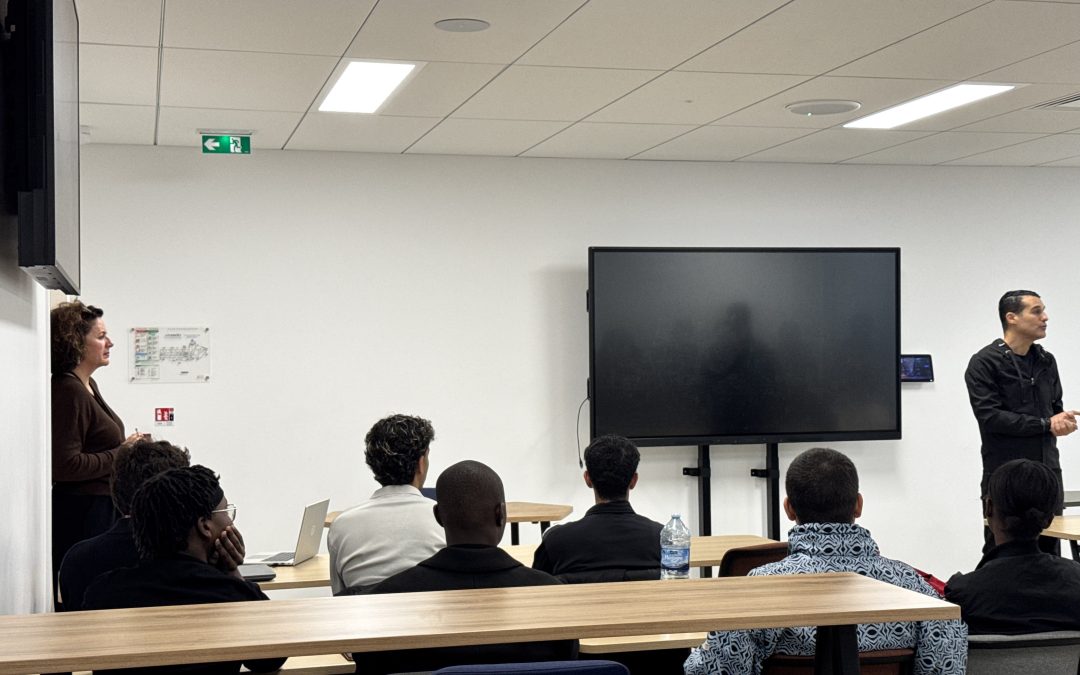
A new year begins at CCCLX!
The Paris-Villejuif campus welcomes CCCLX students for a new year of learning, projects and experiences at the heart of 360° IT.

VMware HyperArmor strengthens hypervisor protection against cyberattacks
Broadcom has unveiled VMware HyperArmor, a solution designed to protect the ESX hypervisor of VMware Cloud Foundation, with announced support for ESX 8.x and later versions.[1] The stakes go beyond the security of a single application: the hypervisor is a shared...
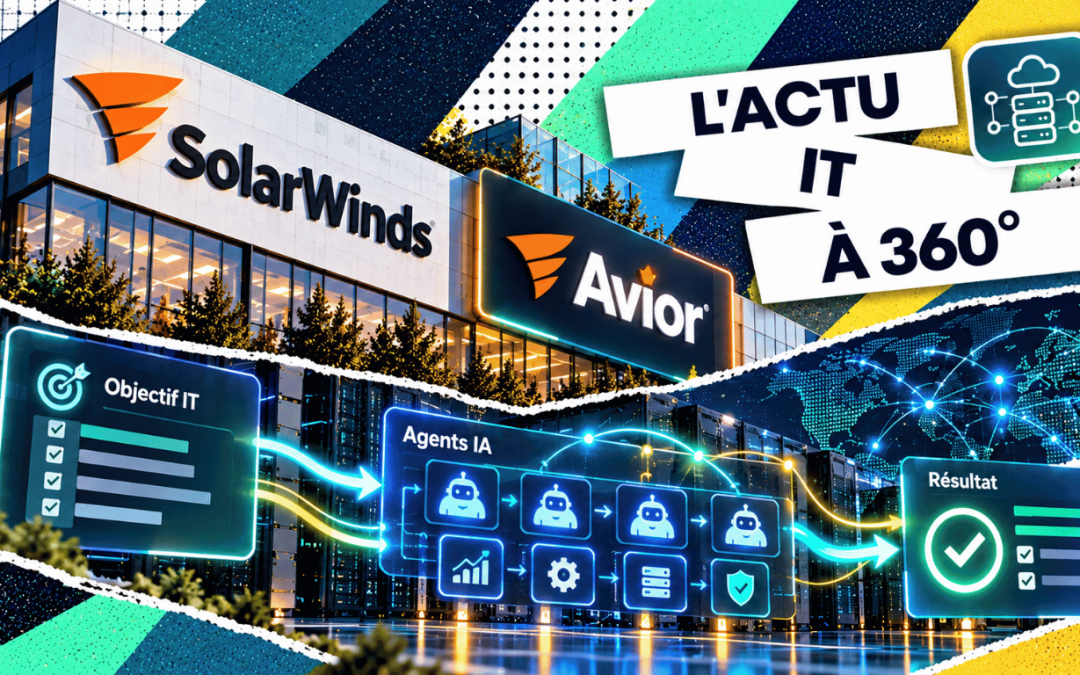
SolarWinds Avior: IT teams set the goals and agents coordinate the actions
SolarWinds has launched Avior, an agentic AI system designed to pursue operational goals in hybrid IT environments. Available since 14 October as part of a guided onboarding programme, it combines specialised agents with control mechanisms.[1] For technical teams, the...
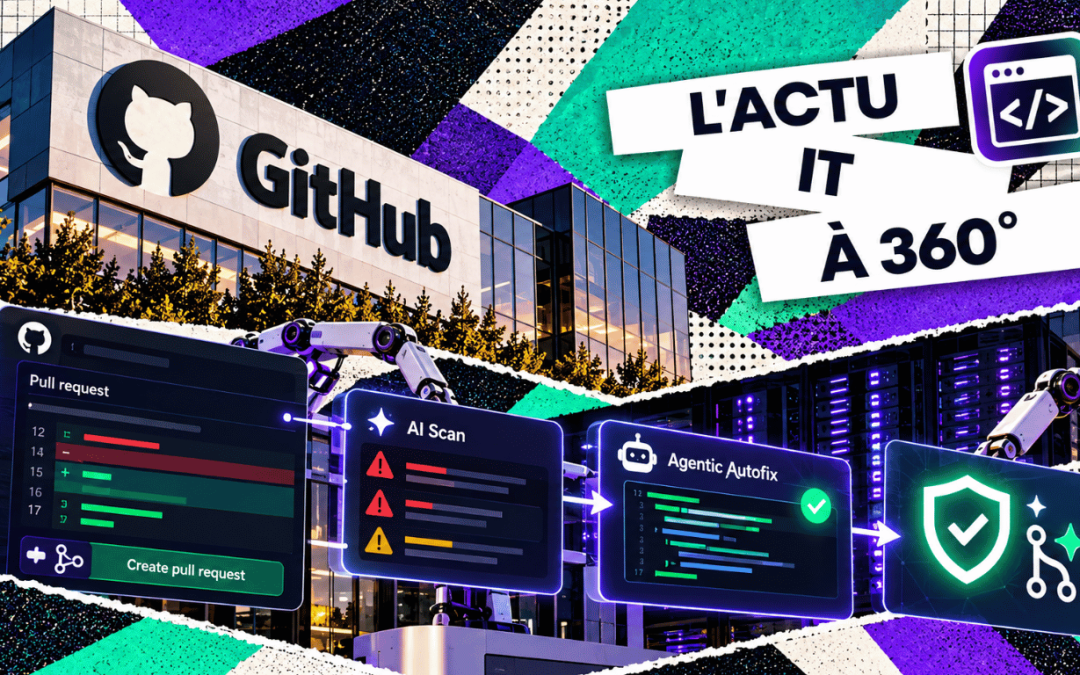
GitHub steps up vulnerability detection and remediation with AI Scan and Agentic Autofix
GitHub has announced the general availability of AI Scan for pull requests and Agentic Autofix for code scanning alerts.[1][2] These features bring AI assistance closer to the work of securing code. They do, however, operate on different scopes: proposed...

Cloudflare makes web security programmable with Workers
Cloudflare is bringing its secure web gateway closer to its Workers development platform. With Forward, available in public beta, businesses can add code to the processing of certain authorised HTTP requests.[2] For IT teams, this development opens up a...

Palo Alto Networks strengthens AI agent security around Claude Enterprise
PPalo Alto Networks has unveiled several updates to Prisma AIRS: protection of interactions with Claude Enterprise, analysis of the components used by agents and control of their exchanges with tools.[1] The stakes are concrete for businesses: preventing an assistant...

ServiceNow prepares AI Passport to control AI agents’ access rights
ServiceNow has announced AI Passport, a cryptographically signed authorisation credential designed to govern AI agents and MCP servers while workflows are running. It is scheduled to be available in the fourth quarter of 2026.[1] The image of a digital badge helps to...
SAP wants to acquire TechWolf to link tasks, skills and the transformation of jobs
SAP has announced an agreement to acquire TechWolf, an AI platform that links tasks, skills and changes in the labour market. Completion is expected in the fourth quarter of 2026, subject in particular to regulatory approvals.[1] The deal raises a practical...