


Alibaba tests how far an autonomous AI developer can go
Alibaba claims to have reached a new milestone in agentic software development with Qwen3.8-Max, its new flagship model launched in early August 2026. In an internal test, the model reportedly worked fully autonomously for around 16 days on a real software engineering project, without human intervention during its execution.¹ The experiment was not simply about generating a few functions from a prompt: Qwen3.8-Max had to start from an empty environment, organise its work, develop the project, run its own tests, detect problems and keep iterating over an exceptionally long period for an AI agent. Alibaba presents this demonstration as an illustration of the model’s ability to carry out so-called “long-horizon” tasks, which require keeping hold of an objective and coordinating numerous actions over several days.
265 commits and 127 pull requests produced by the agent
The announced result gives an idea of the scale of the experiment. As of 30 July 2026, after around 16 days of autonomous operation, the repository used for the test had 265 commits, 127 pull requests and 151 issues.² The model was working on “oh-my-cli”, an agentic framework able to evolve based on requests received, community feedback and its own tests. Its workflow included turning requirements into issues, assigning tasks, generating code, running unit and end-to-end tests, then fixing the defects detected. Alibaba has made the project publicly available on GitHub, allowing part of the traces produced during the experiment to be examined.
The real feat lies in the duration
Coding assistants have been able to generate code, explain a function or fix an error for several years, but sustaining a task over several days is a far more complex problem. An agent must keep the original objective in mind, understand the state of the project after hundreds of actions, detect its own mistakes and resume its work without constantly starting from scratch. Qwen3.8-Max relies in particular on a Mixture-of-Experts architecture with 2.4 trillion parameters, 95 billion of which are activated, as well as a context window of up to one million tokens.³ Above all, Alibaba highlights a closed-loop process in which the agent plans, executes, checks and then corrects its work, a mechanism that is gradually bringing these systems closer to a genuine autonomous software engineering process.
Qwen no longer just wants to write code
This demonstration is part of a broader market trend. Cursor, Claude Code, Codex and GitHub Copilot have gradually moved AI tools from simple autocompletion towards agents capable of exploring a repository, editing several files and running commands. Alibaba now wants to push this logic much further by making the length of autonomy a performance criterion. Qwen3.8-Max was also tested on reproducing a research paper: according to the Qwen team, the model worked for around five days, produced nearly 7,600 lines of code and ran 33 GPU training runs before proposing its own improvements.² These results come from Alibaba’s own evaluations and should therefore be distinguished from independent benchmarks, but they clearly show the direction AI labs are taking.
The developer becomes the supervisor of long-running agents
If agents genuinely become capable of working for several days on the same project, Web Programming and Management could undergo a major transformation. Developers do not disappear from the process: their role shifts towards defining the architecture, setting objectives, reviewing code, testing, security and validating the decisions taken by the agent. Knowing how to program will remain essential to spot a poor implementation or understand the consequences of a change, but a new skill is gradually being added: knowing how to delegate complex tasks to agents, monitor their progress and take back control when their decisions stray from the project’s requirements. A developer’s value could thus depend less and less on the number of lines written by hand and more on their ability to orchestrate and control systems capable of producing code at scale.
The 16 days still have to stand up to real-world conditions
Alibaba’s demonstration should nevertheless be treated with caution. The 16 days correspond to an experiment organised and documented by the model’s provider, and this duration is not enough to prove that an agent can replace a development team on any professional project. Key questions remain about the quality of the code produced, its maintainability, security, the real cost of such a long run and the system’s ability to work in far more complex environments. Industry observers point out that performance deserves to be assessed beyond the number of days of autonomy alone.⁴ The real breakthrough will come when these agents can maintain this level of autonomy in enterprise projects subject to production, security and human collaboration constraints.
From copilot to agentic developer
Above all, Qwen3.8-Max shows how fast AI-assisted development is evolving. After copilots able to suggest the next line, then agents able to modify an entire project, the industry is now experimenting with systems that can pursue an objective for several days. If this autonomy becomes reliable enough for production use, the change will be profound: the challenge will no longer simply be asking an AI to code a feature, but entrusting it with a complete assignment, letting it work and then evaluating the result. The 16 days claimed by Alibaba are therefore less a definitive proof of autonomy than a particularly strong signal of the direction software development is taking.
360° IT News — decoding technology to understand the jobs of tomorrow.
Further reading
Programming environments are also evolving towards agents able to take on a growing share of development. Read our article “ZCode wants to challenge Cursor and Claude Code: China enters the AI coding battle”, on Z.ai’s arrival in the market for agentic development environments.
References
1. Alibaba Group. (2026). Alibaba Unveils Qwen3.8-Max: Its Largest and Most Capable Flagship Model to Date.
https://www.alibabagroup.com
2. Qwen Team. (2026). Qwen3.8-Max: A New Bar for Coding and Cowork.
https://qwen.ai
3. Alibaba Cloud. (2026). Qwen3.8-Max Model Information.
https://www.alibabacloud.com
4. Computerworld. (2026). Alibaba takes aim at OpenAI and Anthropic with Qwen3.8-Max launch.
https://www.computerworld.com
Europe accuses Anthropic of discrimination after Fable 5 is blocked
A US decision that sparks an international crisis The sudden suspension of access to Anthropic’s Fable 5 and Mythos 5 models outside the United States now goes well beyond technology. What initially looked like a national security measure is taking on a major...

Mobi Fold and Spotlight 2: Logitech aims to simplify everyday hybrid working
The office is everywhere, but the tools do not always keep up Hybrid working has profoundly changed professional habits. Video-conference meetings, frequent travel, days split between home, the office and coworking spaces: employees now move between multiple...
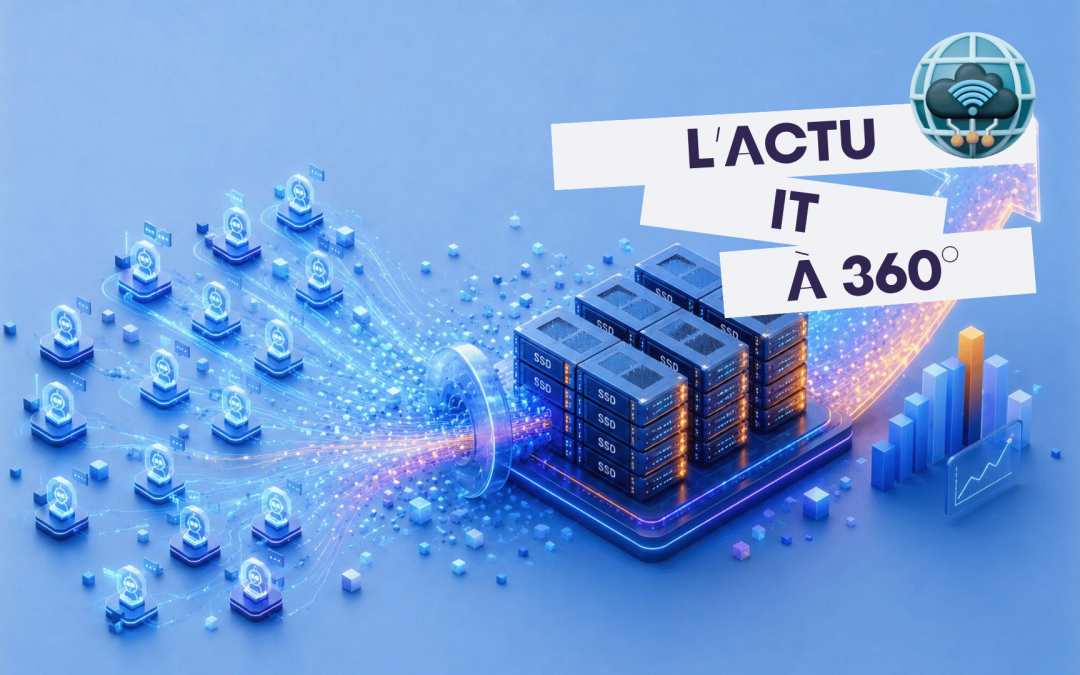
+80%: agentic AI triggers a record surge in enterprise SSD prices
Artificial intelligence is putting new strain on infrastructure Artificial intelligence is often associated with graphics processors and massive computing centres. Yet another essential component of digital infrastructure is coming under unprecedented pressure:...
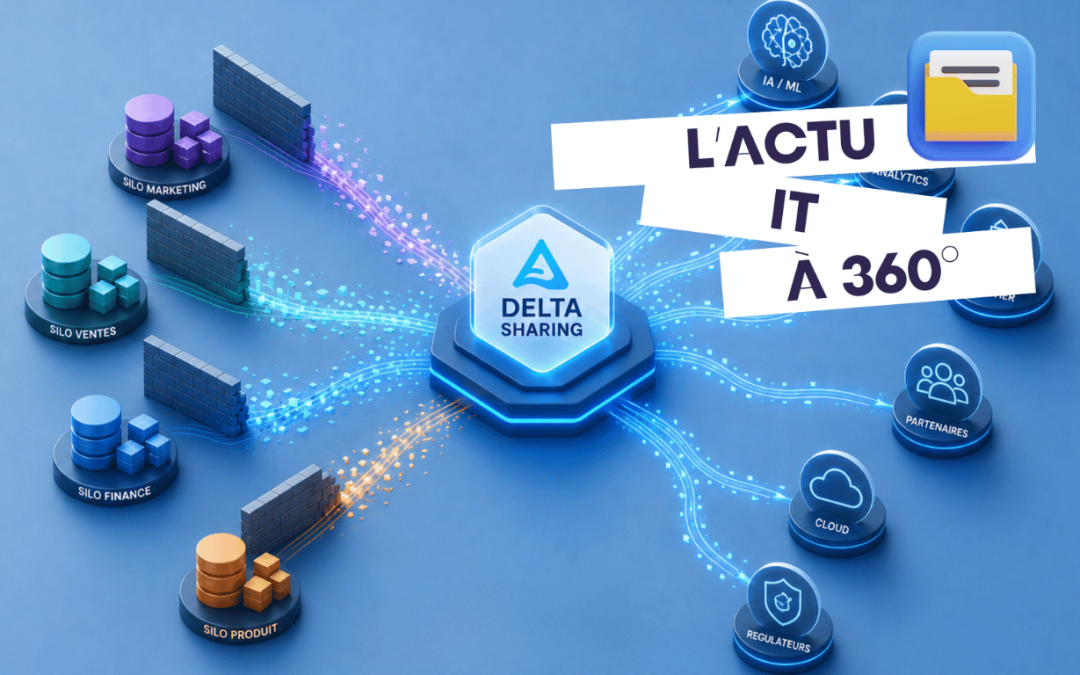
Databricks extends Delta Sharing to AI and aims to break down data silos
Data is no longer enough: intelligence must now be shared too Artificial intelligence is transforming the way companies use their data. Yet one major obstacle remains: the resources needed for AI projects are often scattered across different platforms, teams and...

RTX Spark: Nvidia accelerates the shift to AI-optimised PCs
Nvidia wants to redefine the PC for the age of artificial intelligence Unveiled at Computex 2026, the RTX Spark chip marks a new stage in the evolution of personal computers. With this Arm-based platform, Nvidia is not simply seeking to offer a more powerful...

WiFi 8 is arriving sooner than expected: what it means for businesses
A new generation of networking is already on the horizon While WiFi 7 is only just beginning to spread among businesses and consumers, the industry is already preparing the next step. TP-Link has just unveiled the first WiFi 8-compatible router, confirming that the...

Webedia-Elephant turns to Gemini Enterprise to industrialise generative AI
IT outages become a board-level issue Long regarded as mere technical incidents, service outages are now taking on a whole new dimension. According to a study by Oxford Economics for Splunk, Global 2000 companies suffer an average of 60 downtime incidents a year, at...

$600 billion lost: IT outages take on a new dimension
IT outages are becoming a boardroom issue Long regarded as mere technical incidents, service interruptions are now taking on a whole new dimension. According to a study conducted by Oxford Economics for Splunk, Global 2000 companies suffer an average of 60 downtime...

Lightwell: IBM and Red Hat tackle the open source patching headache
AI finds flaws faster than companies can fix them Artificial intelligence is profoundly transforming cybersecurity. While it makes it possible to detect vulnerabilities more quickly, it also creates a new challenge: the ability to fix a growing number of flaws within...

AWS strengthens OpenSearch to connect AI to enterprise data
AI agents are forcing the cloud to evolve The rise of agentic AI is profoundly transforming cloud infrastructure. Unlike traditional conversational assistants, intelligent agents must access data, interact with several systems and carry out tasks autonomously. To meet...