


AI models cross a new capability threshold
Barely a month after its launch, Claude Mythos Preview is already improving its performance. According to the latest tests published by the UK’s AI Security Institute (AISI), Anthropic’s model now beats its own results from the first evaluations and also outperforms OpenAI’s GPT-5.5 on several cybersecurity exercises. This particularly rapid progress is reigniting the debate on whether security mechanisms can keep pace with the development of the most advanced artificial intelligence models.1
Unprecedented performance in cyber tests
The AISI regularly evaluates artificial intelligence models through scenarios that replicate real cybersecurity operations. In this new round of testing, Mythos Preview became the first model to complete certain ranges previously considered out of reach, notably the Cooling Tower scenario, which had never before been solved by an AI. The researchers point out that this improvement came without a new official generation of the model, demonstrating that AI capabilities continue to advance between versions thanks to optimisations made by their developers.1
Capabilities are advancing faster than expected
The results observed exceed the projections made a few months earlier by the British researchers. In February 2026, the AISI already estimated that AI models’ ability to carry out cybersecurity tasks was doubling roughly every five months. The arrival of Mythos Preview and GPT-5.5 has accelerated this trend. Experts now believe that models are advancing faster than the evaluation scenarios themselves, making it increasingly difficult to measure their true limits.1
A new reality for cybersecurity
Improved model performance brings obvious benefits for defence teams. AI can help detect vulnerabilities, analyse code or speed up the patching of security flaws. But these same capabilities could also be exploited by malicious actors to identify weaknesses in IT systems more quickly. Specialists therefore believe that every technological advance must now be accompanied by new control, evaluation and oversight mechanisms to limit the risk of misuse.2
Benchmarks are reaching their own limits
The AISI researchers also acknowledge that their evaluation methods are starting to show their limits. Current scenarios impose a ceiling of 2.5 million tokens in order to compare models fairly. Yet the latest AI systems appear capable of going well beyond this limit. The researchers believe that larger compute budgets could improve their performance further, suggesting that the real capabilities of the most advanced models are still partly underestimated by current evaluation tools.1
Cybersecurity must evolve at the same pace as artificial intelligence
This development is a reminder of why Cybersecurity is becoming more strategic than ever. Professionals no longer just have to protect infrastructure against traditional attacks; they must also understand the capabilities of new generations of artificial intelligence, anticipate how they will be used and put in place mechanisms able to govern their deployment. Continuous model evaluation, risk management and behaviour monitoring are now becoming essential components of digital security.
A race that now goes beyond performance
The progress of Mythos Preview shows that competition between artificial intelligence players is no longer solely about model performance. It also concerns the ability to guarantee their safety, control and responsible use. As these systems become more autonomous and effective, cybersecurity is becoming an inseparable part of their development and a strategic issue for the entire digital ecosystem.
360° IT News — decoding technology to understand the jobs of tomorrow.
Further reading
The rapid progress of Mythos Preview illustrates how quickly the capabilities of the most advanced artificial intelligence models are accelerating. On a related topic, read our article “Claude Fable 5 leaves the free plan: Anthropic bets on professional use”, which analyses how Anthropic is now repositioning its most powerful models towards businesses and high-value use cases.
References
1. UK AI Security Institute. (2026). Cyber capability evaluations of Claude Mythos Preview.
https://www.aisi.gov.uk
2. Anthropic. (2026). Project Glasswing and Frontier Model Safety.
https://www.anthropic.com

Salesforce wants to acquire Loops to help Tableau explain KPI changes
Salesforce has announced a definitive agreement to acquire Loops, an AI-based analytics platform, with the intention of integrating its technology into Tableau after closing.[1] The aim is to monitor metrics and bring out the factors associated with their changes. For...

Cisco and NVIDIA prepare 400 Gb/s-per-lane optical connections for AI infrastructure
Cisco and NVIDIA have announced a project for a pluggable optical form factor, USFP, capable of supporting 400 Gb/s per lane. Cisco is also unveiling the Silicon One G302 switching chip, rated at 51.2 Tb/s.[1] These announcements address a key challenge for AI...
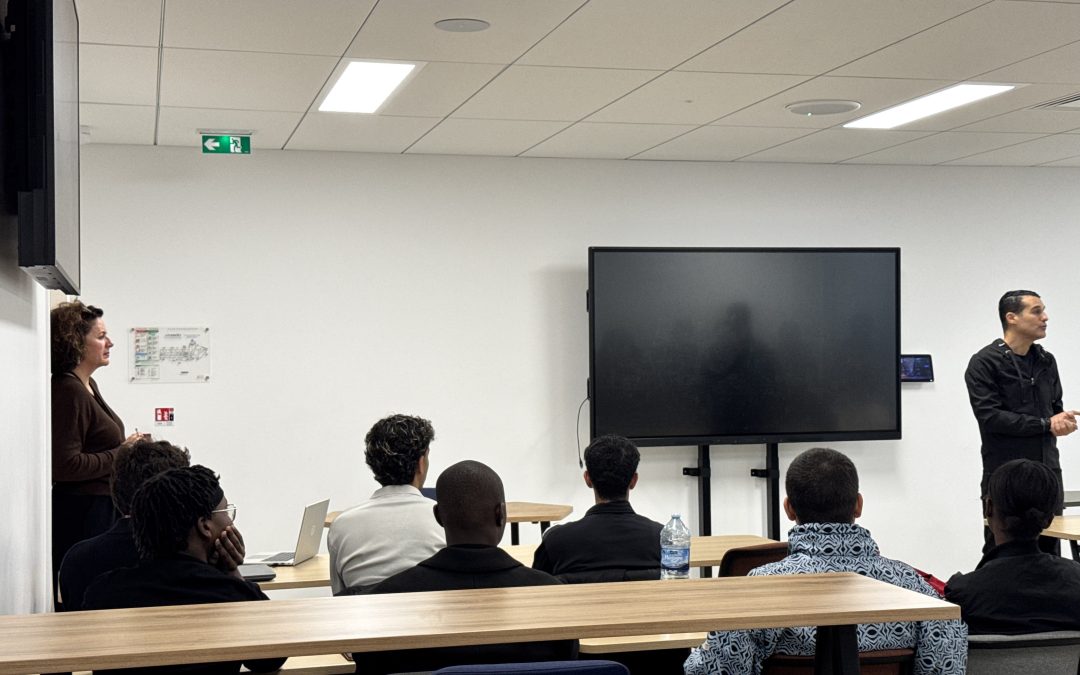
A new year begins at CCCLX!
The Paris-Villejuif campus welcomes CCCLX students for a new year of learning, projects and experiences at the heart of 360° IT.

VMware HyperArmor strengthens hypervisor protection against cyberattacks
Broadcom has unveiled VMware HyperArmor, a solution designed to protect the ESX hypervisor of VMware Cloud Foundation, with announced support for ESX 8.x and later versions.[1] The stakes go beyond the security of a single application: the hypervisor is a shared...

SolarWinds Avior: IT teams set the goals and agents coordinate the actions
SolarWinds has launched Avior, an agentic AI system designed to pursue operational goals in hybrid IT environments. Available since 14 October as part of a guided onboarding programme, it combines specialised agents with control mechanisms.[1] For technical teams, the...
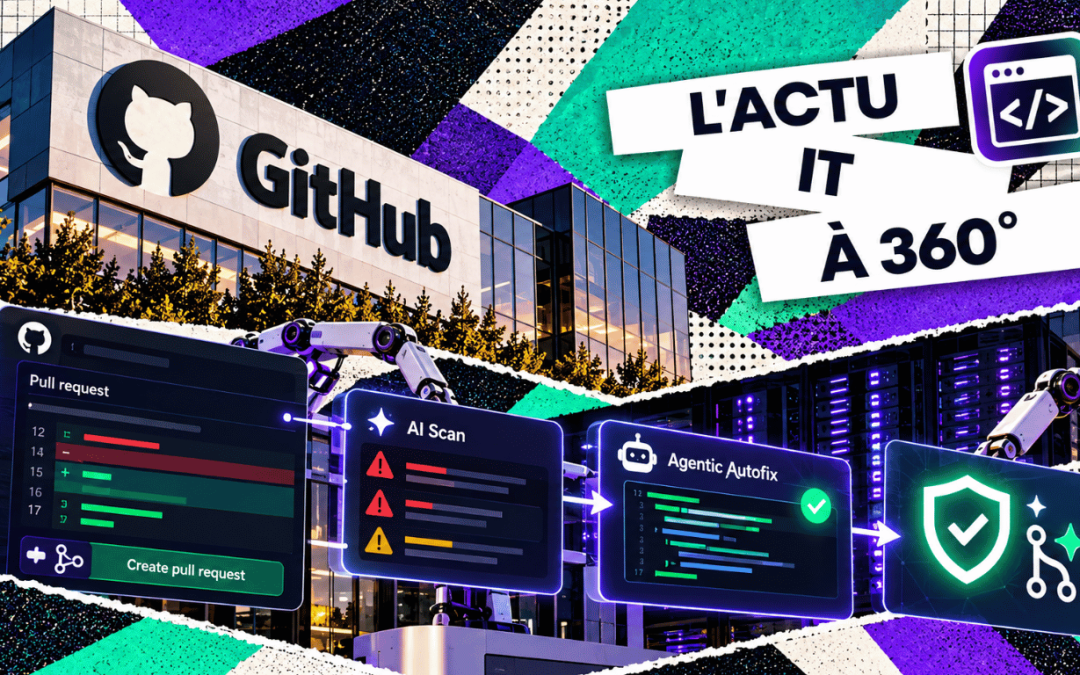
GitHub steps up vulnerability detection and remediation with AI Scan and Agentic Autofix
GitHub has announced the general availability of AI Scan for pull requests and Agentic Autofix for code scanning alerts.[1][2] These features bring AI assistance closer to the work of securing code. They do, however, operate on different scopes: proposed...

Cloudflare makes web security programmable with Workers
Cloudflare is bringing its secure web gateway closer to its Workers development platform. With Forward, available in public beta, businesses can add code to the processing of certain authorised HTTP requests.[2] For IT teams, this development opens up a...

Palo Alto Networks strengthens AI agent security around Claude Enterprise
PPalo Alto Networks has unveiled several updates to Prisma AIRS: protection of interactions with Claude Enterprise, analysis of the components used by agents and control of their exchanges with tools.[1] The stakes are concrete for businesses: preventing an assistant...

ServiceNow prepares AI Passport to control AI agents’ access rights
ServiceNow has announced AI Passport, a cryptographically signed authorisation credential designed to govern AI agents and MCP servers while workflows are running. It is scheduled to be available in the fourth quarter of 2026.[1] The image of a digital badge helps to...

SAP wants to acquire TechWolf to link tasks, skills and the transformation of jobs
SAP has announced an agreement to acquire TechWolf, an AI platform that links tasks, skills and changes in the labour market. Completion is expected in the fourth quarter of 2026, subject in particular to regulatory approvals.[1] The deal raises a practical...