


Cyberattacks push IT giants to join forces
Open-source components are present in virtually all modern applications, from cloud platforms to business software. This dependence, however, comes with a growing risk: vulnerabilities are now discovered and exploited much faster thanks to artificial intelligence. To respond to this new reality, IBM, Red Hat and Palo Alto Networks have announced a partnership to strengthen the protection of open-source projects. The aim is to speed up the detection of flaws, secure applications even before official patches are released and improve the resilience of the software supply chain used by businesses.1
Artificial intelligence changes the rules of cybersecurity
Models specialised in cybersecurity can now analyse millions of lines of code in moments and identify vulnerabilities that were previously hard to detect. This development benefits defenders and attackers alike. Companies have less and less time to react, as a flaw can now be exploited just minutes after it is discovered. Traditional patching methods, which relied on sometimes lengthy development cycles, are struggling to keep up with this new pace set by AI.2
Lightwell becomes the core of this strategy
To respond to this acceleration, IBM and Red Hat are relying on the Lightwell project, unveiled a few months earlier. This platform combines artificial intelligence and human expertise to coordinate the validation, testing and deployment of patches across large volumes of open-source software. With this partnership, its scope now extends to commercial software, IoT environments and the various building blocks of the software supply chain. The goal is to let companies quickly integrate validated patches without interrupting their critical applications.1
Palo Alto provides protection even before patches arrive
Palo Alto Networks’ contribution is based mainly on its virtual patching technology, built into the Prisma platform. When a vulnerability is identified, it is not always possible to deploy a software patch to production immediately. Virtual patches then create a temporary layer of protection that blocks exploitation attempts while teams finalise testing and deployment of the official patch. This approach considerably reduces the exposure window and is particularly relevant in the face of AI-automated attacks.3
Cooperation becomes as important as technology
Beyond the technical tools, IBM, Red Hat and Palo Alto want to establish a secure mechanism for sharing vulnerability information. Software vendors, technology suppliers and security teams will be able to exchange data more quickly on detected flaws, observed exploitation attempts and available protective measures. This collaboration should shorten the time between identifying a threat and implementing a coordinated response, which has become essential now that the same open-source components are used by thousands of companies around the world.1
This alliance shows why Cybersecurity has become an essential skill
Protecting information systems is no longer just about securing servers or workstations. Professionals now need to understand how the software supply chain works, analyse open-source dependencies, assess vulnerabilities, prioritise patches and implement protection mechanisms capable of reacting even before an official patch is available. With AI-driven attacks accelerating, cybersecurity is becoming an increasingly cross-functional field, involving developers, system administrators, cloud teams and security experts alike.
Protecting open source becomes a strategic issue
This alliance illustrates a profound shift in the IT industry. Open-source components are no longer mere software building blocks used by developers; they now form the foundations of cloud infrastructure, business applications and artificial intelligence platforms. As cyberattacks gain speed thanks to AI, the ability to detect vulnerabilities quickly, share information and deploy protections is becoming a key resilience factor for businesses.
360° IT News — decoding technology to understand the jobs of tomorrow.
Further reading
Securing open source is part of a wider transformation of cybersecurity, in which companies must protect their applications against increasingly automated attacks. On a related topic, read our article “F5 strengthens its WAF to tackle AI-era cyber threats”, which explains how artificial intelligence improves behavioural detection and speeds up the protection of web applications.
References
1. IBM. (2026). IBM, Red Hat and Palo Alto Networks expand open source security collaboration.
https://www.ibm.com
2. OpenAI. (2026). GPT-5.5-Cyber Technical Overview.
https://openai.com
3. Palo Alto Networks. (2026). Prisma Cloud Virtual Patching.
https://www.paloaltonetworks.com

Europe accuses Anthropic of discrimination after Fable 5 is blocked
A US decision that sparks an international crisis The sudden suspension of access to Anthropic’s Fable 5 and Mythos 5 models outside the United States now goes well beyond technology. What initially looked like a national security measure is taking on a major...

Mobi Fold and Spotlight 2: Logitech aims to simplify everyday hybrid working
The office is everywhere, but the tools do not always keep up Hybrid working has profoundly changed professional habits. Video-conference meetings, frequent travel, days split between home, the office and coworking spaces: employees now move between multiple...

+80%: agentic AI triggers a record surge in enterprise SSD prices
Artificial intelligence is putting new strain on infrastructure Artificial intelligence is often associated with graphics processors and massive computing centres. Yet another essential component of digital infrastructure is coming under unprecedented pressure:...
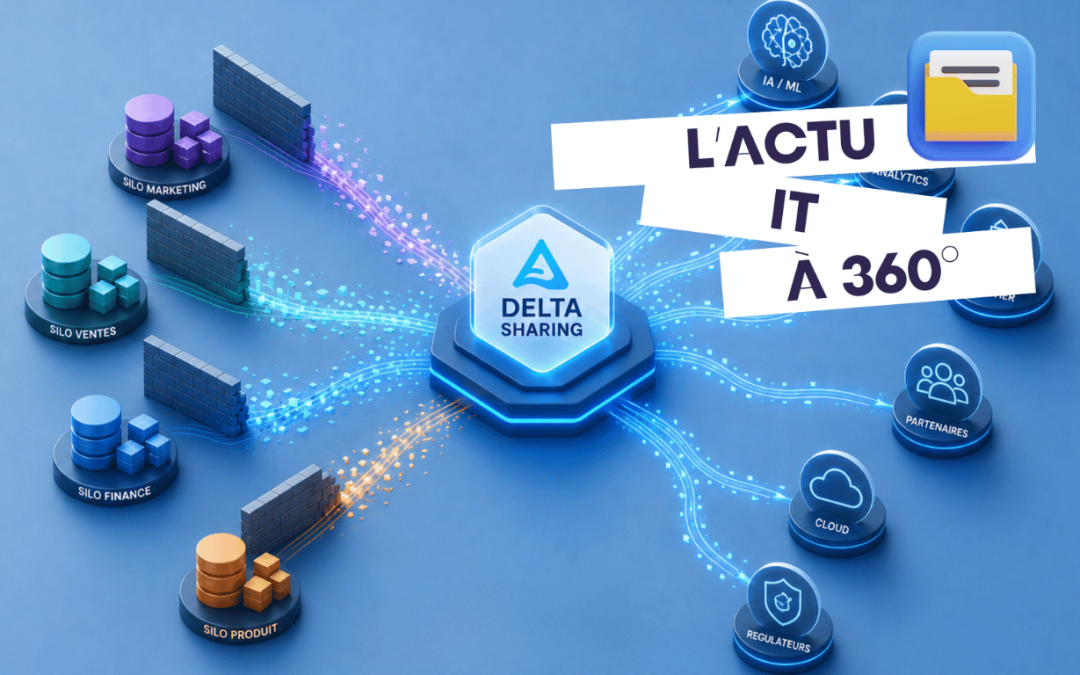
Databricks extends Delta Sharing to AI and aims to break down data silos
Data is no longer enough: intelligence must now be shared too Artificial intelligence is transforming the way companies use their data. Yet one major obstacle remains: the resources needed for AI projects are often scattered across different platforms, teams and...

RTX Spark: Nvidia accelerates the shift to AI-optimised PCs
Nvidia wants to redefine the PC for the age of artificial intelligence Unveiled at Computex 2026, the RTX Spark chip marks a new stage in the evolution of personal computers. With this Arm-based platform, Nvidia is not simply seeking to offer a more powerful...

WiFi 8 is arriving sooner than expected: what it means for businesses
A new generation of networking is already on the horizon While WiFi 7 is only just beginning to spread among businesses and consumers, the industry is already preparing the next step. TP-Link has just unveiled the first WiFi 8-compatible router, confirming that the...

Webedia-Elephant turns to Gemini Enterprise to industrialise generative AI
IT outages become a board-level issue Long regarded as mere technical incidents, service outages are now taking on a whole new dimension. According to a study by Oxford Economics for Splunk, Global 2000 companies suffer an average of 60 downtime incidents a year, at...

$600 billion lost: IT outages take on a new dimension
IT outages are becoming a boardroom issue Long regarded as mere technical incidents, service interruptions are now taking on a whole new dimension. According to a study conducted by Oxford Economics for Splunk, Global 2000 companies suffer an average of 60 downtime...

Lightwell: IBM and Red Hat tackle the open source patching headache
AI finds flaws faster than companies can fix them Artificial intelligence is profoundly transforming cybersecurity. While it makes it possible to detect vulnerabilities more quickly, it also creates a new challenge: the ability to fix a growing number of flaws within...
AWS strengthens OpenSearch to connect AI to enterprise data
AI agents are forcing the cloud to evolve The rise of agentic AI is profoundly transforming cloud infrastructure. Unlike traditional conversational assistants, intelligent agents must access data, interact with several systems and carry out tasks autonomously. To meet...