


IT outages become a board-level issue
Long regarded as mere technical incidents, service outages are now taking on a whole new dimension. According to a study by Oxford Economics for Splunk, Global 2000 companies suffer an average of 60 downtime incidents a year, at an estimated global cost of $600 billion. These figures illustrate a new reality: digital resilience has become a strategic issue that reaches far beyond the IT department.
A bill reaching record levels
The financial consequences of service outages are considerable. The study estimates that each Global 2000 company loses an average of $300 million a year because of system downtime. Every minute of downtime represents almost €13,000 in losses, or more than €775,000 per hour. The technology and energy sectors are among the most exposed to these risks.
Cyberattacks drive costs even higher
Lost revenue is no longer the only factor to consider. Regulatory fines linked to compliance requirements, notably under the GDPR or the EU’s DORA regulation, average €44 million per major outage. On top of this come ransoms paid during ransomware attacks, estimated at an average of €35 million. These costs are now among the main direct impacts associated with information system downtime.
The impact goes far beyond the technical sphere
The consequences of an outage are not limited to infrastructure. According to the study, almost 90% of executives surveyed report an increase in support requests and a sharp deterioration in customer experience after an incident. More than eight in ten companies say they have had to mobilise their teams on a massive scale to restore services, while 81% report losing customers following a major outage.
A direct threat to company reputation
Reputation is also becoming a critical factor. A major outage can take several months to fully restore the trust of customers and partners. The study also observes an average 3.4% fall in share price after a significant IT incident. At a time when companies are increasingly dependent on digital services, system availability is becoming central to their brand image.
AI helps prevent incidents… but also creates new risks
Faced with this growing number of outages, companies are investing heavily in observability and artificial intelligence. Almost 72% of ITOps and engineering teams now consider end-to-end observability a strategic priority. Annual spending on AI to prevent outages averages $24.5 million. However, this automation also brings new challenges: almost half of the leaders surveyed say they have already experienced outages caused by errors in automated, AI-driven systems.
Digital resilience becomes a competitive advantage
In an environment where services must remain accessible at all times, the ability to prevent, detect and quickly fix incidents is becoming a differentiating factor. Companies that invest in infrastructure monitoring, intelligent automation and resilient architectures are better equipped to limit the financial and reputational impact of outages. Digital resilience is no longer just a question of business continuity; it is becoming a genuine competitive advantage.
Understanding IT resilience is becoming essential
This development highlights a strategic skill: managing infrastructure and digital continuity. Future IT professionals need to master observability, cybersecurity, the cloud and disaster recovery mechanisms. As organisations become dependent on digital services, the ability to keep systems available is becoming as important as their performance.
360° IT News — decoding technology to understand the jobs of tomorrow.
Further reading
The growing number of service outages shows just how critical digital infrastructure has become for businesses. This pressure is pushing technology players to invest heavily in automation, observability and artificial intelligence to prevent incidents before they occur. On a related topic, read our article “Lightwell: IBM and Red Hat tackle the headache of open-source patching”, which examines how AI and automation could speed up the fixing of vulnerabilities and strengthen the resilience of information systems.
References
1. Oxford Economics & Splunk. (2026). The Hidden Cost of Downtime Report.
https://www.splunk.com
F5 strengthens its WAF to tackle the cyber threats of the AI era
Cyberattacks are evolving faster than patches Artificial intelligence is transforming corporate cybersecurity, but it is also benefiting attackers. New models capable of rapidly identifying vulnerabilities or automating certain exploitation phases are dramatically...

Europe accuses Anthropic of discrimination after Fable 5 is blocked
A US decision that sparks an international crisis The sudden suspension of access to Anthropic’s Fable 5 and Mythos 5 models outside the United States now goes well beyond technology. What initially looked like a national security measure is taking on a major...

Mobi Fold and Spotlight 2: Logitech aims to simplify everyday hybrid working
The office is everywhere, but the tools do not always keep up Hybrid working has profoundly changed professional habits. Video-conference meetings, frequent travel, days split between home, the office and coworking spaces: employees now move between multiple...
+80%: agentic AI triggers a record surge in enterprise SSD prices
Artificial intelligence is putting new strain on infrastructure Artificial intelligence is often associated with graphics processors and massive computing centres. Yet another essential component of digital infrastructure is coming under unprecedented pressure:...
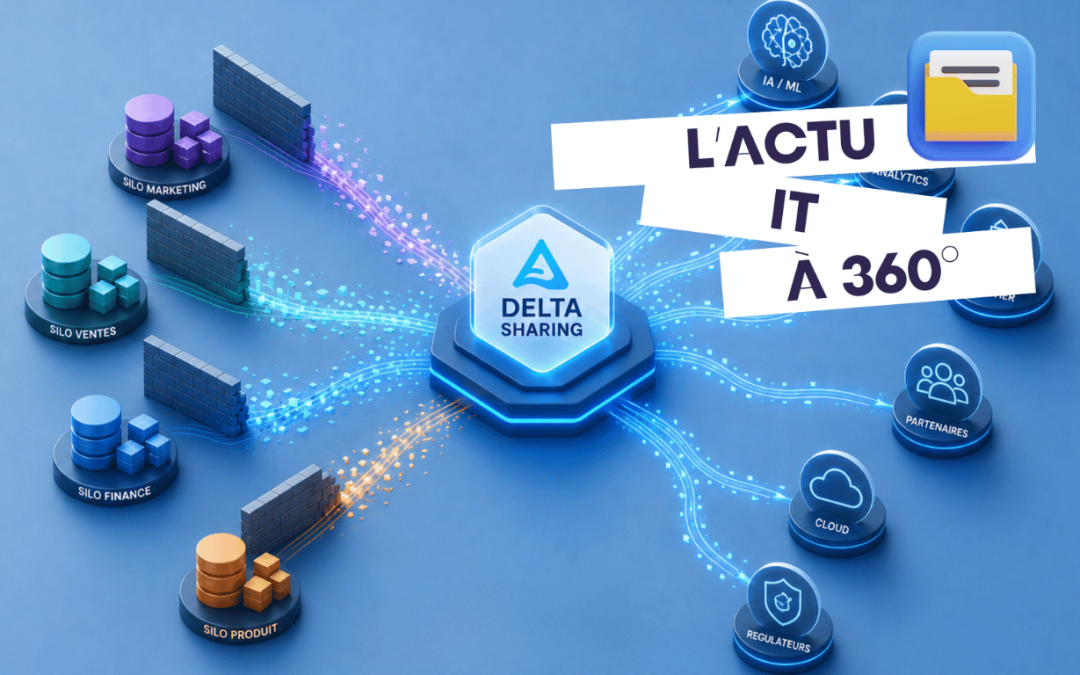
Databricks extends Delta Sharing to AI and aims to break down data silos
Data is no longer enough: intelligence must now be shared too Artificial intelligence is transforming the way companies use their data. Yet one major obstacle remains: the resources needed for AI projects are often scattered across different platforms, teams and...

RTX Spark: Nvidia accelerates the shift to AI-optimised PCs
Nvidia wants to redefine the PC for the age of artificial intelligence Unveiled at Computex 2026, the RTX Spark chip marks a new stage in the evolution of personal computers. With this Arm-based platform, Nvidia is not simply seeking to offer a more powerful...

WiFi 8 is arriving sooner than expected: what it means for businesses
A new generation of networking is already on the horizon While WiFi 7 is only just beginning to spread among businesses and consumers, the industry is already preparing the next step. TP-Link has just unveiled the first WiFi 8-compatible router, confirming that the...

$600 billion lost: IT outages take on a new dimension
IT outages are becoming a boardroom issue Long regarded as mere technical incidents, service interruptions are now taking on a whole new dimension. According to a study conducted by Oxford Economics for Splunk, Global 2000 companies suffer an average of 60 downtime...

Lightwell: IBM and Red Hat tackle the open source patching headache
AI finds flaws faster than companies can fix them Artificial intelligence is profoundly transforming cybersecurity. While it makes it possible to detect vulnerabilities more quickly, it also creates a new challenge: the ability to fix a growing number of flaws within...
AWS strengthens OpenSearch to connect AI to enterprise data
AI agents are forcing the cloud to evolve The rise of agentic AI is profoundly transforming cloud infrastructure. Unlike traditional conversational assistants, intelligent agents must access data, interact with several systems and carry out tasks autonomously. To meet...