


AI finds flaws faster than companies can fix them
Artificial intelligence is profoundly transforming cybersecurity. While it makes it possible to detect vulnerabilities more quickly, it also creates a new challenge: the ability to fix a growing number of flaws within acceptable timeframes. This problem became particularly visible after the first results of Anthropic’s Project Glasswing, which claims to have identified several thousand vulnerabilities in open source software. Faced with this potential influx of fixes, IBM and Red Hat have unveiled Lightwell, an ambitious initiative designed to modernise security patch management across the open source ecosystem.
A platform designed to speed up fixes
With an announced budget of 5 billion dollars and drawing on nearly 20,000 engineers, the Lightwell project aims to create a security coordination layer capable of speeding up the detection, validation and integration of fixes1. The goal is not only to identify vulnerabilities, but above all to enable companies to quickly apply validated fixes in their production environments without disrupting operations. This approach reflects a simple reality: finding a flaw is often easier than fixing it effectively in complex infrastructure.
When AI meets human expertise
Unlike some fully automated visions, IBM and Red Hat advocate a hybrid approach. Artificial intelligence detects, analyses and prioritises vulnerabilities, while human experts oversee the validation and integration of fixes. According to Ashesh Badani, senior vice-president at Red Hat, this combination produces better results than automation alone. As digital infrastructure grows ever more complex, human oversight remains essential to guarantee system stability.
A response to the software supply chain challenge
One of the project’s major issues concerns the software supply chain. Companies today use thousands of open source components built into their applications. IBM says it is directly affected, with more than 62,000 software packages covering technologies such as Linux, Kubernetes, Kafka, Terraform, Cassandra and Ansible. When a vulnerability is discovered, every dependency must be assessed, fixed and validated. Lightwell seeks to automate part of this process in order to reduce response times and operational risks.
Fixes without service interruption
One of the platform’s promises is the ability to backport fixes to versions already deployed without requiring a full upgrade. This approach is particularly important for large companies that cannot quickly change critical environments. By relying on existing configuration files and dependencies that have already been validated, Lightwell aims to integrate fixes while preserving system stability and compliance.
Close collaboration with open source communities
IBM and Red Hat also stress the collaborative dimension of the project. Fixes developed for businesses are to be contributed back to the open source communities concerned. This approach aims to avoid fragmentation of fixes and to strengthen the security of the software ecosystem over the long term. Eventually, Lightwell is expected to extend its support beyond Java and Maven to other environments such as PyPI, npm and Go, which today account for a large share of modern software development.
Vulnerabilities become an industrial challenge
The explosion in the number of open source components used in applications is turning cybersecurity into an industrial challenge. According to several studies, more than 90% of modern software contains open source code2. Each new vulnerability can therefore affect thousands of organisations. The ability to identify, prioritise and rapidly deploy fixes is becoming a key element of companies’ digital resilience.
Understanding supply chain security is becoming essential
This development highlights a strategic skill: the cybersecurity of software and open source dependencies. Future IT professionals will need to understand the mechanisms of vulnerability management, dependency governance and patch automation. It is no longer just a matter of securing a piece of software, but of protecting an entire ecosystem of interconnections and third-party components.
Towards a new generation of automated security
With Lightwell, IBM and Red Hat illustrate an underlying trend: cybersecurity must adapt to the age of artificial intelligence. As AI systems become capable of detecting thousands of vulnerabilities at high speed, companies need tools that can keep up. For students and future IT professionals, this is a major development. It shows that tomorrow’s security will rely as much on intelligent automation as on human expertise.
360° IT News — decoding technology to understand the jobs of tomorrow.
Further reading
Automating vulnerability remediation is part of a wider transformation of cybersecurity, in which artificial intelligence plays a growing role in identifying and managing threats. This shift is pushing major technology players to invest heavily in infrastructure capable of analysing, detecting and responding to risks at scale. On a related topic, read our article “32 billion dollars: Google launches a cyber army of AI agents”, which analyses how artificial intelligence is redefining companies’ digital defence strategies.
References
1. IBM. (2026). Overview of the Lightwell project and securing open source.
https://www.ibm.com
2. Synopsys. (2025). Open Source Security and Risk Analysis Report.
https://www.synopsys.com
F5 strengthens its WAF to tackle the cyber threats of the AI era
Cyberattacks are evolving faster than patches Artificial intelligence is transforming corporate cybersecurity, but it is also benefiting attackers. New models capable of rapidly identifying vulnerabilities or automating certain exploitation phases are dramatically...
Europe accuses Anthropic of discrimination after Fable 5 is blocked
A US decision that sparks an international crisis The sudden suspension of access to Anthropic’s Fable 5 and Mythos 5 models outside the United States now goes well beyond technology. What initially looked like a national security measure is taking on a major...

Mobi Fold and Spotlight 2: Logitech aims to simplify everyday hybrid working
The office is everywhere, but the tools do not always keep up Hybrid working has profoundly changed professional habits. Video-conference meetings, frequent travel, days split between home, the office and coworking spaces: employees now move between multiple...
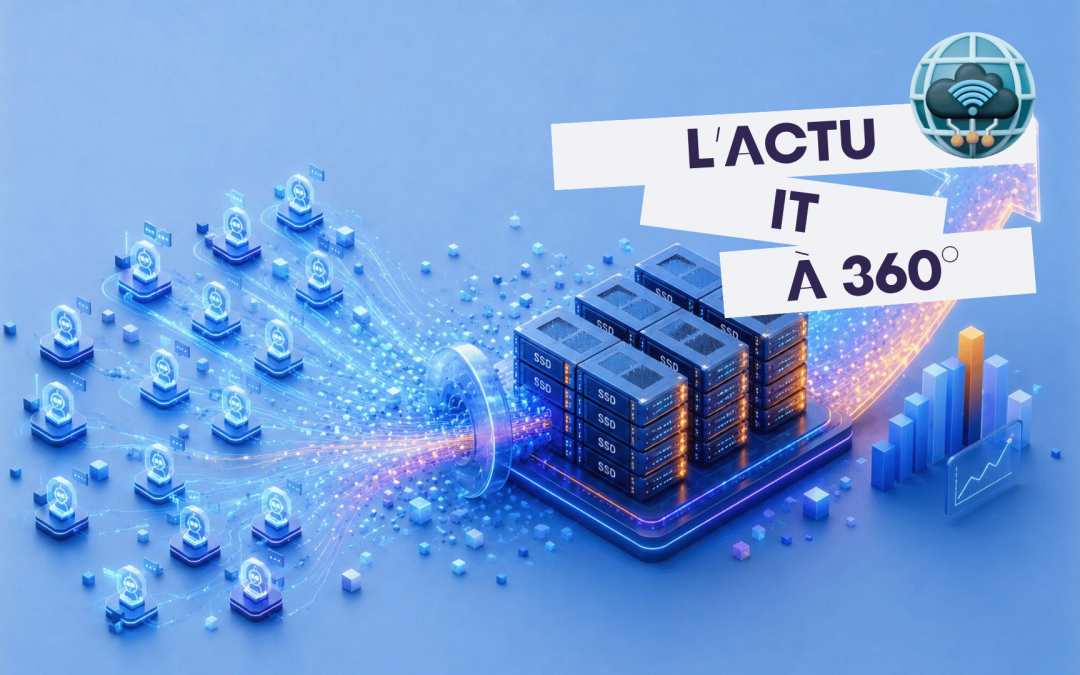
+80%: agentic AI triggers a record surge in enterprise SSD prices
Artificial intelligence is putting new strain on infrastructure Artificial intelligence is often associated with graphics processors and massive computing centres. Yet another essential component of digital infrastructure is coming under unprecedented pressure:...
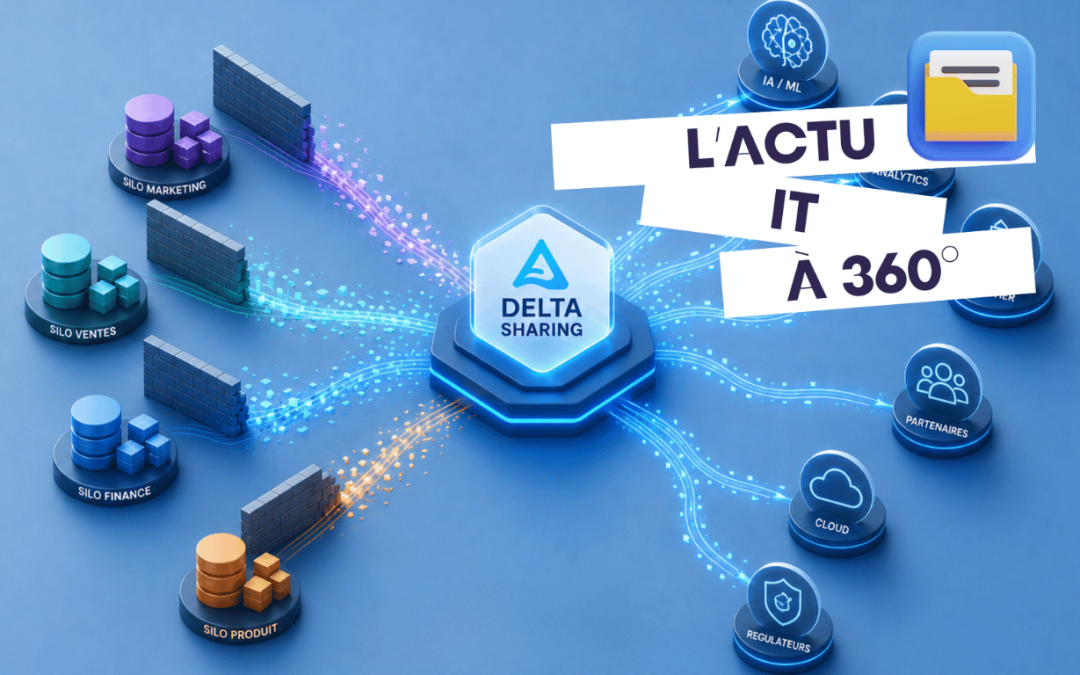
Databricks extends Delta Sharing to AI and aims to break down data silos
Data is no longer enough: intelligence must now be shared too Artificial intelligence is transforming the way companies use their data. Yet one major obstacle remains: the resources needed for AI projects are often scattered across different platforms, teams and...

RTX Spark: Nvidia accelerates the shift to AI-optimised PCs
Nvidia wants to redefine the PC for the age of artificial intelligence Unveiled at Computex 2026, the RTX Spark chip marks a new stage in the evolution of personal computers. With this Arm-based platform, Nvidia is not simply seeking to offer a more powerful...

WiFi 8 is arriving sooner than expected: what it means for businesses
A new generation of networking is already on the horizon While WiFi 7 is only just beginning to spread among businesses and consumers, the industry is already preparing the next step. TP-Link has just unveiled the first WiFi 8-compatible router, confirming that the...

Webedia-Elephant turns to Gemini Enterprise to industrialise generative AI
IT outages become a board-level issue Long regarded as mere technical incidents, service outages are now taking on a whole new dimension. According to a study by Oxford Economics for Splunk, Global 2000 companies suffer an average of 60 downtime incidents a year, at...

$600 billion lost: IT outages take on a new dimension
IT outages are becoming a boardroom issue Long regarded as mere technical incidents, service interruptions are now taking on a whole new dimension. According to a study conducted by Oxford Economics for Splunk, Global 2000 companies suffer an average of 60 downtime...
AWS strengthens OpenSearch to connect AI to enterprise data
AI agents are forcing the cloud to evolve The rise of agentic AI is profoundly transforming cloud infrastructure. Unlike traditional conversational assistants, intelligent agents must access data, interact with several systems and carry out tasks autonomously. To meet...