


Data storage is reaching its limits
Every day, humanity produces a gigantic amount of data. In 2025, the volume generated worldwide each day is estimated at almost 300 exabytes, the equivalent of a century of European audiovisual archives created every 24 hours1. With the rise of artificial intelligence, the cloud and connected devices, this growth is becoming exponential. Behind this explosion lies a major problem: today’s storage infrastructure is gradually approaching its technical, energy and environmental limits.
PearCode wants to turn DNA into digital infrastructure
Against this backdrop, the French deeptech company PearCode, a spin-off from the I3S laboratory in Sophia Antipolis, has just launched a first archiving solution based on synthetic DNA. Long regarded as a futuristic technology, DNA storage is now starting to leave the laboratory and enter the market. The principle is to encode digital data as genetic sequences that can be preserved for decades, or even centuries, without significant degradation.
A gram of DNA could hold an entire data centre
One of the most spectacular arguments for DNA storage lies in its density. According to several studies, a single gram of DNA could theoretically hold the equivalent of an entire data centre’s data2. On top of this comes a major advantage: unlike traditional infrastructure, DNA does not require a continuous power supply to retain data. At a time when data centres already account for 1 to 2% of global electricity consumption, this prospect is attracting strong interest from the technology industry3.
The real challenge: automating data writing and reading
While the promise is immense, the main obstacle remains automation. Today, writing and reading data on DNA is still slow and expensive. The challenge for companies like PearCode is therefore to industrialise these processes in order to reduce costs and access times. This is precisely where the global competition is being played out. The players able to make this technology fast, reliable and accessible could redefine digital storage infrastructure in the coming decades.
A potential revolution for businesses and critical archives
The first target uses concern sensitive data and long-term archives: administrative documents, scientific data, digital heritage or medical records. For businesses, this approach could sharply reduce cold storage costs while improving data durability. SMEs could also benefit indirectly from this development through more efficient, less energy-hungry cloud services.
Between science, cloud and digital sovereignty
DNA storage is not just about technology; it also raises strategic issues. Controlling the storage infrastructure of the future could become a major digital sovereignty issue. While traditional data centres require massive amounts of energy and materials, DNA paves the way for a new, more compact and potentially more sustainable approach to the cloud. This transition could transform the way states and companies manage their critical data.
Understanding tomorrow’s infrastructure becomes essential
This development highlights a key skill: data and digital infrastructure. Future IT professionals will need to understand new storage architectures, their constraints and their uses. It is no longer just a matter of managing servers or conventional cloud, but of anticipating technologies capable of completely redefining the digital ecosystem.
Towards a biological cloud?
Even though DNA storage is still emerging, PearCode shows that the technology is gradually entering an industrial phase. The idea of storing data in a biological molecule may seem futuristic, but it addresses a very concrete problem: the saturation of digital infrastructure. For students and future IT professionals, this is a fascinating development. It shows that the future of the cloud may no longer rest solely on giant servers, but also on technologies directly inspired by living organisms.
360° IT News — decoding technology to understand the jobs of tomorrow.
Further reading
The emergence of DNA storage illustrates a profound transformation of digital infrastructure in the face of the explosion in data volumes generated by artificial intelligence and the cloud. This development is part of a worldwide search for more compact, durable solutions capable of overcoming the limits of traditional data centres. On a related topic, read our article “Data centre boom: Legrand goes on the offensive in China and the United Kingdom”, which analyses how storage and computing infrastructure is becoming a major strategic issue for the digital economy.
References
1. Statista. (2025). Global data creation forecast.
https://www.statista.com
2. Nature. (2021). DNA data storage density research.
https://www.nature.com
3. International Energy Agency. (2024). Data centres and electricity consumption.
https://www.iea.org
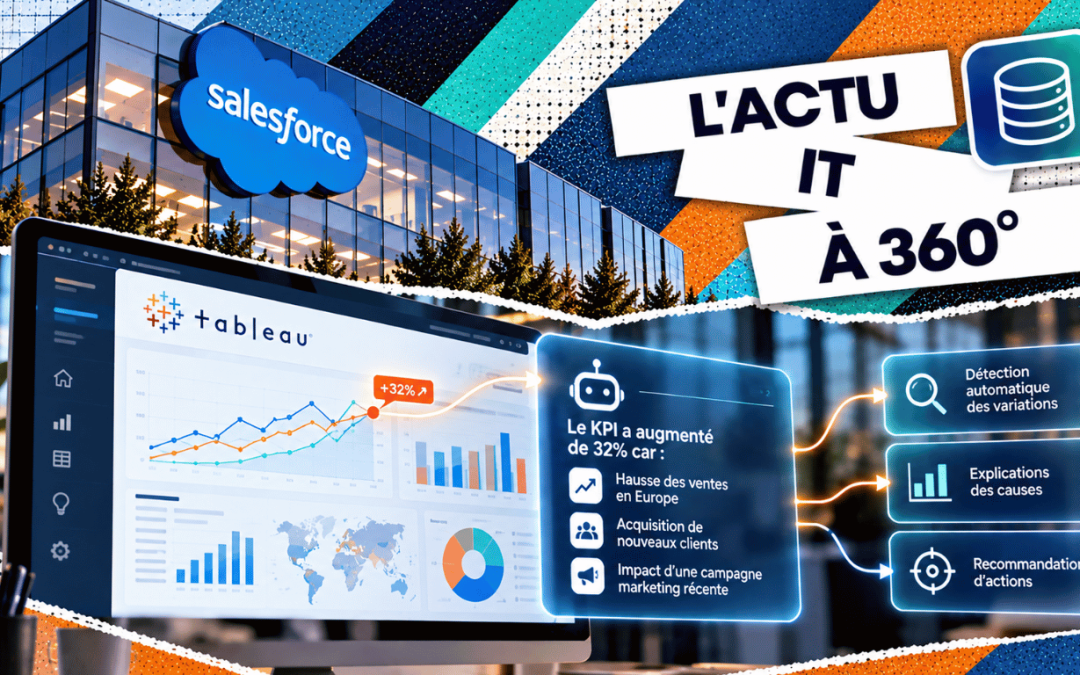
Salesforce wants to acquire Loops to help Tableau explain KPI changes
Salesforce has announced a definitive agreement to acquire Loops, an AI-based analytics platform, with the intention of integrating its technology into Tableau after closing.[1] The aim is to monitor metrics and bring out the factors associated with their changes. For...

Cisco and NVIDIA prepare 400 Gb/s-per-lane optical connections for AI infrastructure
Cisco and NVIDIA have announced a project for a pluggable optical form factor, USFP, capable of supporting 400 Gb/s per lane. Cisco is also unveiling the Silicon One G302 switching chip, rated at 51.2 Tb/s.[1] These announcements address a key challenge for AI...
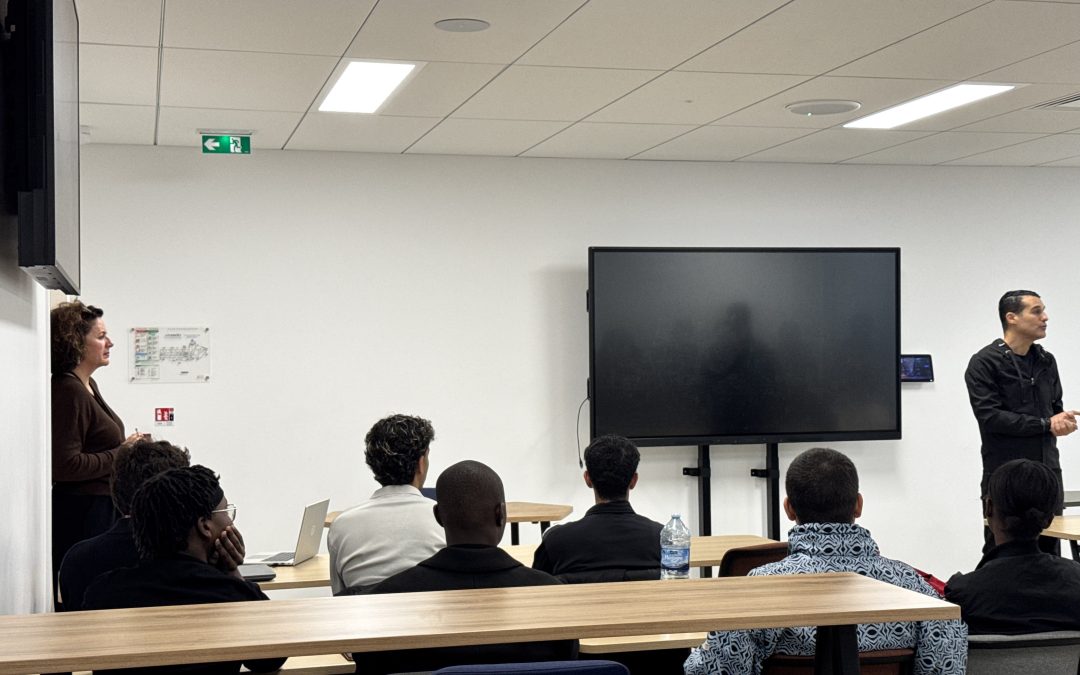
A new year begins at CCCLX!
The Paris-Villejuif campus welcomes CCCLX students for a new year of learning, projects and experiences at the heart of 360° IT.

VMware HyperArmor strengthens hypervisor protection against cyberattacks
Broadcom has unveiled VMware HyperArmor, a solution designed to protect the ESX hypervisor of VMware Cloud Foundation, with announced support for ESX 8.x and later versions.[1] The stakes go beyond the security of a single application: the hypervisor is a shared...

SolarWinds Avior: IT teams set the goals and agents coordinate the actions
SolarWinds has launched Avior, an agentic AI system designed to pursue operational goals in hybrid IT environments. Available since 14 October as part of a guided onboarding programme, it combines specialised agents with control mechanisms.[1] For technical teams, the...

GitHub steps up vulnerability detection and remediation with AI Scan and Agentic Autofix
GitHub has announced the general availability of AI Scan for pull requests and Agentic Autofix for code scanning alerts.[1][2] These features bring AI assistance closer to the work of securing code. They do, however, operate on different scopes: proposed...

Cloudflare makes web security programmable with Workers
Cloudflare is bringing its secure web gateway closer to its Workers development platform. With Forward, available in public beta, businesses can add code to the processing of certain authorised HTTP requests.[2] For IT teams, this development opens up a...

Palo Alto Networks strengthens AI agent security around Claude Enterprise
PPalo Alto Networks has unveiled several updates to Prisma AIRS: protection of interactions with Claude Enterprise, analysis of the components used by agents and control of their exchanges with tools.[1] The stakes are concrete for businesses: preventing an assistant...

ServiceNow prepares AI Passport to control AI agents’ access rights
ServiceNow has announced AI Passport, a cryptographically signed authorisation credential designed to govern AI agents and MCP servers while workflows are running. It is scheduled to be available in the fourth quarter of 2026.[1] The image of a digital badge helps to...

SAP wants to acquire TechWolf to link tasks, skills and the transformation of jobs
SAP has announced an agreement to acquire TechWolf, an AI platform that links tasks, skills and changes in the labour market. Completion is expected in the fourth quarter of 2026, subject in particular to regulatory approvals.[1] The deal raises a practical...