


Cyberattacks push IT giants to join forces
Open-source components are present in virtually all modern applications, from cloud platforms to business software. This dependence, however, comes with a growing risk: vulnerabilities are now discovered and exploited much faster thanks to artificial intelligence. To respond to this new reality, IBM, Red Hat and Palo Alto Networks have announced a partnership to strengthen the protection of open-source projects. The aim is to speed up the detection of flaws, secure applications even before official patches are released and improve the resilience of the software supply chain used by businesses.1
Artificial intelligence changes the rules of cybersecurity
Models specialised in cybersecurity can now analyse millions of lines of code in moments and identify vulnerabilities that were previously hard to detect. This development benefits defenders and attackers alike. Companies have less and less time to react, as a flaw can now be exploited just minutes after it is discovered. Traditional patching methods, which relied on sometimes lengthy development cycles, are struggling to keep up with this new pace set by AI.2
Lightwell becomes the core of this strategy
To respond to this acceleration, IBM and Red Hat are relying on the Lightwell project, unveiled a few months earlier. This platform combines artificial intelligence and human expertise to coordinate the validation, testing and deployment of patches across large volumes of open-source software. With this partnership, its scope now extends to commercial software, IoT environments and the various building blocks of the software supply chain. The goal is to let companies quickly integrate validated patches without interrupting their critical applications.1
Palo Alto provides protection even before patches arrive
Palo Alto Networks’ contribution is based mainly on its virtual patching technology, built into the Prisma platform. When a vulnerability is identified, it is not always possible to deploy a software patch to production immediately. Virtual patches then create a temporary layer of protection that blocks exploitation attempts while teams finalise testing and deployment of the official patch. This approach considerably reduces the exposure window and is particularly relevant in the face of AI-automated attacks.3
Cooperation becomes as important as technology
Beyond the technical tools, IBM, Red Hat and Palo Alto want to establish a secure mechanism for sharing vulnerability information. Software vendors, technology suppliers and security teams will be able to exchange data more quickly on detected flaws, observed exploitation attempts and available protective measures. This collaboration should shorten the time between identifying a threat and implementing a coordinated response, which has become essential now that the same open-source components are used by thousands of companies around the world.1
This alliance shows why Cybersecurity has become an essential skill
Protecting information systems is no longer just about securing servers or workstations. Professionals now need to understand how the software supply chain works, analyse open-source dependencies, assess vulnerabilities, prioritise patches and implement protection mechanisms capable of reacting even before an official patch is available. With AI-driven attacks accelerating, cybersecurity is becoming an increasingly cross-functional field, involving developers, system administrators, cloud teams and security experts alike.
Protecting open source becomes a strategic issue
This alliance illustrates a profound shift in the IT industry. Open-source components are no longer mere software building blocks used by developers; they now form the foundations of cloud infrastructure, business applications and artificial intelligence platforms. As cyberattacks gain speed thanks to AI, the ability to detect vulnerabilities quickly, share information and deploy protections is becoming a key resilience factor for businesses.
360° IT News — decoding technology to understand the jobs of tomorrow.
Further reading
Securing open source is part of a wider transformation of cybersecurity, in which companies must protect their applications against increasingly automated attacks. On a related topic, read our article “F5 strengthens its WAF to tackle AI-era cyber threats”, which explains how artificial intelligence improves behavioural detection and speeds up the protection of web applications.
References
1. IBM. (2026). IBM, Red Hat and Palo Alto Networks expand open source security collaboration.
https://www.ibm.com
2. OpenAI. (2026). GPT-5.5-Cyber Technical Overview.
https://openai.com
3. Palo Alto Networks. (2026). Prisma Cloud Virtual Patching.
https://www.paloaltonetworks.com

Salesforce wants to acquire Loops to help Tableau explain KPI changes
Salesforce has announced a definitive agreement to acquire Loops, an AI-based analytics platform, with the intention of integrating its technology into Tableau after closing.[1] The aim is to monitor metrics and bring out the factors associated with their changes. For...

Cisco and NVIDIA prepare 400 Gb/s-per-lane optical connections for AI infrastructure
Cisco and NVIDIA have announced a project for a pluggable optical form factor, USFP, capable of supporting 400 Gb/s per lane. Cisco is also unveiling the Silicon One G302 switching chip, rated at 51.2 Tb/s.[1] These announcements address a key challenge for AI...
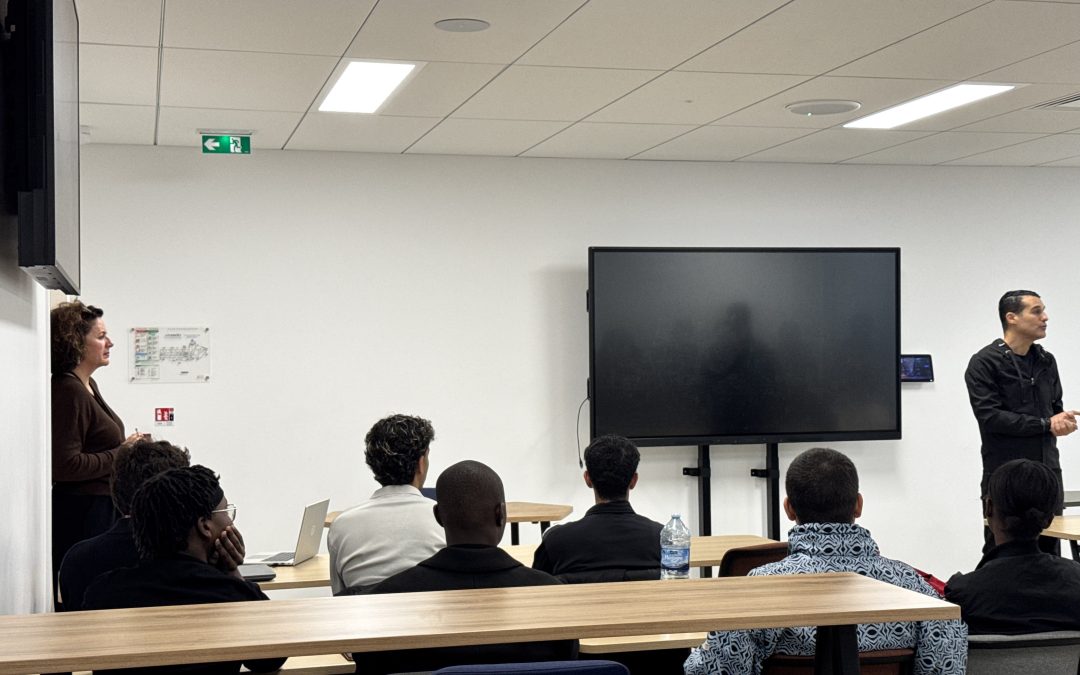
A new year begins at CCCLX!
The Paris-Villejuif campus welcomes CCCLX students for a new year of learning, projects and experiences at the heart of 360° IT.

VMware HyperArmor strengthens hypervisor protection against cyberattacks
Broadcom has unveiled VMware HyperArmor, a solution designed to protect the ESX hypervisor of VMware Cloud Foundation, with announced support for ESX 8.x and later versions.[1] The stakes go beyond the security of a single application: the hypervisor is a shared...

SolarWinds Avior: IT teams set the goals and agents coordinate the actions
SolarWinds has launched Avior, an agentic AI system designed to pursue operational goals in hybrid IT environments. Available since 14 October as part of a guided onboarding programme, it combines specialised agents with control mechanisms.[1] For technical teams, the...
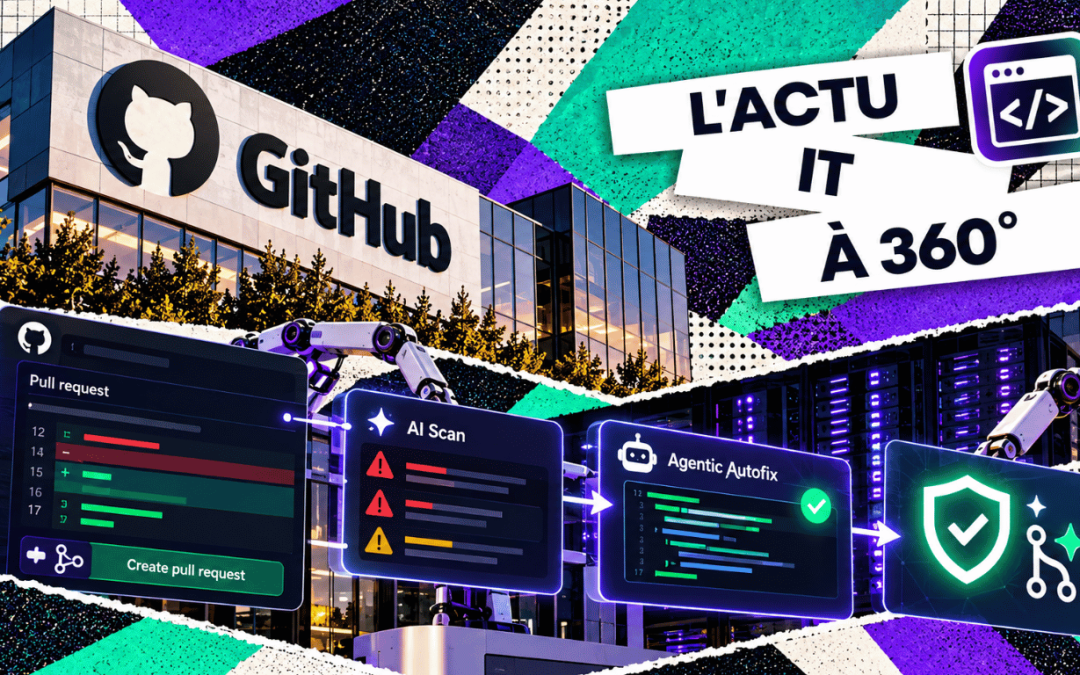
GitHub steps up vulnerability detection and remediation with AI Scan and Agentic Autofix
GitHub has announced the general availability of AI Scan for pull requests and Agentic Autofix for code scanning alerts.[1][2] These features bring AI assistance closer to the work of securing code. They do, however, operate on different scopes: proposed...

Cloudflare makes web security programmable with Workers
Cloudflare is bringing its secure web gateway closer to its Workers development platform. With Forward, available in public beta, businesses can add code to the processing of certain authorised HTTP requests.[2] For IT teams, this development opens up a...

Palo Alto Networks strengthens AI agent security around Claude Enterprise
PPalo Alto Networks has unveiled several updates to Prisma AIRS: protection of interactions with Claude Enterprise, analysis of the components used by agents and control of their exchanges with tools.[1] The stakes are concrete for businesses: preventing an assistant...

ServiceNow prepares AI Passport to control AI agents’ access rights
ServiceNow has announced AI Passport, a cryptographically signed authorisation credential designed to govern AI agents and MCP servers while workflows are running. It is scheduled to be available in the fourth quarter of 2026.[1] The image of a digital badge helps to...

SAP wants to acquire TechWolf to link tasks, skills and the transformation of jobs
SAP has announced an agreement to acquire TechWolf, an AI platform that links tasks, skills and changes in the labour market. Completion is expected in the fourth quarter of 2026, subject in particular to regulatory approvals.[1] The deal raises a practical...