


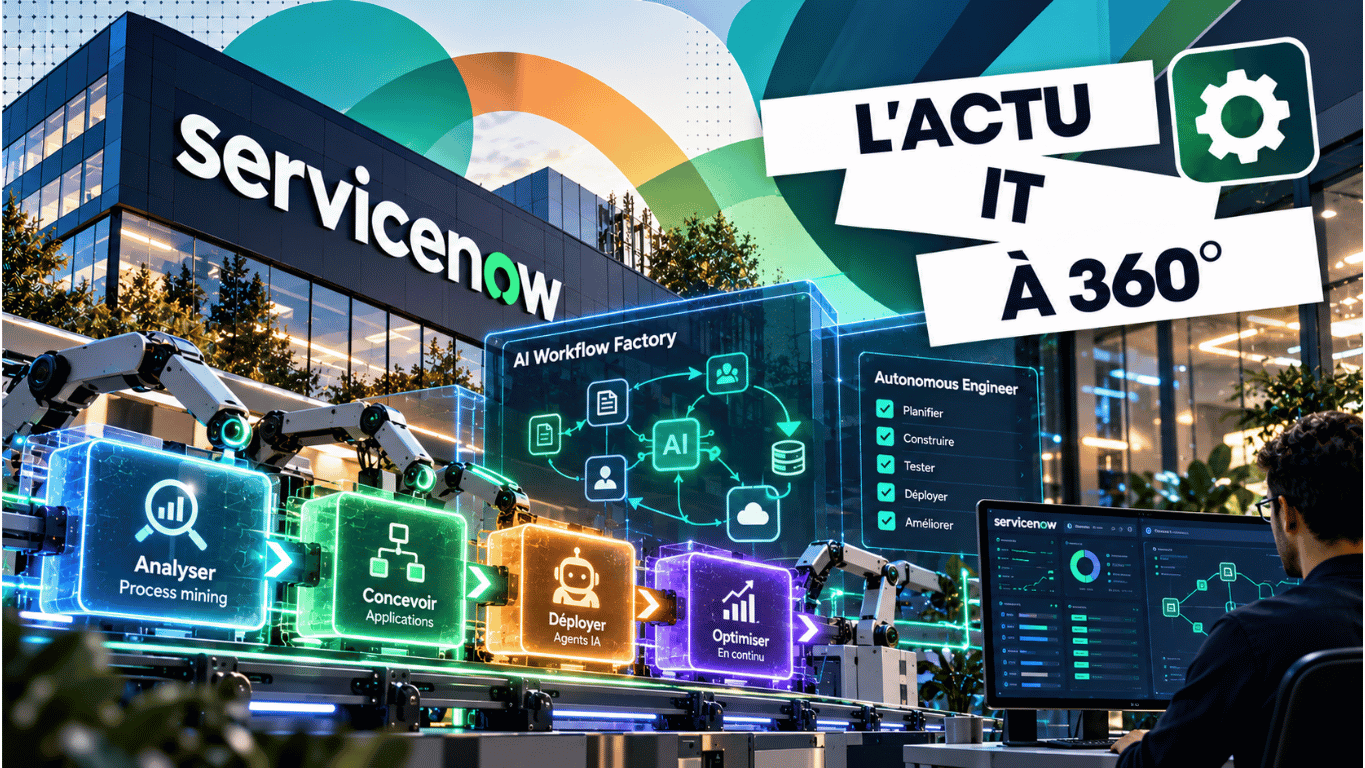
With AI Workflow Factory, ServiceNow aims to link the identification of inefficient processes with building and running their improvements. The announcement notably includes Autonomous Engineer, a tool designed to automate more of the implementation work.[1] For companies, the challenge is to shorten the path between an observed problem and a measurable fix, while keeping control of changes.
Linking the steps between diagnosis and result
ServiceNow structures this approach around Process Mining to spot improvement opportunities, Autonomous Engineer and Build Agent to build the changes, then App Engine to run the workflows. AI Control Tower is meant to oversee the actions and their governance.[1]
A workflow describes the sequence of tasks in a process, for example receiving an IT request, assigning it and resolving it. Process mining analyses execution traces to understand how this journey actually unfolds. Its value lies in making waiting times, rework and hand-offs between teams visible.
Linking these observations to build tools could avoid treating the diagnosis and the change to the process separately. But spotting a delay is not enough to conclude that it is unnecessary: it may correspond to a required approval or to a constraint that the data alone explain poorly.
Autonomous Engineer prepares a plan, then the build
The documentation describes a process in which Autonomous Engineer generates an implementation plan from the requirements, then Build Agent builds the work items in parallel. The AI Workflow Factory Prime bundle also brings together isolated development environments and tools for generating and running regression tests.[2]
These functions can help produce and check changes more quickly. They do not remove the need to define the expected behaviour, exceptions and access rules. A faithful implementation of an ambiguous request can still be ill-suited to the business need.
Four checkpoints in the improvement loop
This grid turns the announced functions into questions to ask before a deployment.
| Building block | Operational effect | Control question |
|---|---|---|
| Process analysis | Identify the steps associated with delays or rework. | Do the data cover real cases and their exceptions? |
| Build | Prepare and produce a change to the workflow. | Who validates the requirements and the necessary permissions? |
| Execution | Run the modified journey in the applications. | How do you test, monitor and restore the service? |
| Measurement | Compare the results achieved with the objectives set. | Does the gain in speed preserve quality and satisfaction? |
Two levels of availability to distinguish
AI Workflow Factory is announced as generally available worldwide on 6 October. Autonomous Engineer remains in early access on request. ServiceNow stresses that people continue to set the direction and approve the results.[1] The announcement therefore does not describe a company whose processes would all change freely without human intervention.
The documentation also advises checking contractual entitlements to access the tools and features of AI Workflow Factory Prime.[2] An organisation needs to identify the components available in its package, their availability level and the integrations required before planning a project.
For SMEs, start with recurring support requests
An SME already equipped with ServiceNow could look at requests that bounce several times from one team to another. A pilot would consist of improving how they are qualified or routed, then comparing the results on a limited scope. This scenario is a suggested assessment, not an announced customer result.
The team would measure resolution time, reassignments and reopened requests. A drop in the number of tickets would not be a success if users simply gave up on getting help. Employee feedback must therefore complement the technical indicators.
The cost of this approach includes licences, connections to applications, data quality and change tracking. For a company that does not have this platform, the investment must be weighed against the problem actually encountered. The announcement alone does not establish a return on investment.
The IT skill to remember: IT project management
This development draws on IT project management. Before delegating the build of a workflow, the need must be clarified, measurable objectives set and the people authorised to accept the result identified. The speed of production makes this scoping even more important.
Professionals must also coordinate business teams, developers and service providers. A change to a journey can shift the workload, alter the information collected or affect a connected application. These effects must be discussed and tested with the users concerned.
Management continues after deployment: tracking results, dealing with discrepancies and deciding on the next improvements. The skill lies in organising lasting change, with a budget, responsibilities and explicit success criteria, even when AI carries out a growing share of the tasks.
Continuous improvement will have to prove its worth
ServiceNow’s proposal brings observation and action together in a single environment. Its value will be borne out in the quality of the service delivered: less unnecessary rework, understandable changes and results tracked over time. Each automation must be traceable to a concrete need and an identified owner.
Further reading
Four CCCLX reads on integrating agents, development and process transformation.
Merck and Google Cloud: 1 billion for agentic AI
With Code Layers, Figma brings design closer to development
GitHub Copilot bulks up for enterprises: coding agents come under IT control
AI voice agents: Oracle details a LiveKit architecture on OCI
Sources
- 01
ServiceNow Newsroom (6 October 2026). “ServiceNow launches AI Workflow Factory to turn workflow improvement into a continuous, agentic AI-powered loop”. Source of the announcement and of the availability details presented.
- 02
ServiceNow Documentation (updated 9 September 2026). “AI Workflow Factory Prime, Brazil release”. Documentation of the tools, features and access conditions.
Editorial check of 6 October 2026. Features and availability are attributed to ServiceNow; no quantified gain is presented as an established result. The table and the SME pilot are editorial suggestions.
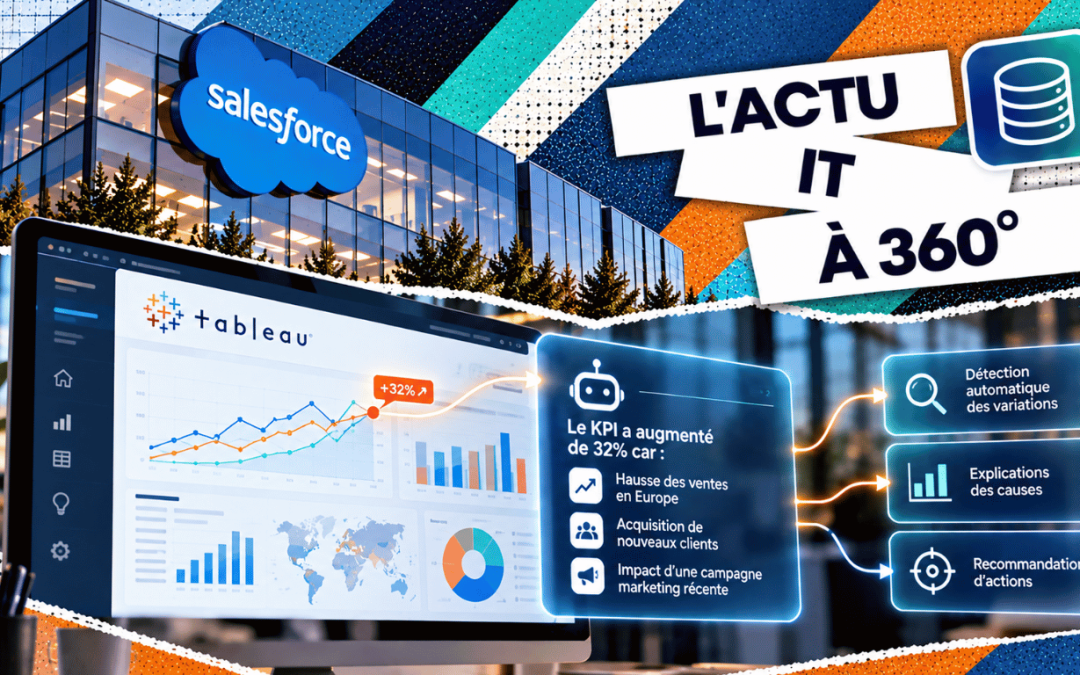
Salesforce wants to acquire Loops to help Tableau explain KPI changes
Salesforce has announced a definitive agreement to acquire Loops, an AI-based analytics platform, with the intention of integrating its technology into Tableau after closing.[1] The aim is to monitor metrics and bring out the factors associated with their changes. For...

Cisco and NVIDIA prepare 400 Gb/s-per-lane optical connections for AI infrastructure
Cisco and NVIDIA have announced a project for a pluggable optical form factor, USFP, capable of supporting 400 Gb/s per lane. Cisco is also unveiling the Silicon One G302 switching chip, rated at 51.2 Tb/s.[1] These announcements address a key challenge for AI...
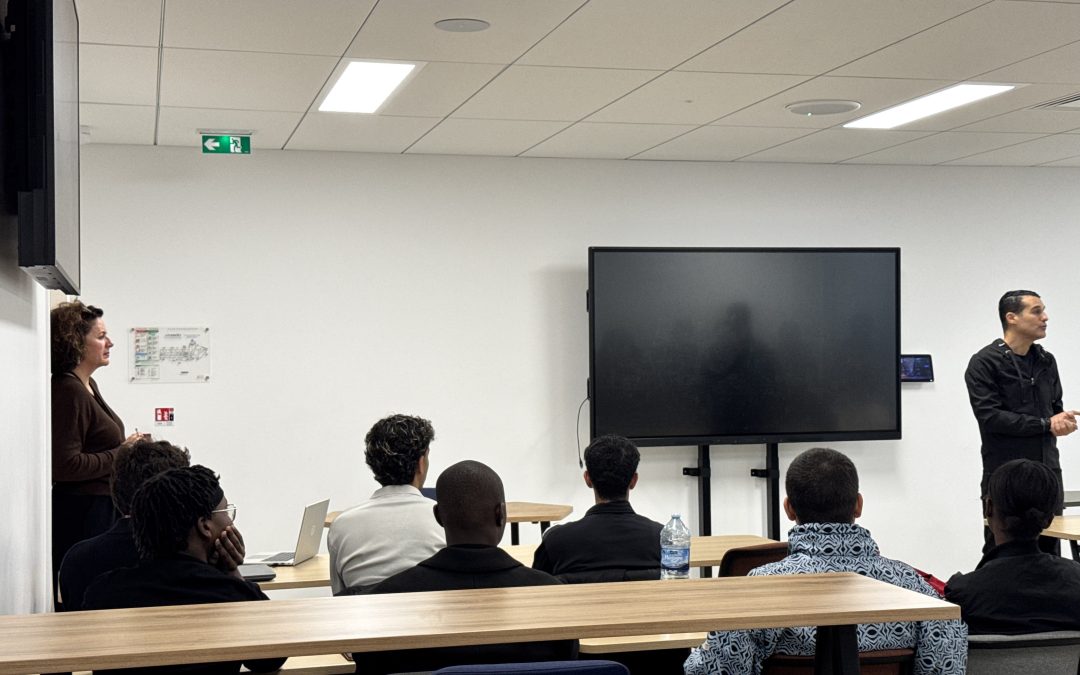
A new year begins at CCCLX!
The Paris-Villejuif campus welcomes CCCLX students for a new year of learning, projects and experiences at the heart of 360° IT.

VMware HyperArmor strengthens hypervisor protection against cyberattacks
Broadcom has unveiled VMware HyperArmor, a solution designed to protect the ESX hypervisor of VMware Cloud Foundation, with announced support for ESX 8.x and later versions.[1] The stakes go beyond the security of a single application: the hypervisor is a shared...

SolarWinds Avior: IT teams set the goals and agents coordinate the actions
SolarWinds has launched Avior, an agentic AI system designed to pursue operational goals in hybrid IT environments. Available since 14 October as part of a guided onboarding programme, it combines specialised agents with control mechanisms.[1] For technical teams, the...
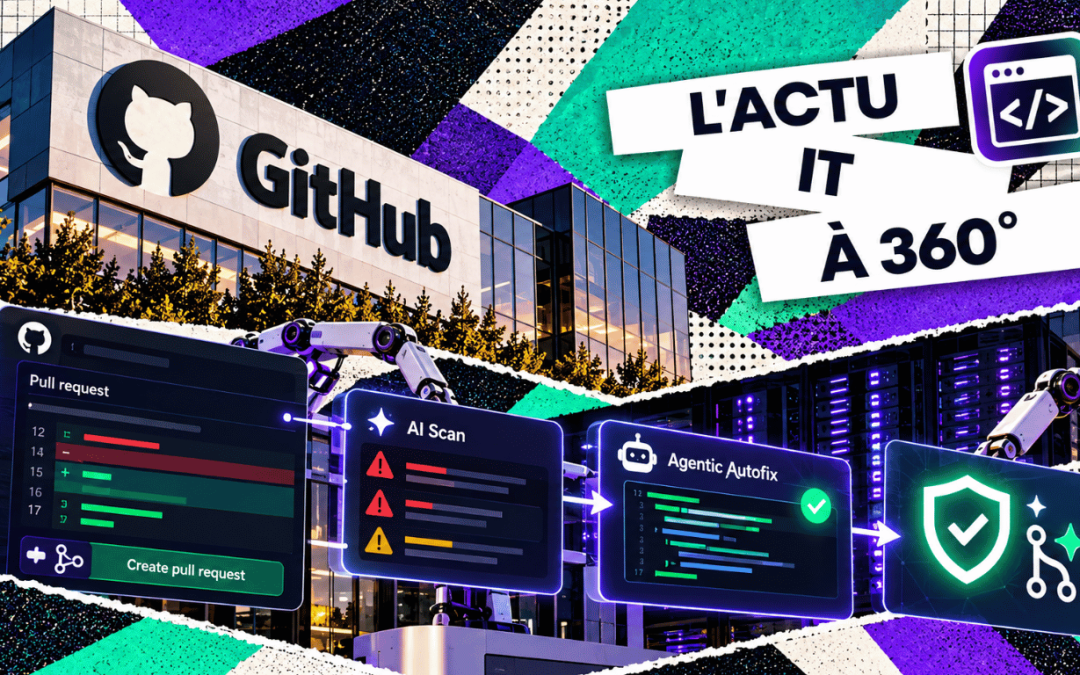
GitHub steps up vulnerability detection and remediation with AI Scan and Agentic Autofix
GitHub has announced the general availability of AI Scan for pull requests and Agentic Autofix for code scanning alerts.[1][2] These features bring AI assistance closer to the work of securing code. They do, however, operate on different scopes: proposed...

Cloudflare makes web security programmable with Workers
Cloudflare is bringing its secure web gateway closer to its Workers development platform. With Forward, available in public beta, businesses can add code to the processing of certain authorised HTTP requests.[2] For IT teams, this development opens up a...

Palo Alto Networks strengthens AI agent security around Claude Enterprise
PPalo Alto Networks has unveiled several updates to Prisma AIRS: protection of interactions with Claude Enterprise, analysis of the components used by agents and control of their exchanges with tools.[1] The stakes are concrete for businesses: preventing an assistant...
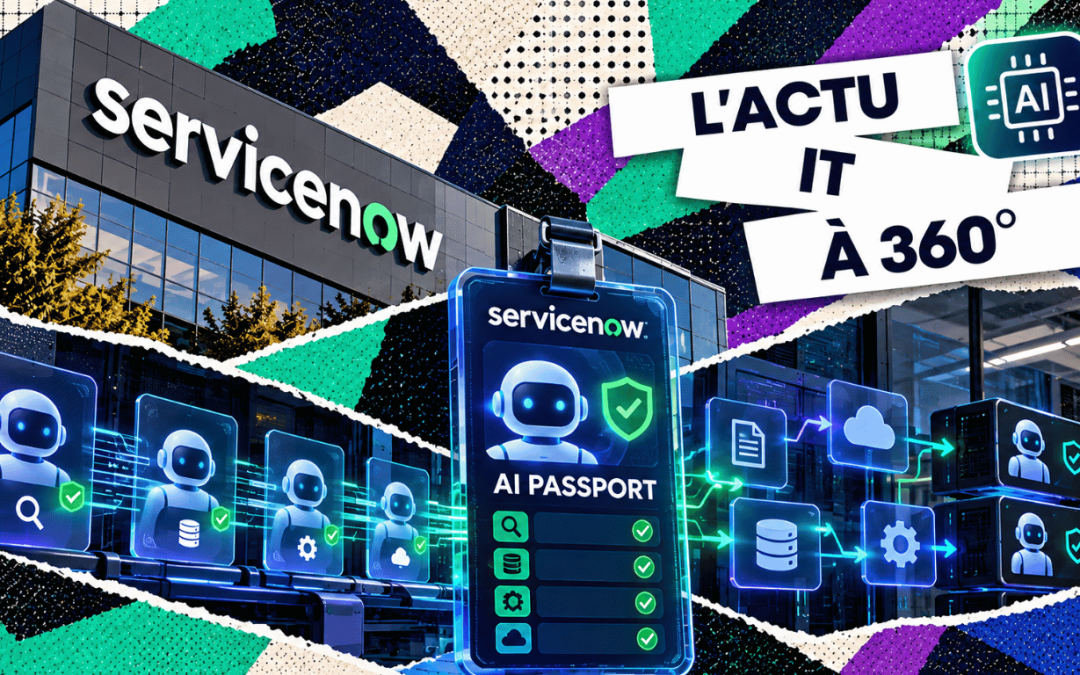
ServiceNow prepares AI Passport to control AI agents’ access rights
ServiceNow has announced AI Passport, a cryptographically signed authorisation credential designed to govern AI agents and MCP servers while workflows are running. It is scheduled to be available in the fourth quarter of 2026.[1] The image of a digital badge helps to...

SAP wants to acquire TechWolf to link tasks, skills and the transformation of jobs
SAP has announced an agreement to acquire TechWolf, an AI platform that links tasks, skills and changes in the labour market. Completion is expected in the fourth quarter of 2026, subject in particular to regulatory approvals.[1] The deal raises a practical...