


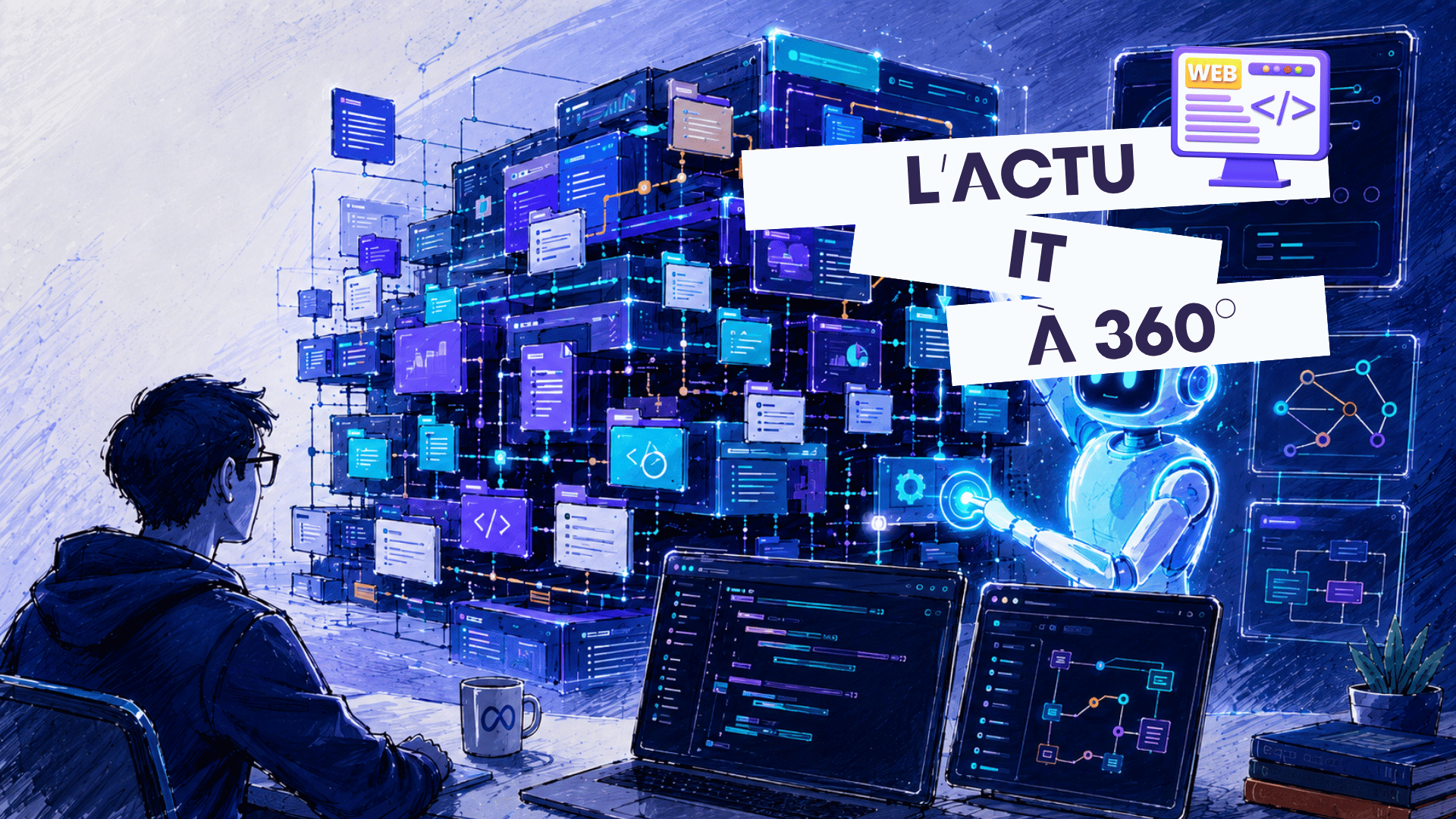
Meta wants to bring AI agents into complex software projects
Meta is stepping up its efforts in AI-assisted software development with Muse Code, a new agent designed to work on large codebases, where traditional assistants can quickly lose the context needed to understand the interactions between thousands of files and millions of lines of code.¹ The aim is no longer simply to generate a function or complete a few lines, but to enable AI to explore an existing project, understand how it is organised and make consistent changes across several components. With Muse Code, Meta is tackling one of the hardest problems in agentic development: giving a model enough context to work effectively on complex applications without treating each file as an isolated element.
Understanding an entire repository rather than a single file
In a large application, changing a few lines can affect dozens of other components, because the code relies on dependencies, internal libraries, APIs and conventions sometimes built up over many years. Muse Code is designed to navigate this environment and search for relevant information before proposing a change, which makes it work much like a developer discovering an unfamiliar codebase.² This ability to reason at repository level is becoming decisive for coding agents, because companies do not generally work on greenfield projects: they have to maintain and evolve existing systems whose complexity is precisely one of the main challenges of software development.
Millions of lines of code become the new challenge for agents
Generative models have made rapid progress in writing code, but the size of professional projects remains a major obstacle. Even with ever larger context windows, loading an entire codebase into a model would often be inefficient and costly, which forces agents to work out for themselves what information is really needed to complete a task. Muse Code follows this approach by combining repository search, context understanding and reasoning in order to select the relevant portions of code before acting.¹ The challenge is therefore no longer just producing syntactically correct code, but understanding how a change fits into a much larger architecture without causing regressions elsewhere in the system.
Meta is also transforming its own development methods
The launch of Muse Code takes on particular significance at Meta, whose engineers work on some of the largest software infrastructures in the tech sector. Facebook, Instagram, WhatsApp and the group’s many internal platforms rely on extremely large bodies of code, making them a particularly demanding testing ground for the capabilities of AI agents. For several years Meta has been developing tools to automate certain engineering tasks and improve its developers’ productivity, while its work on code models shows that the company now regards artificial intelligence as a lasting part of its development processes.³ Muse Code is part of this evolution, seeking to make agents context-aware enough to work in environments where simple code generation is no longer sufficient.
The market moves from copilot to agentic software engineer
Muse Code arrives in a sector where competition is intensifying rapidly. Cursor, Claude Code, GitHub Copilot, Codex, ZCode and the Qwen models are all seeking to move beyond the original copilot approach of suggesting a few lines of code. The new agents can explore files, use a terminal, run tests, identify errors and modify several parts of a project before presenting their work to the developer. Meta is pushing this evolution towards large codebases, a particularly strategic area for companies that have software developed over many years and want to benefit from AI without rebuilding their applications from scratch.
Understanding a codebase becomes as important as knowing how to code
This shift directly transforms the skills associated with Web Programming and Management. As agents take on part of the writing and modification of code, developers need to strengthen their understanding of software architectures, dependencies, APIs, testing and versioning mechanisms so that they can control the changes proposed by artificial intelligence. Being able to generate code quickly loses its value if nobody can check that it respects the project’s overall architecture, security constraints and business rules. Agents such as Muse Code could therefore increase the importance of high-level software engineering skills, as the developer gradually becomes the person who sets the framework, supervises changes and validates the consistency of the system.
Giant codebases become AI’s next battleground
After code generation and the automation of development tasks, understanding large software projects is emerging as a new frontier for AI agents. A system able to navigate efficiently through several million lines of code could speed up maintenance, make it easier to modernise legacy applications and help new developers understand complex architectures more quickly, but this promise will depend on the reliability of the changes produced and on teams’ ability to retain human control over important decisions. In any case, Muse Code shows that the next battle among coding assistants will probably no longer be fought over their ability to write an isolated function, but over their ability to understand and evolve entire software systems.
360° IT News — decoding technology to understand the jobs of tomorrow.
Further reading
Coding agents no longer just generate a few lines of code; they are becoming capable of working directly within development environments. On a related topic, read our article “SpaceX buys Cursor: agentic AI becomes the new standard in development”, which analyses the rise of agents able to design, modify and deploy applications ever more autonomously.
References
1. Meta AI. (2026). Introducing Muse Code: An AI coding agent for large codebases.
https://ai.meta.com
2. Meta Engineering. (2026). AI-assisted software engineering at Meta.
https://engineering.fb.com
3. Meta AI. (2026). AI for software development and code generation.
https://ai.meta.com
Europe accuses Anthropic of discrimination after Fable 5 is blocked
A US decision that sparks an international crisis The sudden suspension of access to Anthropic’s Fable 5 and Mythos 5 models outside the United States now goes well beyond technology. What initially looked like a national security measure is taking on a major...

Mobi Fold and Spotlight 2: Logitech aims to simplify everyday hybrid working
The office is everywhere, but the tools do not always keep up Hybrid working has profoundly changed professional habits. Video-conference meetings, frequent travel, days split between home, the office and coworking spaces: employees now move between multiple...
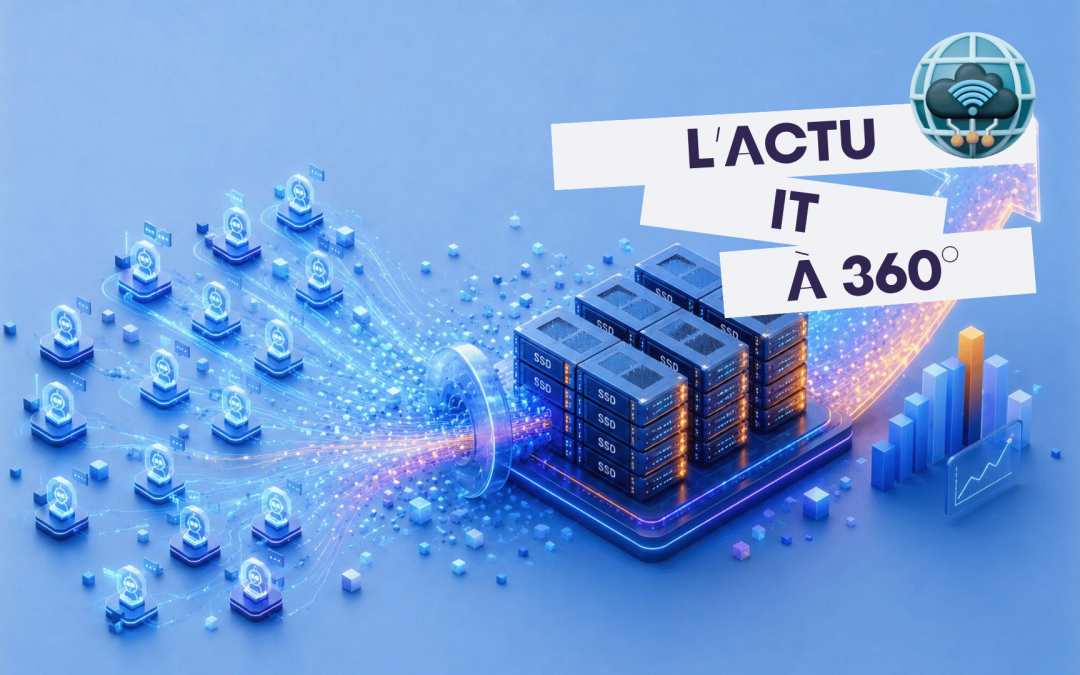
+80%: agentic AI triggers a record surge in enterprise SSD prices
Artificial intelligence is putting new strain on infrastructure Artificial intelligence is often associated with graphics processors and massive computing centres. Yet another essential component of digital infrastructure is coming under unprecedented pressure:...
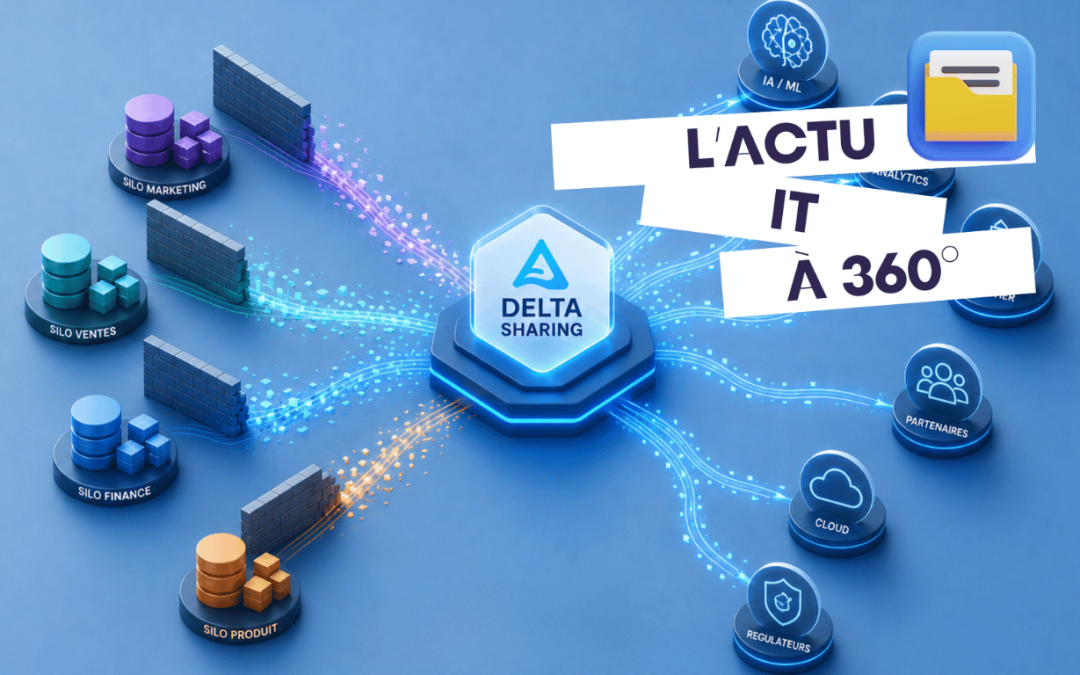
Databricks extends Delta Sharing to AI and aims to break down data silos
Data is no longer enough: intelligence must now be shared too Artificial intelligence is transforming the way companies use their data. Yet one major obstacle remains: the resources needed for AI projects are often scattered across different platforms, teams and...

RTX Spark: Nvidia accelerates the shift to AI-optimised PCs
Nvidia wants to redefine the PC for the age of artificial intelligence Unveiled at Computex 2026, the RTX Spark chip marks a new stage in the evolution of personal computers. With this Arm-based platform, Nvidia is not simply seeking to offer a more powerful...

WiFi 8 is arriving sooner than expected: what it means for businesses
A new generation of networking is already on the horizon While WiFi 7 is only just beginning to spread among businesses and consumers, the industry is already preparing the next step. TP-Link has just unveiled the first WiFi 8-compatible router, confirming that the...

Webedia-Elephant turns to Gemini Enterprise to industrialise generative AI
IT outages become a board-level issue Long regarded as mere technical incidents, service outages are now taking on a whole new dimension. According to a study by Oxford Economics for Splunk, Global 2000 companies suffer an average of 60 downtime incidents a year, at...

$600 billion lost: IT outages take on a new dimension
IT outages are becoming a boardroom issue Long regarded as mere technical incidents, service interruptions are now taking on a whole new dimension. According to a study conducted by Oxford Economics for Splunk, Global 2000 companies suffer an average of 60 downtime...

Lightwell: IBM and Red Hat tackle the open source patching headache
AI finds flaws faster than companies can fix them Artificial intelligence is profoundly transforming cybersecurity. While it makes it possible to detect vulnerabilities more quickly, it also creates a new challenge: the ability to fix a growing number of flaws within...

AWS strengthens OpenSearch to connect AI to enterprise data
AI agents are forcing the cloud to evolve The rise of agentic AI is profoundly transforming cloud infrastructure. Unlike traditional conversational assistants, intelligent agents must access data, interact with several systems and carry out tasks autonomously. To meet...