


The race for AI models is speeding up
Google is going through a difficult period in the competition over advanced artificial intelligence models. According to several reports in the specialist press, the launch of Gemini 3.5 Pro has reportedly been pushed back by several months. The news immediately fuelled investor concerns, sending Alphabet shares lower. More than a simple scheduling delay, the situation illustrates the growing pressure on established AI players, who face competitors that are multiplying announcements and accelerating their development cycles.1
Expectations around Gemini remain very high
Since launching the Gemini family, Google has been seeking to show that its models can compete with those of OpenAI, Anthropic and Meta. Gemini 3.5 Pro is expected to be an important step in improving performance in reasoning, programming and professional use cases. Each postponement therefore delays Google’s ability to offer an alternative capable of winning over businesses and developers, two markets where competition is intensifying rapidly.2
Investors want concrete results
The artificial intelligence market is now moving at an unprecedented pace. Companies are no longer judged solely on their ambitions, but on their ability to deliver high-performing models quickly and turn them into revenue-generating services. The delays to Gemini 3.5 Pro are fuelling questions about Google’s speed of execution, while its main competitors keep launching new versions and continually enriching their AI platforms.1
The battle now goes beyond model quality
Competition no longer rests solely on technical performance. Providers must also offer a complete ecosystem combining cloud infrastructure, development tools, security, integration with business applications and large-scale deployment capabilities. In this context, every month of delay can hand a strategic advantage to competitors that continue to expand their presence among businesses and developers.3
Innovation no longer waits for the established giants
For several years, Google contributed greatly to the advances of modern artificial intelligence. Today, the company operates in a market where new models appear constantly and user expectations change very quickly. This acceleration shows that no player, even among the AI pioneers, is safe from losing momentum if its pace of innovation slows.
A race in which speed is becoming a strategic advantage
The reported delay to Gemini 3.5 Pro illustrates a new market reality: in generative artificial intelligence, speed of execution has become almost as important as model performance. Businesses are looking for solutions that evolve continuously, while developers expect ever more advanced features. In this global competition, maintaining a sustained pace of innovation is now a decisive factor in staying among the leaders.
360° IT News — decoding technology to understand the jobs of tomorrow.
Further reading
The major AI players are all seeking to strengthen their position with businesses. Read our article “Cloud, AI, defence: AWS accelerates on all fronts”, which analyses how AWS is combining artificial intelligence, the cloud and critical infrastructure to build an ecosystem capable of rivalling the other giants of the sector.
References
1. Anthropic. (2026). Project Glasswing.
https://www.anthropic.com
2. Horizon3.ai. (2026). Horizon3.ai joins Project Glasswing.
https://www.horizon3.ai
3. Anthropic. (2026). Responsible Scaling Policy.
https://www.anthropic.com/responsible-scaling-policy

Salesforce wants to acquire Loops to help Tableau explain KPI changes
Salesforce has announced a definitive agreement to acquire Loops, an AI-based analytics platform, with the intention of integrating its technology into Tableau after closing.[1] The aim is to monitor metrics and bring out the factors associated with their changes. For...

Cisco and NVIDIA prepare 400 Gb/s-per-lane optical connections for AI infrastructure
Cisco and NVIDIA have announced a project for a pluggable optical form factor, USFP, capable of supporting 400 Gb/s per lane. Cisco is also unveiling the Silicon One G302 switching chip, rated at 51.2 Tb/s.[1] These announcements address a key challenge for AI...
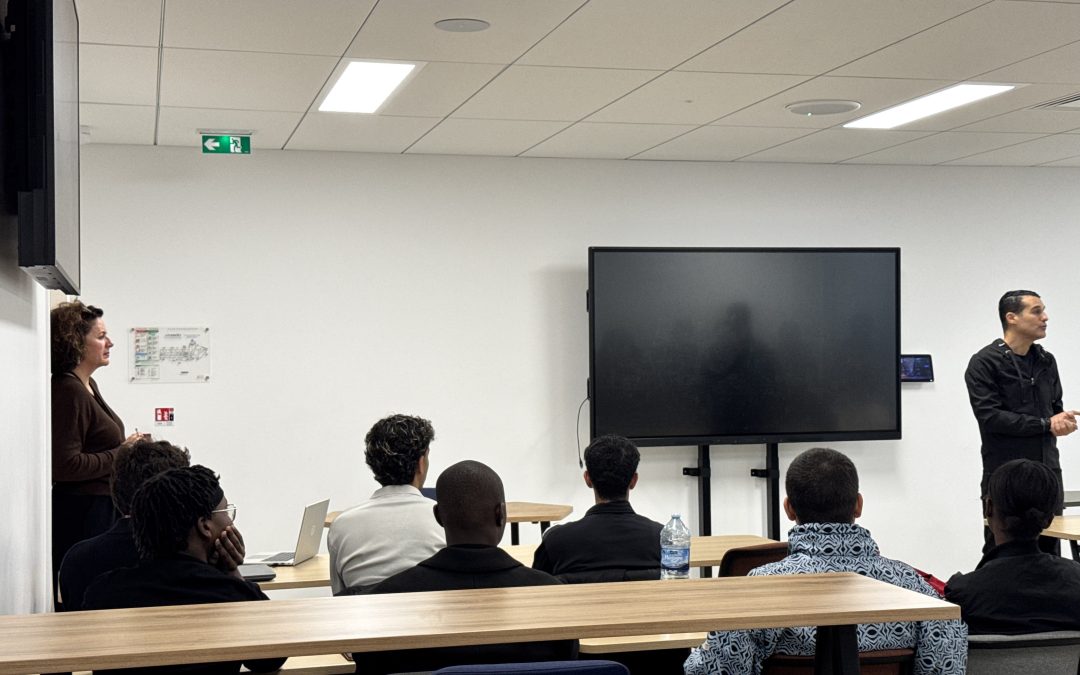
A new year begins at CCCLX!
The Paris-Villejuif campus welcomes CCCLX students for a new year of learning, projects and experiences at the heart of 360° IT.

VMware HyperArmor strengthens hypervisor protection against cyberattacks
Broadcom has unveiled VMware HyperArmor, a solution designed to protect the ESX hypervisor of VMware Cloud Foundation, with announced support for ESX 8.x and later versions.[1] The stakes go beyond the security of a single application: the hypervisor is a shared...

SolarWinds Avior: IT teams set the goals and agents coordinate the actions
SolarWinds has launched Avior, an agentic AI system designed to pursue operational goals in hybrid IT environments. Available since 14 October as part of a guided onboarding programme, it combines specialised agents with control mechanisms.[1] For technical teams, the...

GitHub steps up vulnerability detection and remediation with AI Scan and Agentic Autofix
GitHub has announced the general availability of AI Scan for pull requests and Agentic Autofix for code scanning alerts.[1][2] These features bring AI assistance closer to the work of securing code. They do, however, operate on different scopes: proposed...

Cloudflare makes web security programmable with Workers
Cloudflare is bringing its secure web gateway closer to its Workers development platform. With Forward, available in public beta, businesses can add code to the processing of certain authorised HTTP requests.[2] For IT teams, this development opens up a...

Palo Alto Networks strengthens AI agent security around Claude Enterprise
PPalo Alto Networks has unveiled several updates to Prisma AIRS: protection of interactions with Claude Enterprise, analysis of the components used by agents and control of their exchanges with tools.[1] The stakes are concrete for businesses: preventing an assistant...
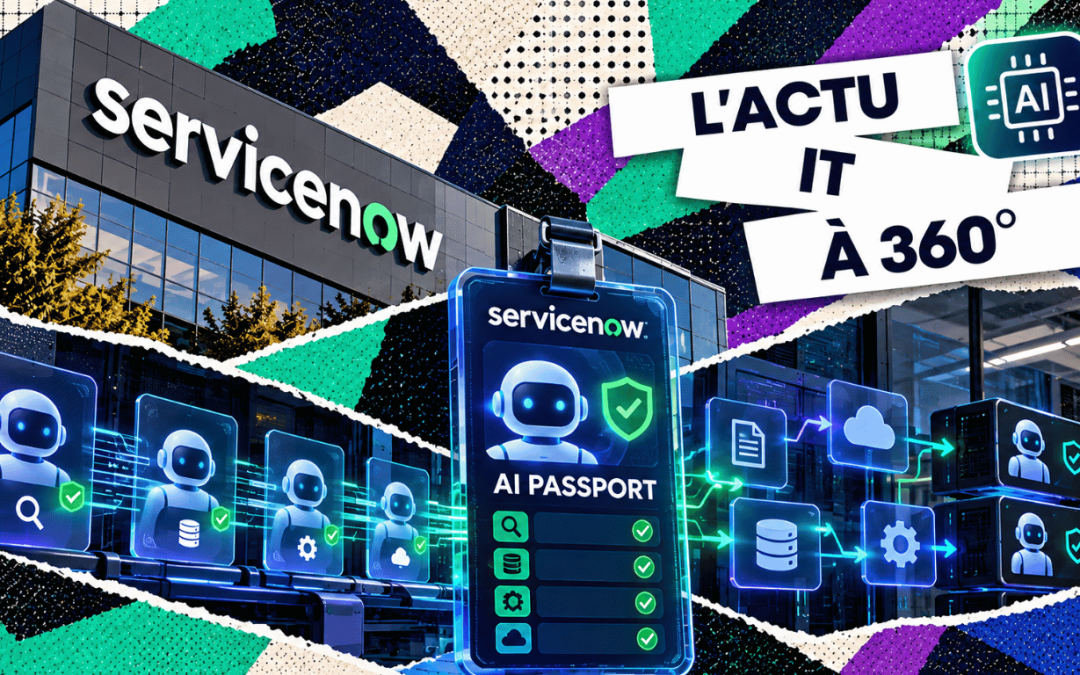
ServiceNow prepares AI Passport to control AI agents’ access rights
ServiceNow has announced AI Passport, a cryptographically signed authorisation credential designed to govern AI agents and MCP servers while workflows are running. It is scheduled to be available in the fourth quarter of 2026.[1] The image of a digital badge helps to...
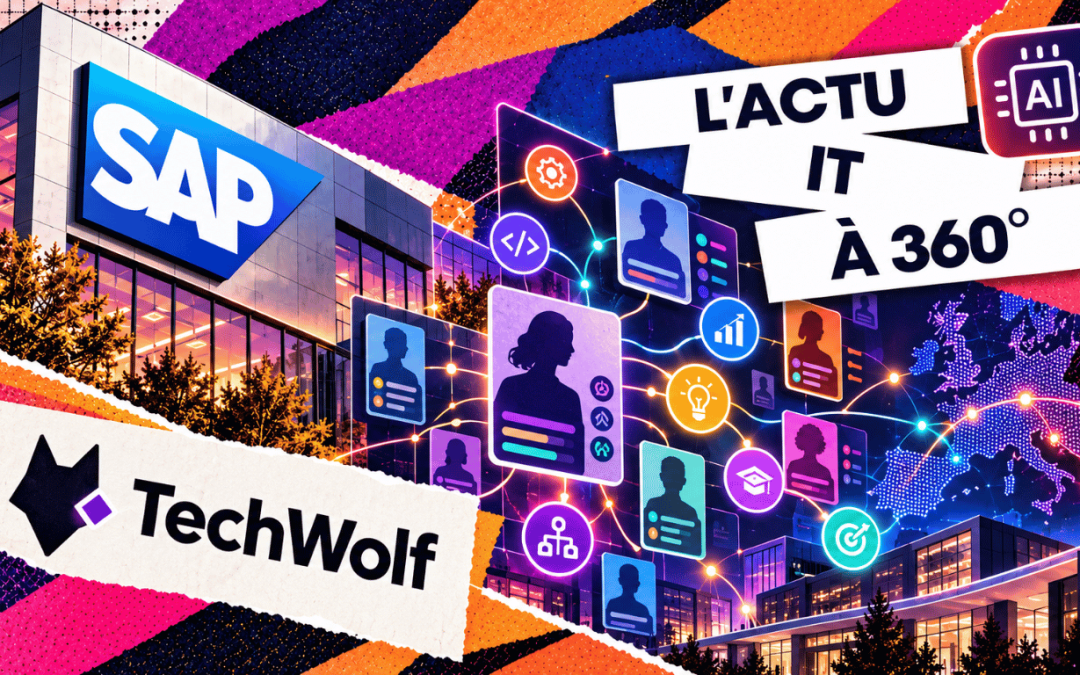
SAP wants to acquire TechWolf to link tasks, skills and the transformation of jobs
SAP has announced an agreement to acquire TechWolf, an AI platform that links tasks, skills and changes in the labour market. Completion is expected in the fourth quarter of 2026, subject in particular to regulatory approvals.[1] The deal raises a practical...