


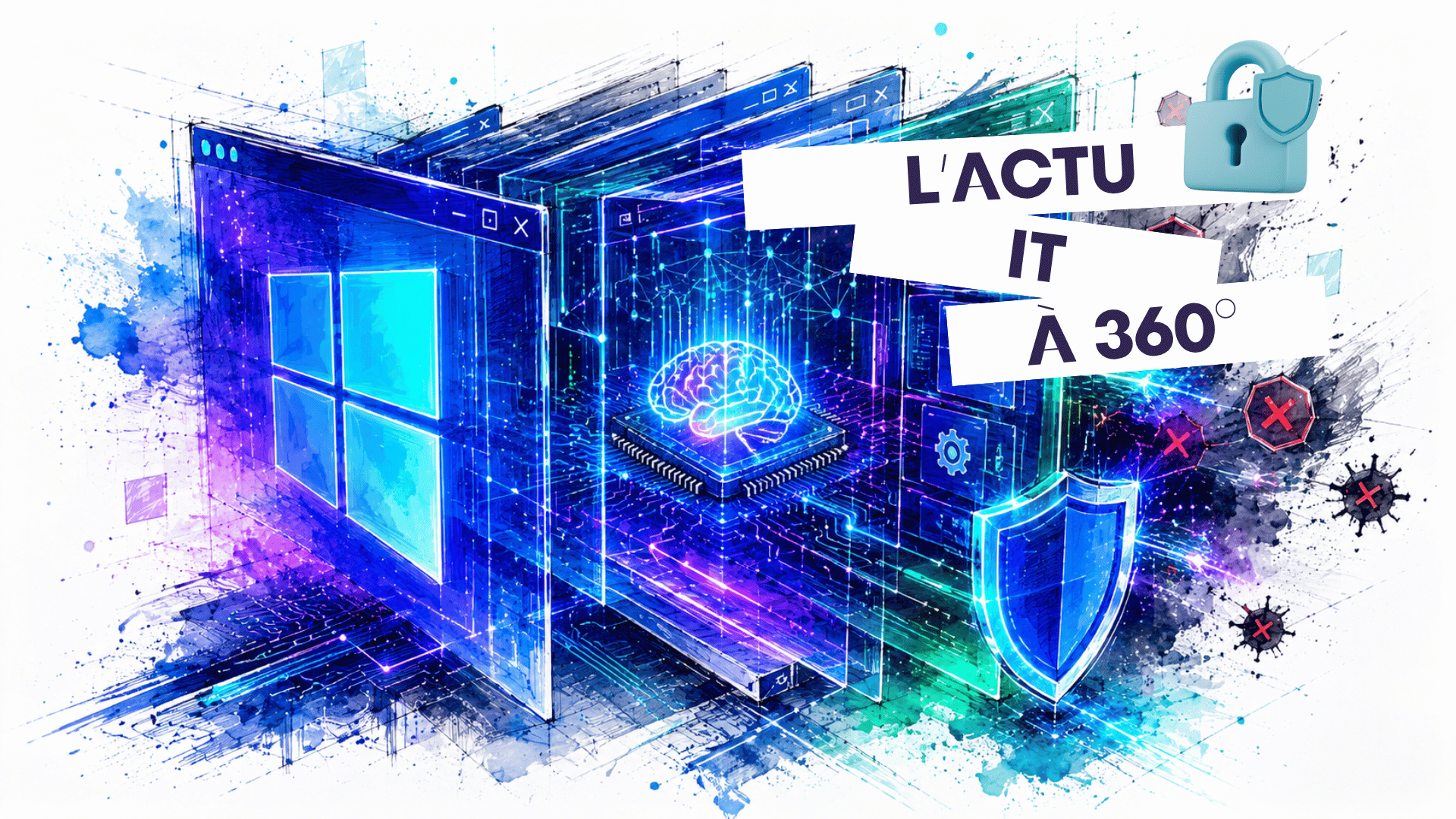
Microsoft hands part of the bug hunt to artificial intelligence
Cyberattacks are evolving ever faster, forcing software vendors to detect vulnerabilities before they can even be exploited. To meet this challenge, Microsoft has unveiled MDASH (Microsoft Detection and Analysis Security Harness), a system based on several artificial intelligence agents capable of analysing Windows code to identify, classify and prioritise potential vulnerabilities. The aim is not to replace cybersecurity experts, but to give them an assistant capable of considerably speeding up the analysis of the millions of lines of code that make up Microsoft’s software.1
AI agents specialised in code analysis
Unlike traditional vulnerability detection tools, MDASH relies on several artificial intelligence models working together. Each agent examines the code from a different angle to identify suspicious behaviour, programming errors or flaws likely to be exploited. The results are then grouped and ranked to highlight the vulnerabilities with the highest level of risk. This approach allows development teams to focus their efforts on the most critical fixes.1
Detecting flaws before they reach users
One of MDASH’s main goals is to step in very early in the software development lifecycle. By identifying vulnerabilities before release, Microsoft reduces the risk of having to publish emergency patches after a flaw is discovered. This strategy also shortens the time between a security defect appearing and its being fixed, a factor that has become essential now that cybercriminals are using artificial intelligence to speed up their own vulnerability research.2
AI assists experts, it does not replace them
Microsoft stresses one important point: MDASH does not make decisions in place of security engineers. The AI agents analyse the code, suggest priorities and highlight the most likely anomalies, but final validation remains in the hands of human experts. This collaboration makes it possible to automate repetitive tasks while retaining the expertise needed to interpret the results, confirm vulnerabilities and define the most appropriate fixes.2
A new approach to secure development
The arrival of tools such as MDASH illustrates a profound change in software development methods. Security checks are no longer carried out only at the end of a project. They are now built in continuously thanks to systems capable of automatically analysing code at every stage of its evolution. This approach improves software quality while reducing the costs of fixing flaws discovered after deployment.3
Cybersecurity now relies on intelligent agents
This development shows why Cybersecurity is becoming an essential skill in modern software development. Professionals now need to understand how artificial intelligence tools that can analyse code, identify vulnerabilities and automate part of security audits actually work. Knowing how to collaborate with these agents while retaining human expertise is becoming essential to designing ever safer software.
Artificial intelligence is also transforming software security
With MDASH, Microsoft shows that artificial intelligence is no longer used solely to create content or automate office tasks. It is also becoming a defensive tool built into the software development lifecycle. As applications grow more complex and threats evolve, AI agents could become indispensable partners for cybersecurity teams, capable of improving software quality before it even reaches users’ hands.
360° IT News — decoding technology to understand the jobs of tomorrow.
Further reading
Artificial intelligence plays a growing role in the defence strategies of major technology companies. On a related topic, read our article “Microsoft accelerates its cybersecurity with AI: defence moves to machine scale”, which explains how Microsoft is using AI to strengthen all of its security operations as part of its Secure Future Initiative.
References
1. Microsoft Security. (2026). Introducing MDASH: AI-assisted vulnerability detection for Windows.
https://www.microsoft.com/security
2. Microsoft Security Response Center. (2026). Secure Development with AI.
https://msrc.microsoft.com
3. Microsoft. (2026). Secure Future Initiative.
https://www.microsoft.com/security/blog

Two months, $1.1 billion: River AI is already exciting investors
A spectacular raise for a start-up barely out of the shadows Two months after emerging from stealth mode, River AI has just completed one of the most spectacular funding rounds of the year in artificial intelligence. The start-up founded by Igor Babuschkin, a former...

AI propels Nokia: data centres are reshaping the networking market
The AI explosion is transforming the infrastructure market Nokia is reaping the full benefits of the rise of artificial intelligence and the proliferation of data centres that comes with it. In the second quarter of 2026, the company’s Network Infrastructure business...

Gemini 3.5 Pro delayed: Google under pressure in the AI race
The race for AI models is speeding up Google is going through a difficult period in the competition over advanced artificial intelligence models. According to several reports in the specialist press, the launch of Gemini 3.5 Pro has reportedly been pushed back by...

Project Glasswing: Anthropic goes on the offensive against software vulnerabilities
A new step for AI applied to cybersecurity Anthropic is pressing ahead with Project Glasswing, an initiative that makes its Claude Mythos Preview model available to specialist cybersecurity players in order to identify and fix vulnerabilities in critical software. The...

Cloud, AI, defence: AWS steps up on every front
AWS makes artificial intelligence a pillar of critical infrastructure At the AWS Summit Washington, D.C. 2026, Amazon Web Services unveiled several developments aimed at government departments, public bodies and critical sectors. The company is strengthening its...

Microsoft speeds up its cybersecurity with AI: defence moves to machine scale
Microsoft wants to regain the upper hand against cyberattacks Cybercriminals are now using artificial intelligence to discover vulnerabilities, automate their attacks and speed up their malicious campaigns. In response, Microsoft is pressing ahead with its Secure...

Free access to Claude Fable 5 extended as Anthropic holds off
A new generation of AI designed for specific uses OpenAI is changing its strategy with the launch of GPT-5.6, a new family of models made up of Sol, Terra and Luna. Rather than offering a single model capable of meeting every need, the company is now betting on a...
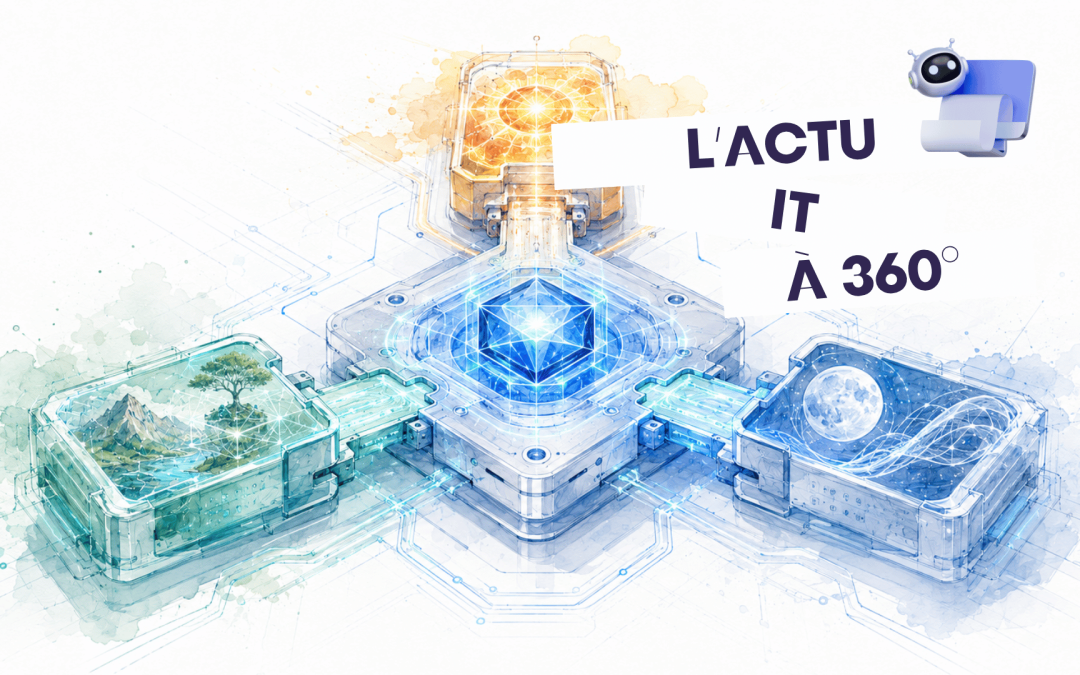
OpenAI bets on modular AI with Sol, Terra and Luna
A new generation of AI designed for specific uses OpenAI is changing its strategy with the launch of GPT-5.6, a new family of models made up of Sol, Terra and Luna. Rather than offering a single model capable of meeting every need, the company is now betting on a...

Anthropic’s AI is advancing at a pace that worries cybersecurity specialists
AI models cross a new capability threshold Barely a month after its launch, Claude Mythos Preview is already improving its performance. According to the latest tests published by the UK’s AI Security Institute (AISI), Anthropic’s model now beats its own results from...

Lumo AI 2.0 speeds up without sacrificing data protection
Proton wants to prove that a high-performing AI can also be private The artificial intelligence race is no longer played out solely on model performance. User trust and data protection are now becoming major differentiators. With Lumo AI 2.0, Proton is upgrading its...