


Proton wants to prove that a high-performing AI can also be private
The artificial intelligence race is no longer played out solely on model performance. User trust and data protection are now becoming major differentiators. With Lumo AI 2.0, Proton is upgrading its intelligent assistant by improving its speed, reasoning capabilities and multimodal features, while maintaining a strong commitment to privacy. The Swiss company thus intends to show that it is possible to use advanced artificial intelligence without giving up control of one’s personal information.1
A more comprehensive artificial intelligence
This new version is no longer limited to text exchanges. Lumo AI 2.0 can now analyse images, generate them from descriptions and draw on web results to enrich its answers with up-to-date information such as news, weather or financial data. Proton is also announcing improved reasoning capabilities for the model, enabling it to better understand complex requests and provide more relevant answers. Users can also choose what information the assistant remembers or forgets in order to personalise their future interactions.1
Privacy becomes a technological selling point
Whereas most players emphasise above all the performance of their models, Proton is focusing on data protection. The company states that its users’ conversations are never used to train future artificial intelligence models. Exchanges are encrypted so that they cannot be viewed, including by Proton itself. This approach is in keeping with the company’s long-standing strategy, already known for its secure email and storage services, in which privacy is central to its offering.2
Europe as a guarantee of digital sovereignty
Another distinctive feature of Lumo AI 2.0 is that its infrastructure relies on servers located in Europe. This choice allows Proton to limit its services’ exposure to certain extraterritorial laws and to meet the requirements of many organisations concerned about where their data is located. The company also offers a dedicated business plan enabling companies to analyse internal documents or use artificial intelligence on sensitive information while maintaining a high level of data protection.2
Companies are now looking for trustworthy AI
The evolution of Lumo AI illustrates an underlying market trend. Organisations no longer choose an artificial intelligence assistant solely on the basis of its speed or the quality of its answers. They also assess how their data is stored, used and protected. Questions of digital sovereignty, regulatory compliance and privacy are gradually becoming as important as the technical performance of models, particularly in sectors that handle sensitive information.3
Ethics becomes a criterion for choosing AI technologies
The development of solutions such as Lumo AI 2.0 shows that ethical and data protection issues are taking on a growing role in artificial intelligence. Understanding data governance mechanisms, privacy principles, applicable regulations and the technology choices that protect users’ information is becoming essential for deploying responsible AI solutions in companies.
The future of AI will also depend on trust
With Lumo AI 2.0, Proton is a reminder that competition between intelligent assistants no longer rests solely on model capabilities. The trust placed in platforms, transparency about how data is used and the ability to protect personal information are becoming decisive factors. As artificial intelligence becomes part of the everyday lives of individuals and businesses alike, privacy could become a competitive advantage as important as performance.
360° IT News — decoding technology to understand the jobs of tomorrow.
Further reading
The evolution of Azure Linux illustrates the rapid transformation of IT infrastructure, which is increasingly geared towards the cloud, distributed environments and artificial intelligence. On a related topic, read our article “The cloud gets ready for autonomous agents: AWS evolves Lambda”, which shows how cloud platforms are also adapting their architectures to new generations of applications driven by AI agents.
References
1. Proton. (2026). Introducing Lumo AI 2.0.
https://proton.me
2. Proton. (2026). Privacy and Security at Proton AI.
https://proton.me
3. European Commission. (2024). AI Act.
https://artificial-intelligence-act.eu
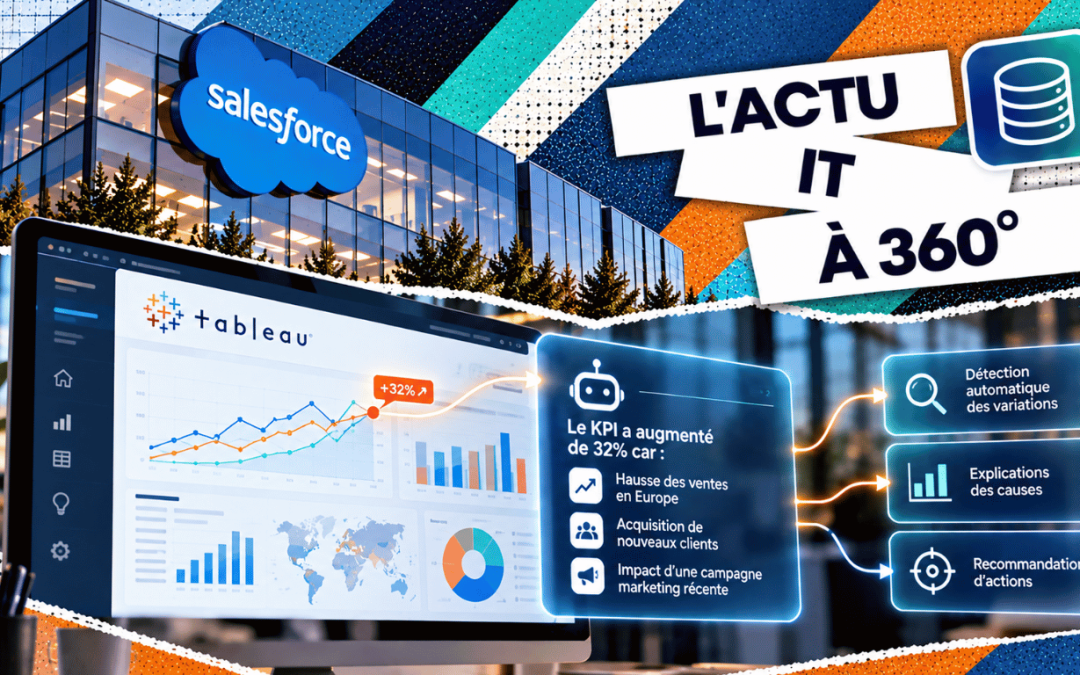
Salesforce wants to acquire Loops to help Tableau explain KPI changes
Salesforce has announced a definitive agreement to acquire Loops, an AI-based analytics platform, with the intention of integrating its technology into Tableau after closing.[1] The aim is to monitor metrics and bring out the factors associated with their changes. For...

Cisco and NVIDIA prepare 400 Gb/s-per-lane optical connections for AI infrastructure
Cisco and NVIDIA have announced a project for a pluggable optical form factor, USFP, capable of supporting 400 Gb/s per lane. Cisco is also unveiling the Silicon One G302 switching chip, rated at 51.2 Tb/s.[1] These announcements address a key challenge for AI...

A new year begins at CCCLX!
The Paris-Villejuif campus welcomes CCCLX students for a new year of learning, projects and experiences at the heart of 360° IT.

VMware HyperArmor strengthens hypervisor protection against cyberattacks
Broadcom has unveiled VMware HyperArmor, a solution designed to protect the ESX hypervisor of VMware Cloud Foundation, with announced support for ESX 8.x and later versions.[1] The stakes go beyond the security of a single application: the hypervisor is a shared...
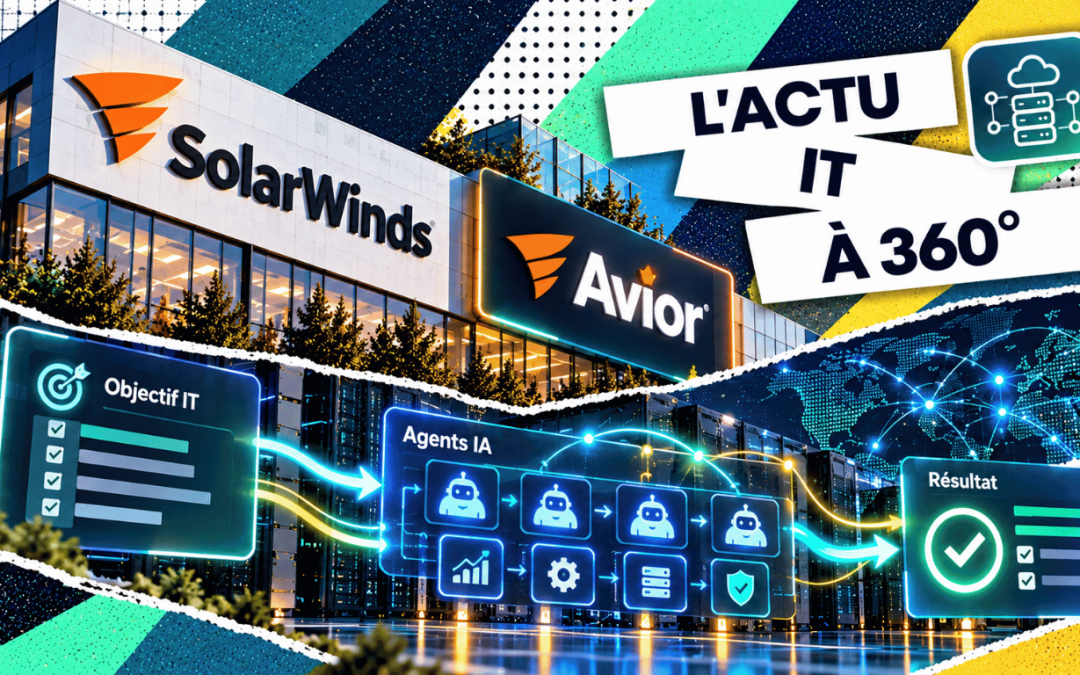
SolarWinds Avior: IT teams set the goals and agents coordinate the actions
SolarWinds has launched Avior, an agentic AI system designed to pursue operational goals in hybrid IT environments. Available since 14 October as part of a guided onboarding programme, it combines specialised agents with control mechanisms.[1] For technical teams, the...
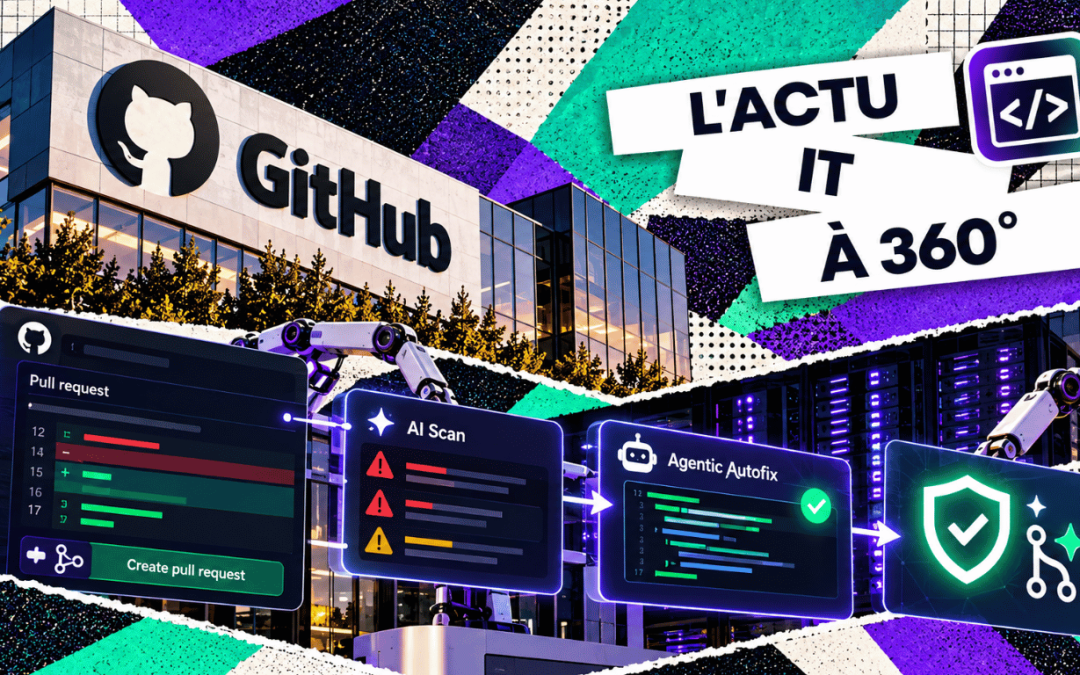
GitHub steps up vulnerability detection and remediation with AI Scan and Agentic Autofix
GitHub has announced the general availability of AI Scan for pull requests and Agentic Autofix for code scanning alerts.[1][2] These features bring AI assistance closer to the work of securing code. They do, however, operate on different scopes: proposed...
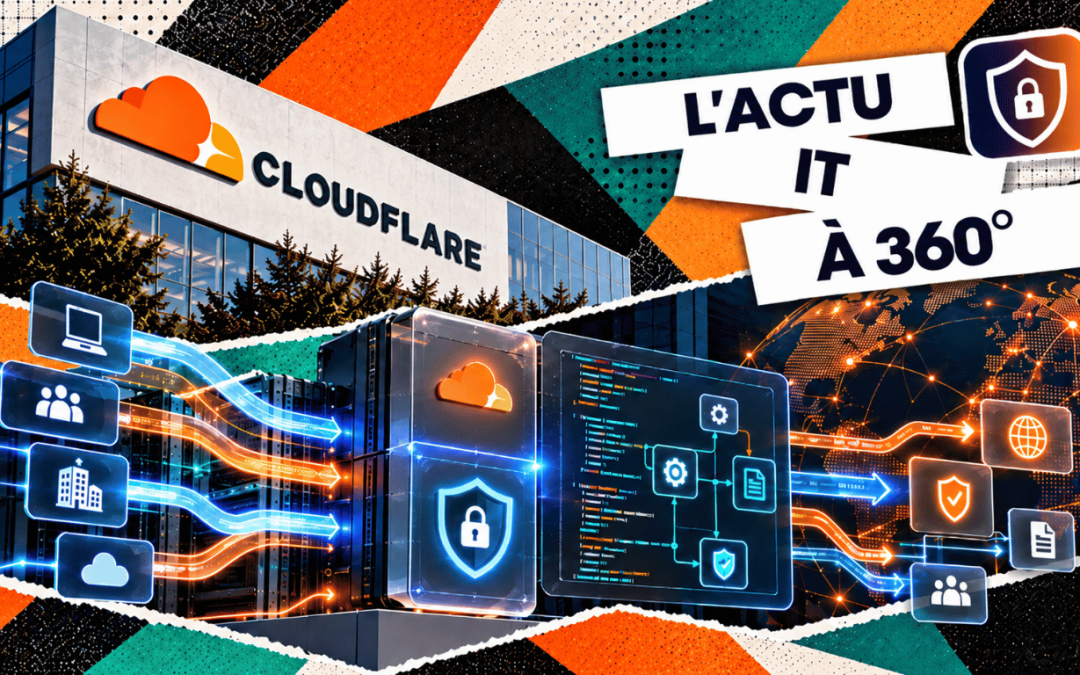
Cloudflare makes web security programmable with Workers
Cloudflare is bringing its secure web gateway closer to its Workers development platform. With Forward, available in public beta, businesses can add code to the processing of certain authorised HTTP requests.[2] For IT teams, this development opens up a...
Palo Alto Networks strengthens AI agent security around Claude Enterprise
PPalo Alto Networks has unveiled several updates to Prisma AIRS: protection of interactions with Claude Enterprise, analysis of the components used by agents and control of their exchanges with tools.[1] The stakes are concrete for businesses: preventing an assistant...
ServiceNow prepares AI Passport to control AI agents’ access rights
ServiceNow has announced AI Passport, a cryptographically signed authorisation credential designed to govern AI agents and MCP servers while workflows are running. It is scheduled to be available in the fourth quarter of 2026.[1] The image of a digital badge helps to...
SAP wants to acquire TechWolf to link tasks, skills and the transformation of jobs
SAP has announced an agreement to acquire TechWolf, an AI platform that links tasks, skills and changes in the labour market. Completion is expected in the fourth quarter of 2026, subject in particular to regulatory approvals.[1] The deal raises a practical...