


A new step towards building apps without boundaries
Design and software development have long followed two separate paths. Designers imagined the interfaces, developers then translated them into code, with many back-and-forth exchanges and sometimes discrepancies between the mock-up and the final product. At Config 2026, Figma aims to remove this boundary. The platform is introducing Code Layers, enriching its environment with new creative tools and strengthening its artificial intelligence agents in order to bring every stage of building an application into a single collaborative space.1
This is not simply a feature update. It reflects a more ambitious vision: turning Figma into a platform capable of supporting the entire development cycle, from the first ideas through to product delivery.
Design and code now evolve together
The main new feature presented at Config 2026 is the arrival of Code Layers. This feature makes it possible to import a Git repository directly into Figma, work on graphic and technical components on the same canvas and then automatically synchronise changes with the software project.1
Until now, moving from design to development often involved several intermediate steps. Mock-ups were exported, interpreted and then recreated by developers before being integrated into applications. Code Layers greatly reduce this disconnect. Designers immediately see the impact of their choices on the final product, while developers work from a representation that is constantly synchronised with the code.
This new way of working improves interface consistency while shortening production times.
Artificial intelligence becomes a creative partner
The other major development concerns the capabilities of the AI agent built into Figma. It now plays a part throughout the design process. It can generate new interface variants, produce code compatible with existing components, suggest improvements or automate certain repetitive tasks to save teams time.1
The aim is not to replace designers or developers. Rather, artificial intelligence acts as a collaborator that can take on the most time-consuming operations so that teams can devote more time to functional decisions, user experience and application quality.
An ever more complete creative environment
Figma is also using Config 2026 to enrich its canvas with several new tools. Motion now makes it possible to create animations, transitions and 3D scenes directly in the platform while automatically generating the corresponding code. Shaders introduces the creation of advanced graphic effects from simple natural-language descriptions. Finally, Weave Workflows bring together more than twenty tools designed to simplify AI-related processes and automate complex tasks.2
By grouping these features in a single environment, Figma seeks to limit switching between tools and to offer product teams a single workspace.
AI agents gain autonomy
The Config 2026 announcements also show that AI agents are gradually becoming able to play a more active role in projects. They can memorise certain tasks as reusable skills, use documents, access web search or use various connectors to better understand the context in which they operate.2
Figma also makes it possible to create custom plugins simply from a natural-language instruction. This development democratises extension development and makes it easier to automate many operations, even for users without strong programming skills.
A new way of collaborating in digital teams
With these new features, Figma no longer presents itself solely as a design tool. The platform is gradually becoming a shared space where designers, developers, product managers and user experience specialists work simultaneously on the same components.
This convergence reduces miscommunication, speeds up iterations and makes it easier to develop ever more complex applications. At a time when production cycles are getting shorter, this collaborative approach is a significant advantage for organisations.
Web Programming and Management becomes a strategic skill
Figma’s announcements perfectly illustrate how digital jobs are changing. Today, a professional can no longer master only design or only development. Companies are looking for people who understand web technologies, user interfaces, modern frameworks and the new AI-enhanced tools.
This is precisely what the Web Programming and Management skill taught at CCCLX develops. It provides the knowledge needed to design web applications, understand modern software architectures and collaborate effectively with multidisciplinary teams. With platforms such as Figma bringing graphic design and development closer together, this skill is becoming essential for taking part in building the applications of tomorrow.
A platform that supports the transformation of jobs
Code Layers illustrate a broader trend affecting the entire digital industry. Tools are evolving into environments that bring design, development and artificial intelligence together in a single workspace. This convergence is gradually transforming software production methods and redefining the skills companies expect.
For students and future digital professionals, these developments show that jobs are becoming increasingly cross-functional. Knowing how to work with intelligent tools, understanding web technologies and working in environments where code and design evolve simultaneously is now a real professional advantage.
360° IT News — decoding technology to understand the jobs of tomorrow.
Further reading
Figma’s announcements illustrate an underlying trend: professional software is becoming an intelligent workspace, able to assist users and understand their context. This development is not limited to design tools. Web browsers are following the same path by building AI features directly into their interface. To explore this transformation further, read our article “Google upgrades Chrome: Gemini now analyses what is on your screen”, which shows how artificial intelligence is gradually being built into everyday tools to simplify interactions and improve productivity.
References
1. Figma. (2026). Config 2026 Product Announcements.
https://www.figma.com
2. Figma. (2026). Introducing Code Layers, Motion and Weave.
https://www.figma.com/blog
Europe accuses Anthropic of discrimination after Fable 5 is blocked
A US decision that sparks an international crisis The sudden suspension of access to Anthropic’s Fable 5 and Mythos 5 models outside the United States now goes well beyond technology. What initially looked like a national security measure is taking on a major...
Mobi Fold and Spotlight 2: Logitech aims to simplify everyday hybrid working
The office is everywhere, but the tools do not always keep up Hybrid working has profoundly changed professional habits. Video-conference meetings, frequent travel, days split between home, the office and coworking spaces: employees now move between multiple...

+80%: agentic AI triggers a record surge in enterprise SSD prices
Artificial intelligence is putting new strain on infrastructure Artificial intelligence is often associated with graphics processors and massive computing centres. Yet another essential component of digital infrastructure is coming under unprecedented pressure:...
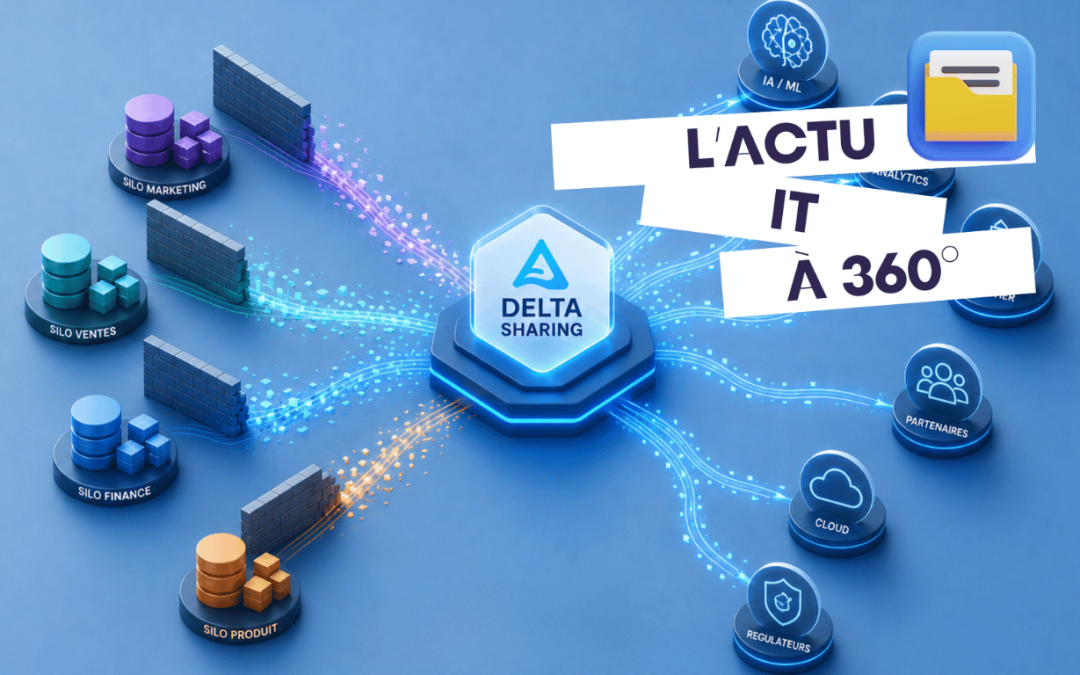
Databricks extends Delta Sharing to AI and aims to break down data silos
Data is no longer enough: intelligence must now be shared too Artificial intelligence is transforming the way companies use their data. Yet one major obstacle remains: the resources needed for AI projects are often scattered across different platforms, teams and...

RTX Spark: Nvidia accelerates the shift to AI-optimised PCs
Nvidia wants to redefine the PC for the age of artificial intelligence Unveiled at Computex 2026, the RTX Spark chip marks a new stage in the evolution of personal computers. With this Arm-based platform, Nvidia is not simply seeking to offer a more powerful...

WiFi 8 is arriving sooner than expected: what it means for businesses
A new generation of networking is already on the horizon While WiFi 7 is only just beginning to spread among businesses and consumers, the industry is already preparing the next step. TP-Link has just unveiled the first WiFi 8-compatible router, confirming that the...

Webedia-Elephant turns to Gemini Enterprise to industrialise generative AI
IT outages become a board-level issue Long regarded as mere technical incidents, service outages are now taking on a whole new dimension. According to a study by Oxford Economics for Splunk, Global 2000 companies suffer an average of 60 downtime incidents a year, at...

$600 billion lost: IT outages take on a new dimension
IT outages are becoming a boardroom issue Long regarded as mere technical incidents, service interruptions are now taking on a whole new dimension. According to a study conducted by Oxford Economics for Splunk, Global 2000 companies suffer an average of 60 downtime...

Lightwell: IBM and Red Hat tackle the open source patching headache
AI finds flaws faster than companies can fix them Artificial intelligence is profoundly transforming cybersecurity. While it makes it possible to detect vulnerabilities more quickly, it also creates a new challenge: the ability to fix a growing number of flaws within...

AWS strengthens OpenSearch to connect AI to enterprise data
AI agents are forcing the cloud to evolve The rise of agentic AI is profoundly transforming cloud infrastructure. Unlike traditional conversational assistants, intelligent agents must access data, interact with several systems and carry out tasks autonomously. To meet...