


Chrome takes a new step towards the intelligent browser
Web browsers no longer simply display web pages. They are gradually becoming genuine assistants capable of understanding the context in which users are working. With the new “Select from screen” feature, Google is continuing this transformation by allowing Gemini to analyse the elements visible on a web page directly. This development simplifies interactions with artificial intelligence and brings Chrome closer to a smarter, more intuitive working environment.
No more need to describe what you see
Until now, asking an AI for help often meant copying text, taking a screenshot or writing a description that could be long and imprecise. Google wants to eliminate this step with a much more natural approach.
With “Select from screen”, users can simply draw a box around an element visible in a Chrome tab, then ask Gemini about that content1. The assistant can thus directly analyse a paragraph, an image, a chart, a diagram or even a product photo.
This interaction is reminiscent of how Circle to Search works on Android, now adapted for the Chrome browser.
A much more natural interaction with AI
The novelty does not lie solely in visual selection. It reflects a deeper change in the way users communicate with intelligent assistants.
Instead of explaining what you want analysed, you now simply show the element in question. This approach reduces ambiguity, speeds up exchanges and improves the relevance of the answers generated by Gemini.
This multimodal approach is gradually becoming the norm among the leading artificial intelligence players.
A wide range of uses for professionals
Google envisages several use cases that go well beyond simply looking up information.
Users can, for example:
- ask for an explanation of a complex chart;
- compare several products displayed on the same page;
- analyse a technical image;
- summarise a document;
- turn content into a table or a list;
- get additional information about a visual element1.
The ability to keep several selections during the same session also makes it easier to compare different pieces of content.
Chrome is gradually becoming a work assistant
This feature illustrates an important shift in web browsers. Chrome is no longer used solely to look up information. It is becoming an environment capable of directly assisting users in their everyday tasks.
This approach is part of a broader Google strategy to put Gemini at the heart of all its products. After Android, Workspace and online search, the browser is also becoming a key interface for artificial intelligence.
A new step towards contextual AI
The arrival of this feature confirms the emergence of contextual AI. Unlike traditional assistants, Gemini no longer responds solely to text commands. It now takes into account the visual context in which the user is working in order to produce more relevant answers.
This capability is also one of the foundations of agentic AI, in which systems understand their environment before carrying out an action.
Simple activation for users
The feature is available from Chrome 149 onwards. Once the browser has been updated, simply open the Gemini panel via the “Ask Gemini” button, then use the “Select from screen” option available from the “+” menu1.
Users can then freely select one or more areas of the page before asking the assistant their questions.
Browsers are becoming a new AI platform
With this development, Google confirms that web browsers are gradually becoming a strategic platform for artificial intelligence. Having transformed online search, the company is now seeking to enrich the browsing experience directly with assistants capable of understanding what is displayed on screen.
This trend could permanently change professional practices, particularly in monitoring, documentation, training and data analysis.
Understanding intelligent interfaces is becoming essential
This development highlights an increasingly sought-after skill: designing interfaces that integrate artificial intelligence. Future IT professionals will need to understand how multimodal technologies, generative AI, data management and agentic AI interact to deliver more natural and more effective user experiences.
Chrome opens a new chapter in intelligent assistance
With “Select from screen”, Google is continuing to turn Chrome into a true digital assistant. For students and future digital professionals, this development illustrates an underlying trend: tomorrow, interfaces will no longer just ask users what they want to do; they will directly understand what they are looking at in order to assist them more effectively.
360° IT News — decoding technology to understand the jobs of tomorrow.
Further reading
The integration of Gemini into Chrome illustrates a major shift: everyday applications are gradually becoming able to understand the context in which their users operate. This contextual intelligence is transforming the way we interact with digital tools and paving the way for new professional uses. On a related topic, read our article “With iOS 27, Apple redesigns the user experience for the AI era”, which shows how Apple is also building artificial intelligence into the heart of its operating system to make interactions more natural and more personalised.
References
1. Google. (2026). Gemini in Chrome: Select from screen.
https://support.google.com/chrome
Europe accuses Anthropic of discrimination after Fable 5 is blocked
A US decision that sparks an international crisis The sudden suspension of access to Anthropic’s Fable 5 and Mythos 5 models outside the United States now goes well beyond technology. What initially looked like a national security measure is taking on a major...
Mobi Fold and Spotlight 2: Logitech aims to simplify everyday hybrid working
The office is everywhere, but the tools do not always keep up Hybrid working has profoundly changed professional habits. Video-conference meetings, frequent travel, days split between home, the office and coworking spaces: employees now move between multiple...

+80%: agentic AI triggers a record surge in enterprise SSD prices
Artificial intelligence is putting new strain on infrastructure Artificial intelligence is often associated with graphics processors and massive computing centres. Yet another essential component of digital infrastructure is coming under unprecedented pressure:...
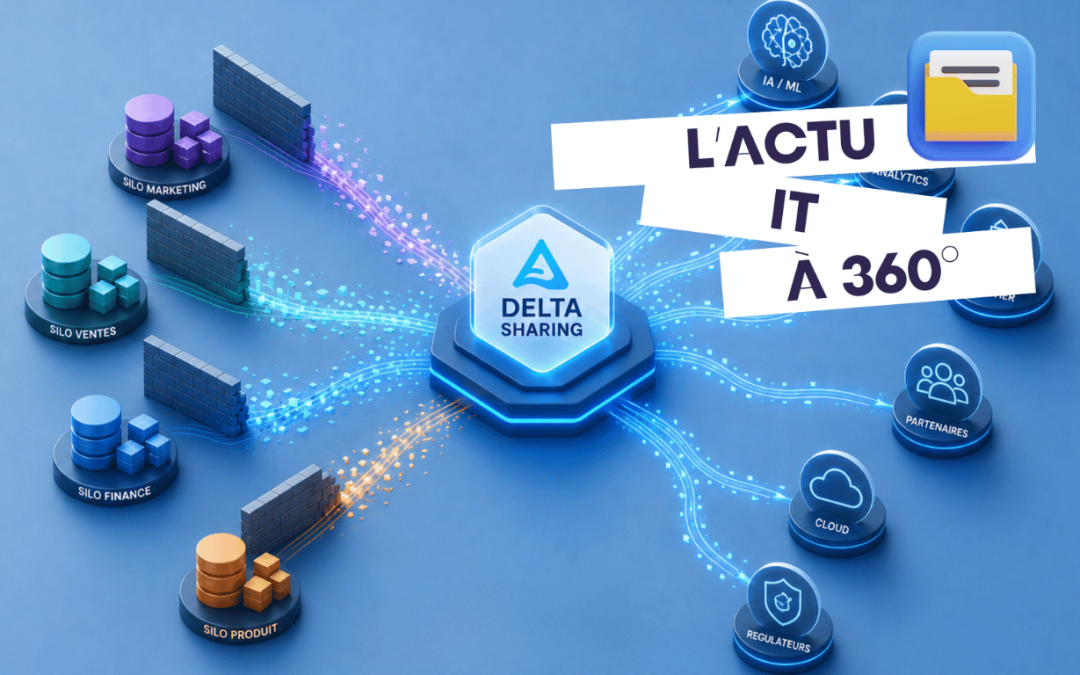
Databricks extends Delta Sharing to AI and aims to break down data silos
Data is no longer enough: intelligence must now be shared too Artificial intelligence is transforming the way companies use their data. Yet one major obstacle remains: the resources needed for AI projects are often scattered across different platforms, teams and...

RTX Spark: Nvidia accelerates the shift to AI-optimised PCs
Nvidia wants to redefine the PC for the age of artificial intelligence Unveiled at Computex 2026, the RTX Spark chip marks a new stage in the evolution of personal computers. With this Arm-based platform, Nvidia is not simply seeking to offer a more powerful...

WiFi 8 is arriving sooner than expected: what it means for businesses
A new generation of networking is already on the horizon While WiFi 7 is only just beginning to spread among businesses and consumers, the industry is already preparing the next step. TP-Link has just unveiled the first WiFi 8-compatible router, confirming that the...

Webedia-Elephant turns to Gemini Enterprise to industrialise generative AI
IT outages become a board-level issue Long regarded as mere technical incidents, service outages are now taking on a whole new dimension. According to a study by Oxford Economics for Splunk, Global 2000 companies suffer an average of 60 downtime incidents a year, at...

$600 billion lost: IT outages take on a new dimension
IT outages are becoming a boardroom issue Long regarded as mere technical incidents, service interruptions are now taking on a whole new dimension. According to a study conducted by Oxford Economics for Splunk, Global 2000 companies suffer an average of 60 downtime...

Lightwell: IBM and Red Hat tackle the open source patching headache
AI finds flaws faster than companies can fix them Artificial intelligence is profoundly transforming cybersecurity. While it makes it possible to detect vulnerabilities more quickly, it also creates a new challenge: the ability to fix a growing number of flaws within...

AWS strengthens OpenSearch to connect AI to enterprise data
AI agents are forcing the cloud to evolve The rise of agentic AI is profoundly transforming cloud infrastructure. Unlike traditional conversational assistants, intelligent agents must access data, interact with several systems and carry out tasks autonomously. To meet...