


Artificial intelligence is putting new strain on infrastructure
Artificial intelligence is often associated with graphics processors and massive computing centres. Yet another essential component of digital infrastructure is coming under unprecedented pressure: storage. According to the latest market analyses, the explosion of agentic AI and inference workloads is causing a shortage of enterprise SSDs, leading to a dramatic rise in prices. In just a few months, contract prices have risen by around 80%, revealing a new challenge for companies engaged in digital transformation.
Storage becomes the new fuel of AI
For several years, attention focused mainly on the computing power needed to train artificial intelligence models. Today, the market is changing. Companies are now deploying AI agents, intelligent assistants and applications capable of interacting in real time with users and databases. This inference phase requires fast, constant access to huge volumes of data, making SSDs a strategic resource for modern infrastructure.
Demand outstripping production capacity
According to TrendForce, the enterprise SSD market recorded quarter-on-quarter growth of more than 86% in the first quarter of 20261. This exceptional growth is driven mainly by cloud service providers, which are stepping up investment to meet growing demand for artificial intelligence capacity. Faced with this influx of orders, production capacity is struggling to keep up. Manufacturers’ inventories are at historically low levels, fuelling strong pressure on prices.
Memory giants are reaping the benefits
This situation directly benefits the main players in the memory market. Samsung retains its dominant position with more than $7 billion in quarterly revenue, while SK hynix, Solidigm, Micron, Kioxia and SanDisk are also seeing strong growth in their businesses1. To meet demand, several manufacturers are redirecting their production capacity towards high-density enterprise SSDs, sometimes at the expense of other segments such as smartphones or consumer computers.
Agentic AI is changing data centre architecture
The rise of agentic AI is profoundly transforming digital infrastructure. Models need fast access to vast datasets, must retain context histories and interact with multiple systems. This considerably increases the need for fast storage. Whereas GPUs had until now been seen as the main limiting factor, SSDs are now becoming an equally critical element in ensuring the performance of AI platforms.
Companies are discovering a new hidden cost
For many organisations, the rise in SSD prices is an indirect cost of adopting artificial intelligence. The investment required no longer concerns only models, software licences or computing capacity. Storage infrastructure must also be sized to absorb growing volumes of data and guarantee response times compatible with modern AI use cases. This reality could weigh on IT budgets in the coming years.
Storage becomes a strategic issue
As intelligent systems become widespread, storage availability is becoming a competitive factor. Companies able to secure their supplies and optimise their infrastructure will have a significant advantage over their competitors. This development is reminiscent of the race for GPUs seen in recent years, but it now concerns a less visible yet essential component of the digital ecosystem.
Understanding data infrastructure is becoming indispensable
This transformation highlights a strategic skill: managing storage and data infrastructure. Future IT professionals will need to understand high-performance storage mechanisms, cloud architectures and the specific needs of artificial intelligence applications. In a world where data feeds models, mastering storage is becoming as important as mastering compute.
Infrastructure becomes AI’s next challenge
With this surge in enterprise SSD prices, the industry is discovering that the AI revolution does not rest on algorithms alone. Physical infrastructure, long taken for granted, is in turn becoming a strategic resource. For students and future IT professionals, this development reveals a profound change: the success of artificial intelligence projects will depend as much on the quality of the infrastructure as on the performance of the models themselves.
360° IT News — decoding technology to understand the jobs of tomorrow.
Further reading
Soaring SSD prices show that the rise of artificial intelligence depends not only on models but also on infrastructure capable of storing and processing ever-growing volumes of data. This pressure is felt across the entire technology chain, from data centres to specialised hardware components. On a related topic, read our article “ Data centre boom: Legrand goes on the offensive in China and the UK ”, which examines how manufacturers are preparing for the rapid growth of the infrastructure needed for AI.
References
1. TrendForce. (2026). Enterprise SSD Market Analysis Q1 2026.
https://www.trendforce.com

F5 strengthens its WAF to tackle the cyber threats of the AI era
Cyberattacks are evolving faster than patches Artificial intelligence is transforming corporate cybersecurity, but it is also benefiting attackers. New models capable of rapidly identifying vulnerabilities or automating certain exploitation phases are dramatically...

Europe accuses Anthropic of discrimination after Fable 5 is blocked
A US decision that sparks an international crisis The sudden suspension of access to Anthropic’s Fable 5 and Mythos 5 models outside the United States now goes well beyond technology. What initially looked like a national security measure is taking on a major...

Mobi Fold and Spotlight 2: Logitech aims to simplify everyday hybrid working
The office is everywhere, but the tools do not always keep up Hybrid working has profoundly changed professional habits. Video-conference meetings, frequent travel, days split between home, the office and coworking spaces: employees now move between multiple...
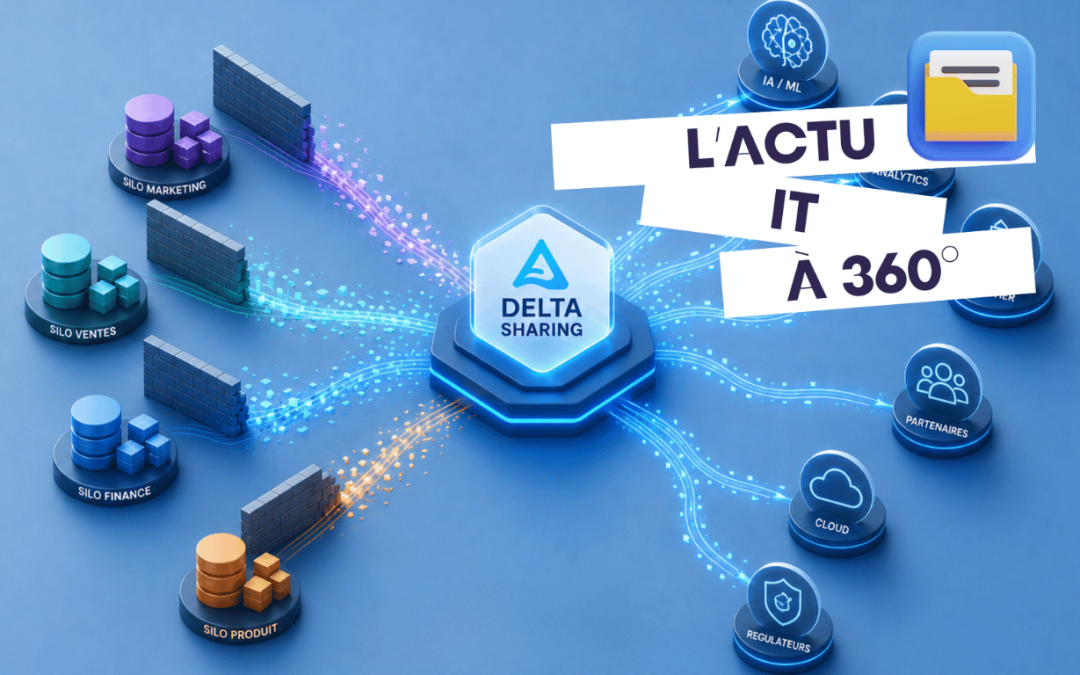
Databricks extends Delta Sharing to AI and aims to break down data silos
Data is no longer enough: intelligence must now be shared too Artificial intelligence is transforming the way companies use their data. Yet one major obstacle remains: the resources needed for AI projects are often scattered across different platforms, teams and...

RTX Spark: Nvidia accelerates the shift to AI-optimised PCs
Nvidia wants to redefine the PC for the age of artificial intelligence Unveiled at Computex 2026, the RTX Spark chip marks a new stage in the evolution of personal computers. With this Arm-based platform, Nvidia is not simply seeking to offer a more powerful...

WiFi 8 is arriving sooner than expected: what it means for businesses
A new generation of networking is already on the horizon While WiFi 7 is only just beginning to spread among businesses and consumers, the industry is already preparing the next step. TP-Link has just unveiled the first WiFi 8-compatible router, confirming that the...

Webedia-Elephant turns to Gemini Enterprise to industrialise generative AI
IT outages become a board-level issue Long regarded as mere technical incidents, service outages are now taking on a whole new dimension. According to a study by Oxford Economics for Splunk, Global 2000 companies suffer an average of 60 downtime incidents a year, at...

$600 billion lost: IT outages take on a new dimension
IT outages are becoming a boardroom issue Long regarded as mere technical incidents, service interruptions are now taking on a whole new dimension. According to a study conducted by Oxford Economics for Splunk, Global 2000 companies suffer an average of 60 downtime...

Lightwell: IBM and Red Hat tackle the open source patching headache
AI finds flaws faster than companies can fix them Artificial intelligence is profoundly transforming cybersecurity. While it makes it possible to detect vulnerabilities more quickly, it also creates a new challenge: the ability to fix a growing number of flaws within...

AWS strengthens OpenSearch to connect AI to enterprise data
AI agents are forcing the cloud to evolve The rise of agentic AI is profoundly transforming cloud infrastructure. Unlike traditional conversational assistants, intelligent agents must access data, interact with several systems and carry out tasks autonomously. To meet...