


A new generation of networking is already on the horizon
While WiFi 7 is only just beginning to spread among businesses and consumers, the industry is already preparing the next step. TP-Link has just unveiled the first WiFi 8-compatible router, confirming that the technology timeline for network infrastructure is speeding up. Behind this announcement lies a significant development: WiFi 8 does not simply aim to increase speeds, but to improve the stability, reliability and quality of connections in ever more complex environments.
Speed is no longer the overriding priority
For several generations, the evolution of WiFi has mainly been associated with speed gains. With WiFi 8, also known as the IEEE 802.11bn standard, the objective is changing. Manufacturers are now seeking to guarantee a more predictable network experience, even in very dense environments where hundreds of devices are connected at the same time. This shift reflects changing digital usage, in which service interruptions and latency problems often cost more than a few extra megabits per second.
Businesses need more reliable networks
The development of the cloud, hybrid working and collaboration tools has profoundly changed organisations’ needs. Video conferencing, SaaS applications, data analytics platforms and cloud development environments all require stable, continuous connectivity. According to Gartner, digital service interruptions are now among the main operational risks facing modern businesses1. In this context, WiFi 8 aims to reduce disruption and improve the continuity of network traffic.
AI is increasing the pressure on infrastructure
Artificial intelligence is also contributing to this transformation. AI agents, intelligent assistants and generative AI applications require constant exchanges with cloud platforms and remote databases. As these uses become widespread, wireless networks are becoming a critical component of information system performance. WiFi 8 has been designed to handle these continuous data flows better and to limit congestion.
Better management of connected environments
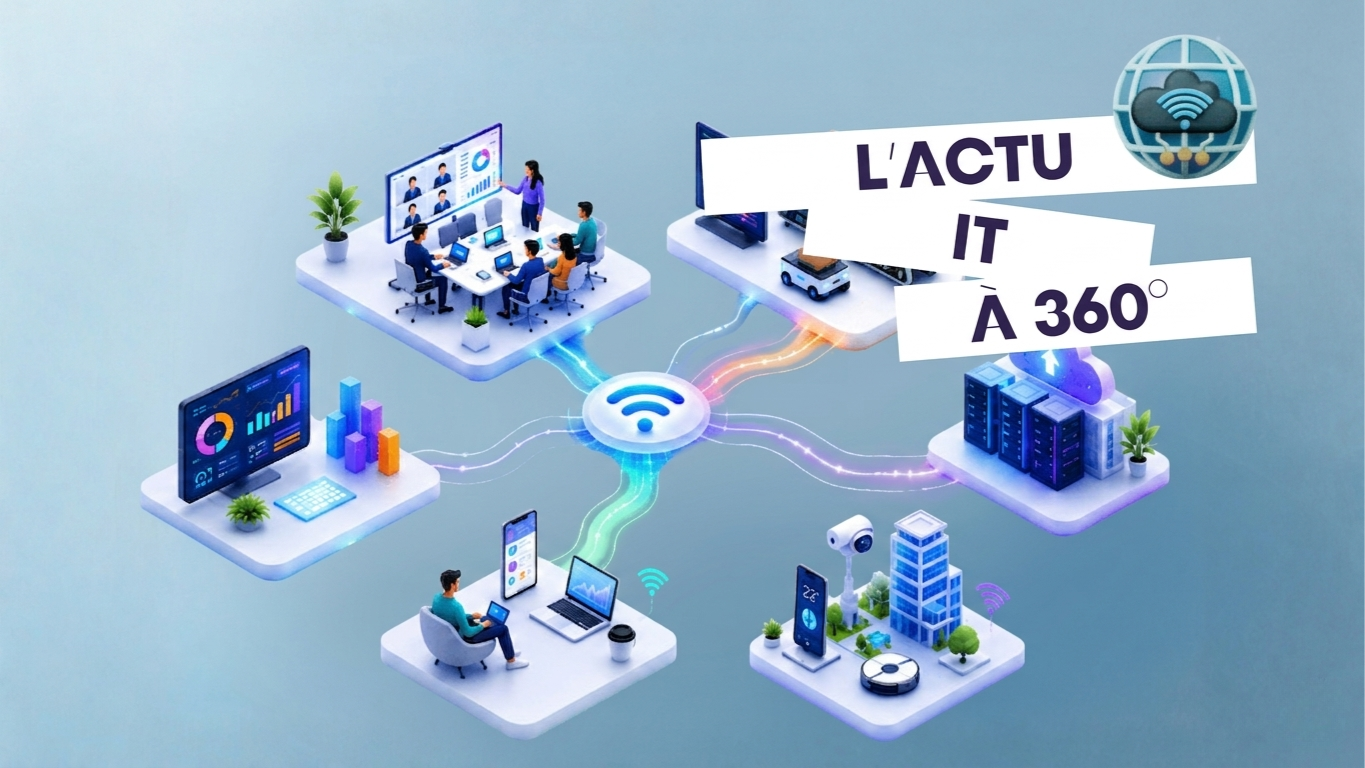
Modern offices now bring together computers, smartphones, IoT sensors, smart cameras and collaboration equipment. In some buildings, several thousand devices may share the same network infrastructure. WiFi 8 introduces mechanisms designed to optimise the management of these highly connected environments, notably by improving coordination between access points and the distribution of traffic.
Data centres and the cloud also benefit from this development
Even though WiFi is often associated with user devices, its evolution also has indirect consequences for cloud infrastructure. More stable connectivity makes it easier to access remotely hosted platforms and improves the experience of distributed applications. At a time when businesses are migrating their data and services to the cloud on a massive scale, the quality of the local network is becoming a strategic element in the overall performance of the information system.
A transition that will take several years
As with previous generations, the adoption of WiFi 8 will be gradual. Businesses will need to renew their network equipment and devices before they can take full advantage of the standard’s new capabilities. However, the early arrival of the first routers shows that manufacturers are already anticipating organisations’ future needs. This preparation is essential as data volumes continue to grow under the impact of AI, video and connected devices.
Understanding the networks of tomorrow is becoming essential
This development highlights a strategic skill: administering modern network infrastructure. Future IT professionals will need to understand advanced WiFi architectures, quality of service management, cloud connectivity and the integration of connected devices. As digital uses multiply, networks are becoming a key factor in performance and competitiveness.
WiFi is becoming a strategic lever for digital transformation
With the arrival of WiFi 8, the industry is confirming that network infrastructure is evolving to meet the demands of AI, the cloud and ever more connected digital environments. For students and future IT professionals, this transition is worth following. It shows that tomorrow’s digital performance will depend as much on the quality of networks as on the power of the applications that use them.
360° IT News — decoding technology to understand the jobs of tomorrow.
Further reading
The evolution of WiFi 8 illustrates a broader transformation of digital infrastructure, which must now support ever larger volumes of data and AI-driven uses. This modernisation also concerns enterprise networks and cloud architectures, which face new performance and resilience challenges. On a related subject, read our article “In the cloud era, enterprise networks are changing standards”, which analyses how network infrastructure is evolving to support organisations’ digital transformation.
References
1. Gartner. (2025). Future of Enterprise Networking Report.
https://www.gartner.com
2. IEEE. (2025). IEEE 802.11bn Ultra High Reliability Wireless Networks.
https://www.ieee.org

With Stainless, Anthropic aims to put Claude at the heart of software development
The AI battle is shifting to developer tools Anthropic is continuing its rise in artificial intelligence with the acquisition of Stainless, a start-up specialising in development tools and API automation. Behind this acquisition lies a significant strategic...

Microsoft transforms Office with Fintool and autonomous AI
Office enters the age of intelligent agents Microsoft is stepping up its agentic artificial intelligence strategy with the acquisition of Fintool, a start-up specialising in automated financial analysis. Founded in San Francisco by Frenchmen Nicolas Bustamante and...

Googlebook: Google wants to reinvent the computer around AI
A new generation of PCs designed for artificial intelligence Google is preparing a new category of laptops called “Googlebook”, designed from the ground up around artificial intelligence. After AI-powered smartphones, the company now wants to turn the PC itself into a...

OpsMill: the start-up that wants to prepare IT systems for the AI shock
Artificial intelligence is moving faster than IT infrastructure Generative artificial intelligence is rapidly transforming businesses, but one reality is becoming increasingly clear: today’s IT infrastructure is not ready to absorb this revolution. This is...

What if your future cloud fitted in a drop of DNA?
Data storage is reaching its limits Every day, humanity produces a gigantic amount of data. In 2025, the volume generated worldwide each day is estimated at almost 300 exabytes, the equivalent of a century of European audiovisual archives created every 24 hours1. With...

+13.5% in 2026: corporate IT spending soars
A sharp acceleration in IT investment Worldwide IT spending is expected to reach 6.31 trillion dollars in 2026, a rise of 13.5% year on year, according to Gartner’s latest forecast1. This figure marks a clear acceleration compared with previous estimates (+10.8%),...

Microsoft builds legal AI into Word: contracts go automated
Word becomes an intelligent legal tool Microsoft is taking a new step by building artificial intelligence specialised in legal analysis directly into Word. The aim is clear: to automate contract review, detect risks and speed up document production. At a time when...

Merck and Google Cloud: a key partnership for agentic AI in the enterprise
A strategic investment to transform the company through AI Biopharmaceutical giant Merck has announced a 1-billion-dollar, 10-year partnership with Google Cloud, with a clear goal: to embed agentic artificial intelligence at the heart of its operations. This project...

Chrome Enterprise goes AI: Google automates browsing and workflows
The browser becomes a genuinely intelligent work tool Google is upgrading Chrome Enterprise with advanced artificial intelligence capabilities, turning the browser into an active platform able to carry out tasks. Autonomous browsing, workflow automation and...

$32 billion: Google launches a cyber army of AI agents
Cybersecurity enters a new dimension Google has made a major move by announcing an investment of $32 billion in developing a “cyber army” of artificial intelligence agents. Behind this term lies a technological reality: systems capable of automatically detecting,...