


IT outages are becoming a boardroom issue
Long regarded as mere technical incidents, service interruptions are now taking on a whole new dimension. According to a study conducted by Oxford Economics for Splunk, Global 2000 companies suffer an average of 60 downtime incidents a year, at a total cost estimated at $600 billion worldwide. These figures illustrate a new reality: digital resilience has become a strategic issue that extends far beyond IT departments.
A bill reaching record levels
The financial consequences of service interruptions are considerable. The study estimates that each Global 2000 company loses an average of $300 million a year because of system downtime. Each minute of downtime represents nearly €13,000 in losses, or more than €775,000 per hour. The technology and energy sectors are among the most exposed to these risks.
Cyberattacks drive costs even higher
Lost revenue is no longer the only factor to consider. Regulatory fines linked to compliance requirements, particularly under the GDPR or the European DORA regulation, average €44 million per major outage. On top of this come ransoms paid during ransomware attacks, estimated at €35 million on average. These costs are now among the main direct impacts associated with information system downtime.
The impact goes far beyond the technical sphere
The consequences of an outage are not limited to infrastructure. According to the study, nearly 90% of the executives surveyed report an increase in requests to support services and a sharp deterioration in the customer experience after an incident. More than eight out of ten companies say they had to mobilise their teams on a massive scale to restore services, while 81% report losing customers following a major outage.
A direct threat to companies’ reputations
Reputation is also becoming a critical factor. A major outage can take several months to fully restore the trust of customers and partners. The study also observes an average 3.4% fall in share price after a significant IT incident. At a time when businesses are increasingly dependent on digital services, system availability is becoming central to their brand image.
AI helps prevent incidents… but also creates new risks
Faced with this increase in outages, businesses are investing heavily in observability and artificial intelligence. Nearly 72% of ITOps and engineering teams now regard end-to-end observability as a strategic priority. Annual spending on AI to prevent outages averages $24.5 million. However, this automation also brings new challenges: nearly half of the managers surveyed say they have already experienced outages caused by errors in AI-driven automated systems.
Digital resilience is becoming a competitive advantage
In an environment where services must remain accessible at all times, the ability to prevent, detect and quickly fix incidents is becoming a differentiating factor. Companies that invest in infrastructure monitoring, intelligent automation and resilient architectures are better equipped to limit the financial and reputational impact of outages. Digital resilience is no longer just a matter of business continuity; it is becoming a genuine competitive advantage.
Understanding IT resilience is becoming essential
This development highlights a strategic skill: managing infrastructure and digital continuity. Future IT professionals must master observability, cybersecurity, the cloud and disaster recovery mechanisms. As organisations become dependent on digital services, the ability to keep systems available is becoming as important as their performance.
360° IT News — decoding technology to understand the jobs of tomorrow.
Further reading
The increase in service interruptions shows just how critical digital infrastructure has become for businesses. This pressure is pushing technology players to invest heavily in automation, observability and artificial intelligence to prevent incidents before they occur. On a related subject, read our article “Lightwell: IBM and Red Hat tackle the open-source patching headache”, which analyses how AI and automation could speed up the fixing of vulnerabilities and strengthen the resilience of information systems.
References
1. Oxford Economics & Splunk. (2026). The Hidden Cost of Downtime Report.
https://www.splunk.com
GitHub Copilot bulks up for business: coding agents come under IT control
Copilot is no longer just there to suggest the next line GitHub Copilot is continuing its transformation. Originally known mainly for completing code in the editor, the tool is now evolving towards agents capable of exploring a project, modifying files, using tools...

PDFs, presentations, audio: Adobe wants to turn Acrobat into a content factory
Acrobat no longer just wants to open your documents For more than thirty years, Acrobat has mainly been used to read, create, edit, sign and share PDFs. Adobe now wants to give it a much broader role. On 9 September 2026, the company announced new capabilities based...
Salesforce plugs Claude into its CRM: Claudeforce prepares for life after the interface
What if the CRM soon no longer needed to be opened? For decades, using a CRM meant navigating between customer records, dashboards, menus and forms. With Claudeforce, Salesforce and Anthropic want to change this logic: rather than forcing users to go into Salesforce...

Kimi K3, Mistral, DeepSeek: Oracle turns OCI into an AI model hub
Oracle wants to make OCI a one-stop shop for AI Oracle is stepping up its efforts in the AI cloud battle by significantly expanding the catalogue of models available in OCI Enterprise AI. On 4 September 2026, the group announced in particular the integration of Kimi...
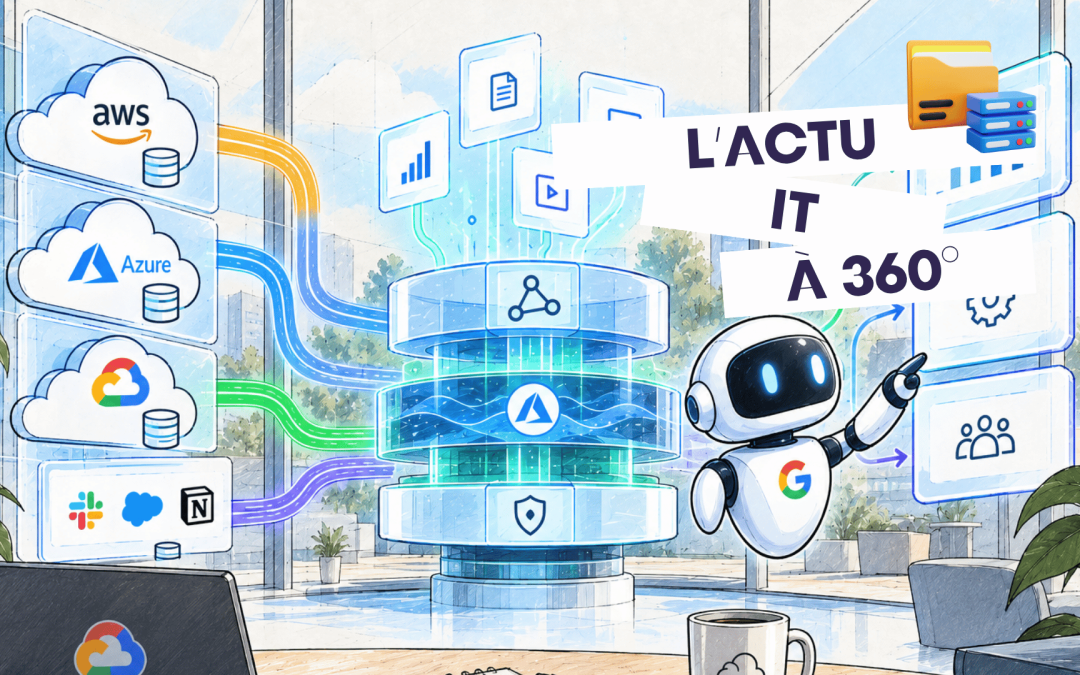
Agentic Data Cloud: Google rethinks data for the age of AI agents
AI agents are forcing Google to rethink data architecture AI agents promise to search for information, make decisions and act directly within company systems, but this autonomy depends on one essential condition: accessing the right data and, above all, understanding...
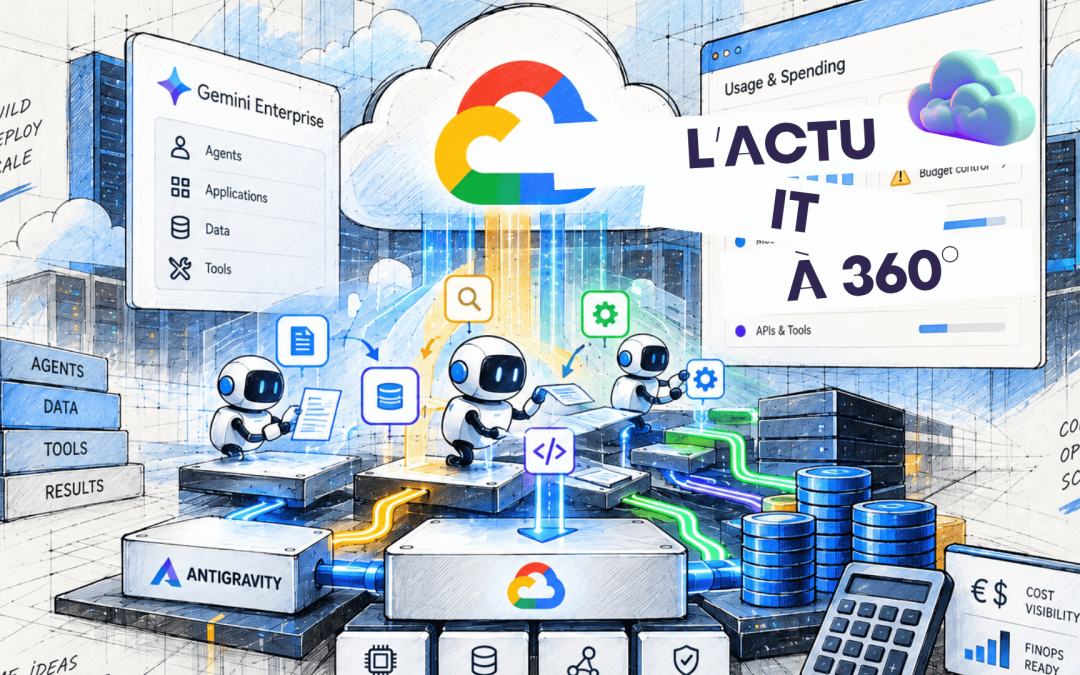
Google Cloud tackles the hidden bill of AI agents
AI agents raise a new problem: how much does a task really cost? As companies move from chatbots to AI agents able to work through multiple steps, the question of cost becomes much more complex. A chatbot generally handles a request and generates an answer, whereas an...
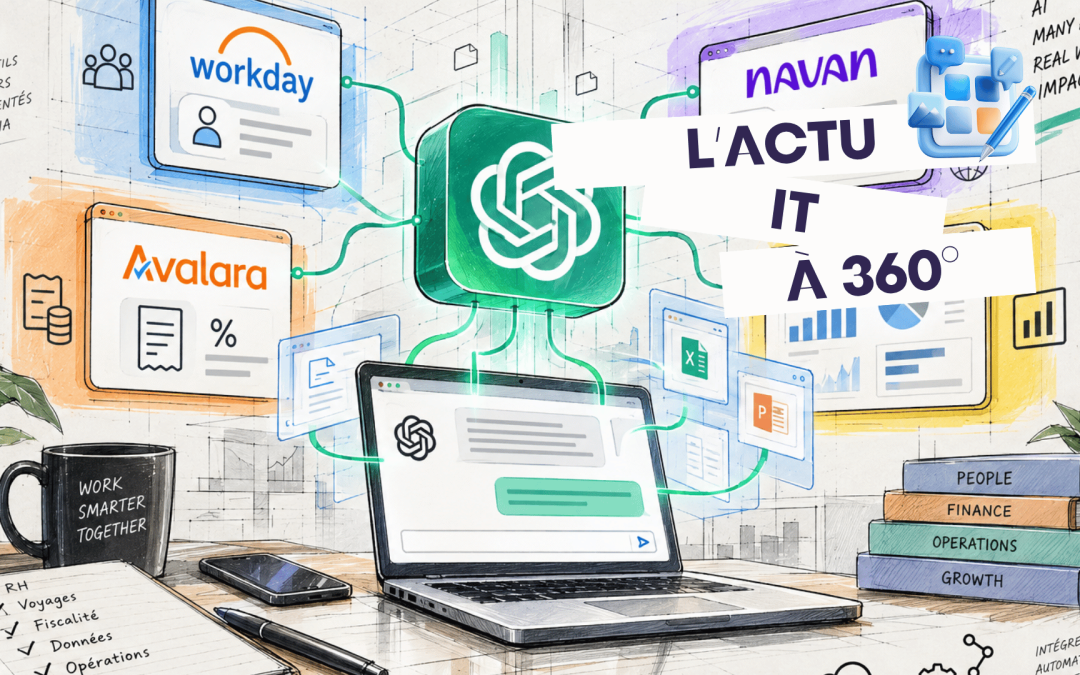
Workday, Navan, Avalara: ChatGPT Work moves into business software
ChatGPT Work is gradually leaving the chat window With GPT-6 Astra, OpenAI is no longer simply trying to improve the quality of ChatGPT’s answers. The company wants to bring its AI closer to the applications in which employees actually work. With the arrival of GPT-6...
From chip to cloud: Groq raises 350 million to scale up
Groq now wants to sell cloud rather than just chips Groq is pursuing a major strategic transformation. Long seen as one of Nvidia’s challengers thanks to its LPUs (Language Processing Units) specialised in artificial intelligence model inference, the group is now...
Muse Code: Meta launches its AI agent to tackle giant codebases
Meta wants to bring AI agents into complex software projects Meta is stepping up its efforts in AI-assisted software development with Muse Code, a new agent designed to work on large codebases, where traditional assistants can quickly lose the context needed to...
Qwen3.8-Max reportedly coded for 16 days without human intervention
Alibaba tests how far an autonomous AI developer can go Alibaba claims to have reached a new milestone in agentic software development with Qwen3.8-Max, its new flagship model launched in early August 2026. In an internal test, the model reportedly worked fully...