


Data storage is reaching its limits
Every day, humanity produces a gigantic amount of data. In 2025, the volume generated worldwide each day is estimated at almost 300 exabytes, the equivalent of a century of European audiovisual archives created every 24 hours1. With the rise of artificial intelligence, the cloud and connected devices, this growth is becoming exponential. Behind this explosion lies a major problem: today’s storage infrastructure is gradually approaching its technical, energy and environmental limits.
PearCode wants to turn DNA into digital infrastructure
Against this backdrop, the French deeptech company PearCode, a spin-off from the I3S laboratory in Sophia Antipolis, has just launched a first archiving solution based on synthetic DNA. Long regarded as a futuristic technology, DNA storage is now starting to leave the laboratory and enter the market. The principle is to encode digital data as genetic sequences that can be preserved for decades, or even centuries, without significant degradation.
A gram of DNA could hold an entire data centre
One of the most spectacular arguments for DNA storage lies in its density. According to several studies, a single gram of DNA could theoretically hold the equivalent of an entire data centre’s data2. On top of this comes a major advantage: unlike traditional infrastructure, DNA does not require a continuous power supply to retain data. At a time when data centres already account for 1 to 2% of global electricity consumption, this prospect is attracting strong interest from the technology industry3.
The real challenge: automating data writing and reading
While the promise is immense, the main obstacle remains automation. Today, writing and reading data on DNA is still slow and expensive. The challenge for companies like PearCode is therefore to industrialise these processes in order to reduce costs and access times. This is precisely where the global competition is being played out. The players able to make this technology fast, reliable and accessible could redefine digital storage infrastructure in the coming decades.
A potential revolution for businesses and critical archives
The first target uses concern sensitive data and long-term archives: administrative documents, scientific data, digital heritage or medical records. For businesses, this approach could sharply reduce cold storage costs while improving data durability. SMEs could also benefit indirectly from this development through more efficient, less energy-hungry cloud services.
Between science, cloud and digital sovereignty
DNA storage is not just about technology; it also raises strategic issues. Controlling the storage infrastructure of the future could become a major digital sovereignty issue. While traditional data centres require massive amounts of energy and materials, DNA paves the way for a new, more compact and potentially more sustainable approach to the cloud. This transition could transform the way states and companies manage their critical data.
Understanding tomorrow’s infrastructure becomes essential
This development highlights a key skill: data and digital infrastructure. Future IT professionals will need to understand new storage architectures, their constraints and their uses. It is no longer just a matter of managing servers or conventional cloud, but of anticipating technologies capable of completely redefining the digital ecosystem.
Towards a biological cloud?
Even though DNA storage is still emerging, PearCode shows that the technology is gradually entering an industrial phase. The idea of storing data in a biological molecule may seem futuristic, but it addresses a very concrete problem: the saturation of digital infrastructure. For students and future IT professionals, this is a fascinating development. It shows that the future of the cloud may no longer rest solely on giant servers, but also on technologies directly inspired by living organisms.
360° IT News — decoding technology to understand the jobs of tomorrow.
Further reading
The emergence of DNA storage illustrates a profound transformation of digital infrastructure in the face of the explosion in data volumes generated by artificial intelligence and the cloud. This development is part of a worldwide search for more compact, durable solutions capable of overcoming the limits of traditional data centres. On a related topic, read our article “Data centre boom: Legrand goes on the offensive in China and the United Kingdom”, which analyses how storage and computing infrastructure is becoming a major strategic issue for the digital economy.
References
1. Statista. (2025). Global data creation forecast.
https://www.statista.com
2. Nature. (2021). DNA data storage density research.
https://www.nature.com
3. International Energy Agency. (2024). Data centres and electricity consumption.
https://www.iea.org

GitHub Copilot bulks up for business: coding agents come under IT control
Copilot is no longer just there to suggest the next line GitHub Copilot is continuing its transformation. Originally known mainly for completing code in the editor, the tool is now evolving towards agents capable of exploring a project, modifying files, using tools...
PDFs, presentations, audio: Adobe wants to turn Acrobat into a content factory
Acrobat no longer just wants to open your documents For more than thirty years, Acrobat has mainly been used to read, create, edit, sign and share PDFs. Adobe now wants to give it a much broader role. On 9 September 2026, the company announced new capabilities based...
Salesforce plugs Claude into its CRM: Claudeforce prepares for life after the interface
What if the CRM soon no longer needed to be opened? For decades, using a CRM meant navigating between customer records, dashboards, menus and forms. With Claudeforce, Salesforce and Anthropic want to change this logic: rather than forcing users to go into Salesforce...

Kimi K3, Mistral, DeepSeek: Oracle turns OCI into an AI model hub
Oracle wants to make OCI a one-stop shop for AI Oracle is stepping up its efforts in the AI cloud battle by significantly expanding the catalogue of models available in OCI Enterprise AI. On 4 September 2026, the group announced in particular the integration of Kimi...

Agentic Data Cloud: Google rethinks data for the age of AI agents
AI agents are forcing Google to rethink data architecture AI agents promise to search for information, make decisions and act directly within company systems, but this autonomy depends on one essential condition: accessing the right data and, above all, understanding...
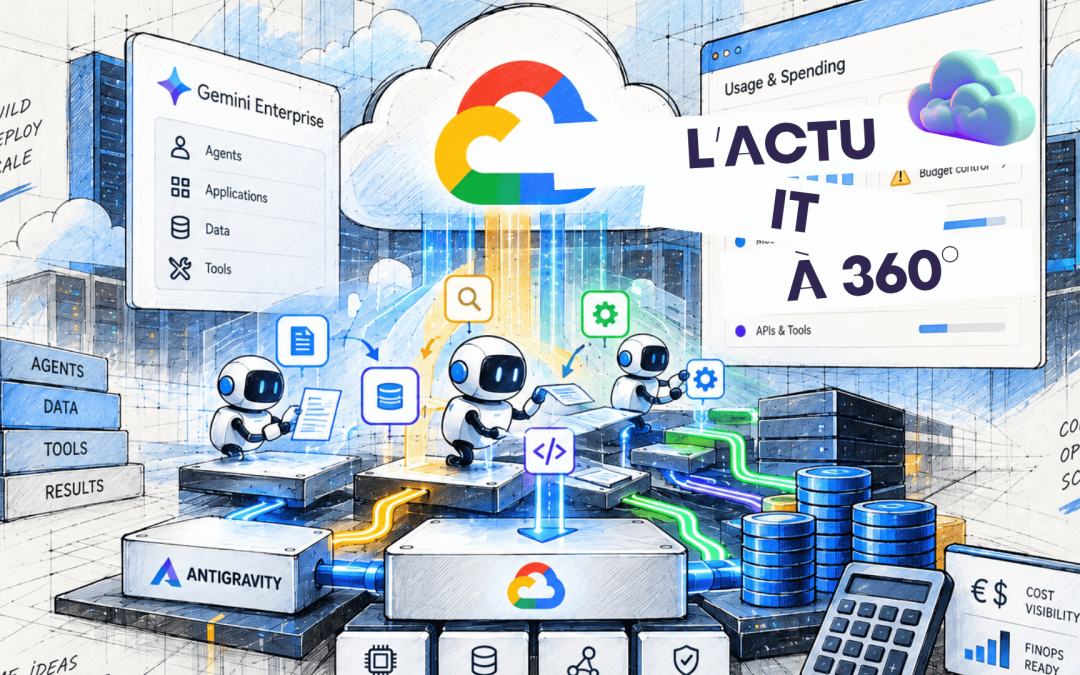
Google Cloud tackles the hidden bill of AI agents
AI agents raise a new problem: how much does a task really cost? As companies move from chatbots to AI agents able to work through multiple steps, the question of cost becomes much more complex. A chatbot generally handles a request and generates an answer, whereas an...
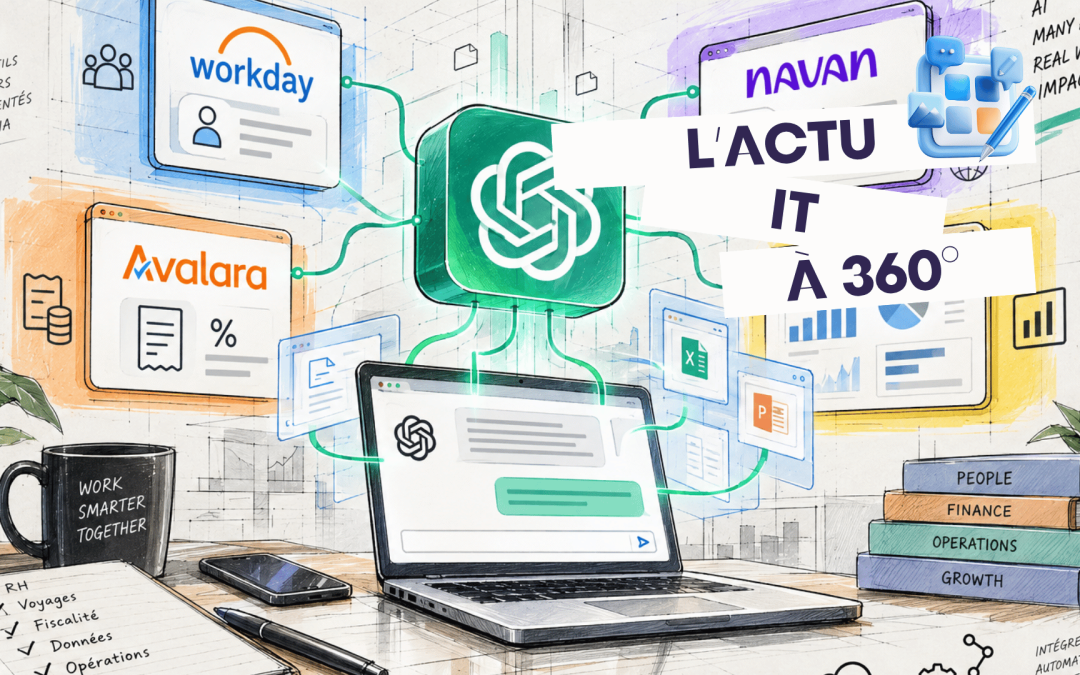
Workday, Navan, Avalara: ChatGPT Work moves into business software
ChatGPT Work is gradually leaving the chat window With GPT-6 Astra, OpenAI is no longer simply trying to improve the quality of ChatGPT’s answers. The company wants to bring its AI closer to the applications in which employees actually work. With the arrival of GPT-6...

From chip to cloud: Groq raises 350 million to scale up
Groq now wants to sell cloud rather than just chips Groq is pursuing a major strategic transformation. Long seen as one of Nvidia’s challengers thanks to its LPUs (Language Processing Units) specialised in artificial intelligence model inference, the group is now...

Muse Code: Meta launches its AI agent to tackle giant codebases
Meta wants to bring AI agents into complex software projects Meta is stepping up its efforts in AI-assisted software development with Muse Code, a new agent designed to work on large codebases, where traditional assistants can quickly lose the context needed to...

Qwen3.8-Max reportedly coded for 16 days without human intervention
Alibaba tests how far an autonomous AI developer can go Alibaba claims to have reached a new milestone in agentic software development with Qwen3.8-Max, its new flagship model launched in early August 2026. In an internal test, the model reportedly worked fully...