


The network is no longer just support: it is becoming a driver of performance
For a long time, the enterprise network was regarded as a simple technical infrastructure, often invisible as long as it worked. But with the explosion of the cloud, SaaS applications and artificial intelligence, it is becoming a central element of overall performance. Today, more than 80% of enterprise applications are hosted in the cloud, which places new demands on latency, availability and security1. The network no longer just carries data; it directly determines the effectiveness of digital tools and the productivity of teams.
The limits of the traditional model are holding back transformation
The historical model based on MPLS networks, long dominant, is now showing its limits in the face of new uses. Too rigid, costly and slow to deploy, it no longer meets businesses’ need for agility. With the proliferation of cloud tools, remote sites and hybrid working, traffic no longer passes solely through a single central hub. As a result, businesses suffer from latency, high costs and growing complexity. This model is becoming a real obstacle to digital transformation, at a time when speed of execution is essential.
Less latency, more agility: the network is becoming intelligent
To meet these challenges, businesses are migrating to modern architectures based on software-defined networking (SDN) and SD-WAN, which make it possible to steer traffic intelligently according to application needs. The aim is no longer simply to route data, but to optimise it in real time. These technologies make it possible, for example, to prioritise certain critical applications, reduce latency and improve the user experience. The network thus becomes a dynamic system, able to adapt continuously to business uses and constraints.
Ensuring business continuity is becoming an absolute priority
In a digital environment, a network outage can have immediate consequences for business. That is why resilience is becoming a central criterion. Businesses must be able to maintain their services even in the event of an incident, thanks to redundant architectures, multi-connectivity solutions (fibre, 5G, satellite) and automatic failover mechanisms. Today, some networks achieve availability levels of 99.9%, guaranteeing the business continuity that is essential for critical operations2.
Networks that adapt to cloud and SaaS uses
One of the major changes concerns direct access to cloud services. With approaches such as Direct Internet Access (DIA), traffic no longer systematically passes through a central site but breaks out locally, which reduces latency and improves the performance of tools such as Microsoft 365 or Salesforce. This development optimises the user experience while reducing bandwidth costs. It illustrates a shift towards distributed architectures that are better suited to modern environments3.
Managing hybrid networks is becoming a strategic skill
This transformation highlights a key skill: systems and network administration. IT professionals must now manage hybrid environments that combine traditional networks, the cloud, security and advanced connectivity. They must be able to monitor traffic, optimise performance and guarantee the security of exchanges. This ability to manage complex infrastructure is becoming essential to support the digital transformation of SMEs and large companies.
The network is becoming a competitive advantage for businesses
Today, the network is no longer limited to a technical role; it is becoming a strategic lever for competitiveness. A company able to guarantee fast, stable and secure connectivity can innovate faster, improve the customer experience and optimise its operations. Conversely, an ill-suited network can hold back growth. For students and future IT professionals, this shows that jobs are evolving towards architect roles capable of designing and managing high-performing, resilient infrastructure.
360° IT News — decoding technology to understand the jobs of tomorrow.
References
1. Gartner. (2023). Forecast Analysis: Public Cloud Services, Worldwide.
https://www.gartner.com/en/newsroom/press-releases
2. Cloudflare. (2023). What is network resilience?.
https://www.cloudflare.com/learning/network-layer/what-is-network-resilience/
3. Microsoft. (2023). Microsoft 365 network connectivity principles.
https://learn.microsoft.com/en-us/microsoft-365/enterprise/microsoft-365-network-connectivity-principles
F5 strengthens its WAF to tackle the cyber threats of the AI era
Cyberattacks are evolving faster than patches Artificial intelligence is transforming corporate cybersecurity, but it is also benefiting attackers. New models capable of rapidly identifying vulnerabilities or automating certain exploitation phases are dramatically...

Europe accuses Anthropic of discrimination after Fable 5 is blocked
A US decision that sparks an international crisis The sudden suspension of access to Anthropic’s Fable 5 and Mythos 5 models outside the United States now goes well beyond technology. What initially looked like a national security measure is taking on a major...

Mobi Fold and Spotlight 2: Logitech aims to simplify everyday hybrid working
The office is everywhere, but the tools do not always keep up Hybrid working has profoundly changed professional habits. Video-conference meetings, frequent travel, days split between home, the office and coworking spaces: employees now move between multiple...
+80%: agentic AI triggers a record surge in enterprise SSD prices
Artificial intelligence is putting new strain on infrastructure Artificial intelligence is often associated with graphics processors and massive computing centres. Yet another essential component of digital infrastructure is coming under unprecedented pressure:...
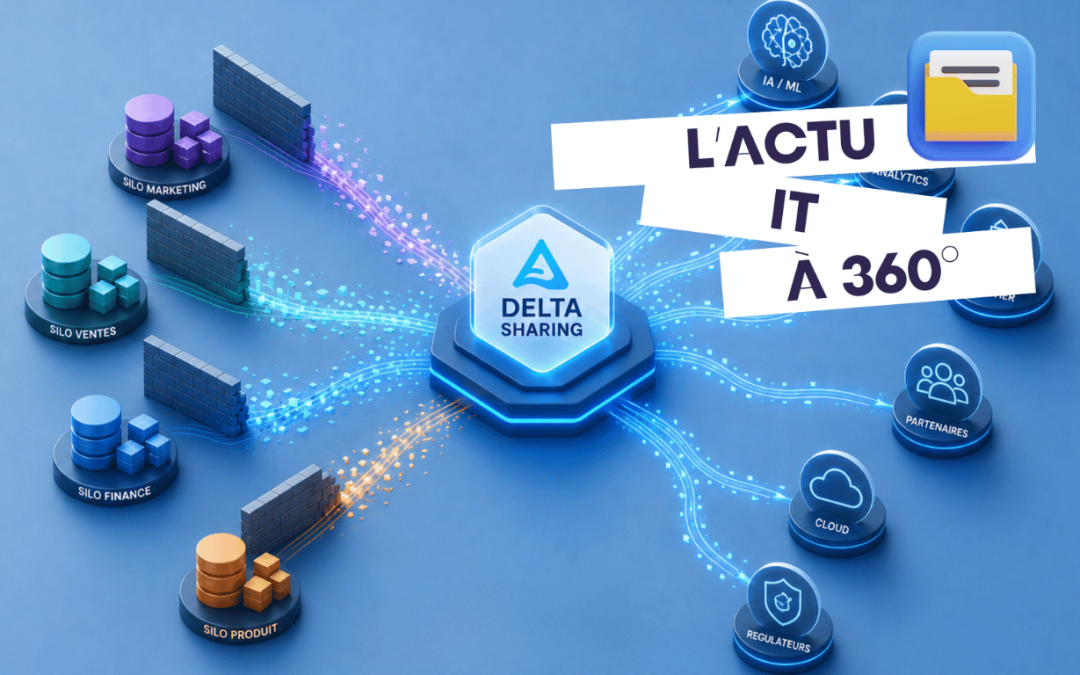
Databricks extends Delta Sharing to AI and aims to break down data silos
Data is no longer enough: intelligence must now be shared too Artificial intelligence is transforming the way companies use their data. Yet one major obstacle remains: the resources needed for AI projects are often scattered across different platforms, teams and...

RTX Spark: Nvidia accelerates the shift to AI-optimised PCs
Nvidia wants to redefine the PC for the age of artificial intelligence Unveiled at Computex 2026, the RTX Spark chip marks a new stage in the evolution of personal computers. With this Arm-based platform, Nvidia is not simply seeking to offer a more powerful...

WiFi 8 is arriving sooner than expected: what it means for businesses
A new generation of networking is already on the horizon While WiFi 7 is only just beginning to spread among businesses and consumers, the industry is already preparing the next step. TP-Link has just unveiled the first WiFi 8-compatible router, confirming that the...

Webedia-Elephant turns to Gemini Enterprise to industrialise generative AI
IT outages become a board-level issue Long regarded as mere technical incidents, service outages are now taking on a whole new dimension. According to a study by Oxford Economics for Splunk, Global 2000 companies suffer an average of 60 downtime incidents a year, at...

$600 billion lost: IT outages take on a new dimension
IT outages are becoming a boardroom issue Long regarded as mere technical incidents, service interruptions are now taking on a whole new dimension. According to a study conducted by Oxford Economics for Splunk, Global 2000 companies suffer an average of 60 downtime...

Lightwell: IBM and Red Hat tackle the open source patching headache
AI finds flaws faster than companies can fix them Artificial intelligence is profoundly transforming cybersecurity. While it makes it possible to detect vulnerabilities more quickly, it also creates a new challenge: the ability to fix a growing number of flaws within...