


News in brief
Tencent has just integrated OpenClaw into WeChat, turning the app into far more than a simple communication tool. This development introduces agents capable of carrying out tasks directly from the interface, without going through several applications or intermediate steps. This announcement is not just a functional improvement but a paradigm shift: applications are becoming intelligent environments capable of acting on the user’s behalf. With more than a billion users, WeChat is thus becoming a large-scale laboratory for testing a new generation of digital uses.¹
Agents that move from assistance to execution
Until now, artificial intelligence has mainly been used to assist, suggest or generate content. With OpenClaw, AI is crossing a threshold by becoming capable of carrying out concrete actions within a digital system. This means that a user can delegate certain tasks, such as organising a diary, sending messages or managing files, without intervening at every step. This development has been made possible by advances in artificial intelligence models capable of understanding complex contexts and interacting with different tools. AI is thus becoming a genuine intermediary between users and their digital tools.²
Saving time without changing working habits
For businesses, start-ups and freelancers, integrating these agents directly into an app such as WeChat profoundly changes the way AI is used. Rather than adopting new tools or deploying complex solutions, it becomes possible to automate tasks directly within an environment already used every day. This approach reduces technological friction and makes automation accessible to a larger number of organisations, particularly SMEs. It saves time on repetitive tasks and allows teams to refocus on higher-value activities, which is essential in a context of digital transformation.
A global battle over intelligent platforms
Tencent’s initiative is part of a global competition between the major technology companies. Alibaba, Baidu and other players are also developing agent-based solutions capable of automating processes and coordinating actions across different systems. This dynamic shows that platforms are no longer just tools, but are becoming ecosystems capable of orchestrating intelligent actions. The challenge is no longer simply to offer features, but to control complete digital environments in which artificial intelligence plays a central role.
Knowing how to orchestrate AI is becoming a decisive skill
In this context, the key skill is no longer simply understanding artificial intelligence, but knowing how to orchestrate it in a professional environment. IT professionals must be able to configure agents, supervise their actions and guarantee the security of the data they handle. Generative artificial intelligence is thus becoming an operational lever, built into business processes. This ability to manage intelligent systems is becoming essential to support businesses in their digital transformation and to exploit the full potential of these technologies.
Applications that anticipate and act
With the arrival of AI agents in WeChat, a new stage has been reached in the evolution of digital tools. Applications no longer simply respond to requests; they anticipate and carry out actions for the user. This transformation heralds a future in which interactions with digital tools will be increasingly automated and seamless. For students and future IT professionals, understanding this development is crucial, because it is redefining uses, IT jobs and the digital skills needed in an environment dominated by artificial intelligence.
360° IT News — decoding technology to understand the jobs of tomorrow.
References
1. Reuters. Tencent integrates AI agents into WeChat ecosystem.
https://www.reuters.com
2. OpenClaw. Open-source AI agent architecture overview.
https://github.com

F5 strengthens its WAF to tackle the cyber threats of the AI era
Cyberattacks are evolving faster than patches Artificial intelligence is transforming corporate cybersecurity, but it is also benefiting attackers. New models capable of rapidly identifying vulnerabilities or automating certain exploitation phases are dramatically...
Europe accuses Anthropic of discrimination after Fable 5 is blocked
A US decision that sparks an international crisis The sudden suspension of access to Anthropic’s Fable 5 and Mythos 5 models outside the United States now goes well beyond technology. What initially looked like a national security measure is taking on a major...
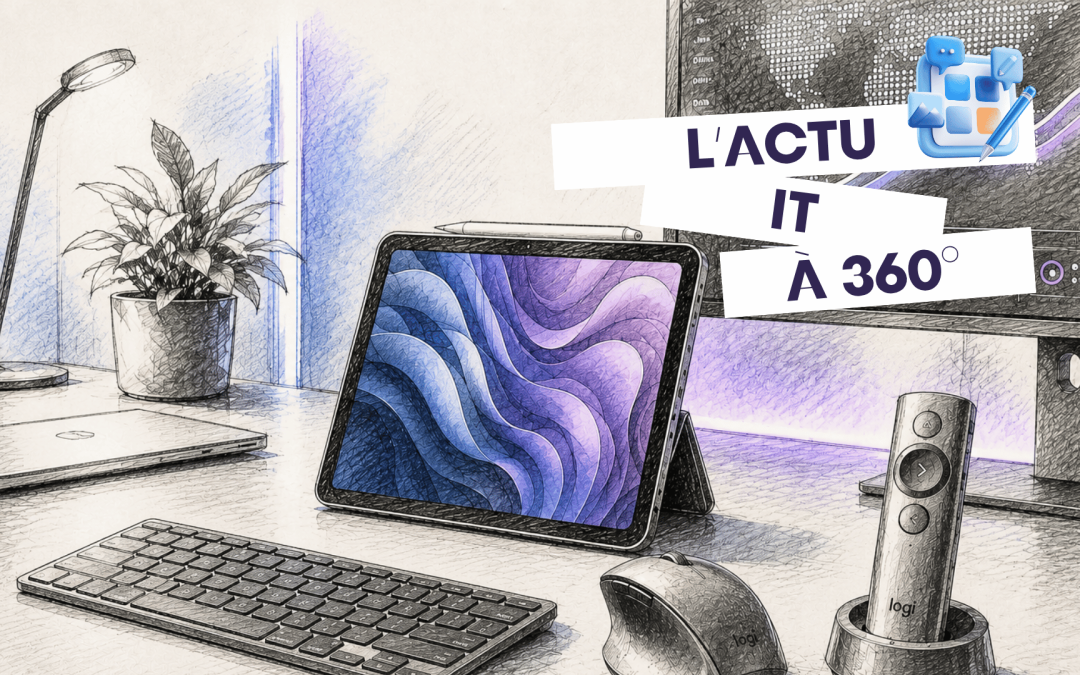
Mobi Fold and Spotlight 2: Logitech aims to simplify everyday hybrid working
The office is everywhere, but the tools do not always keep up Hybrid working has profoundly changed professional habits. Video-conference meetings, frequent travel, days split between home, the office and coworking spaces: employees now move between multiple...
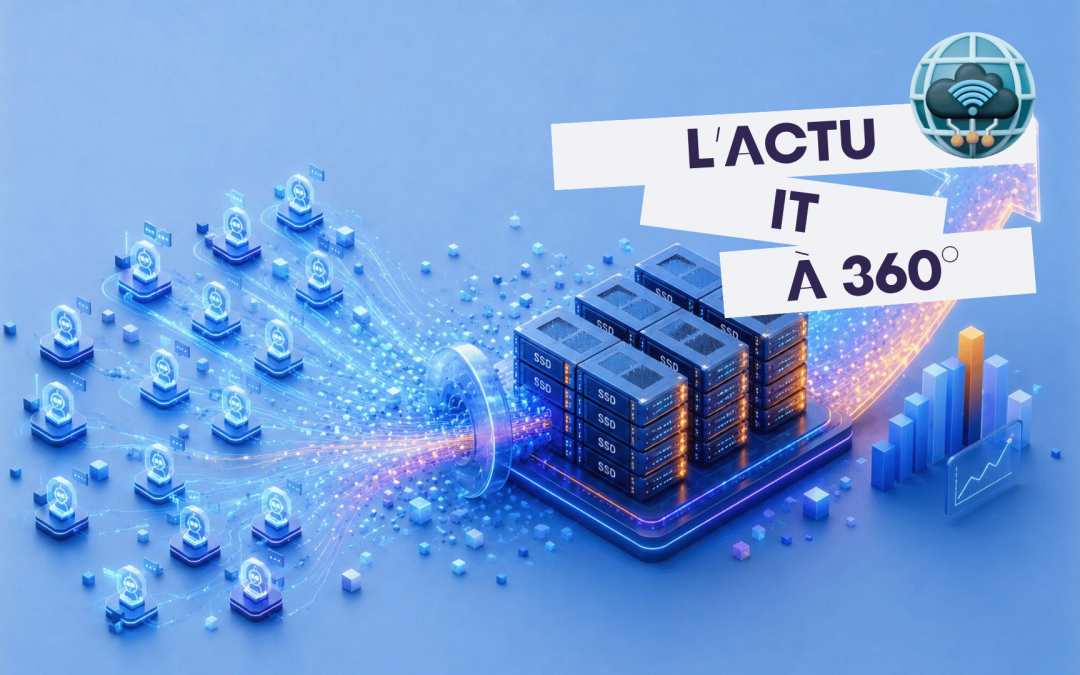
+80%: agentic AI triggers a record surge in enterprise SSD prices
Artificial intelligence is putting new strain on infrastructure Artificial intelligence is often associated with graphics processors and massive computing centres. Yet another essential component of digital infrastructure is coming under unprecedented pressure:...
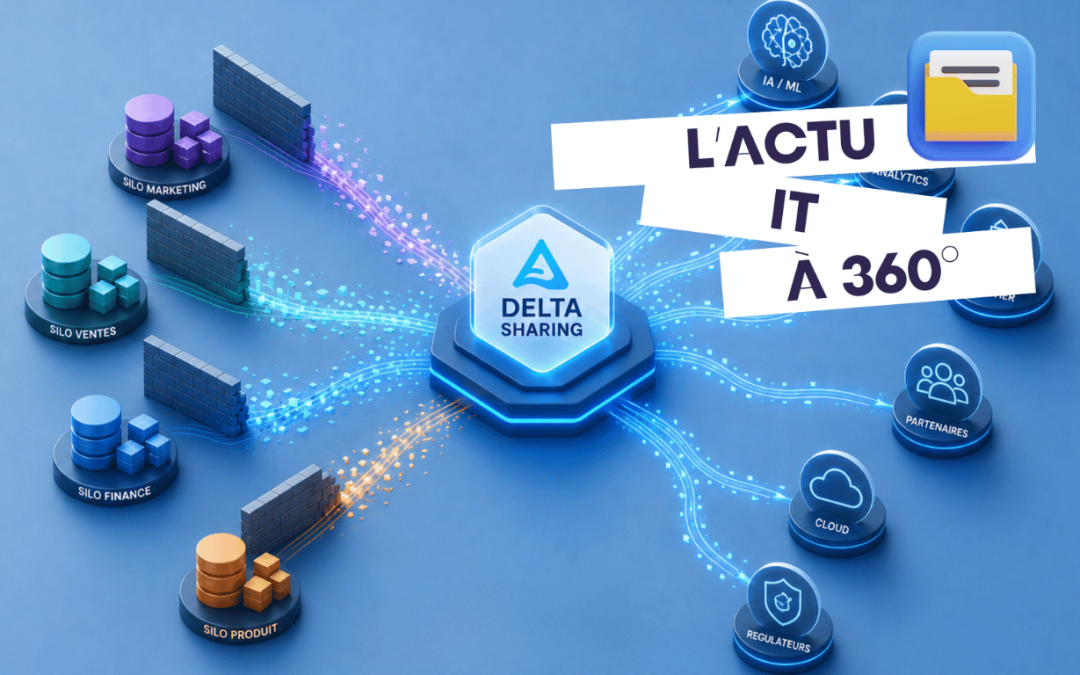
Databricks extends Delta Sharing to AI and aims to break down data silos
Data is no longer enough: intelligence must now be shared too Artificial intelligence is transforming the way companies use their data. Yet one major obstacle remains: the resources needed for AI projects are often scattered across different platforms, teams and...

RTX Spark: Nvidia accelerates the shift to AI-optimised PCs
Nvidia wants to redefine the PC for the age of artificial intelligence Unveiled at Computex 2026, the RTX Spark chip marks a new stage in the evolution of personal computers. With this Arm-based platform, Nvidia is not simply seeking to offer a more powerful...

WiFi 8 is arriving sooner than expected: what it means for businesses
A new generation of networking is already on the horizon While WiFi 7 is only just beginning to spread among businesses and consumers, the industry is already preparing the next step. TP-Link has just unveiled the first WiFi 8-compatible router, confirming that the...

Webedia-Elephant turns to Gemini Enterprise to industrialise generative AI
IT outages become a board-level issue Long regarded as mere technical incidents, service outages are now taking on a whole new dimension. According to a study by Oxford Economics for Splunk, Global 2000 companies suffer an average of 60 downtime incidents a year, at...

$600 billion lost: IT outages take on a new dimension
IT outages are becoming a boardroom issue Long regarded as mere technical incidents, service interruptions are now taking on a whole new dimension. According to a study conducted by Oxford Economics for Splunk, Global 2000 companies suffer an average of 60 downtime...

Lightwell: IBM and Red Hat tackle the open source patching headache
AI finds flaws faster than companies can fix them Artificial intelligence is profoundly transforming cybersecurity. While it makes it possible to detect vulnerabilities more quickly, it also creates a new challenge: the ability to fix a growing number of flaws within...