


News in brief
Creating a meme has become an everyday activity on the internet. Humorous images circulate daily on social networks, forums and messaging apps, often used to comment on the news, share an idea or simply make people laugh. Yet producing a meme quickly is not always easy when you have to use image-editing software or online tools.
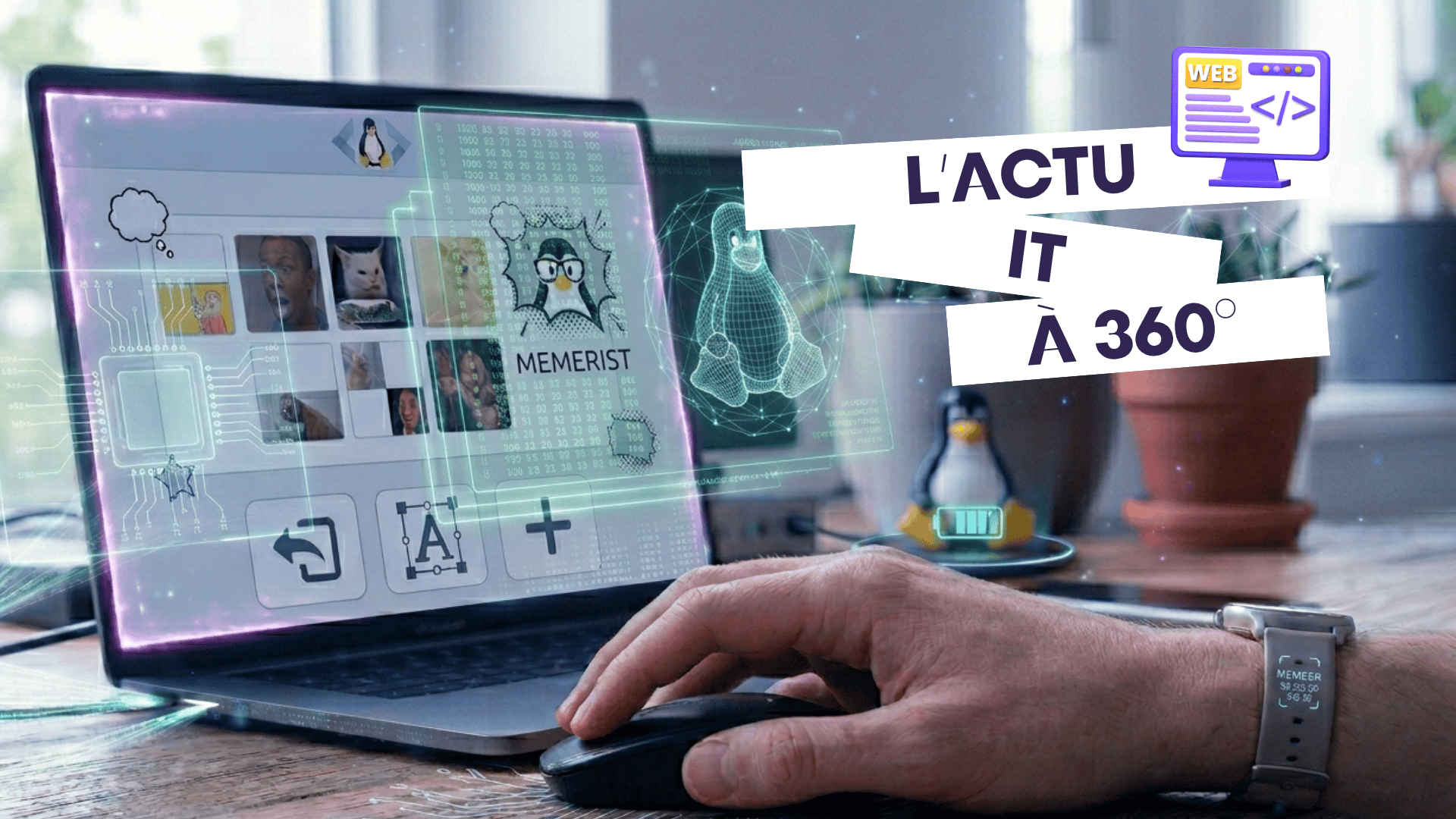
That is precisely what Memerist offers: a new free application for Linux users. The software lets you create memes in seconds from a library of images or popular templates. Users can add text, customise the visual and export the result immediately. The aim is simple: to provide a fast, accessible and fully open-source tool for generating visual content for the web.¹
What is really happening
Memerist is part of a broader trend: the simplification of digital content creation tools. For a long time, producing an image or visual for the internet required complex software such as Photoshop or GIMP. Today, by contrast, many applications seek to automate certain tasks in order to make creation accessible to as many people as possible.
The application works on a simple principle. It offers a lightweight interface with a collection of popular meme templates. Users choose an image, add their text, adjust its position and export the result. In a few clicks, the visual is ready to be shared on a social network or online platform.
This type of tool also illustrates the philosophy of the open-source world. Memerist is designed to be free, accessible and modifiable by developers. Users can thus contribute to the project, suggest new templates or improve the application’s features. This collaborative approach is at the heart of the Linux ecosystem, which has long relied on software developed by communities of programmers.²
Beyond the humorous side of memes, these tools show how digital content creation is becoming increasingly automated. Modern applications seek to reduce the technical steps so that users can quickly produce visuals, text or even videos for the internet.
Why it matters for SMEs
At first glance, a meme-creation tool may seem trivial for businesses. Yet memes are now a genuine communication phenomenon on the internet. Brands, start-ups and even some institutions use this format to interact with their community and make their messages more accessible.
For SMEs, these tools can be a simple way to produce visual content quickly without needing advanced graphic design skills. At a time when digital communication has become essential, the ability to create engaging visuals can help a company improve its online visibility.
Social networks now play a central role in organisations’ communication strategies. Short, humorous or interactive visual content often attracts more attention than traditional formats. A tool such as Memerist can therefore make it easier to create content for social platforms.
But this development also shows that content creation is increasingly tied to digital technologies. Companies need to be able to use a range of software tools, manage their online presence and understand the codes of digital communication. This reinforces the importance of digital skills in organisations’ digital transformation strategies.
The IT skill behind this news: Web Programming and Management
The emergence of tools such as Memerist is a reminder of the importance of programming and web management skills. Behind an easy-to-use application lie computing technologies that handle the user interface, image processing and file export.
Developers who design this type of application need to master several technical aspects: building software interfaces, handling graphic files and integrating with operating systems such as Linux. On the web, these skills also make it possible to develop content-creation platforms, media management tools or interactive applications.
For companies and start-ups, this know-how is essential. Organisations need professionals able to design digital tools, maintain their web platforms and improve the user experience of online services.
In a world where digital communication and content production play a central role, IT jobs related to web and software development are therefore becoming increasingly strategic.
Why this news matters
The arrival of tools such as Memerist shows how much digital technologies continue to transform content creation. What once required complex software and advanced technical skills is gradually becoming accessible through simple, automated applications.
For users and businesses alike, these tools make it possible to produce content suited to the web and social networks more quickly. This development reflects a broader trend in the digital economy: technologies seek to simplify processes so that everyone can create, share and disseminate information.
Understanding these transformations is important for future IT professionals. Behind every digital tool lie technologies, skills and jobs that help build the digital ecosystem.
360° IT News — decoding technology to understand the jobs of tomorrow.
References
1. Memerist. Open-source meme creation project for Linux.
https://github.com
2. Linux Foundation. What is open source software?
https://www.linuxfoundation.org/resources/open-source-guides/what-is-open-source-software

Lumo AI 2.0 speeds up without sacrificing data protection
Proton wants to prove that a high-performing AI can also be private The artificial intelligence race is no longer played out solely on model performance. User trust and data protection are now becoming major differentiators. With Lumo AI 2.0, Proton is upgrading its...

Djinn Stealer: the malware targeting companies’ cloud and AI credentials
Cybercriminals are changing targets Cyberattacks are no longer aimed solely at data or workstations. The credentials used to access cloud platforms, artificial intelligence environments and development tools have become highly sought-after assets. It is against this...

Claude Tag turns Slack into a genuine agentic workspace
AI agents settle at the heart of collaborative work Artificial intelligence is no longer limited to assistants accessed in a chat window. With Claude Tag, Anthropic is taking a new step by building an AI agent directly into Slack. Available in beta for Claude...

IBM and OpenAI want to arm businesses against machine-speed cyberattacks
Defenders must now fight AI with AI Cyberattacks are evolving at unprecedented speed. Thanks to artificial intelligence models, attackers can automate the search for vulnerabilities, analyse code in seconds and quickly identify the most exposed systems. To respond to...

Open-source security scales up: IBM, Red Hat and Palo Alto join forces
Cyberattacks push IT giants to join forces Open-source components are present in virtually all modern applications, from cloud platforms to business software. This dependence, however, comes with a growing risk: vulnerabilities are now discovered and exploited much...
With Lambda, AWS prepares cloud infrastructure for autonomous AI agents
Serverless enters a new phase The cloud is evolving to meet the needs of a new generation of applications based on agentic artificial intelligence. As AI agents become capable of carrying out complex tasks for hours at a time, traditional serverless architectures are...

With Code Layers, Figma brings design and development together for good
A new step towards building apps without boundaries Design and software development have long followed two separate paths. Designers imagined the interfaces, developers then translated them into code, with many back-and-forth exchanges and sometimes discrepancies...

Google Chrome sees what you see: Gemini can now analyse your screen
Chrome takes a new step towards the intelligent browser Web browsers no longer simply display web pages. They are gradually becoming genuine assistants capable of understanding the context in which users are working. With the new “Select from screen” feature, Google...
SpaceX buys Cursor: agentic AI becomes the new standard in software development
An acquisition that reaches far beyond the software world SpaceX’s acquisition of Anysphere, the company behind Cursor, for an estimated $60 billion marks a major turning point in the tech industry. Behind this spectacular deal lies a much deeper transformation: the...

Europe’s AI takes shape: OVHcloud is developing its own LLMs
OVHcloud wants to move from cloud to artificial intelligence Long recognised as a major player in European cloud, OVHcloud now aims to play a much bigger role in the artificial intelligence ecosystem. At the VivaTech trade show, Octave Klaba, the group’s founder and...