


OVHcloud wants to move from cloud to artificial intelligence
Long recognised as a major player in European cloud, OVHcloud now aims to play a much bigger role in the artificial intelligence ecosystem. At the VivaTech trade show, Octave Klaba, the group’s founder and CEO, announced that the company was working on developing its own large language models (LLMs). This decision marks a strategic turning point for the French provider, which no longer wants merely to host AI infrastructure, but also to master the technologies that power it.
Digital sovereignty is a priority once again
This announcement comes at a particular time. Recent debates over access to Anthropic’s most advanced models have reminded European businesses of their dependence on American artificial intelligence players. For OVHcloud, this situation highlights the need for local alternatives capable of guaranteeing service continuity and control over critical technologies.
According to Octave Klaba, mastering AI models is now essential to secure the group’s future and meet the expectations of European customers1. This vision goes beyond a purely commercial rationale: it is part of a broader reflection on the continent’s technological sovereignty.
Financial barriers are starting to fall
For several years, developing a large language model was the preserve of a handful of tech giants able to invest several billion euros in computing infrastructure and training data. That reality is changing fast.
OVHcloud believes that advances in model architectures, chip optimisation and the use of synthetic data now make it possible to cut development costs considerably1. Where a project previously required nearly one billion euros of investment, it could now be carried out with a budget of between 150 and 200 million euros.
This shift opens the door to new players able to take part in the race for advanced models.
Jupiter, a first testing ground
OVHcloud is not starting from scratch. The company says it has already completed the pre-training of a first model on Jupiter, presented as Europe’s most powerful supercomputer1. This step is an important milestone in the group’s roadmap and demonstrates its ability to mobilise the infrastructure needed to train large-scale models.
The company does indeed have a particular advantage: it already controls a significant part of the value chain, from data centres to high-performance computing capacity.
Dragon LLM brings the missing expertise
To accelerate its development, OVHcloud has also strengthened its skills through the recent acquisition of Dragon LLM, formerly known as Lingua Custodia. The deal led to the creation of an in-house artificial intelligence laboratory called AI Lab2.
The know-how of this company, a winner of the European Commission’s Large AI Grand Challenge, should enable OVHcloud to develop specialised models that meet the needs of heavily regulated industries, notably in the financial, legal and public administration sectors.
Specialised models rather than a direct ChatGPT rival
OVHcloud’s strategy does not necessarily involve creating a European equivalent of ChatGPT for the general public. The company appears to favour a more targeted approach, based on families of models tailored to specific uses.
This direction could make it possible to address the constraints faced by European businesses more effectively, particularly in terms of compliance, confidentiality and data governance. With this in mind, the value lies less in the size of the model than in its ability to meet precise business needs.
Open source as a long-term goal
OVHcloud also says it wants to take an open approach. The company indicates that some of its technologies could be released as open source once performance reaches a level deemed satisfactory1.
This direction is in line with a trend already seen in Europe, where several players regard opening up models as a way of fostering innovation, transparency and technological independence.
Reducing the real cost of generative AI
Beyond developing the models themselves, OVHcloud is seeking to address another major challenge: the operating cost of artificial intelligence. The company is focusing on optimising performance and reducing inference costs, in other words the resources required when a model is used in production.
This issue is becoming crucial as businesses move from experimenting with generative AI to industrialising it. A model that performs well but is too expensive to run can quickly become hard to make profitable.
Understanding AI infrastructure is becoming strategic
This development highlights a key skill: mastering the entire artificial intelligence value chain, from cloud infrastructure to the models themselves. Future IT professionals will need to understand how Data, data engineering, Data management, generative AI and agentic AI fit together in order to design solutions that are high-performing, secure and economically viable.
A new ambition for the European ecosystem
With this initiative, OVHcloud joins the players seeking to strengthen Europe’s technological autonomy in artificial intelligence. For students and future digital professionals, this announcement illustrates an underlying trend: the next phase of AI development will not only be about the most powerful models, but also about organisations’ ability to master them, host them and adapt them to their specific needs.
360° IT News — decoding technology to understand the jobs of tomorrow.
Further reading
Developing artificial intelligence models is only one part of the equation. To create value, businesses must also be able to connect these models to their data, applications and business processes. This integration is becoming a strategic issue as AI becomes widespread within organisations. On a related topic, read our article “AWS strengthens OpenSearch to connect AI to enterprise data”, which analyses how data infrastructures are evolving to support new uses of artificial intelligence.
References
1. Reuters. (2026). OVHcloud plans to develop its own frontier AI models.
https://www.reuters.com
2. OVHcloud. (2026). Acquisition of Dragon LLM and creation of AI Lab.
https://www.ovhcloud.com
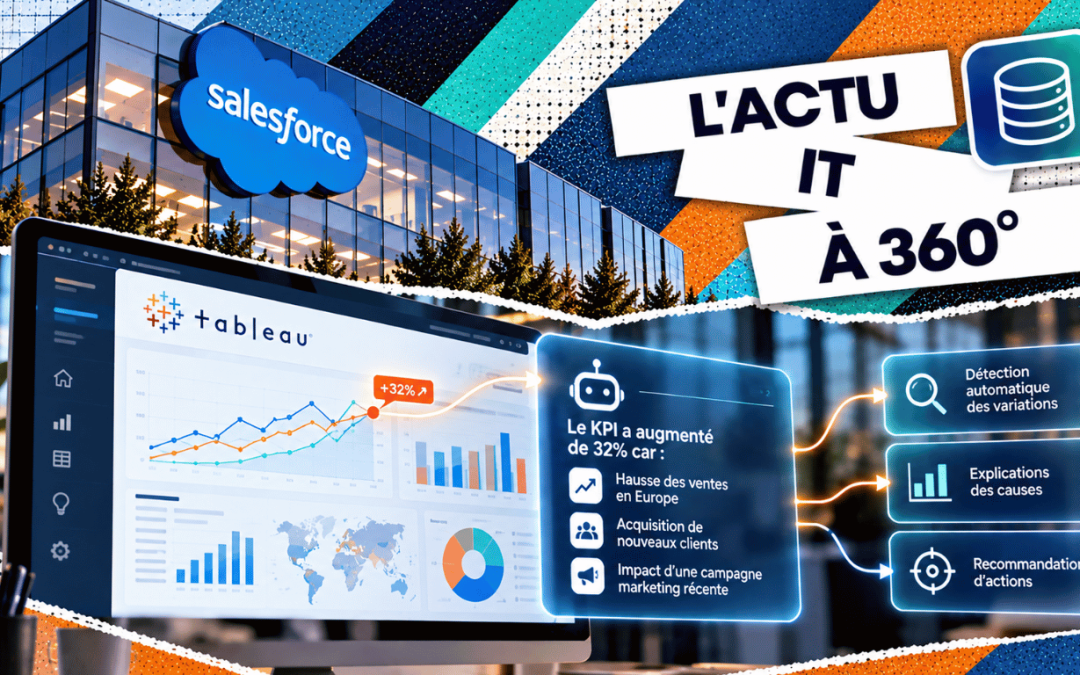
Salesforce wants to acquire Loops to help Tableau explain KPI changes
Salesforce has announced a definitive agreement to acquire Loops, an AI-based analytics platform, with the intention of integrating its technology into Tableau after closing.[1] The aim is to monitor metrics and bring out the factors associated with their changes. For...

Cisco and NVIDIA prepare 400 Gb/s-per-lane optical connections for AI infrastructure
Cisco and NVIDIA have announced a project for a pluggable optical form factor, USFP, capable of supporting 400 Gb/s per lane. Cisco is also unveiling the Silicon One G302 switching chip, rated at 51.2 Tb/s.[1] These announcements address a key challenge for AI...
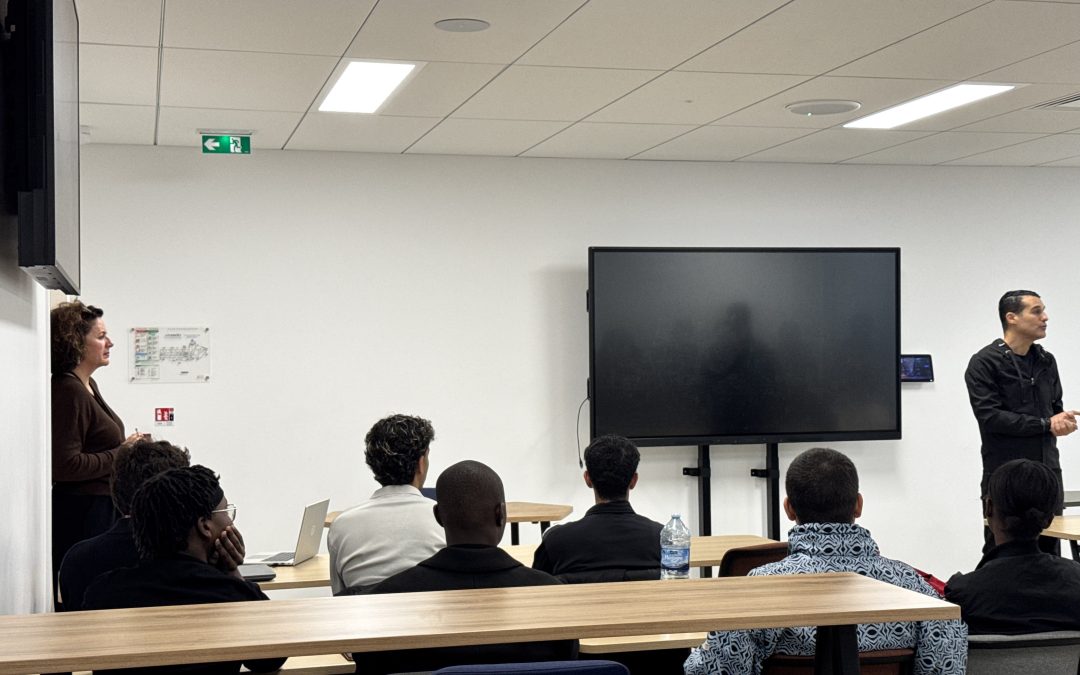
A new year begins at CCCLX!
The Paris-Villejuif campus welcomes CCCLX students for a new year of learning, projects and experiences at the heart of 360° IT.

VMware HyperArmor strengthens hypervisor protection against cyberattacks
Broadcom has unveiled VMware HyperArmor, a solution designed to protect the ESX hypervisor of VMware Cloud Foundation, with announced support for ESX 8.x and later versions.[1] The stakes go beyond the security of a single application: the hypervisor is a shared...

SolarWinds Avior: IT teams set the goals and agents coordinate the actions
SolarWinds has launched Avior, an agentic AI system designed to pursue operational goals in hybrid IT environments. Available since 14 October as part of a guided onboarding programme, it combines specialised agents with control mechanisms.[1] For technical teams, the...
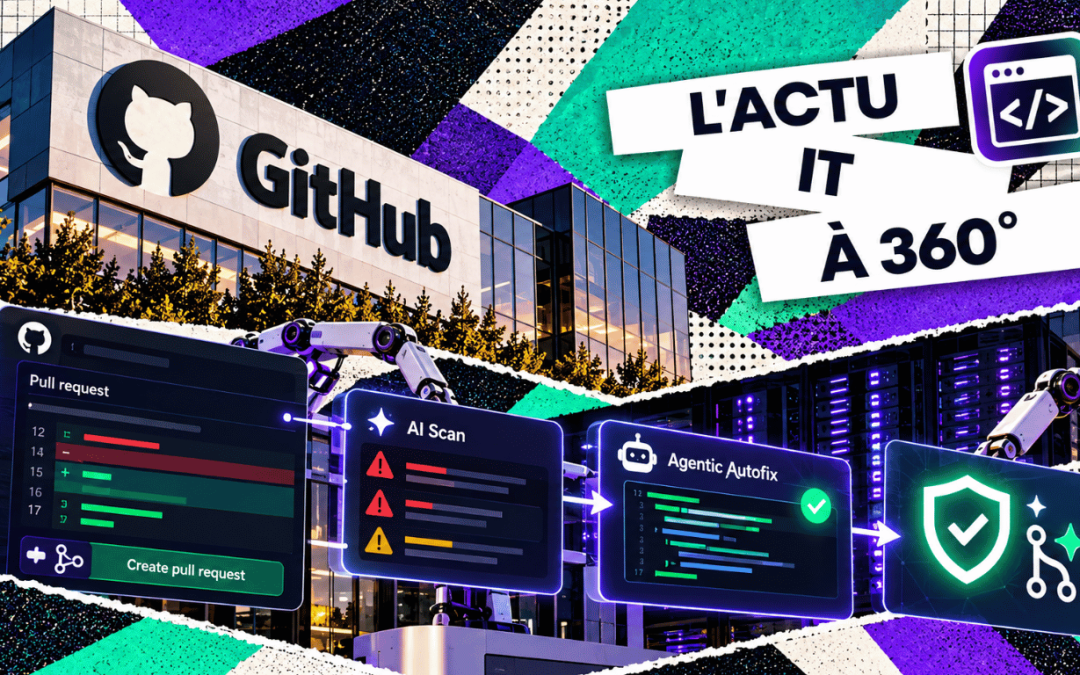
GitHub steps up vulnerability detection and remediation with AI Scan and Agentic Autofix
GitHub has announced the general availability of AI Scan for pull requests and Agentic Autofix for code scanning alerts.[1][2] These features bring AI assistance closer to the work of securing code. They do, however, operate on different scopes: proposed...

Cloudflare makes web security programmable with Workers
Cloudflare is bringing its secure web gateway closer to its Workers development platform. With Forward, available in public beta, businesses can add code to the processing of certain authorised HTTP requests.[2] For IT teams, this development opens up a...

Palo Alto Networks strengthens AI agent security around Claude Enterprise
PPalo Alto Networks has unveiled several updates to Prisma AIRS: protection of interactions with Claude Enterprise, analysis of the components used by agents and control of their exchanges with tools.[1] The stakes are concrete for businesses: preventing an assistant...
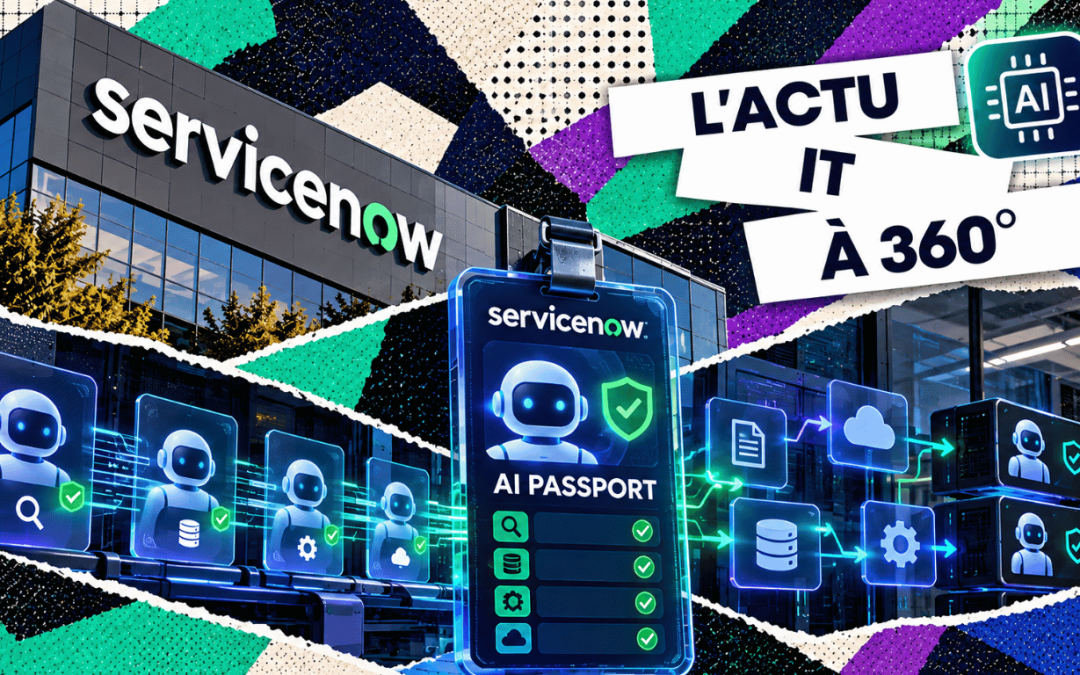
ServiceNow prepares AI Passport to control AI agents’ access rights
ServiceNow has announced AI Passport, a cryptographically signed authorisation credential designed to govern AI agents and MCP servers while workflows are running. It is scheduled to be available in the fourth quarter of 2026.[1] The image of a digital badge helps to...

SAP wants to acquire TechWolf to link tasks, skills and the transformation of jobs
SAP has announced an agreement to acquire TechWolf, an AI platform that links tasks, skills and changes in the labour market. Completion is expected in the fourth quarter of 2026, subject in particular to regulatory approvals.[1] The deal raises a practical...