



A new step for AI applied to cybersecurity
Anthropic is pressing ahead with Project Glasswing, an initiative that makes its Claude Mythos Preview model available to specialist cybersecurity players in order to identify and fix vulnerabilities in critical software. The aim is to let security researchers draw on the AI’s advanced reasoning capabilities to speed up the discovery of flaws before cybercriminals can exploit them. This approach illustrates a major shift: artificial intelligence models no longer merely assist developers; they are becoming active tools for securing digital infrastructure.1
Horizon3.ai brings an offensive view of cybersecurity
For this new phase, Anthropic is welcoming Horizon3.ai among the partners of Project Glasswing. The company is known for its offensive security solutions, which reproduce the methods used by attackers to detect weak points in information systems. By combining this “attacker’s perspective” approach with the analytical capabilities of Claude Mythos Preview, the programme seeks to identify more quickly the complex vulnerabilities that could affect critical infrastructure, public services or strategic software.2
Bug hunting scales up thanks to artificial intelligence
Vulnerability research has traditionally relied on manual audits, static analysis tools or automated testing campaigns. With models able to understand code, explore attack scenarios and suggest fixes, artificial intelligence is ushering in a new generation of bug hunting. Security teams can thus focus their efforts on the most critical vulnerabilities and shorten the time between discovering a flaw and dealing with it. This acceleration is a major issue as software development cycles become ever faster.1
Powerful models that require stronger governance
Using advanced models to search for vulnerabilities also raises new questions. An AI capable of identifying flaws effectively could also be misused for malicious purposes if access to it were not strictly controlled. Anthropic presents Project Glasswing as a programme reserved for selected partners, with control mechanisms designed to limit the risk of misuse. This governance becomes indispensable as models gain in analytical capability and autonomy.3
A new generation of tools to protect critical infrastructure
Energy infrastructure, transport networks, healthcare facilities and government departments depend on software in which the slightest vulnerability can have serious consequences. By combining artificial intelligence, offensive expertise and collaboration between specialist partners, Project Glasswing illustrates an underlying trend: cybersecurity will increasingly rely on AI capable of anticipating threats before they turn into major incidents.
Cybersecurity becomes an indispensable skill
The development of Project Glasswing shows that cybersecurity experts must now master artificial intelligence tools as well as traditional system protection techniques. Understanding how models work, assessing their limits, securing their use and integrating AI into vulnerability detection processes are becoming essential skills for protecting critical infrastructure and strategic software.
360° IT News — decoding technology to understand the jobs of tomorrow.
Further reading
AI models are no longer used only to detect vulnerabilities: they now play a direct part in protecting systems. Read our article “ IBM and OpenAI want to arm businesses against machine-speed cyberattacks”, which explains how artificial intelligence speeds up the detection of and response to cybersecurity threats.
References
1. Anthropic. (2026). Project Glasswing.
https://www.anthropic.com
2. Horizon3.ai. (2026). Horizon3.ai joins Project Glasswing.
https://www.horizon3.ai
3. Anthropic. (2026). Responsible Scaling Policy.
https://www.anthropic.com/responsible-scaling-policy
With Stainless, Anthropic aims to put Claude at the heart of software development
The AI battle is shifting to developer tools Anthropic is continuing its rise in artificial intelligence with the acquisition of Stainless, a start-up specialising in development tools and API automation. Behind this acquisition lies a significant strategic...

Microsoft transforms Office with Fintool and autonomous AI
Office enters the age of intelligent agents Microsoft is stepping up its agentic artificial intelligence strategy with the acquisition of Fintool, a start-up specialising in automated financial analysis. Founded in San Francisco by Frenchmen Nicolas Bustamante and...
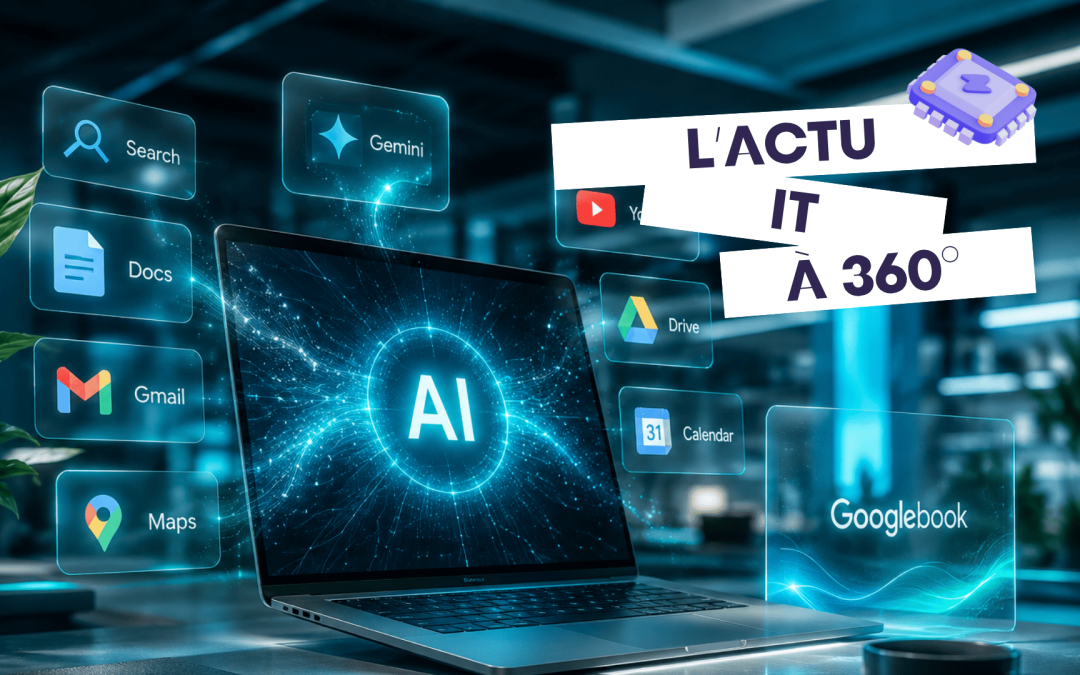
Googlebook: Google wants to reinvent the computer around AI
A new generation of PCs designed for artificial intelligence Google is preparing a new category of laptops called “Googlebook”, designed from the ground up around artificial intelligence. After AI-powered smartphones, the company now wants to turn the PC itself into a...

OpsMill: the start-up that wants to prepare IT systems for the AI shock
Artificial intelligence is moving faster than IT infrastructure Generative artificial intelligence is rapidly transforming businesses, but one reality is becoming increasingly clear: today’s IT infrastructure is not ready to absorb this revolution. This is...

What if your future cloud fitted in a drop of DNA?
Data storage is reaching its limits Every day, humanity produces a gigantic amount of data. In 2025, the volume generated worldwide each day is estimated at almost 300 exabytes, the equivalent of a century of European audiovisual archives created every 24 hours1. With...

+13.5% in 2026: corporate IT spending soars
A sharp acceleration in IT investment Worldwide IT spending is expected to reach 6.31 trillion dollars in 2026, a rise of 13.5% year on year, according to Gartner’s latest forecast1. This figure marks a clear acceleration compared with previous estimates (+10.8%),...
Microsoft builds legal AI into Word: contracts go automated
Word becomes an intelligent legal tool Microsoft is taking a new step by building artificial intelligence specialised in legal analysis directly into Word. The aim is clear: to automate contract review, detect risks and speed up document production. At a time when...
Merck and Google Cloud: a key partnership for agentic AI in the enterprise
A strategic investment to transform the company through AI Biopharmaceutical giant Merck has announced a 1-billion-dollar, 10-year partnership with Google Cloud, with a clear goal: to embed agentic artificial intelligence at the heart of its operations. This project...
Chrome Enterprise goes AI: Google automates browsing and workflows
The browser becomes a genuinely intelligent work tool Google is upgrading Chrome Enterprise with advanced artificial intelligence capabilities, turning the browser into an active platform able to carry out tasks. Autonomous browsing, workflow automation and...
$32 billion: Google launches a cyber army of AI agents
Cybersecurity enters a new dimension Google has made a major move by announcing an investment of $32 billion in developing a “cyber army” of artificial intelligence agents. Behind this term lies a technological reality: systems capable of automatically detecting,...