


Microsoft wants to regain the upper hand against cyberattacks
Cybercriminals are now using artificial intelligence to discover vulnerabilities, automate their attacks and speed up their malicious campaigns. In response, Microsoft is pressing ahead with its Secure Future Initiative (SFI), a wide-ranging programme launched to strengthen the security of its products, infrastructure and cloud services. In its progress report published on 10 July 2026, the company explains that AI is now becoming a central pillar of its defence strategy, able to help security teams detect, prioritise and remediate threats at a speed comparable to that of attackers.1
Cybersecurity built in by design
With the Secure Future Initiative, Microsoft is no longer content to add protections after software has been developed. The company is seeking to build security into its platforms from the design stage. This approach rests on several priorities: strengthening digital identities, protecting cloud environments, securing critical infrastructure and making automated security checks the norm. The aim is to reduce the time needed to identify a flaw and deploy fixes before it is exploited.1
Artificial intelligence becomes a co-pilot for SOC teams
The report also stresses that security operations centres (SOCs) must now rely on artificial intelligence to cope with the explosion in alert volumes. AI models can analyse millions of events, identify suspicious behaviour, prioritise the most critical incidents and help analysts respond more quickly. Microsoft believes this automation is becoming indispensable to counter attacks that now operate at machine scale.2
Attackers are using AI too
One of the report’s key findings is that artificial intelligence now benefits attackers as much as defenders. Cybercriminals are exploiting advanced models to speed up vulnerability research, produce malicious code or improve their phishing campaigns. This development considerably shortens the time between the discovery of a flaw and its exploitation. For Microsoft, businesses must therefore adopt the same technologies in order to keep their ability to respond to these new threats.2
A strategy that goes beyond Microsoft products alone
The Secure Future Initiative is not just about Windows or Azure. Microsoft wants to extend this approach across its entire ecosystem by strengthening the security of identities, cloud services, workstations, business applications and artificial intelligence tools. This move confirms that cybersecurity is becoming a shared responsibility that involves infrastructure as much as software, users and development processes.3
Cybersecurity evolves in the age of artificial intelligence
This development shows why Cybersecurity is becoming an essential skill. Professionals must no longer simply understand traditional attack techniques. They must also know how to harness artificial intelligence to analyse threats, automate incident detection and strengthen the protection of information systems. Mastering these new tools is becoming essential to protect digital infrastructure effectively.
The race between attackers and defenders is accelerating
With its new report on the Secure Future Initiative, Microsoft confirms that artificial intelligence is profoundly redefining the balance of power in cybersecurity. Organisations able to integrate these technologies into their defence operations will have a decisive advantage against ever faster and more sophisticated cyberattacks. The future of IT security will depend as much on the quality of the algorithms as on that of the infrastructure they protect.
360° IT News — decoding technology to understand the jobs of tomorrow.
Further reading
Using artificial intelligence to strengthen security operations is becoming an underlying trend in the industry. On a related topic, read our article “IBM and OpenAI want to arm businesses against machine-speed cyberattacks”, which shows how AI models are now built directly into cybersecurity workflows to speed up the detection and remediation of vulnerabilities.
References
1. Microsoft. (2026). Secure Future Initiative Progress Report – July 2026.
https://www.microsoft.com/security
2. Microsoft Security. (2026). Secure by Design, Secure by Default, Secure Operations.
https://www.microsoft.com/security
3. Microsoft. (2026). Secure Future Initiative.
https://www.microsoft.com/security/blog
GitHub Copilot bulks up for business: coding agents come under IT control
Copilot is no longer just there to suggest the next line GitHub Copilot is continuing its transformation. Originally known mainly for completing code in the editor, the tool is now evolving towards agents capable of exploring a project, modifying files, using tools...

PDFs, presentations, audio: Adobe wants to turn Acrobat into a content factory
Acrobat no longer just wants to open your documents For more than thirty years, Acrobat has mainly been used to read, create, edit, sign and share PDFs. Adobe now wants to give it a much broader role. On 9 September 2026, the company announced new capabilities based...

Salesforce plugs Claude into its CRM: Claudeforce prepares for life after the interface
What if the CRM soon no longer needed to be opened? For decades, using a CRM meant navigating between customer records, dashboards, menus and forms. With Claudeforce, Salesforce and Anthropic want to change this logic: rather than forcing users to go into Salesforce...

Kimi K3, Mistral, DeepSeek: Oracle turns OCI into an AI model hub
Oracle wants to make OCI a one-stop shop for AI Oracle is stepping up its efforts in the AI cloud battle by significantly expanding the catalogue of models available in OCI Enterprise AI. On 4 September 2026, the group announced in particular the integration of Kimi...
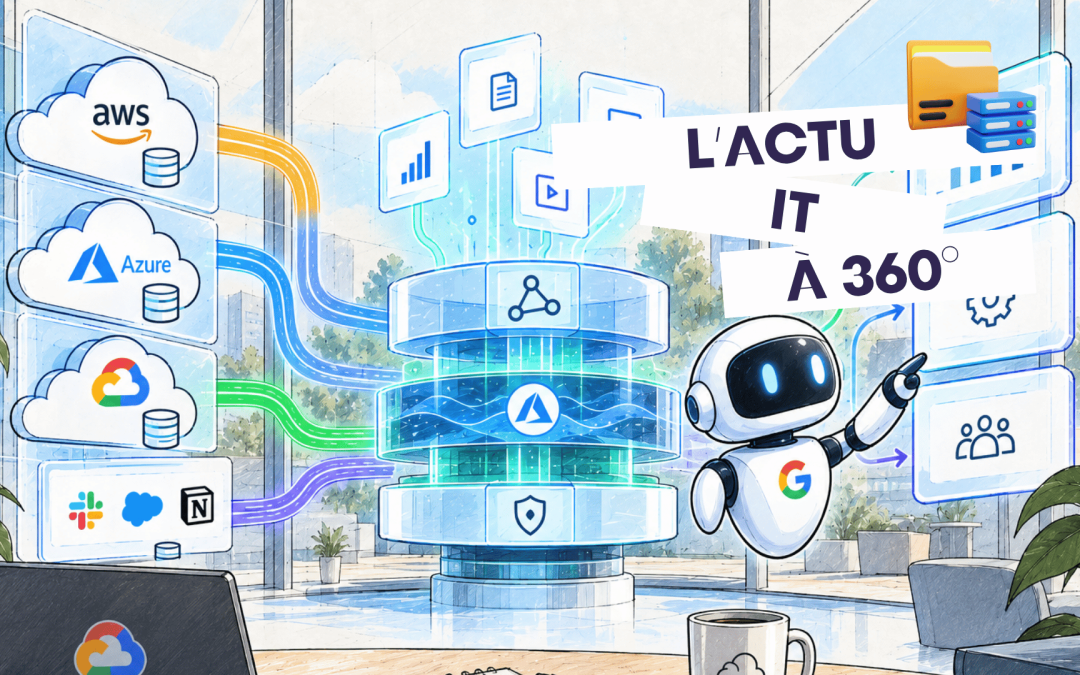
Agentic Data Cloud: Google rethinks data for the age of AI agents
AI agents are forcing Google to rethink data architecture AI agents promise to search for information, make decisions and act directly within company systems, but this autonomy depends on one essential condition: accessing the right data and, above all, understanding...
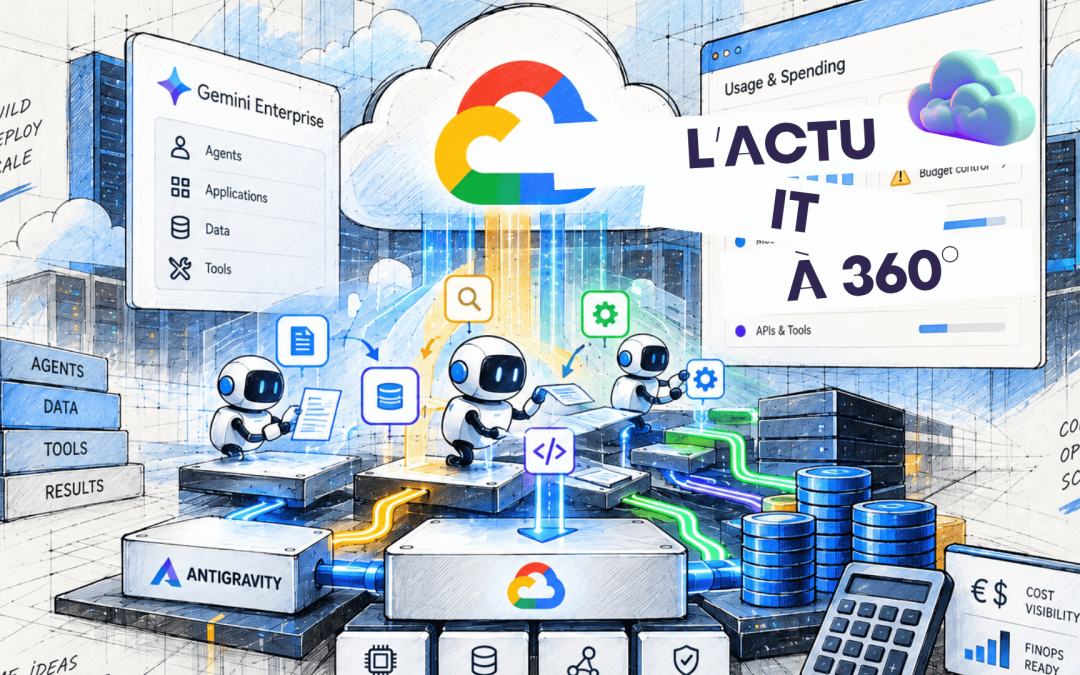
Google Cloud tackles the hidden bill of AI agents
AI agents raise a new problem: how much does a task really cost? As companies move from chatbots to AI agents able to work through multiple steps, the question of cost becomes much more complex. A chatbot generally handles a request and generates an answer, whereas an...
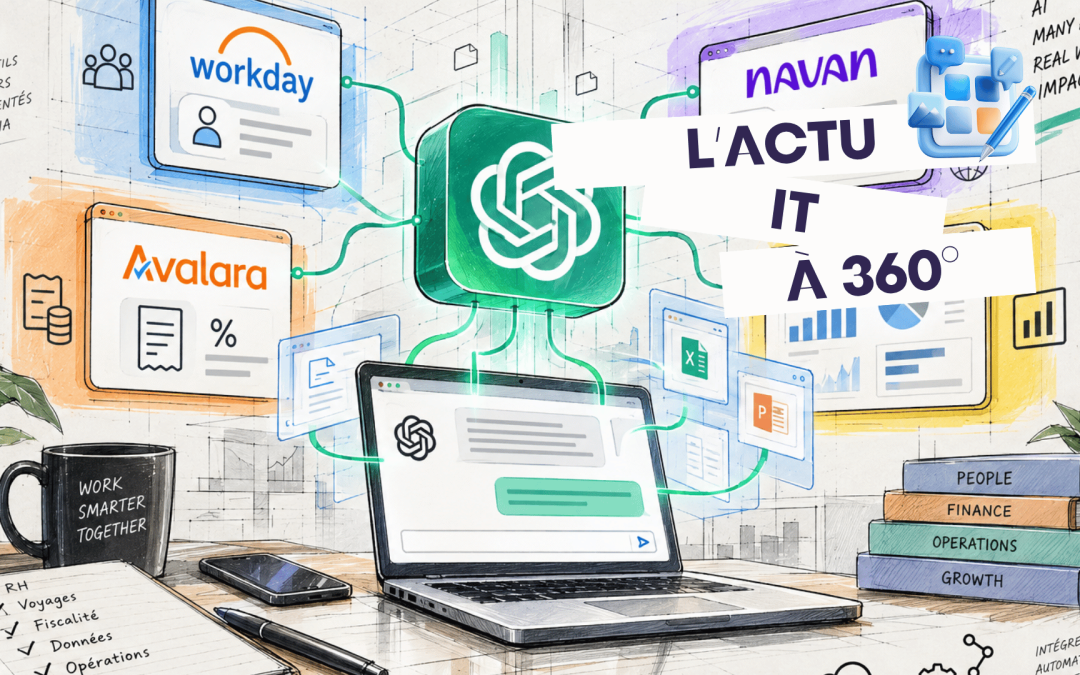
Workday, Navan, Avalara: ChatGPT Work moves into business software
ChatGPT Work is gradually leaving the chat window With GPT-6 Astra, OpenAI is no longer simply trying to improve the quality of ChatGPT’s answers. The company wants to bring its AI closer to the applications in which employees actually work. With the arrival of GPT-6...

From chip to cloud: Groq raises 350 million to scale up
Groq now wants to sell cloud rather than just chips Groq is pursuing a major strategic transformation. Long seen as one of Nvidia’s challengers thanks to its LPUs (Language Processing Units) specialised in artificial intelligence model inference, the group is now...
Muse Code: Meta launches its AI agent to tackle giant codebases
Meta wants to bring AI agents into complex software projects Meta is stepping up its efforts in AI-assisted software development with Muse Code, a new agent designed to work on large codebases, where traditional assistants can quickly lose the context needed to...

Qwen3.8-Max reportedly coded for 16 days without human intervention
Alibaba tests how far an autonomous AI developer can go Alibaba claims to have reached a new milestone in agentic software development with Qwen3.8-Max, its new flagship model launched in early August 2026. In an internal test, the model reportedly worked fully...