


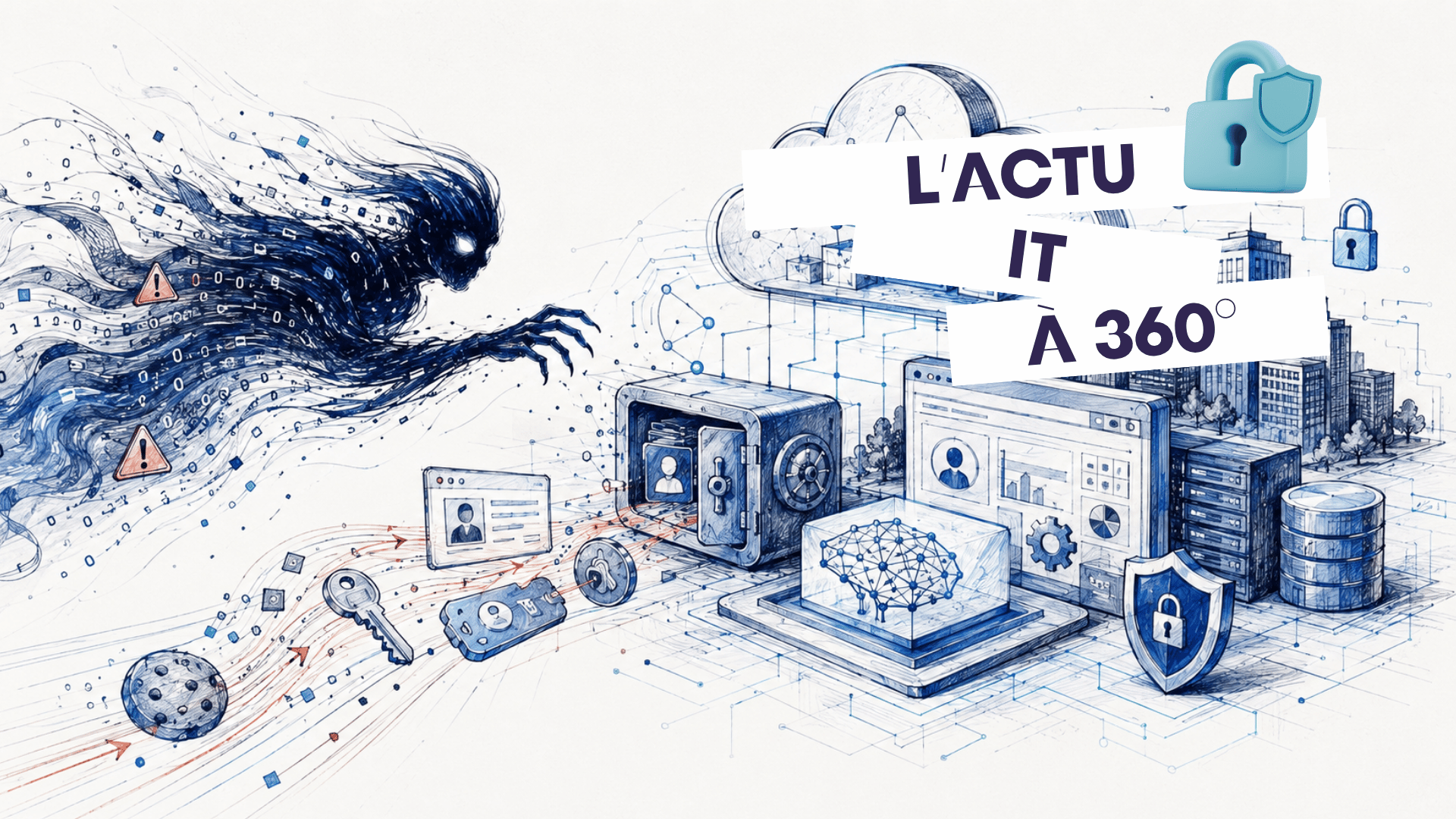
Cybercriminals are changing targets
Cyberattacks are no longer aimed solely at data or workstations. The credentials used to access cloud platforms, artificial intelligence environments and development tools have become highly sought-after assets. It is against this backdrop that cybersecurity researchers have identified Djinn Stealer, a new piece of malware spread via a critical vulnerability in the SimpleHelp remote administration software, tracked as CVE-2026-48558. Once installed, it seeks to steal authentication details that could open up access to companies’ digital infrastructure.1
A single flaw can open the doors to the information system
Djinn Stealer exploits an authentication vulnerability that allows attackers to compromise an inadequately protected SimpleHelp server. Once this initial access has been gained, the malware harvests various types of credentials stored on the compromised machines: administrator accounts, cloud access, API keys, authentication tokens, development environments and artificial intelligence platforms. This information can then be sold on or used to prepare more complex attacks against the entire information system.1
Cloud credentials have become a strategic target
Businesses today use many cloud-hosted services as well as AI platforms accessed via credentials or access keys. For cybercriminals, stealing this information is often more profitable than launching a direct attack on infrastructure. By obtaining valid credentials, they can bypass certain protections, access sensitive resources, deploy malicious software or compromise development environments. Technical accounts are thus becoming prime entry points into modern information systems.2
AI creates new assets to protect
The rise of artificial intelligence is also changing the nature of sensitive information. API keys giving access to AI models, tokens used to orchestrate intelligent agents and credentials for development platforms are now critical resources for businesses. Their compromise can lead to financial losses, service outages or fraudulent use of particularly expensive computing capacity. Cybersecurity strategies must therefore evolve to cover these new digital assets in the same way as sensitive data or network infrastructure.2
Detecting the intrusion before it spreads
Faced with this type of threat, speed of detection becomes essential. Once credentials have been compromised, attackers generally seek to escalate their privileges gradually in order to reach other systems. Monitoring unusual logins, multi-factor authentication, regular rotation of access keys and segmentation of cloud environments help limit the consequences of a compromise. Businesses must also apply security patches promptly to prevent the exploitation of known vulnerabilities such as the one affecting SimpleHelp.3
New digital assets are redefining cybersecurity
This threat illustrates why Cybersecurity is evolving rapidly in response to new uses of the cloud and artificial intelligence. Professionals must now protect far more than servers or workstations. They must also secure digital identities, API keys, development environments, cloud platforms and access to AI services. As these resources become indispensable to how businesses operate, protecting them is becoming a central element of any security strategy.
Digital identities become the new defence perimeter
With Djinn Stealer, cybercriminals are demonstrating that access to cloud services and artificial intelligence platforms is now a priority target. This development confirms that corporate security no longer rests solely on protecting data, but also on controlling the digital identities that provide access to it. In an environment where infrastructure is becoming ever more distributed, securing this access is one of the main challenges of the years ahead.
360° IT News — decoding technology to understand the jobs of tomorrow.
Further reading
The integration of AI agents into collaborative tools is part of a broader evolution of professional software, in which artificial intelligence plays a direct role in business processes. On a related topic, read our article “With Code Layers, Figma brings design and development firmly together”, which shows how AI agents are now being built into design platforms to bring design and development teams closer together.
References
1. Dark Reading. (2026). Djinn Stealer Targets Cloud and AI Credentials via SimpleHelp Vulnerability.
https://www.darkreading.com
2. MITRE. (2026). CVE-2026-48558.
https://cve.mitre.org
3. CISA. (2026). Best Practices for Protecting Credentials and Cloud Environments.
https://www.cisa.gov
With Stainless, Anthropic aims to put Claude at the heart of software development
The AI battle is shifting to developer tools Anthropic is continuing its rise in artificial intelligence with the acquisition of Stainless, a start-up specialising in development tools and API automation. Behind this acquisition lies a significant strategic...

Microsoft transforms Office with Fintool and autonomous AI
Office enters the age of intelligent agents Microsoft is stepping up its agentic artificial intelligence strategy with the acquisition of Fintool, a start-up specialising in automated financial analysis. Founded in San Francisco by Frenchmen Nicolas Bustamante and...
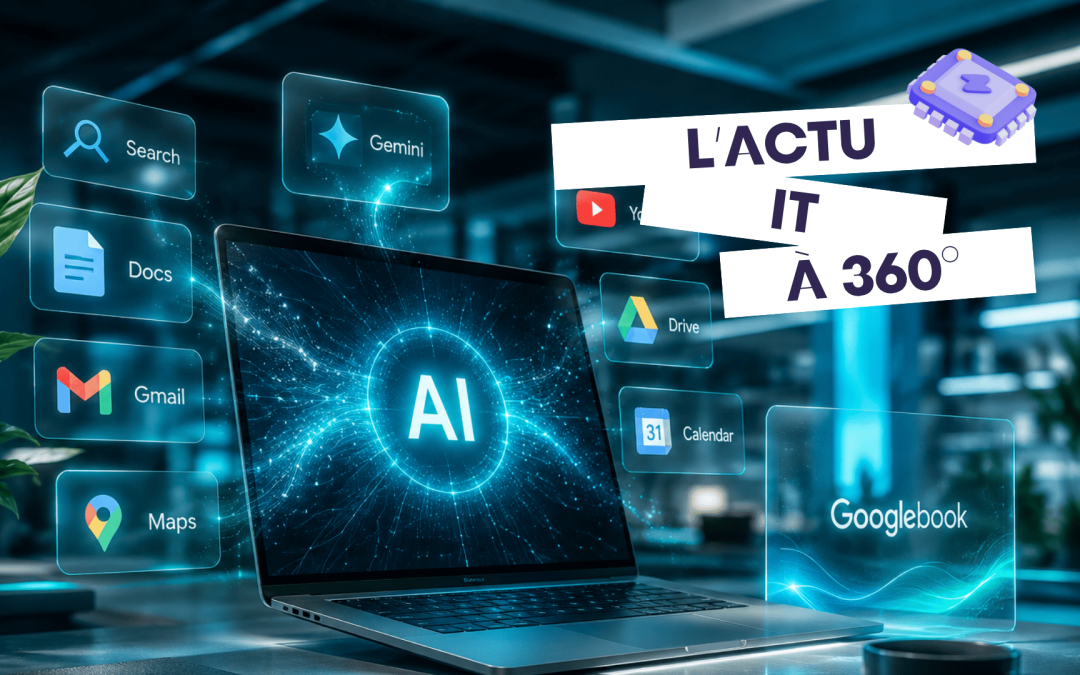
Googlebook: Google wants to reinvent the computer around AI
A new generation of PCs designed for artificial intelligence Google is preparing a new category of laptops called “Googlebook”, designed from the ground up around artificial intelligence. After AI-powered smartphones, the company now wants to turn the PC itself into a...

OpsMill: the start-up that wants to prepare IT systems for the AI shock
Artificial intelligence is moving faster than IT infrastructure Generative artificial intelligence is rapidly transforming businesses, but one reality is becoming increasingly clear: today’s IT infrastructure is not ready to absorb this revolution. This is...

What if your future cloud fitted in a drop of DNA?
Data storage is reaching its limits Every day, humanity produces a gigantic amount of data. In 2025, the volume generated worldwide each day is estimated at almost 300 exabytes, the equivalent of a century of European audiovisual archives created every 24 hours1. With...

+13.5% in 2026: corporate IT spending soars
A sharp acceleration in IT investment Worldwide IT spending is expected to reach 6.31 trillion dollars in 2026, a rise of 13.5% year on year, according to Gartner’s latest forecast1. This figure marks a clear acceleration compared with previous estimates (+10.8%),...
Microsoft builds legal AI into Word: contracts go automated
Word becomes an intelligent legal tool Microsoft is taking a new step by building artificial intelligence specialised in legal analysis directly into Word. The aim is clear: to automate contract review, detect risks and speed up document production. At a time when...
Merck and Google Cloud: a key partnership for agentic AI in the enterprise
A strategic investment to transform the company through AI Biopharmaceutical giant Merck has announced a 1-billion-dollar, 10-year partnership with Google Cloud, with a clear goal: to embed agentic artificial intelligence at the heart of its operations. This project...
Chrome Enterprise goes AI: Google automates browsing and workflows
The browser becomes a genuinely intelligent work tool Google is upgrading Chrome Enterprise with advanced artificial intelligence capabilities, turning the browser into an active platform able to carry out tasks. Autonomous browsing, workflow automation and...
$32 billion: Google launches a cyber army of AI agents
Cybersecurity enters a new dimension Google has made a major move by announcing an investment of $32 billion in developing a “cyber army” of artificial intelligence agents. Behind this term lies a technological reality: systems capable of automatically detecting,...