


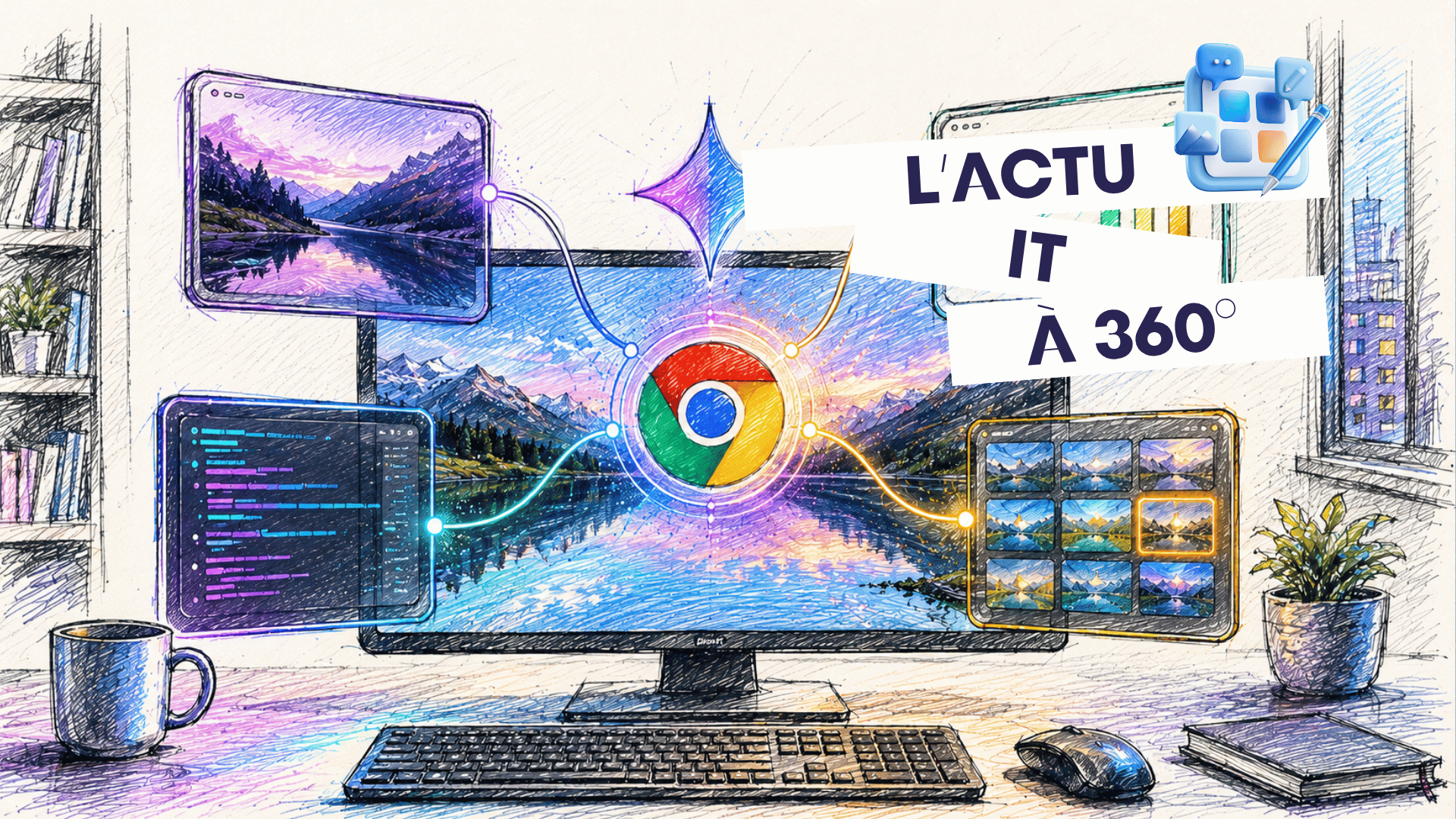
Chrome takes a new step towards the intelligent browser
Web browsers no longer simply display web pages. They are gradually becoming genuine assistants capable of understanding the context in which users are working. With the new “Select from screen” feature, Google is continuing this transformation by allowing Gemini to analyse the elements visible on a web page directly. This development simplifies interactions with artificial intelligence and brings Chrome closer to a smarter, more intuitive working environment.
No more need to describe what you see
Until now, asking an AI for help often meant copying text, taking a screenshot or writing a description that could be long and imprecise. Google wants to eliminate this step with a much more natural approach.
With “Select from screen”, users can simply draw a box around an element visible in a Chrome tab, then ask Gemini about that content1. The assistant can thus directly analyse a paragraph, an image, a chart, a diagram or even a product photo.
This interaction is reminiscent of how Circle to Search works on Android, now adapted for the Chrome browser.
A much more natural interaction with AI
The novelty does not lie solely in visual selection. It reflects a deeper change in the way users communicate with intelligent assistants.
Instead of explaining what you want analysed, you now simply show the element in question. This approach reduces ambiguity, speeds up exchanges and improves the relevance of the answers generated by Gemini.
This multimodal approach is gradually becoming the norm among the leading artificial intelligence players.
A wide range of uses for professionals
Google envisages several use cases that go well beyond simply looking up information.
Users can, for example:
- ask for an explanation of a complex chart;
- compare several products displayed on the same page;
- analyse a technical image;
- summarise a document;
- turn content into a table or a list;
- get additional information about a visual element1.
The ability to keep several selections during the same session also makes it easier to compare different pieces of content.
Chrome is gradually becoming a work assistant
This feature illustrates an important shift in web browsers. Chrome is no longer used solely to look up information. It is becoming an environment capable of directly assisting users in their everyday tasks.
This approach is part of a broader Google strategy to put Gemini at the heart of all its products. After Android, Workspace and online search, the browser is also becoming a key interface for artificial intelligence.
A new step towards contextual AI
The arrival of this feature confirms the emergence of contextual AI. Unlike traditional assistants, Gemini no longer responds solely to text commands. It now takes into account the visual context in which the user is working in order to produce more relevant answers.
This capability is also one of the foundations of agentic AI, in which systems understand their environment before carrying out an action.
Simple activation for users
The feature is available from Chrome 149 onwards. Once the browser has been updated, simply open the Gemini panel via the “Ask Gemini” button, then use the “Select from screen” option available from the “+” menu1.
Users can then freely select one or more areas of the page before asking the assistant their questions.
Browsers are becoming a new AI platform
With this development, Google confirms that web browsers are gradually becoming a strategic platform for artificial intelligence. Having transformed online search, the company is now seeking to enrich the browsing experience directly with assistants capable of understanding what is displayed on screen.
This trend could permanently change professional practices, particularly in monitoring, documentation, training and data analysis.
Understanding intelligent interfaces is becoming essential
This development highlights an increasingly sought-after skill: designing interfaces that integrate artificial intelligence. Future IT professionals will need to understand how multimodal technologies, generative AI, data management and agentic AI interact to deliver more natural and more effective user experiences.
Chrome opens a new chapter in intelligent assistance
With “Select from screen”, Google is continuing to turn Chrome into a true digital assistant. For students and future digital professionals, this development illustrates an underlying trend: tomorrow, interfaces will no longer just ask users what they want to do; they will directly understand what they are looking at in order to assist them more effectively.
360° IT News — decoding technology to understand the jobs of tomorrow.
Further reading
The integration of Gemini into Chrome illustrates a major shift: everyday applications are gradually becoming able to understand the context in which their users operate. This contextual intelligence is transforming the way we interact with digital tools and paving the way for new professional uses. On a related topic, read our article “With iOS 27, Apple redesigns the user experience for the AI era”, which shows how Apple is also building artificial intelligence into the heart of its operating system to make interactions more natural and more personalised.
References
1. Google. (2026). Gemini in Chrome: Select from screen.
https://support.google.com/chrome

With Stainless, Anthropic aims to put Claude at the heart of software development
The AI battle is shifting to developer tools Anthropic is continuing its rise in artificial intelligence with the acquisition of Stainless, a start-up specialising in development tools and API automation. Behind this acquisition lies a significant strategic...

Microsoft transforms Office with Fintool and autonomous AI
Office enters the age of intelligent agents Microsoft is stepping up its agentic artificial intelligence strategy with the acquisition of Fintool, a start-up specialising in automated financial analysis. Founded in San Francisco by Frenchmen Nicolas Bustamante and...
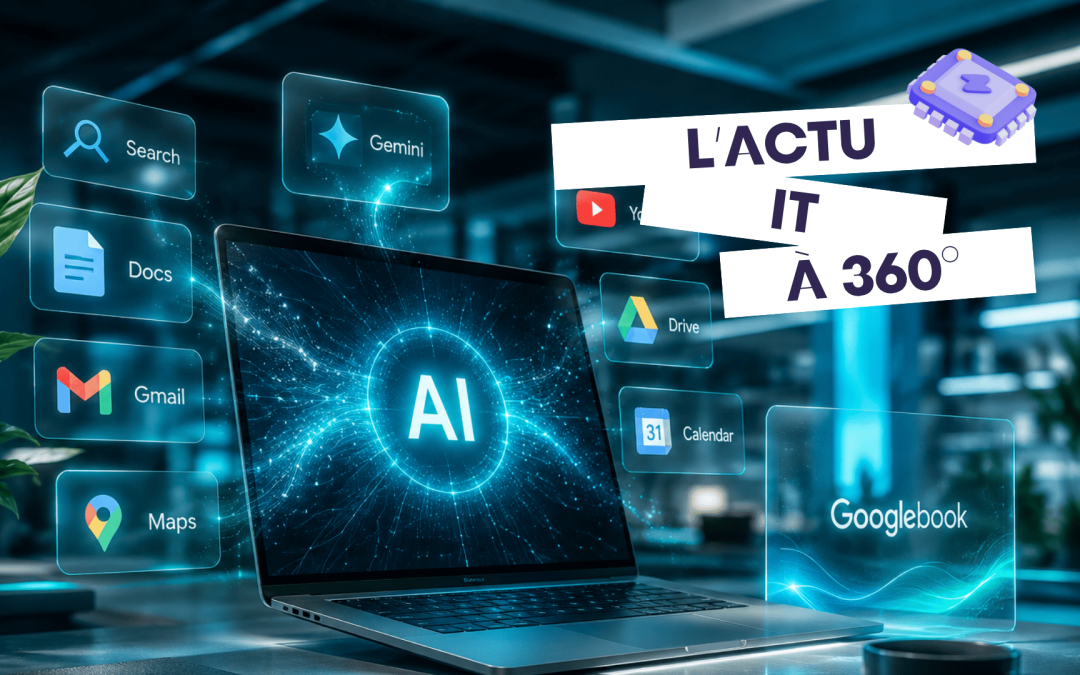
Googlebook: Google wants to reinvent the computer around AI
A new generation of PCs designed for artificial intelligence Google is preparing a new category of laptops called “Googlebook”, designed from the ground up around artificial intelligence. After AI-powered smartphones, the company now wants to turn the PC itself into a...

OpsMill: the start-up that wants to prepare IT systems for the AI shock
Artificial intelligence is moving faster than IT infrastructure Generative artificial intelligence is rapidly transforming businesses, but one reality is becoming increasingly clear: today’s IT infrastructure is not ready to absorb this revolution. This is...

What if your future cloud fitted in a drop of DNA?
Data storage is reaching its limits Every day, humanity produces a gigantic amount of data. In 2025, the volume generated worldwide each day is estimated at almost 300 exabytes, the equivalent of a century of European audiovisual archives created every 24 hours1. With...

+13.5% in 2026: corporate IT spending soars
A sharp acceleration in IT investment Worldwide IT spending is expected to reach 6.31 trillion dollars in 2026, a rise of 13.5% year on year, according to Gartner’s latest forecast1. This figure marks a clear acceleration compared with previous estimates (+10.8%),...
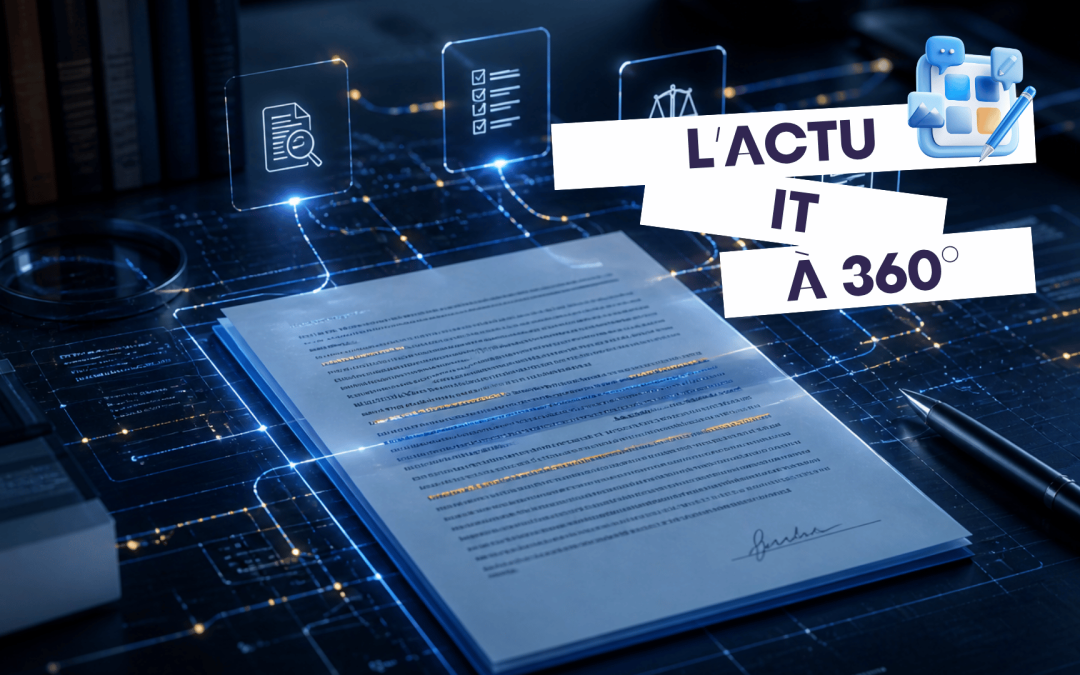
Microsoft builds legal AI into Word: contracts go automated
Word becomes an intelligent legal tool Microsoft is taking a new step by building artificial intelligence specialised in legal analysis directly into Word. The aim is clear: to automate contract review, detect risks and speed up document production. At a time when...
Merck and Google Cloud: a key partnership for agentic AI in the enterprise
A strategic investment to transform the company through AI Biopharmaceutical giant Merck has announced a 1-billion-dollar, 10-year partnership with Google Cloud, with a clear goal: to embed agentic artificial intelligence at the heart of its operations. This project...
Chrome Enterprise goes AI: Google automates browsing and workflows
The browser becomes a genuinely intelligent work tool Google is upgrading Chrome Enterprise with advanced artificial intelligence capabilities, turning the browser into an active platform able to carry out tasks. Autonomous browsing, workflow automation and...
$32 billion: Google launches a cyber army of AI agents
Cybersecurity enters a new dimension Google has made a major move by announcing an investment of $32 billion in developing a “cyber army” of artificial intelligence agents. Behind this term lies a technological reality: systems capable of automatically detecting,...