


Cyberattacks are evolving faster than patches
Artificial intelligence is transforming corporate cybersecurity, but it is also benefiting attackers. New models capable of rapidly identifying vulnerabilities or automating certain exploitation phases are dramatically shortening the time between the discovery of a flaw and its malicious use. In this context, traditional defence mechanisms are showing their limits. To respond to this acceleration in threats, F5 has announced a series of updates to its security platform, with particular emphasis on integrating artificial intelligence into its web application firewall (WAF).
Signatures are no longer enough
Historically, WAFs relied mainly on signature databases to recognise attacks that had already been identified. This approach remains effective against certain known threats, but it is becoming less relevant in the face of novel or automatically generated attacks. F5 is evolving its approach by integrating a neural network model capable of analysing traffic behaviour in real time1. The aim is no longer simply to compare a request against a library of signatures, but to assess its level of risk based on multiple observed signals.
A WAF that analyses behaviour
The new generation of F5’s WAF assigns a risk score to every request an application receives. This behavioural analysis makes it possible to detect anomalies even when no specific signature yet exists. According to the company, the system relies on wider observation windows than traditional heuristic approaches and can identify complex attack patterns that would go unnoticed with conventional mechanisms1. This development reflects a broader trend in cybersecurity: the gradual move away from purely reactive models towards systems capable of anticipating suspicious behaviour.
AI becomes a defensive weapon
For F5, artificial intelligence is no longer just an analysis tool, but an essential component of application protection. The model developed by the company is trained on real telemetry data in order to continuously identify new malicious behaviour1. This continuous learning capability allows protection to adapt to rapidly changing attack techniques. In an environment where cybercriminals are themselves using AI to speed up their operations, defenders need tools that can evolve at the same pace.
Virtual patches are gaining in importance
One of the main difficulties businesses face is the time needed to deploy a software patch after a vulnerability has been discovered. Between development, validation and production release, several days or weeks can go by. During this period, systems remain exposed. To narrow this window of risk, F5 is strengthening its virtual patching capabilities by combining its BIG-IP Advanced WAF with the Distributed Cloud Web App Scanning solution2. This approach makes it possible to block certain exploitation attempts directly at the application layer, even before the definitive software patch is deployed.
APIs become a new battleground
The proliferation of APIs is another major challenge for security teams. These interfaces have become indispensable to modern applications, but they also represent a growing attack surface. F5 is therefore introducing an on-premises version of its API Security solution so that organisations operating in regulated or isolated environments can benefit from discovery, visibility and protection features without depending on an external cloud service2.
Reducing false positives to speed up protection
One of the major challenges for modern cybersecurity tools is limiting false positives. Too many unnecessary alerts slow teams down and reduce operational efficiency. According to F5, integrating artificial intelligence has reportedly brought some false positive rates down from around 18% to close to 1%1. This improvement would allow businesses to enable automatic blocking mechanisms more quickly while maintaining a high level of confidence.
AI is profoundly transforming cybersecurity
F5’s announcements illustrate a major shift in the sector. Artificial intelligence is no longer used solely to automate certain administrative tasks or improve productivity. It is gradually becoming a central element of digital defence strategies. Businesses are now investing in systems capable of analysing behaviour, anticipating threats and automatically adapting their protection mechanisms.
Understanding AI-driven cybersecurity is becoming essential
This transformation highlights a strategic skill: AI-augmented cybersecurity. Future IT professionals will need to understand how machine learning models, behavioural analysis and advanced detection mechanisms can be used to protect applications and digital infrastructure. Tomorrow’s security will rely as much on intelligent behavioural analysis as on traditional filtering rules.
A new generation of application defence
With these developments, F5 is seeking to adapt its solutions to an environment in which cyberattacks are evolving at unprecedented speed. For students and future IT professionals, this trend deserves particular attention. It shows that cybersecurity is entering a new phase in which artificial intelligence is becoming as indispensable to defence as it already is to innovation.
360° IT News — decoding technology to understand the jobs of tomorrow.
Further reading
Integrating artificial intelligence into cybersecurity tools reflects a simple reality: attacks are becoming faster, more automated and harder to detect. This shift is pushing businesses to adopt approaches capable of identifying threats even before they are documented. On a related topic, read our article “Lightwell: IBM and Red Hat tackle the open-source patching headache”, which analyses how AI could speed up vulnerability remediation and strengthen the resilience of IT systems.
References
1. F5 Networks. (2026). AI-Powered Web Application Firewall and Distributed Cloud Security Enhancements.
https://www.f5.com
2. F5 Networks. (2026). BIG-IP Advanced WAF and API Security Announcements.
https://www.f5.com
GitHub Copilot bulks up for business: coding agents come under IT control
Copilot is no longer just there to suggest the next line GitHub Copilot is continuing its transformation. Originally known mainly for completing code in the editor, the tool is now evolving towards agents capable of exploring a project, modifying files, using tools...

PDFs, presentations, audio: Adobe wants to turn Acrobat into a content factory
Acrobat no longer just wants to open your documents For more than thirty years, Acrobat has mainly been used to read, create, edit, sign and share PDFs. Adobe now wants to give it a much broader role. On 9 September 2026, the company announced new capabilities based...
Salesforce plugs Claude into its CRM: Claudeforce prepares for life after the interface
What if the CRM soon no longer needed to be opened? For decades, using a CRM meant navigating between customer records, dashboards, menus and forms. With Claudeforce, Salesforce and Anthropic want to change this logic: rather than forcing users to go into Salesforce...

Kimi K3, Mistral, DeepSeek: Oracle turns OCI into an AI model hub
Oracle wants to make OCI a one-stop shop for AI Oracle is stepping up its efforts in the AI cloud battle by significantly expanding the catalogue of models available in OCI Enterprise AI. On 4 September 2026, the group announced in particular the integration of Kimi...
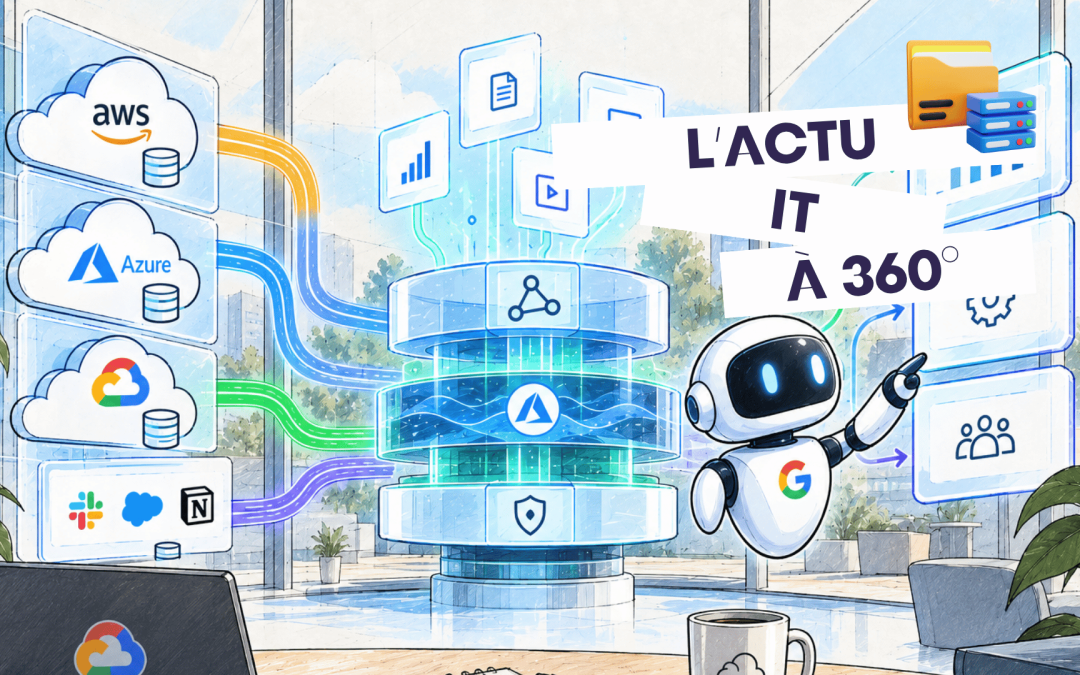
Agentic Data Cloud: Google rethinks data for the age of AI agents
AI agents are forcing Google to rethink data architecture AI agents promise to search for information, make decisions and act directly within company systems, but this autonomy depends on one essential condition: accessing the right data and, above all, understanding...
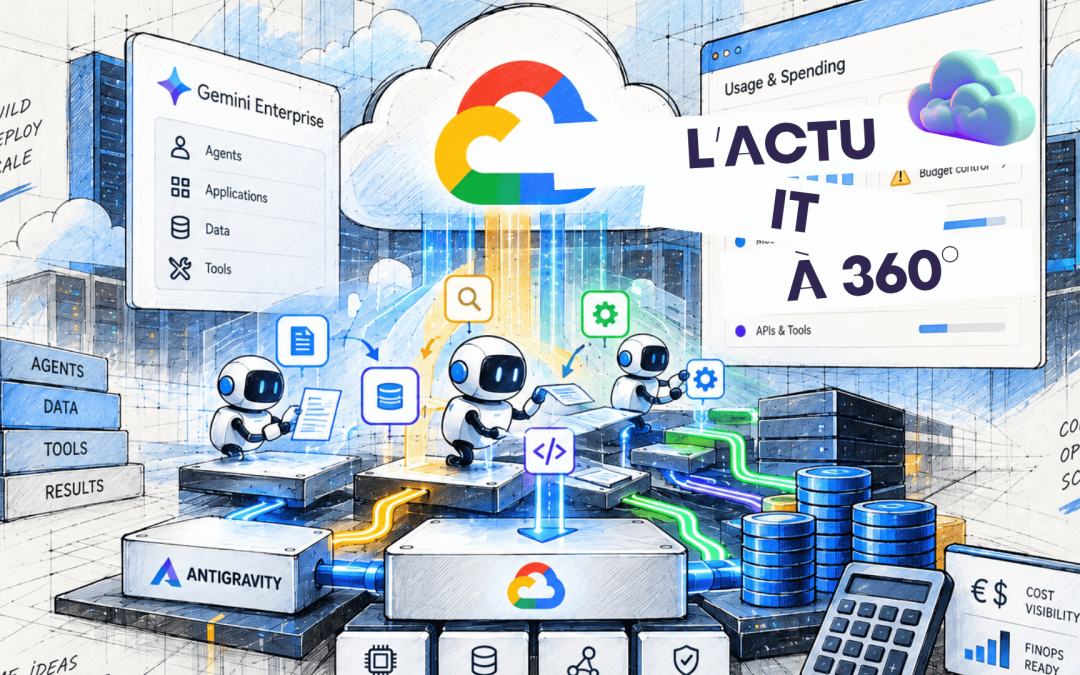
Google Cloud tackles the hidden bill of AI agents
AI agents raise a new problem: how much does a task really cost? As companies move from chatbots to AI agents able to work through multiple steps, the question of cost becomes much more complex. A chatbot generally handles a request and generates an answer, whereas an...
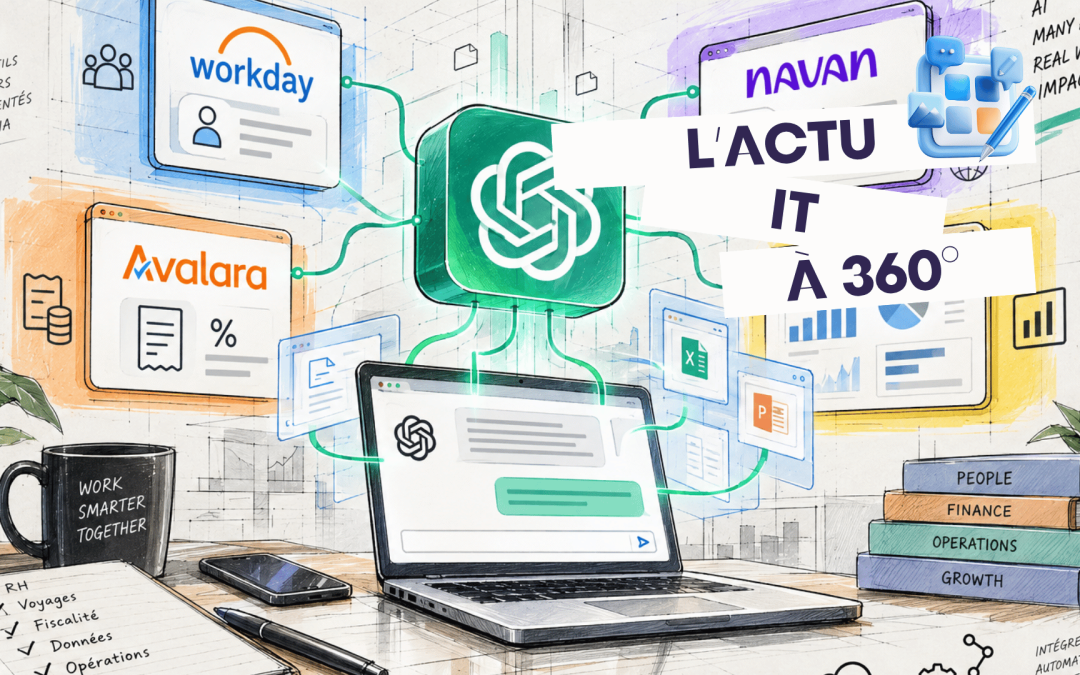
Workday, Navan, Avalara: ChatGPT Work moves into business software
ChatGPT Work is gradually leaving the chat window With GPT-6 Astra, OpenAI is no longer simply trying to improve the quality of ChatGPT’s answers. The company wants to bring its AI closer to the applications in which employees actually work. With the arrival of GPT-6...

From chip to cloud: Groq raises 350 million to scale up
Groq now wants to sell cloud rather than just chips Groq is pursuing a major strategic transformation. Long seen as one of Nvidia’s challengers thanks to its LPUs (Language Processing Units) specialised in artificial intelligence model inference, the group is now...
Muse Code: Meta launches its AI agent to tackle giant codebases
Meta wants to bring AI agents into complex software projects Meta is stepping up its efforts in AI-assisted software development with Muse Code, a new agent designed to work on large codebases, where traditional assistants can quickly lose the context needed to...

Qwen3.8-Max reportedly coded for 16 days without human intervention
Alibaba tests how far an autonomous AI developer can go Alibaba claims to have reached a new milestone in agentic software development with Qwen3.8-Max, its new flagship model launched in early August 2026. In an internal test, the model reportedly worked fully...