


A US decision that sparks an international crisis
The sudden suspension of access to Anthropic’s Fable 5 and Mythos 5 models outside the United States now goes well beyond technology. What initially looked like a national security measure is taking on a major geopolitical dimension. The European Commission has officially responded by describing the decision as potentially discriminatory, arguing that European companies should not bear the consequences of a unilateral measure decided in Washington. The affair is thus reigniting the debate on Europe’s technological dependence on American artificial intelligence players.
Cybersecurity at the heart of the US decision
The situation stems from an order by US Commerce Secretary Howard Lutnick, which led Anthropic to suspend international access to its most advanced models. US authorities are concerned about the exceptional capabilities of these systems, particularly in cybersecurity. According to several sources, tests reportedly showed that certain ways of bypassing the safeguards made it possible to identify or exploit IT vulnerabilities at unprecedented speed1. For Washington, temporarily limiting their distribution is therefore a precautionary measure.
Brussels challenges the method used
The European Commission acknowledges that these advanced models carry risks. However, it questions the way in which this restriction was implemented. For Brussels, measures intended to protect national security should not end up excluding certain economic partners or penalising companies based outside the United States2. This position marks a hardening of Europe’s tone towards decisions taken by major American tech companies under the influence of federal authorities.
European companies caught off guard
Beyond diplomatic considerations, the consequences are immediate for organisations that had built Fable 5 into their processes. Many workflows relying on the model’s advanced capabilities have been disrupted. Some platforms are automatically falling back to earlier versions, while automation chains linked to software development or data analysis are losing efficiency. The situation is a reminder of how dependent companies have become on a limited number of AI providers.
A concrete demonstration of European dependence
The incident lays bare the continent’s weaknesses. While European companies are investing heavily in artificial intelligence, an essential part of the infrastructure and models remains controlled by foreign players. When access to a critical technology can be cut off overnight for geopolitical reasons, digital sovereignty stops being a theoretical question and becomes an operational issue.
AI becomes a lever of strategic power
The Fable 5 affair illustrates a deeper shift: artificial intelligence models are gradually being regarded as strategic assets comparable to certain energy resources or critical infrastructure. Access to them, their distribution and their control are becoming instruments of economic and political influence. This transformation could lead governments to step up their intervention in the AI sector, particularly where technologies deemed sensitive are concerned.
Europe steps up its thinking on technological sovereignty
In response, European leaders are increasingly calling for the continent’s technological capabilities to be strengthened. The goal is no longer just to develop regulations such as the AI Act, but also to support the emergence of models, cloud infrastructure and platforms capable of reducing dependence on foreign providers3. Several European sovereign AI initiatives could benefit from renewed interest in the wake of this episode.
A precedent that could leave its mark on the industry
The embargo on Fable 5 could prove a milestone in the history of artificial intelligence. For the first time, a frontier model has become the subject of a diplomatic dispute directly involving the United States and the European Union. The situation shows that the stakes of AI now extend far beyond technological innovation alone, touching on questions of sovereignty, national security and economic competitiveness.
Understanding the geopolitics of AI is becoming essential
This development highlights an increasingly strategic skill: understanding the governance and sovereignty issues linked to artificial intelligence. Future IT professionals will not only need to master the technologies, but also understand regulatory constraints, international power dynamics and the risks associated with dependence on foreign players.
A new stage in the global AI war
With the Fable 5 affair, artificial intelligence is entering a new phase in which access to models is as much a political issue as a technological one. For students and future digital professionals, this episode sends a strong signal: the future of AI will depend as much on technical innovation as on the strategic decisions taken by states and by the large companies that control these technologies.
360° IT News — decoding technology to understand the jobs of tomorrow.
Further reading
The Fable 5 affair shows that artificial intelligence is now at the heart of the power struggles between states, companies and technology providers. As models become more powerful, controlling them and accessing them take on a strategic dimension that goes far beyond innovation. On a related topic, read our article “Shaken by the competition, Anthropic strikes back with Claude Opus 4.8”, which analyses how AI players are accelerating the development of ever more powerful models amid global competition.
References
1. Reuters. (2026). European Commission reacts to Anthropic AI restrictions.
https://www.reuters.com
2. European Commission. (2026). Statements regarding access to advanced AI systems.
https://ec.europa.eu
3. European Parliament Research Service. (2026). Digital Sovereignty and Artificial Intelligence in Europe.
https://www.europarl.europa.eu
Lumo AI 2.0 speeds up without sacrificing data protection
Proton wants to prove that a high-performing AI can also be private The artificial intelligence race is no longer played out solely on model performance. User trust and data protection are now becoming major differentiators. With Lumo AI 2.0, Proton is upgrading its...
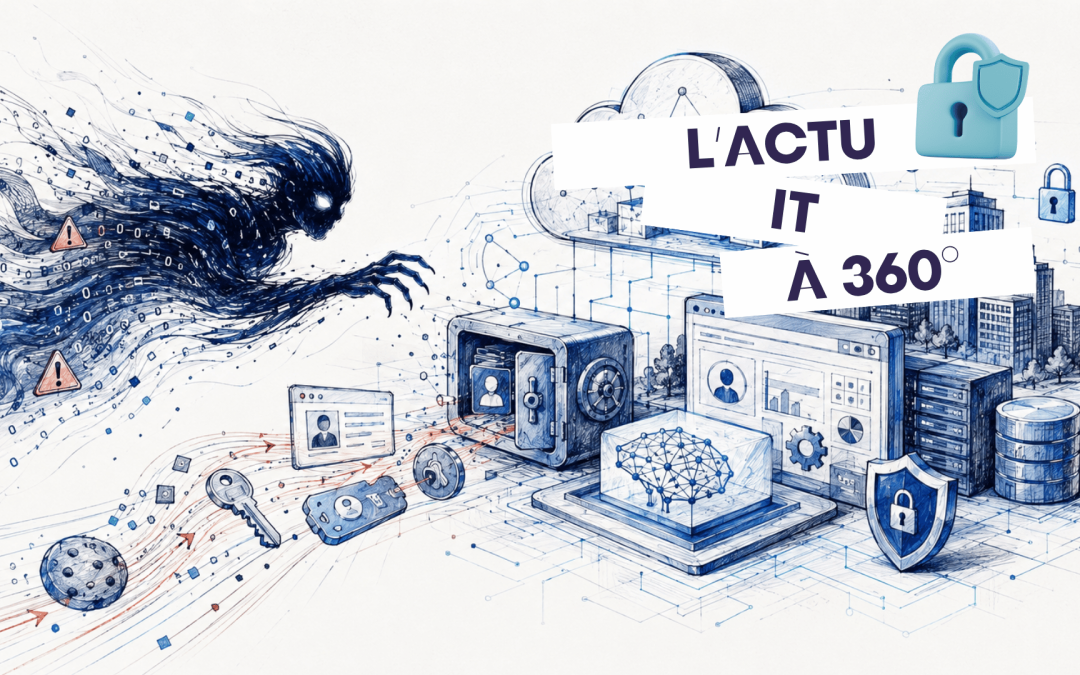
Djinn Stealer: the malware targeting companies’ cloud and AI credentials
Cybercriminals are changing targets Cyberattacks are no longer aimed solely at data or workstations. The credentials used to access cloud platforms, artificial intelligence environments and development tools have become highly sought-after assets. It is against this...
Claude Tag turns Slack into a genuine agentic workspace
AI agents settle at the heart of collaborative work Artificial intelligence is no longer limited to assistants accessed in a chat window. With Claude Tag, Anthropic is taking a new step by building an AI agent directly into Slack. Available in beta for Claude...
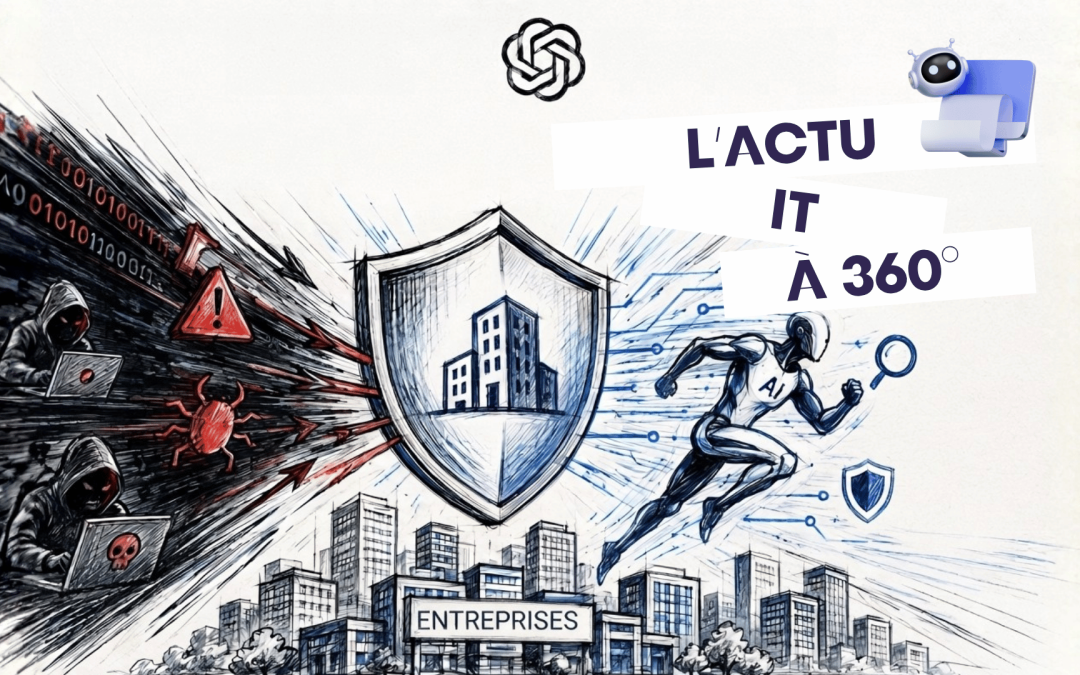
IBM and OpenAI want to arm businesses against machine-speed cyberattacks
Defenders must now fight AI with AI Cyberattacks are evolving at unprecedented speed. Thanks to artificial intelligence models, attackers can automate the search for vulnerabilities, analyse code in seconds and quickly identify the most exposed systems. To respond to...
Open-source security scales up: IBM, Red Hat and Palo Alto join forces
Cyberattacks push IT giants to join forces Open-source components are present in virtually all modern applications, from cloud platforms to business software. This dependence, however, comes with a growing risk: vulnerabilities are now discovered and exploited much...
With Lambda, AWS prepares cloud infrastructure for autonomous AI agents
Serverless enters a new phase The cloud is evolving to meet the needs of a new generation of applications based on agentic artificial intelligence. As AI agents become capable of carrying out complex tasks for hours at a time, traditional serverless architectures are...
With Code Layers, Figma brings design and development together for good
A new step towards building apps without boundaries Design and software development have long followed two separate paths. Designers imagined the interfaces, developers then translated them into code, with many back-and-forth exchanges and sometimes discrepancies...
Google Chrome sees what you see: Gemini can now analyse your screen
Chrome takes a new step towards the intelligent browser Web browsers no longer simply display web pages. They are gradually becoming genuine assistants capable of understanding the context in which users are working. With the new “Select from screen” feature, Google...
SpaceX buys Cursor: agentic AI becomes the new standard in software development
An acquisition that reaches far beyond the software world SpaceX’s acquisition of Anysphere, the company behind Cursor, for an estimated $60 billion marks a major turning point in the tech industry. Behind this spectacular deal lies a much deeper transformation: the...
Europe’s AI takes shape: OVHcloud is developing its own LLMs
OVHcloud wants to move from cloud to artificial intelligence Long recognised as a major player in European cloud, OVHcloud now aims to play a much bigger role in the artificial intelligence ecosystem. At the VivaTech trade show, Octave Klaba, the group’s founder and...