


Data is no longer enough: intelligence must now be shared too
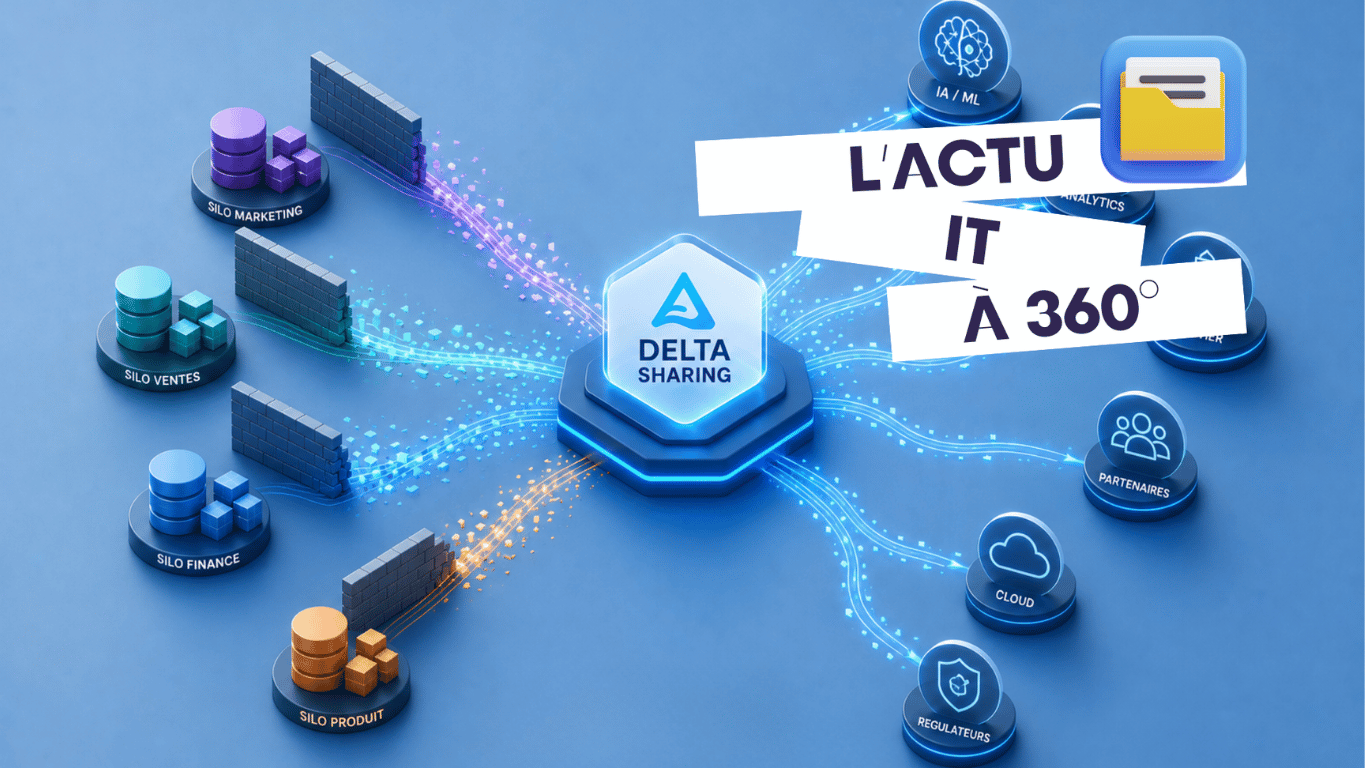
Artificial intelligence is transforming the way companies use their data. Yet one major obstacle remains: the resources needed for AI projects are often scattered across different platforms, teams and technical environments. Models, agents, dashboards and unstructured data are frequently locked away in silos that make them hard to use at scale. To address this challenge, Databricks has unveiled Open Sharing, an evolution of its Delta Sharing protocol designed to extend secure sharing to artificial intelligence assets.
From Delta Sharing to Open Sharing
Launched in 2021, Delta Sharing set out to create an open protocol allowing companies to exchange data in real time without depending on a specific platform. Based on the Delta Lakehouse ecosystem, it was gradually adopted as an interoperability solution between different cloud and analytics environments. With Open Sharing, Databricks is now extending the concept beyond data alone to include AI models, agent skills, applications, dashboards and unstructured content1.
Sharing without copying becomes a strategic advantage
One of Open Sharing’s main innovations lies in its “zero-copy” approach. Companies can share AI assets without having to move, duplicate or replicate them across multiple systems1. Access is granted via temporary credentials and secure control mechanisms. This approach reduces the costs of duplicating resources while simplifying data governance and compliance.
Agentic AI is driving a surge in interoperability needs
The arrival of AI agents makes this need even more pressing. In many projects, models, data and users are spread across several separate platforms. Each new integration requires specific development work, security checks and complex synchronisation mechanisms. According to several analysts, these hidden costs are becoming one of the main barriers to deploying AI at scale2. Open Sharing aims precisely to reduce this complexity by providing a common protocol for exchanging AI assets.
AI assets become business assets
For a long time, value lay mainly in the data itself. Today, companies increasingly regard models, agents and AI workflows as strategic assets. This shift is changing the way organisations manage their digital infrastructure. Open Sharing supports this trend by making it possible to share not only data but also the logic, context and intelligence associated with it3.
Governance under the Linux Foundation
To encourage adoption, Databricks is placing Open Sharing under the aegis of the Linux Foundation and its LF Data & AI branch1. This open governance is intended to reassure companies about the protocol’s long-term future and to encourage interoperability with other market players. The protocol also supports Apache Iceberg tables, which are increasingly used in modern data and artificial intelligence architectures.
Cutting integration costs and speeding up projects
Companies currently spend a significant share of their AI budgets on integrating systems. Sharing resources between partners, subsidiaries or customers often requires weeks of development. By standardising these exchanges, Open Sharing could considerably shorten these timescales. For CIOs, the stakes are high: accelerating project deployment while limiting the operational costs of managing multiple platforms2.
A new stage for the AI economy
This development reflects a broader trend: the industrialisation of artificial intelligence. Having invested in models and infrastructure, companies are now seeking to make AI assets flow more smoothly. Organisations able to share their models, agents and data quickly will enjoy a significant competitive advantage in an environment where speed of execution is becoming essential.
Understanding data interoperability is becoming essential
This transformation highlights a strategic skill: data governance and sharing in the age of AI. Future IT professionals will need to understand exchange protocols, open architectures and the mechanisms that allow resources to flow between different environments. As systems become more distributed, interoperability is becoming a key success factor for digital projects.
Towards more open and collaborative AI
With Open Sharing, Databricks is attempting to address one of the most important challenges of modern artificial intelligence: allowing AI assets to flow as easily as data. For students and future IT professionals, this development deserves particular attention. It shows that the future of AI will depend not only on the power of models, but also on companies’ ability to share their knowledge, data and intelligent agents effectively.
360° IT News — decoding technology to understand the jobs of tomorrow.
Further reading
The emergence of Open Sharing illustrates a strong trend: companies are seeking to make their data and AI assets more accessible across different platforms and cloud environments. This interoperability is becoming essential to power intelligent agents and accelerate artificial intelligence projects. On a related topic, read our article “AWS strengthens OpenSearch to connect AI to enterprise data”, which examines how data infrastructure is evolving to meet the needs of agentic AI.
References
1. Databricks. (2026). Open Sharing: Extending Delta Sharing for AI Assets.
https://www.databricks.com
2. HFS Research. (2026). The Hidden Cost of AI Integration and Interoperability.
https://www.hfsresearch.com
3. HyperFrame Research. (2026). AI Assets and the Future of Enterprise Data Sharing.
https://www.hyperframeresearch.com

Two months, $1.1 billion: River AI is already exciting investors
A spectacular raise for a start-up barely out of the shadows Two months after emerging from stealth mode, River AI has just completed one of the most spectacular funding rounds of the year in artificial intelligence. The start-up founded by Igor Babuschkin, a former...

AI propels Nokia: data centres are reshaping the networking market
The AI explosion is transforming the infrastructure market Nokia is reaping the full benefits of the rise of artificial intelligence and the proliferation of data centres that comes with it. In the second quarter of 2026, the company’s Network Infrastructure business...
Gemini 3.5 Pro delayed: Google under pressure in the AI race
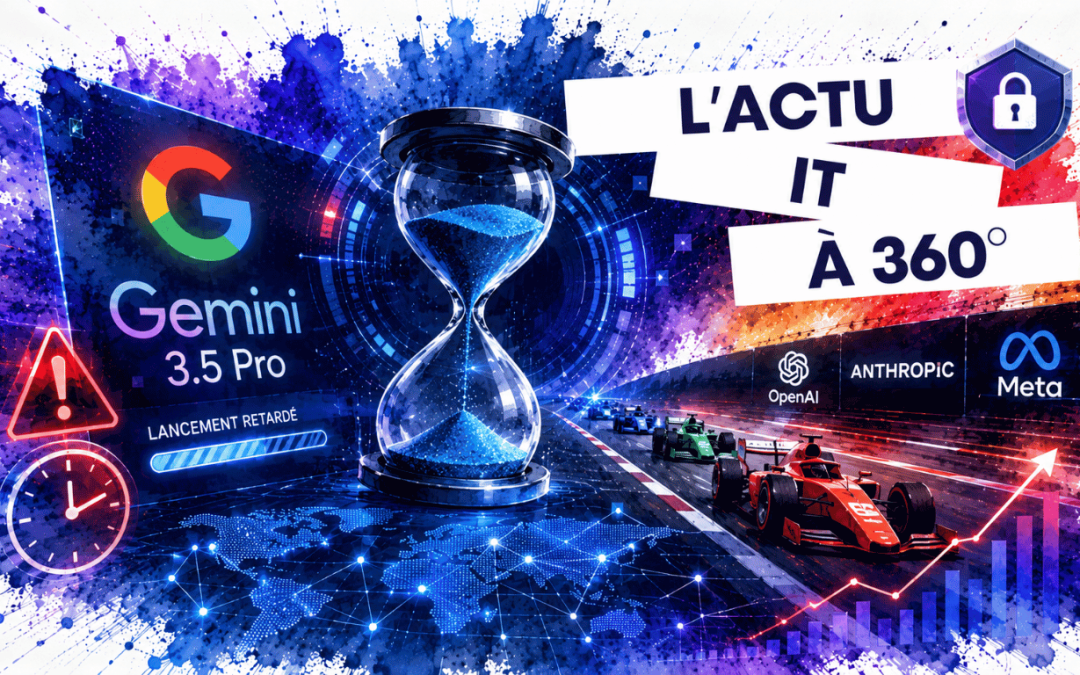
The race for AI models is speeding up Google is going through a difficult period in the competition over advanced artificial intelligence models. According to several reports in the specialist press, the launch of Gemini 3.5 Pro has reportedly been pushed back by...

Project Glasswing: Anthropic goes on the offensive against software vulnerabilities
A new step for AI applied to cybersecurity Anthropic is pressing ahead with Project Glasswing, an initiative that makes its Claude Mythos Preview model available to specialist cybersecurity players in order to identify and fix vulnerabilities in critical software. The...

Cloud, AI, defence: AWS steps up on every front
AWS makes artificial intelligence a pillar of critical infrastructure At the AWS Summit Washington, D.C. 2026, Amazon Web Services unveiled several developments aimed at government departments, public bodies and critical sectors. The company is strengthening its...

MDASH: the AI helping Microsoft secure Windows
Microsoft hands part of the bug hunt to artificial intelligence Cyberattacks are evolving ever faster, forcing software vendors to detect vulnerabilities before they can even be exploited. To meet this challenge, Microsoft has unveiled MDASH (Microsoft Detection and...

Microsoft speeds up its cybersecurity with AI: defence moves to machine scale
Microsoft wants to regain the upper hand against cyberattacks Cybercriminals are now using artificial intelligence to discover vulnerabilities, automate their attacks and speed up their malicious campaigns. In response, Microsoft is pressing ahead with its Secure...

Free access to Claude Fable 5 extended as Anthropic holds off
A new generation of AI designed for specific uses OpenAI is changing its strategy with the launch of GPT-5.6, a new family of models made up of Sol, Terra and Luna. Rather than offering a single model capable of meeting every need, the company is now betting on a...
OpenAI bets on modular AI with Sol, Terra and Luna
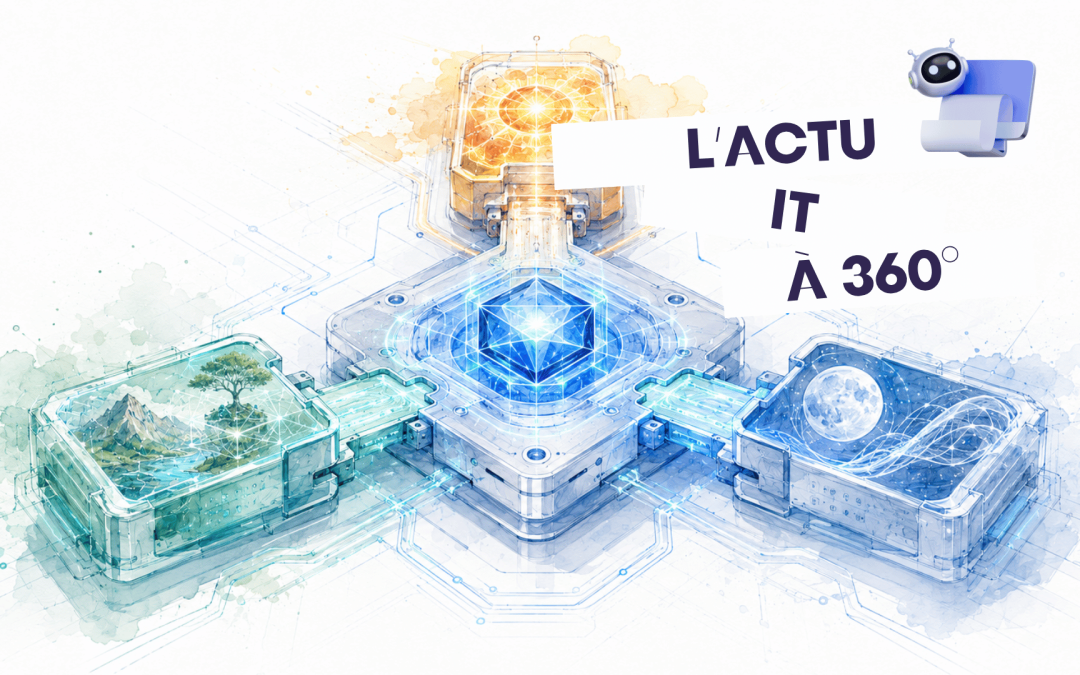
A new generation of AI designed for specific uses OpenAI is changing its strategy with the launch of GPT-5.6, a new family of models made up of Sol, Terra and Luna. Rather than offering a single model capable of meeting every need, the company is now betting on a...

Anthropic’s AI is advancing at a pace that worries cybersecurity specialists
AI models cross a new capability threshold Barely a month after its launch, Claude Mythos Preview is already improving its performance. According to the latest tests published by the UK’s AI Security Institute (AISI), Anthropic’s model now beats its own results from...