


A sharp acceleration in IT investment
Worldwide IT spending is expected to reach 6.31 trillion dollars in 2026, a rise of 13.5% year on year, according to Gartner’s latest forecast1. This figure marks a clear acceleration compared with previous estimates (+10.8%), proof that businesses are investing in their digital infrastructure faster than expected. After already solid growth of 10.5% in 2025, 2026 confirms an underlying trend: IT is no longer a support function, but a strategic lever for transformation and competitiveness.
AI becomes the main driver of growth
Behind this surge in spending, one factor clearly dominates: artificial intelligence. Investment in AI-related infrastructure, particularly data centres and computing capacity, is pulling the whole market upwards. Gartner points out that AI workloads require massive resources, which is boosting demand for processors, accelerators and advanced memory technologies. This dynamic is creating a two-speed market, in which AI-related segments far outperform other IT categories.
Data centres boom at the heart of the new digital economy
The most spectacular segment remains data centre infrastructure, with growth expected to reach 55.8% in 2026, to almost 788 billion dollars1. This increase illustrates the scale of the computing power needed to support AI, the cloud and data. Hyperscalers are investing massively to meet this demand, creating a knock-on effect across the entire IT ecosystem. Data centres are thus becoming the critical foundation of the digital economy, on a par with electricity or networks.
Software and services: growth fuelled by AI
Other segments are not lagging behind. IT services remain the largest spending item at 1.87 trillion dollars (+9%), while software reaches 1.444 trillion dollars, with growth of 15.1%1. This increase is largely driven by generative AI and automation tools, which are transforming how businesses work. Contrary to fears of a SaaS slowdown, software continues to grow strongly, proof that businesses are investing in solutions to improve their productivity and competitiveness.
A widening gap between IT segments
This growth is not uniform, however. Some segments, such as devices (PCs, smartphones), are growing more slowly, with an increase limited to 8.2%, held back by inflation and component costs1. This divergence reflects a transformation of the IT market: investment is now concentrated on critical infrastructure and high-value technologies such as AI and the cloud. Businesses are reallocating their budgets to favour the most strategic areas.
SMEs face a new IT reality
For SMEs, this development is both an opportunity and a challenge. On the one hand, increased investment in the cloud and infrastructure provides access to advanced technologies without heavy in-house investment. On the other, it requires IT priorities to be rethought and adaptation to an increasingly complex environment. Businesses must strike a balance between modernisation, security and cost control, at a time when IT is becoming a key competitive factor.
Investing in IT becomes a strategic choice, not a technical one
This development highlights a key skill: IT project management. Professionals must be able to steer investments, understand technology priorities and align IT choices with business objectives. It is no longer just about managing tools, but about building a coherent digital strategy capable of supporting the company’s growth.
A lasting transformation of the digital economy
The 13.5% rise in IT spending in 2026 is not a one-off phenomenon, but the sign of a lasting transformation. Artificial intelligence, the cloud and data are redefining the priorities of businesses, which are investing heavily to stay competitive. For students and future IT professionals, this development is essential to understand. It shows that digital jobs will be at the heart of corporate strategies, in a world where technology is becoming an engine of growth.
360° IT News — decoding technology to understand the jobs of tomorrow.
References
1. Gartner. (2026). IT Spending Forecast Worldwide.
https://www.gartner.com
GitHub Copilot bulks up for business: coding agents come under IT control
Copilot is no longer just there to suggest the next line GitHub Copilot is continuing its transformation. Originally known mainly for completing code in the editor, the tool is now evolving towards agents capable of exploring a project, modifying files, using tools...

PDFs, presentations, audio: Adobe wants to turn Acrobat into a content factory
Acrobat no longer just wants to open your documents For more than thirty years, Acrobat has mainly been used to read, create, edit, sign and share PDFs. Adobe now wants to give it a much broader role. On 9 September 2026, the company announced new capabilities based...
Salesforce plugs Claude into its CRM: Claudeforce prepares for life after the interface
What if the CRM soon no longer needed to be opened? For decades, using a CRM meant navigating between customer records, dashboards, menus and forms. With Claudeforce, Salesforce and Anthropic want to change this logic: rather than forcing users to go into Salesforce...

Kimi K3, Mistral, DeepSeek: Oracle turns OCI into an AI model hub
Oracle wants to make OCI a one-stop shop for AI Oracle is stepping up its efforts in the AI cloud battle by significantly expanding the catalogue of models available in OCI Enterprise AI. On 4 September 2026, the group announced in particular the integration of Kimi...
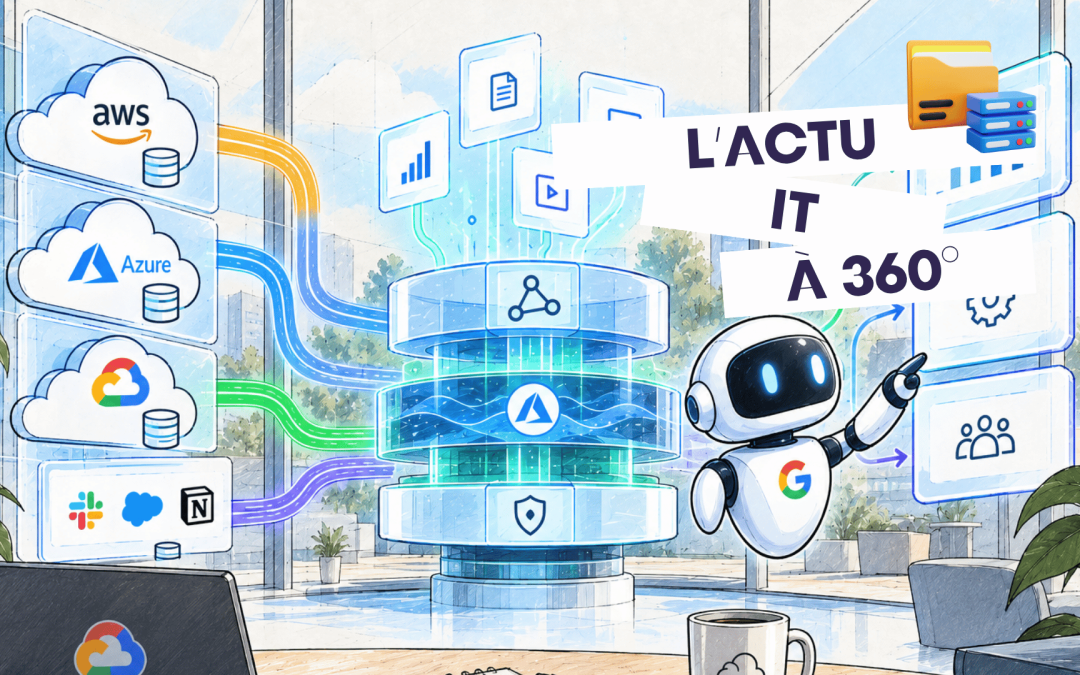
Agentic Data Cloud: Google rethinks data for the age of AI agents
AI agents are forcing Google to rethink data architecture AI agents promise to search for information, make decisions and act directly within company systems, but this autonomy depends on one essential condition: accessing the right data and, above all, understanding...
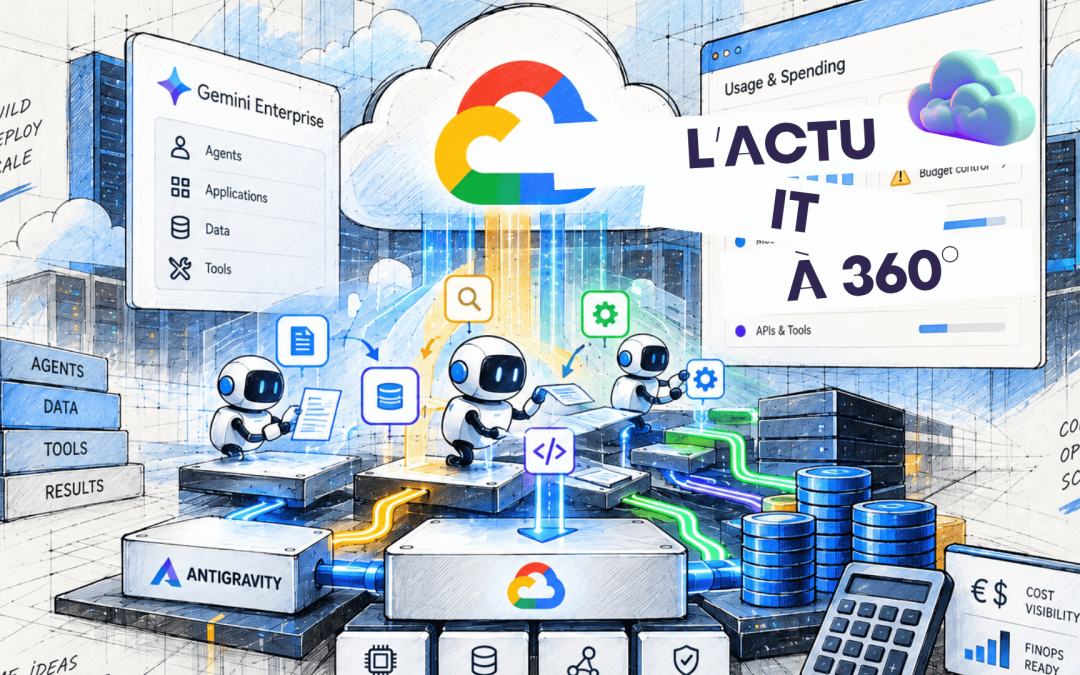
Google Cloud tackles the hidden bill of AI agents
AI agents raise a new problem: how much does a task really cost? As companies move from chatbots to AI agents able to work through multiple steps, the question of cost becomes much more complex. A chatbot generally handles a request and generates an answer, whereas an...
Workday, Navan, Avalara: ChatGPT Work moves into business software
ChatGPT Work is gradually leaving the chat window With GPT-6 Astra, OpenAI is no longer simply trying to improve the quality of ChatGPT’s answers. The company wants to bring its AI closer to the applications in which employees actually work. With the arrival of GPT-6...

From chip to cloud: Groq raises 350 million to scale up
Groq now wants to sell cloud rather than just chips Groq is pursuing a major strategic transformation. Long seen as one of Nvidia’s challengers thanks to its LPUs (Language Processing Units) specialised in artificial intelligence model inference, the group is now...

Muse Code: Meta launches its AI agent to tackle giant codebases
Meta wants to bring AI agents into complex software projects Meta is stepping up its efforts in AI-assisted software development with Muse Code, a new agent designed to work on large codebases, where traditional assistants can quickly lose the context needed to...

Qwen3.8-Max reportedly coded for 16 days without human intervention
Alibaba tests how far an autonomous AI developer can go Alibaba claims to have reached a new milestone in agentic software development with Qwen3.8-Max, its new flagship model launched in early August 2026. In an internal test, the model reportedly worked fully...