


News in brief
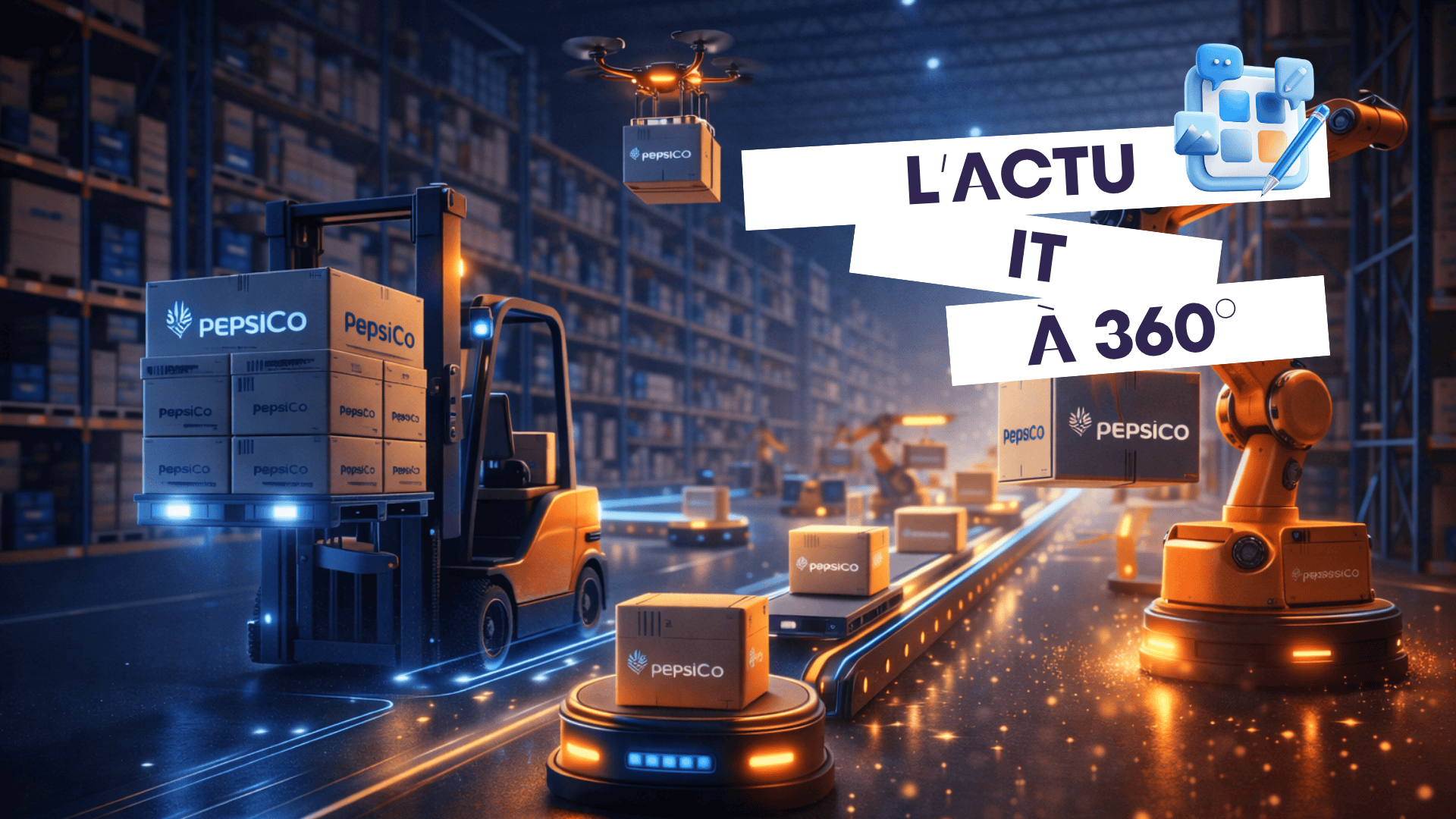
PepsiCo France is investing in an automated, multimodal warehouse that combines robotics, digital systems and intelligent management of logistics flows. The aim is no longer simply to store and distribute products, but to turn the warehouse into a genuine operational control centre. Amid strong pressure on lead times, costs and customer satisfaction, logistics is becoming a strategic lever for competitiveness, directly linked to companies’ digital transformation and their ability to adapt quickly to market fluctuations.¹
Less handling, more intelligent orchestration
Thanks to automation, repetitive tasks such as moving pallets or picking orders are handled by automated systems, allowing teams to focus on higher-value tasks. The warehouse now operates as a coordinated system, in which flows are optimised in real time according to priorities, stock levels and orders. This orchestration relies on advanced software, sensors and analytics tools that continuously adjust operations, thereby reducing errors and improving overall productivity.
Speeding up deliveries without increasing costs
For businesses, and SMEs in particular, this development shows that it is possible to handle more volume without a proportional increase in resources. Automation reduces order preparation times, optimises internal routes and limits losses due to human error. As a result, companies can deliver faster while keeping their operating costs under control. In a market where speed and reliability have become essential criteria, this ability to improve logistics performance is becoming a decisive competitive advantage.
Logistics is becoming a data-driven system
One of the major changes lies in the use of data as a management tool. Systems continuously collect and analyse information on flows, stock and performance, making it possible to anticipate needs and optimise operations. This approach turns logistics into a predictive system capable of anticipating stock-outs, adapting resources and taking decisions in real time. It brings supply chain jobs closer to IT jobs, in which data management is becoming central to operational performance.
Managing automated systems, a new IT reality
This transformation highlights a key skill: software and application management in industrial environments. IT professionals must be able to configure complex systems, ensure they run smoothly and guarantee their interoperability with other tools. This requires an understanding of both technical and operational issues, since these systems have a direct impact on production and logistics. IT is thus becoming a central player in on-the-ground operations, rather than a mere support function.
Physical warehouses are becoming digital platforms
With this type of infrastructure, warehouses are evolving into hybrid environments that are both physical and digital. They are becoming platforms capable of adapting to needs in real time, integrating new technologies and connecting different systems to one another. This transformation perfectly illustrates the impact of IT in traditionally industrial sectors. For students and future professionals, it shows that IT jobs are not limited to digital environments, but now extend to all of a company’s activities.
360° IT News — decoding technology to understand the jobs of tomorrow.
References
1. PepsiCo. Logistics and supply chain innovation initiatives.
https://www.pepsico.com

AWS strengthens OpenSearch to connect AI to enterprise data
AI agents are forcing the cloud to evolve The rise of agentic AI is profoundly transforming cloud infrastructure. Unlike traditional conversational assistants, intelligent agents must access data, interact with several systems and carry out tasks autonomously. To meet...

With Stainless, Anthropic aims to put Claude at the heart of software development
The AI battle is shifting to developer tools Anthropic is continuing its rise in artificial intelligence with the acquisition of Stainless, a start-up specialising in development tools and API automation. Behind this acquisition lies a significant strategic...

Microsoft transforms Office with Fintool and autonomous AI
Office enters the age of intelligent agents Microsoft is stepping up its agentic artificial intelligence strategy with the acquisition of Fintool, a start-up specialising in automated financial analysis. Founded in San Francisco by Frenchmen Nicolas Bustamante and...
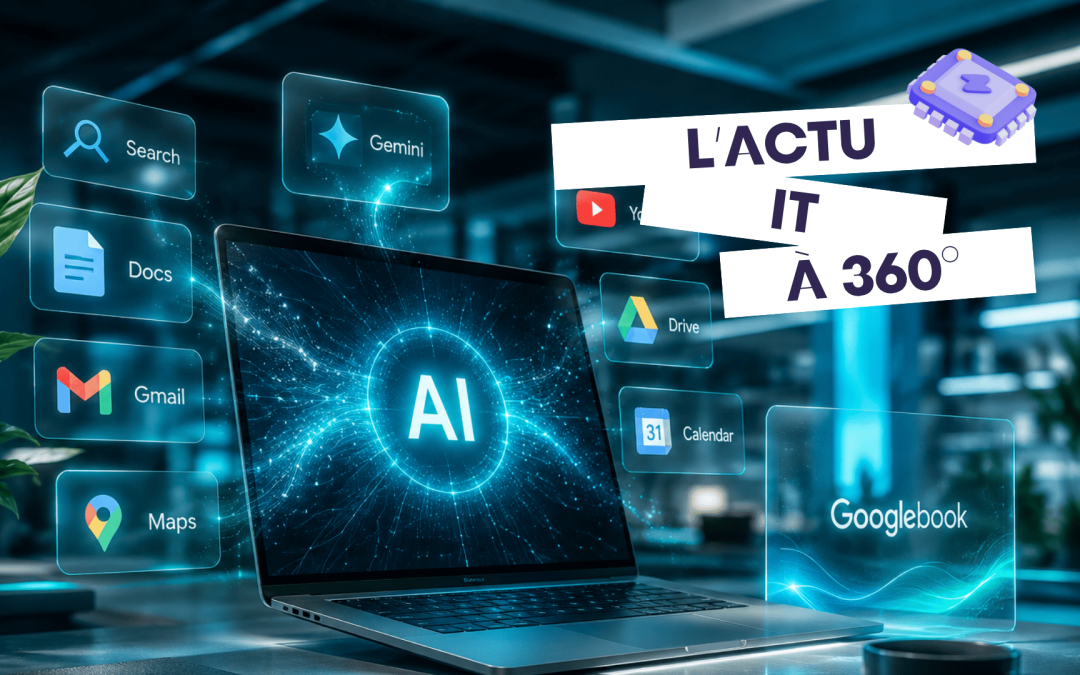
Googlebook: Google wants to reinvent the computer around AI
A new generation of PCs designed for artificial intelligence Google is preparing a new category of laptops called “Googlebook”, designed from the ground up around artificial intelligence. After AI-powered smartphones, the company now wants to turn the PC itself into a...

OpsMill: the start-up that wants to prepare IT systems for the AI shock
Artificial intelligence is moving faster than IT infrastructure Generative artificial intelligence is rapidly transforming businesses, but one reality is becoming increasingly clear: today’s IT infrastructure is not ready to absorb this revolution. This is...

What if your future cloud fitted in a drop of DNA?
Data storage is reaching its limits Every day, humanity produces a gigantic amount of data. In 2025, the volume generated worldwide each day is estimated at almost 300 exabytes, the equivalent of a century of European audiovisual archives created every 24 hours1. With...

+13.5% in 2026: corporate IT spending soars
A sharp acceleration in IT investment Worldwide IT spending is expected to reach 6.31 trillion dollars in 2026, a rise of 13.5% year on year, according to Gartner’s latest forecast1. This figure marks a clear acceleration compared with previous estimates (+10.8%),...
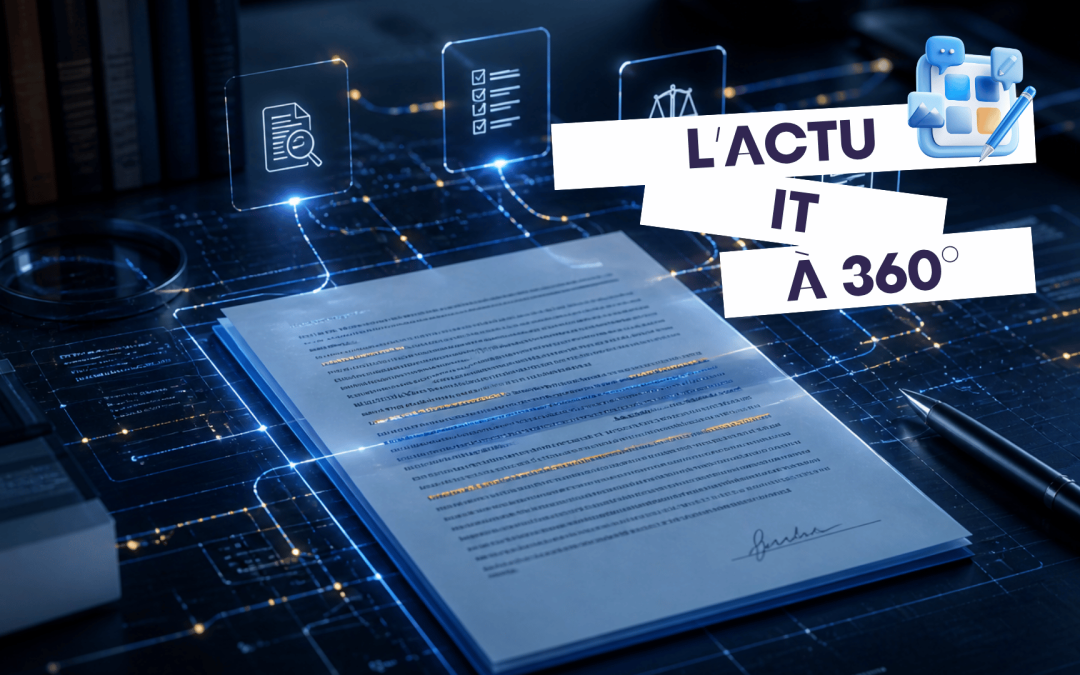
Microsoft builds legal AI into Word: contracts go automated
Word becomes an intelligent legal tool Microsoft is taking a new step by building artificial intelligence specialised in legal analysis directly into Word. The aim is clear: to automate contract review, detect risks and speed up document production. At a time when...
Merck and Google Cloud: a key partnership for agentic AI in the enterprise
A strategic investment to transform the company through AI Biopharmaceutical giant Merck has announced a 1-billion-dollar, 10-year partnership with Google Cloud, with a clear goal: to embed agentic artificial intelligence at the heart of its operations. This project...
Chrome Enterprise goes AI: Google automates browsing and workflows
The browser becomes a genuinely intelligent work tool Google is upgrading Chrome Enterprise with advanced artificial intelligence capabilities, turning the browser into an active platform able to carry out tasks. Autonomous browsing, workflow automation and...