


News in brief
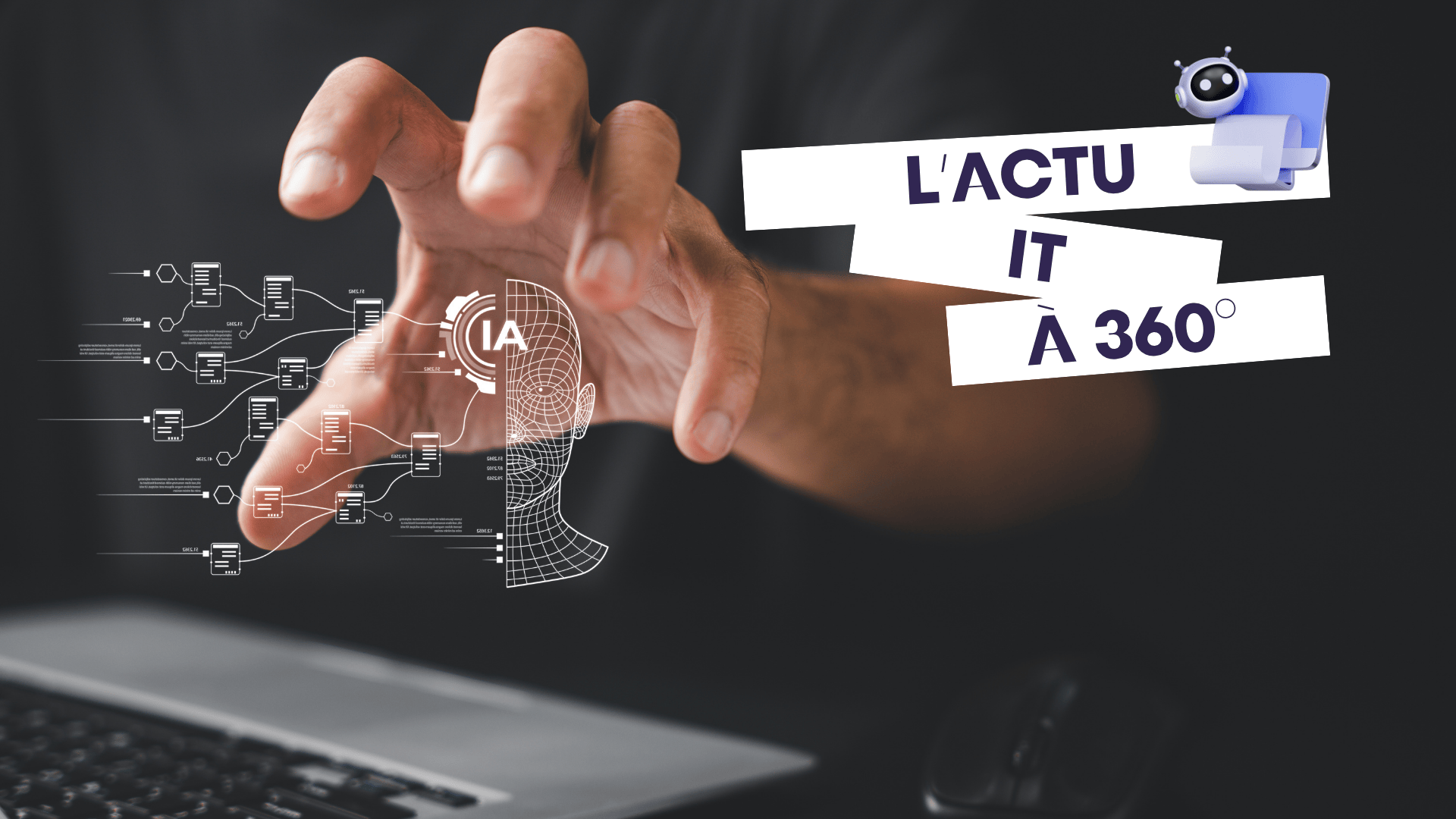
Tencent has just integrated OpenClaw into WeChat, turning the app into far more than a simple communication tool. This development introduces agents capable of carrying out tasks directly from the interface, without going through several applications or intermediate steps. This announcement is not just a functional improvement but a paradigm shift: applications are becoming intelligent environments capable of acting on the user’s behalf. With more than a billion users, WeChat is thus becoming a large-scale laboratory for testing a new generation of digital uses.¹
Agents that move from assistance to execution
Until now, artificial intelligence has mainly been used to assist, suggest or generate content. With OpenClaw, AI is crossing a threshold by becoming capable of carrying out concrete actions within a digital system. This means that a user can delegate certain tasks, such as organising a diary, sending messages or managing files, without intervening at every step. This development has been made possible by advances in artificial intelligence models capable of understanding complex contexts and interacting with different tools. AI is thus becoming a genuine intermediary between users and their digital tools.²
Saving time without changing working habits
For businesses, start-ups and freelancers, integrating these agents directly into an app such as WeChat profoundly changes the way AI is used. Rather than adopting new tools or deploying complex solutions, it becomes possible to automate tasks directly within an environment already used every day. This approach reduces technological friction and makes automation accessible to a larger number of organisations, particularly SMEs. It saves time on repetitive tasks and allows teams to refocus on higher-value activities, which is essential in a context of digital transformation.
A global battle over intelligent platforms
Tencent’s initiative is part of a global competition between the major technology companies. Alibaba, Baidu and other players are also developing agent-based solutions capable of automating processes and coordinating actions across different systems. This dynamic shows that platforms are no longer just tools, but are becoming ecosystems capable of orchestrating intelligent actions. The challenge is no longer simply to offer features, but to control complete digital environments in which artificial intelligence plays a central role.
Knowing how to orchestrate AI is becoming a decisive skill
In this context, the key skill is no longer simply understanding artificial intelligence, but knowing how to orchestrate it in a professional environment. IT professionals must be able to configure agents, supervise their actions and guarantee the security of the data they handle. Generative artificial intelligence is thus becoming an operational lever, built into business processes. This ability to manage intelligent systems is becoming essential to support businesses in their digital transformation and to exploit the full potential of these technologies.
Applications that anticipate and act
With the arrival of AI agents in WeChat, a new stage has been reached in the evolution of digital tools. Applications no longer simply respond to requests; they anticipate and carry out actions for the user. This transformation heralds a future in which interactions with digital tools will be increasingly automated and seamless. For students and future IT professionals, understanding this development is crucial, because it is redefining uses, IT jobs and the digital skills needed in an environment dominated by artificial intelligence.
360° IT News — decoding technology to understand the jobs of tomorrow.
References
1. Reuters. Tencent integrates AI agents into WeChat ecosystem.
https://www.reuters.com
2. OpenClaw. Open-source AI agent architecture overview.
https://github.com

AWS strengthens OpenSearch to connect AI to enterprise data
AI agents are forcing the cloud to evolve The rise of agentic AI is profoundly transforming cloud infrastructure. Unlike traditional conversational assistants, intelligent agents must access data, interact with several systems and carry out tasks autonomously. To meet...
With Stainless, Anthropic aims to put Claude at the heart of software development
The AI battle is shifting to developer tools Anthropic is continuing its rise in artificial intelligence with the acquisition of Stainless, a start-up specialising in development tools and API automation. Behind this acquisition lies a significant strategic...

Microsoft transforms Office with Fintool and autonomous AI
Office enters the age of intelligent agents Microsoft is stepping up its agentic artificial intelligence strategy with the acquisition of Fintool, a start-up specialising in automated financial analysis. Founded in San Francisco by Frenchmen Nicolas Bustamante and...
Googlebook: Google wants to reinvent the computer around AI
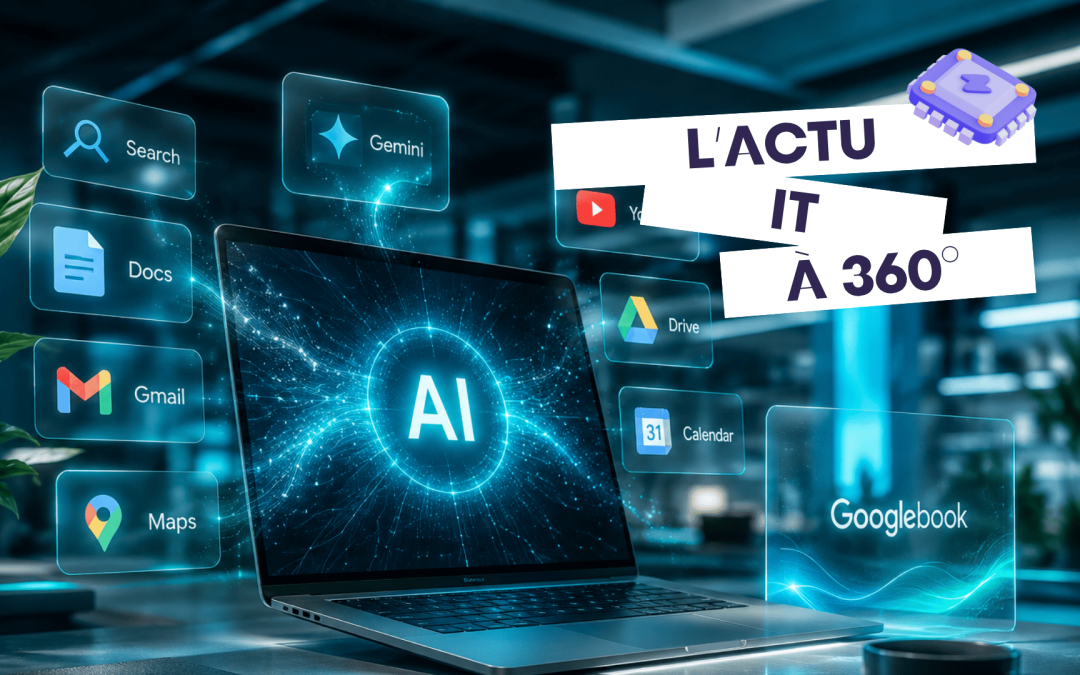
A new generation of PCs designed for artificial intelligence Google is preparing a new category of laptops called “Googlebook”, designed from the ground up around artificial intelligence. After AI-powered smartphones, the company now wants to turn the PC itself into a...

OpsMill: the start-up that wants to prepare IT systems for the AI shock
Artificial intelligence is moving faster than IT infrastructure Generative artificial intelligence is rapidly transforming businesses, but one reality is becoming increasingly clear: today’s IT infrastructure is not ready to absorb this revolution. This is...

What if your future cloud fitted in a drop of DNA?
Data storage is reaching its limits Every day, humanity produces a gigantic amount of data. In 2025, the volume generated worldwide each day is estimated at almost 300 exabytes, the equivalent of a century of European audiovisual archives created every 24 hours1. With...

+13.5% in 2026: corporate IT spending soars
A sharp acceleration in IT investment Worldwide IT spending is expected to reach 6.31 trillion dollars in 2026, a rise of 13.5% year on year, according to Gartner’s latest forecast1. This figure marks a clear acceleration compared with previous estimates (+10.8%),...
Microsoft builds legal AI into Word: contracts go automated
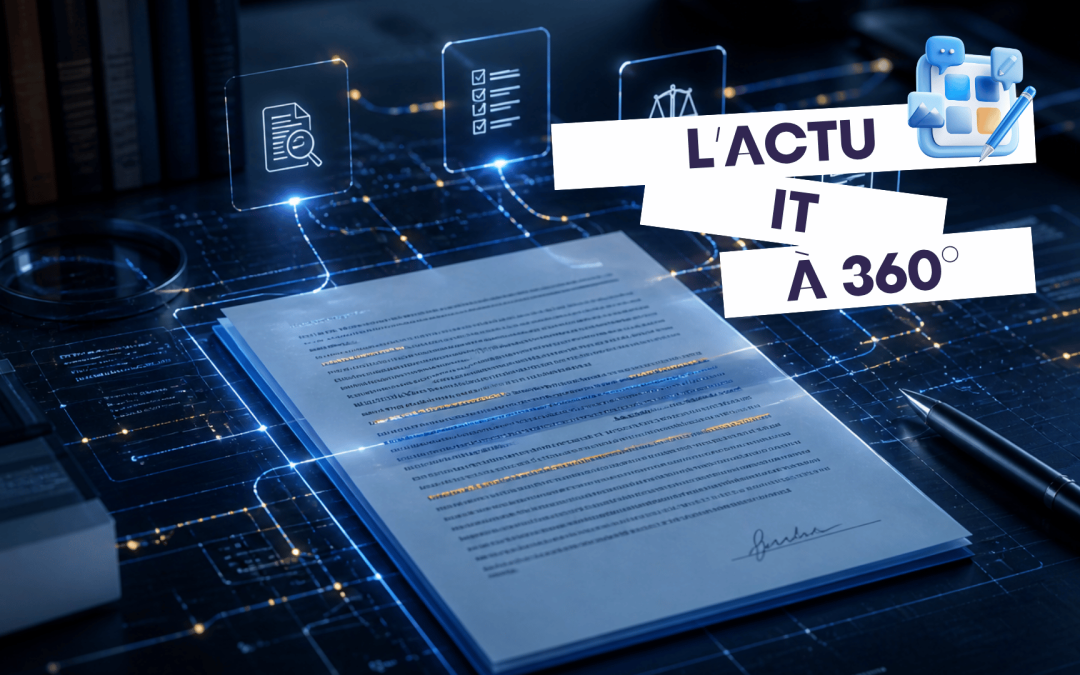
Word becomes an intelligent legal tool Microsoft is taking a new step by building artificial intelligence specialised in legal analysis directly into Word. The aim is clear: to automate contract review, detect risks and speed up document production. At a time when...
Merck and Google Cloud: a key partnership for agentic AI in the enterprise
A strategic investment to transform the company through AI Biopharmaceutical giant Merck has announced a 1-billion-dollar, 10-year partnership with Google Cloud, with a clear goal: to embed agentic artificial intelligence at the heart of its operations. This project...
Chrome Enterprise goes AI: Google automates browsing and workflows
The browser becomes a genuinely intelligent work tool Google is upgrading Chrome Enterprise with advanced artificial intelligence capabilities, turning the browser into an active platform able to carry out tasks. Autonomous browsing, workflow automation and...