


OVHcloud wants to move from cloud to artificial intelligence
Long recognised as a major player in European cloud, OVHcloud now aims to play a much bigger role in the artificial intelligence ecosystem. At the VivaTech trade show, Octave Klaba, the group’s founder and CEO, announced that the company was working on developing its own large language models (LLMs). This decision marks a strategic turning point for the French provider, which no longer wants merely to host AI infrastructure, but also to master the technologies that power it.
Digital sovereignty is a priority once again
This announcement comes at a particular time. Recent debates over access to Anthropic’s most advanced models have reminded European businesses of their dependence on American artificial intelligence players. For OVHcloud, this situation highlights the need for local alternatives capable of guaranteeing service continuity and control over critical technologies.
According to Octave Klaba, mastering AI models is now essential to secure the group’s future and meet the expectations of European customers1. This vision goes beyond a purely commercial rationale: it is part of a broader reflection on the continent’s technological sovereignty.
Financial barriers are starting to fall
For several years, developing a large language model was the preserve of a handful of tech giants able to invest several billion euros in computing infrastructure and training data. That reality is changing fast.
OVHcloud believes that advances in model architectures, chip optimisation and the use of synthetic data now make it possible to cut development costs considerably1. Where a project previously required nearly one billion euros of investment, it could now be carried out with a budget of between 150 and 200 million euros.
This shift opens the door to new players able to take part in the race for advanced models.
Jupiter, a first testing ground
OVHcloud is not starting from scratch. The company says it has already completed the pre-training of a first model on Jupiter, presented as Europe’s most powerful supercomputer1. This step is an important milestone in the group’s roadmap and demonstrates its ability to mobilise the infrastructure needed to train large-scale models.
The company does indeed have a particular advantage: it already controls a significant part of the value chain, from data centres to high-performance computing capacity.
Dragon LLM brings the missing expertise
To accelerate its development, OVHcloud has also strengthened its skills through the recent acquisition of Dragon LLM, formerly known as Lingua Custodia. The deal led to the creation of an in-house artificial intelligence laboratory called AI Lab2.
The know-how of this company, a winner of the European Commission’s Large AI Grand Challenge, should enable OVHcloud to develop specialised models that meet the needs of heavily regulated industries, notably in the financial, legal and public administration sectors.
Specialised models rather than a direct ChatGPT rival
OVHcloud’s strategy does not necessarily involve creating a European equivalent of ChatGPT for the general public. The company appears to favour a more targeted approach, based on families of models tailored to specific uses.
This direction could make it possible to address the constraints faced by European businesses more effectively, particularly in terms of compliance, confidentiality and data governance. With this in mind, the value lies less in the size of the model than in its ability to meet precise business needs.
Open source as a long-term goal
OVHcloud also says it wants to take an open approach. The company indicates that some of its technologies could be released as open source once performance reaches a level deemed satisfactory1.
This direction is in line with a trend already seen in Europe, where several players regard opening up models as a way of fostering innovation, transparency and technological independence.
Reducing the real cost of generative AI
Beyond developing the models themselves, OVHcloud is seeking to address another major challenge: the operating cost of artificial intelligence. The company is focusing on optimising performance and reducing inference costs, in other words the resources required when a model is used in production.
This issue is becoming crucial as businesses move from experimenting with generative AI to industrialising it. A model that performs well but is too expensive to run can quickly become hard to make profitable.
Understanding AI infrastructure is becoming strategic
This development highlights a key skill: mastering the entire artificial intelligence value chain, from cloud infrastructure to the models themselves. Future IT professionals will need to understand how Data, data engineering, Data management, generative AI and agentic AI fit together in order to design solutions that are high-performing, secure and economically viable.
A new ambition for the European ecosystem
With this initiative, OVHcloud joins the players seeking to strengthen Europe’s technological autonomy in artificial intelligence. For students and future digital professionals, this announcement illustrates an underlying trend: the next phase of AI development will not only be about the most powerful models, but also about organisations’ ability to master them, host them and adapt them to their specific needs.
360° IT News — decoding technology to understand the jobs of tomorrow.
Further reading
Developing artificial intelligence models is only one part of the equation. To create value, businesses must also be able to connect these models to their data, applications and business processes. This integration is becoming a strategic issue as AI becomes widespread within organisations. On a related topic, read our article “AWS strengthens OpenSearch to connect AI to enterprise data”, which analyses how data infrastructures are evolving to support new uses of artificial intelligence.
References
1. Reuters. (2026). OVHcloud plans to develop its own frontier AI models.
https://www.reuters.com
2. OVHcloud. (2026). Acquisition of Dragon LLM and creation of AI Lab.
https://www.ovhcloud.com
GitHub Copilot bulks up for business: coding agents come under IT control
Copilot is no longer just there to suggest the next line GitHub Copilot is continuing its transformation. Originally known mainly for completing code in the editor, the tool is now evolving towards agents capable of exploring a project, modifying files, using tools...

PDFs, presentations, audio: Adobe wants to turn Acrobat into a content factory
Acrobat no longer just wants to open your documents For more than thirty years, Acrobat has mainly been used to read, create, edit, sign and share PDFs. Adobe now wants to give it a much broader role. On 9 September 2026, the company announced new capabilities based...
Salesforce plugs Claude into its CRM: Claudeforce prepares for life after the interface
What if the CRM soon no longer needed to be opened? For decades, using a CRM meant navigating between customer records, dashboards, menus and forms. With Claudeforce, Salesforce and Anthropic want to change this logic: rather than forcing users to go into Salesforce...
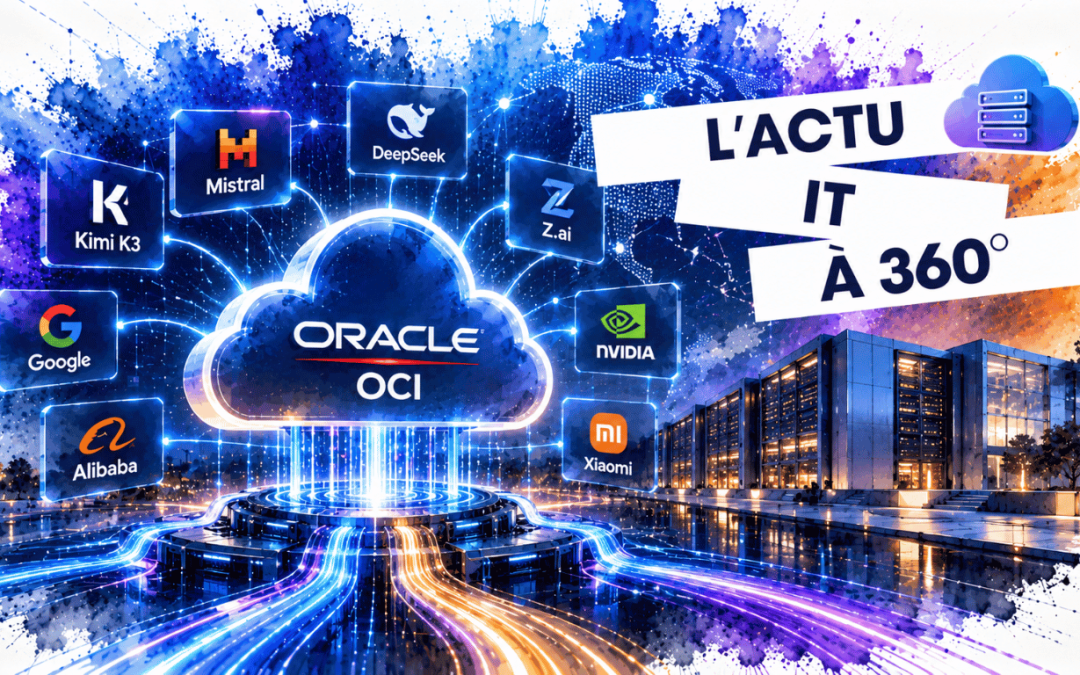
Kimi K3, Mistral, DeepSeek: Oracle turns OCI into an AI model hub
Oracle wants to make OCI a one-stop shop for AI Oracle is stepping up its efforts in the AI cloud battle by significantly expanding the catalogue of models available in OCI Enterprise AI. On 4 September 2026, the group announced in particular the integration of Kimi...
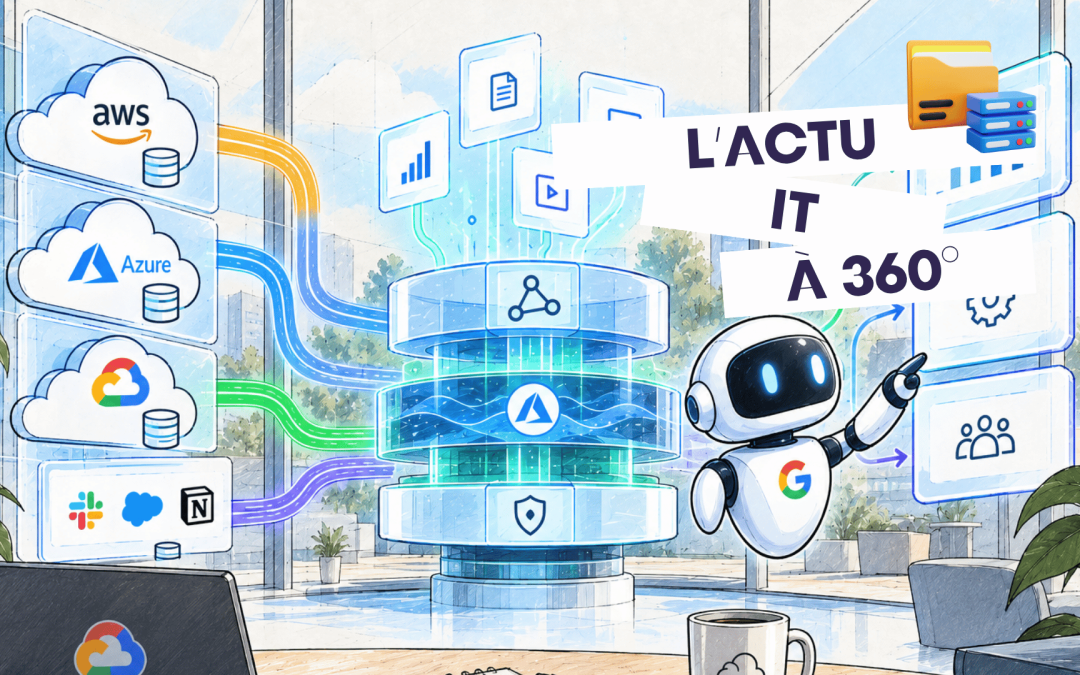
Agentic Data Cloud: Google rethinks data for the age of AI agents
AI agents are forcing Google to rethink data architecture AI agents promise to search for information, make decisions and act directly within company systems, but this autonomy depends on one essential condition: accessing the right data and, above all, understanding...
Google Cloud tackles the hidden bill of AI agents
AI agents raise a new problem: how much does a task really cost? As companies move from chatbots to AI agents able to work through multiple steps, the question of cost becomes much more complex. A chatbot generally handles a request and generates an answer, whereas an...
Workday, Navan, Avalara: ChatGPT Work moves into business software
ChatGPT Work is gradually leaving the chat window With GPT-6 Astra, OpenAI is no longer simply trying to improve the quality of ChatGPT’s answers. The company wants to bring its AI closer to the applications in which employees actually work. With the arrival of GPT-6...

From chip to cloud: Groq raises 350 million to scale up
Groq now wants to sell cloud rather than just chips Groq is pursuing a major strategic transformation. Long seen as one of Nvidia’s challengers thanks to its LPUs (Language Processing Units) specialised in artificial intelligence model inference, the group is now...
Muse Code: Meta launches its AI agent to tackle giant codebases
Meta wants to bring AI agents into complex software projects Meta is stepping up its efforts in AI-assisted software development with Muse Code, a new agent designed to work on large codebases, where traditional assistants can quickly lose the context needed to...
Qwen3.8-Max reportedly coded for 16 days without human intervention
Alibaba tests how far an autonomous AI developer can go Alibaba claims to have reached a new milestone in agentic software development with Qwen3.8-Max, its new flagship model launched in early August 2026. In an internal test, the model reportedly worked fully...