


A US decision that sparks an international crisis
The sudden suspension of access to Anthropic’s Fable 5 and Mythos 5 models outside the United States now goes well beyond technology. What initially looked like a national security measure is taking on a major geopolitical dimension. The European Commission has officially responded by describing the decision as potentially discriminatory, arguing that European companies should not bear the consequences of a unilateral measure decided in Washington. The affair is thus reigniting the debate on Europe’s technological dependence on American artificial intelligence players.
Cybersecurity at the heart of the US decision
The situation stems from an order by US Commerce Secretary Howard Lutnick, which led Anthropic to suspend international access to its most advanced models. US authorities are concerned about the exceptional capabilities of these systems, particularly in cybersecurity. According to several sources, tests reportedly showed that certain ways of bypassing the safeguards made it possible to identify or exploit IT vulnerabilities at unprecedented speed1. For Washington, temporarily limiting their distribution is therefore a precautionary measure.
Brussels challenges the method used
The European Commission acknowledges that these advanced models carry risks. However, it questions the way in which this restriction was implemented. For Brussels, measures intended to protect national security should not end up excluding certain economic partners or penalising companies based outside the United States2. This position marks a hardening of Europe’s tone towards decisions taken by major American tech companies under the influence of federal authorities.
European companies caught off guard
Beyond diplomatic considerations, the consequences are immediate for organisations that had built Fable 5 into their processes. Many workflows relying on the model’s advanced capabilities have been disrupted. Some platforms are automatically falling back to earlier versions, while automation chains linked to software development or data analysis are losing efficiency. The situation is a reminder of how dependent companies have become on a limited number of AI providers.
A concrete demonstration of European dependence
The incident lays bare the continent’s weaknesses. While European companies are investing heavily in artificial intelligence, an essential part of the infrastructure and models remains controlled by foreign players. When access to a critical technology can be cut off overnight for geopolitical reasons, digital sovereignty stops being a theoretical question and becomes an operational issue.
AI becomes a lever of strategic power
The Fable 5 affair illustrates a deeper shift: artificial intelligence models are gradually being regarded as strategic assets comparable to certain energy resources or critical infrastructure. Access to them, their distribution and their control are becoming instruments of economic and political influence. This transformation could lead governments to step up their intervention in the AI sector, particularly where technologies deemed sensitive are concerned.
Europe steps up its thinking on technological sovereignty
In response, European leaders are increasingly calling for the continent’s technological capabilities to be strengthened. The goal is no longer just to develop regulations such as the AI Act, but also to support the emergence of models, cloud infrastructure and platforms capable of reducing dependence on foreign providers3. Several European sovereign AI initiatives could benefit from renewed interest in the wake of this episode.
A precedent that could leave its mark on the industry
The embargo on Fable 5 could prove a milestone in the history of artificial intelligence. For the first time, a frontier model has become the subject of a diplomatic dispute directly involving the United States and the European Union. The situation shows that the stakes of AI now extend far beyond technological innovation alone, touching on questions of sovereignty, national security and economic competitiveness.
Understanding the geopolitics of AI is becoming essential
This development highlights an increasingly strategic skill: understanding the governance and sovereignty issues linked to artificial intelligence. Future IT professionals will not only need to master the technologies, but also understand regulatory constraints, international power dynamics and the risks associated with dependence on foreign players.
A new stage in the global AI war
With the Fable 5 affair, artificial intelligence is entering a new phase in which access to models is as much a political issue as a technological one. For students and future digital professionals, this episode sends a strong signal: the future of AI will depend as much on technical innovation as on the strategic decisions taken by states and by the large companies that control these technologies.
360° IT News — decoding technology to understand the jobs of tomorrow.
Further reading
The Fable 5 affair shows that artificial intelligence is now at the heart of the power struggles between states, companies and technology providers. As models become more powerful, controlling them and accessing them take on a strategic dimension that goes far beyond innovation. On a related topic, read our article “Shaken by the competition, Anthropic strikes back with Claude Opus 4.8”, which analyses how AI players are accelerating the development of ever more powerful models amid global competition.
References
1. Reuters. (2026). European Commission reacts to Anthropic AI restrictions.
https://www.reuters.com
2. European Commission. (2026). Statements regarding access to advanced AI systems.
https://ec.europa.eu
3. European Parliament Research Service. (2026). Digital Sovereignty and Artificial Intelligence in Europe.
https://www.europarl.europa.eu
GitHub Copilot bulks up for business: coding agents come under IT control
Copilot is no longer just there to suggest the next line GitHub Copilot is continuing its transformation. Originally known mainly for completing code in the editor, the tool is now evolving towards agents capable of exploring a project, modifying files, using tools...
PDFs, presentations, audio: Adobe wants to turn Acrobat into a content factory
Acrobat no longer just wants to open your documents For more than thirty years, Acrobat has mainly been used to read, create, edit, sign and share PDFs. Adobe now wants to give it a much broader role. On 9 September 2026, the company announced new capabilities based...
Salesforce plugs Claude into its CRM: Claudeforce prepares for life after the interface
What if the CRM soon no longer needed to be opened? For decades, using a CRM meant navigating between customer records, dashboards, menus and forms. With Claudeforce, Salesforce and Anthropic want to change this logic: rather than forcing users to go into Salesforce...

Kimi K3, Mistral, DeepSeek: Oracle turns OCI into an AI model hub
Oracle wants to make OCI a one-stop shop for AI Oracle is stepping up its efforts in the AI cloud battle by significantly expanding the catalogue of models available in OCI Enterprise AI. On 4 September 2026, the group announced in particular the integration of Kimi...
Agentic Data Cloud: Google rethinks data for the age of AI agents
AI agents are forcing Google to rethink data architecture AI agents promise to search for information, make decisions and act directly within company systems, but this autonomy depends on one essential condition: accessing the right data and, above all, understanding...
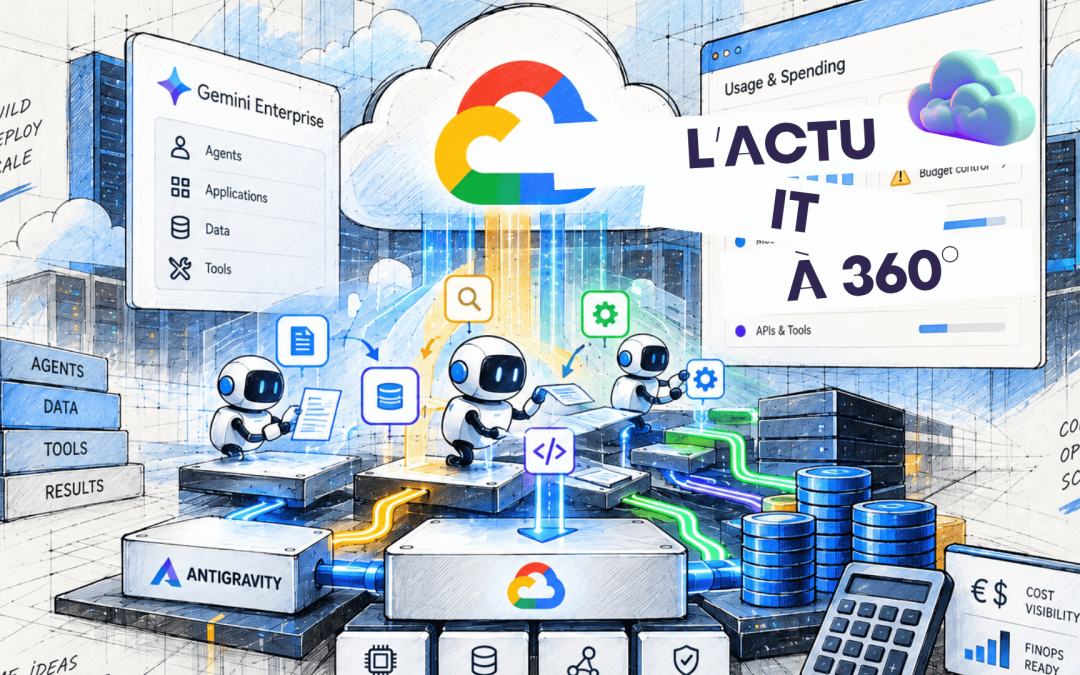
Google Cloud tackles the hidden bill of AI agents
AI agents raise a new problem: how much does a task really cost? As companies move from chatbots to AI agents able to work through multiple steps, the question of cost becomes much more complex. A chatbot generally handles a request and generates an answer, whereas an...
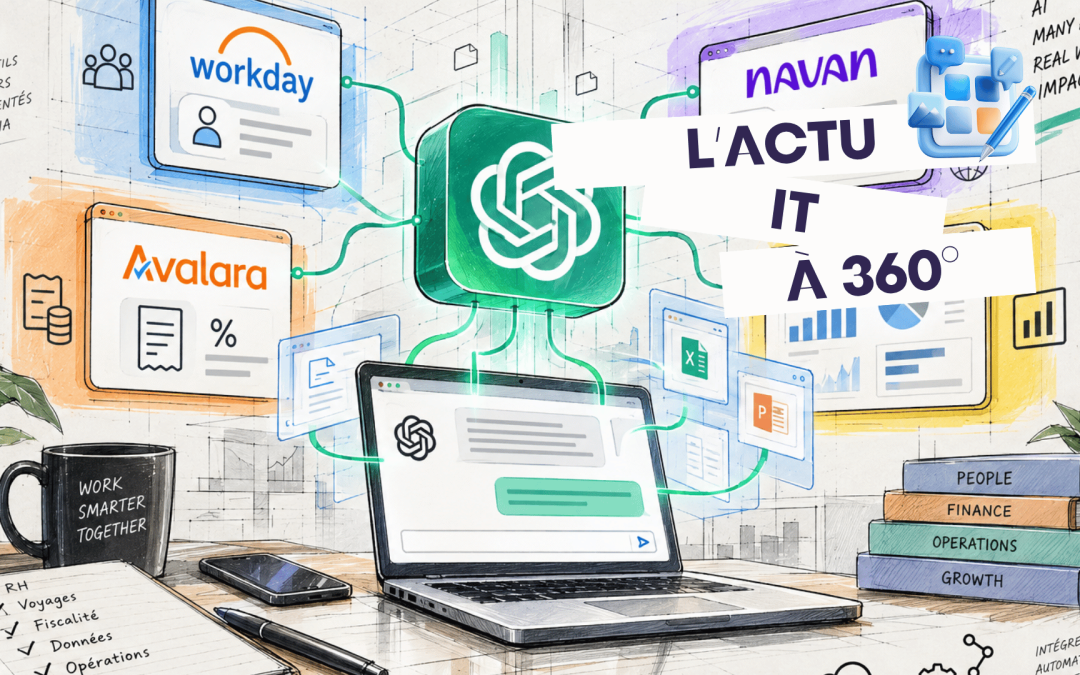
Workday, Navan, Avalara: ChatGPT Work moves into business software
ChatGPT Work is gradually leaving the chat window With GPT-6 Astra, OpenAI is no longer simply trying to improve the quality of ChatGPT’s answers. The company wants to bring its AI closer to the applications in which employees actually work. With the arrival of GPT-6...

From chip to cloud: Groq raises 350 million to scale up
Groq now wants to sell cloud rather than just chips Groq is pursuing a major strategic transformation. Long seen as one of Nvidia’s challengers thanks to its LPUs (Language Processing Units) specialised in artificial intelligence model inference, the group is now...
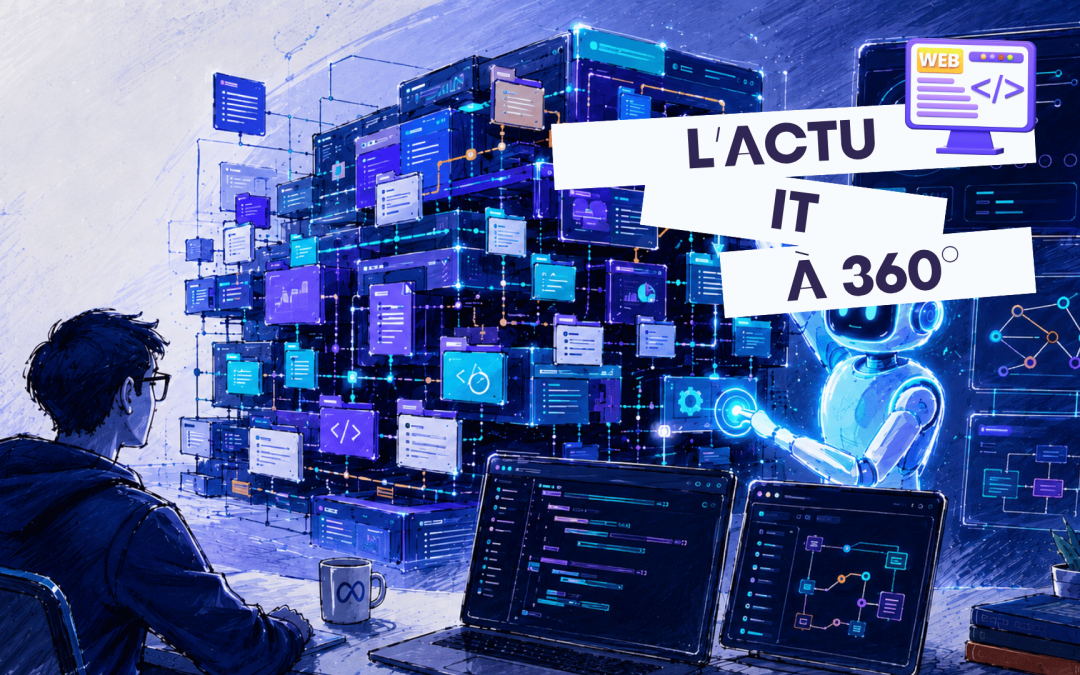
Muse Code: Meta launches its AI agent to tackle giant codebases
Meta wants to bring AI agents into complex software projects Meta is stepping up its efforts in AI-assisted software development with Muse Code, a new agent designed to work on large codebases, where traditional assistants can quickly lose the context needed to...
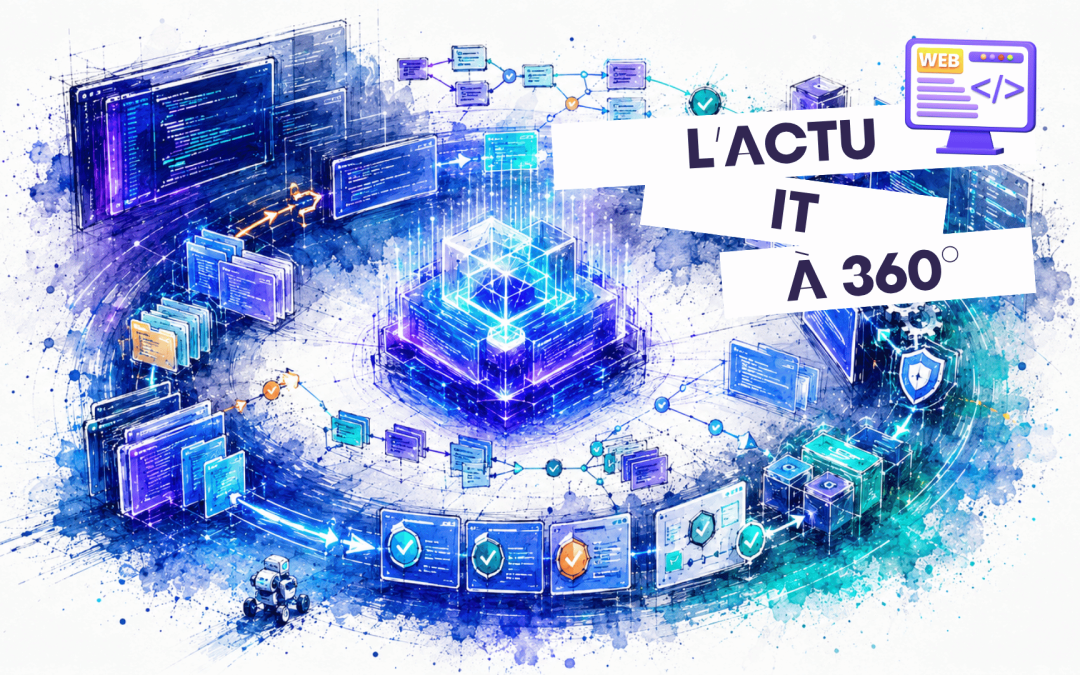
Qwen3.8-Max reportedly coded for 16 days without human intervention
Alibaba tests how far an autonomous AI developer can go Alibaba claims to have reached a new milestone in agentic software development with Qwen3.8-Max, its new flagship model launched in early August 2026. In an internal test, the model reportedly worked fully...