


Nvidia wants to redefine the PC for the age of artificial intelligence
Unveiled at Computex 2026, the RTX Spark chip marks a new stage in the evolution of personal computers. With this Arm-based platform, Nvidia is not simply seeking to offer a more powerful processor. The company aims to create a new category of PCs designed from the ground up to run artificial intelligence workloads locally. This initiative could upset the balance of a market dominated for decades by Intel and AMD, while accelerating the adoption of AI PCs in business.
Unprecedented computing power for AI use cases
The RTX Spark platform combines a 20-core Grace Arm processor with a graphics unit featuring 6,144 CUDA cores based on the Blackwell architecture. Nvidia claims performance of up to 1 petaflop at FP4 precision, a level until now reserved for certain specialised infrastructures. The platform can also include up to 128 GB of LPDDR5X memory, making it possible to run language models of up to 120 billion parameters1 locally. This capability paves the way for advanced AI use directly on the workstation, without permanent reliance on the cloud.
Major manufacturers are getting on board
To speed up adoption, Nvidia is relying on a broad ecosystem of manufacturers. Asus, Dell, HP, Lenovo, Microsoft and MSI have already announced products based on RTX Spark. Dell notably plans to integrate the chip into a version of its XPS 16 Creator Edition, while Microsoft is preparing a Surface RTX Spark Dev Box aimed at developers. This mobilisation shows that the industry now regards AI PCs as a strategic segment set to grow rapidly.
A new segment between the standard PC and the workstation
According to several analysts, RTX Spark could create a new category of computers sitting between traditional business PCs and high-end workstations2. These machines target users who need to run complex AI models, simulations or advanced data processing locally. Prices should logically reflect this premium positioning, with configurations likely to exceed 2,000 dollars. By contrast, consumer AI PCs equipped with Intel, AMD or Qualcomm processors remain mainly intended for office use and Copilot+ features.
Local AI becomes a strategic selling point
One of RTX Spark’s main strengths lies in its ability to run AI directly on the device. This approach offers businesses several advantages: lower cloud inference costs, reduced latency and better control over sensitive data. For certain sectors handling confidential information, such as finance, healthcare or cybersecurity, running models locally can be a decisive advantage.
Developers and data scientists on the front line
Not every business will need such power, however. Analysts believe the first users will mainly be developers, AI engineers, data scientists and cybersecurity teams. These profiles work with complex models and large volumes of data on a daily basis. For standard office use, current AI PCs remain more than sufficient. RTX Spark therefore looks more like a specialised platform than a future universal standard in the short term.
Growing pressure on Intel, AMD and Qualcomm
Nvidia’s arrival in the AI PC market could also intensify competition. Until now, Intel, AMD and Qualcomm have occupied most of the ground in AI-capable computers3. By introducing a solution capable of running very large models locally, Nvidia is pushing the whole sector to step up investment in AI-dedicated architectures. This competition should foster innovation and reshape market standards over the coming years.
Understanding AI architectures is becoming essential
This development highlights a strategic skill: mastering hardware architectures dedicated to artificial intelligence. Future IT professionals will need to understand the differences between CPUs, GPUs, NPUs and new hybrid platforms capable of running complex models locally. As AI moves closer to users, hardware is once again becoming a key factor in performance and innovation.
AI PCs enter a new phase
With RTX Spark, Nvidia is not just launching a new chip. The company is helping to build a new generation of computers capable of running advanced artificial intelligence models locally. For students and future IT professionals, this development deserves particular attention. It could herald the emergence of a new computing segment in which AI capabilities become as important as traditional computing power.
360° IT News — decoding technology to understand the jobs of tomorrow.
Further reading
The arrival of RTX Spark illustrates a broader transformation of computer hardware, now designed to run artificial intelligence workloads directly on devices. This shift also affects high-performance computing infrastructure, which must adapt to the explosion in AI-related needs. On a related topic, read our article “Pangea 5: TotalEnergies’ 100-million bet on AI and simulation”, which analyses how new computing infrastructures are becoming strategic for innovation and competitiveness.
References
1. Nvidia. (2026). RTX Spark Platform Specifications.
https://www.nvidia.com
2. Futurum Research. (2026). AI PC Market Forecast 2025–2030.
https://www.futurumgroup.com
3. Counterpoint Research. (2026). The Future of AI PCs and Edge Computing.
https://www.counterpointresearch.com
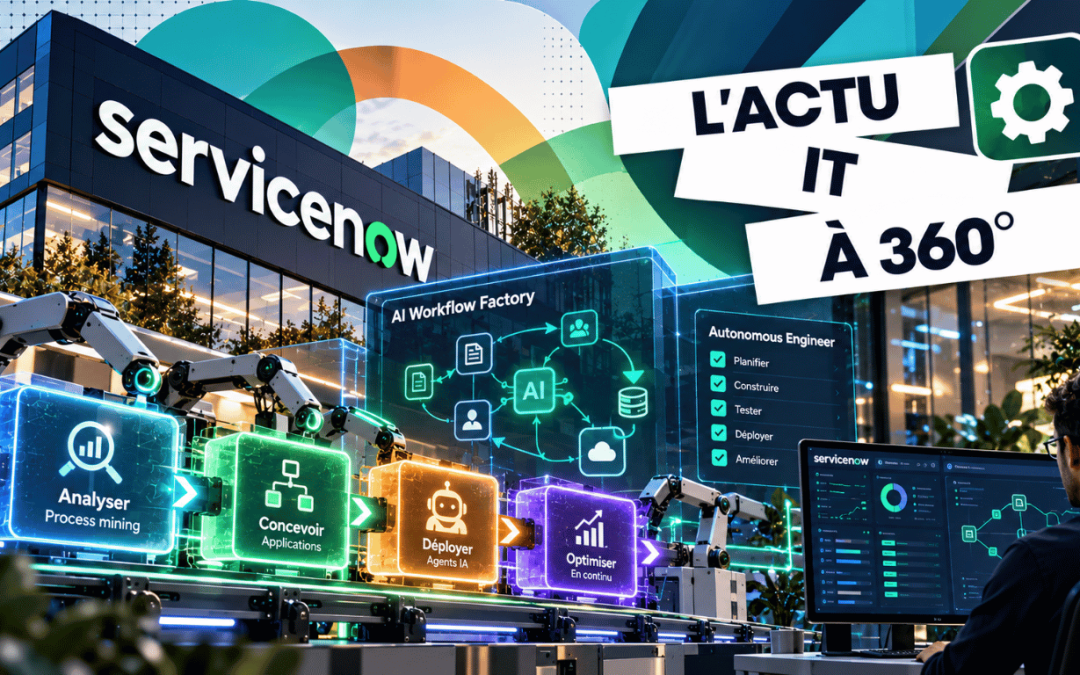
ServiceNow wants to turn process improvement into a continuous AI-driven loop
With AI Workflow Factory, ServiceNow aims to link the identification of inefficient processes with building and running their improvements. The announcement notably includes Autonomous Engineer, a tool designed to automate more of the implementation work.[1] For...

Mistral Large 4: what its trillion-parameter model could change for businesses
Mistral has opened the public preview of Mistral Large 4, nicknamed “Le Chonk”, and plans to release its weights by the end of the month.[1] This European model targets agentic use cases in particular, as well as cybersecurity, finance and industry. For businesses,...
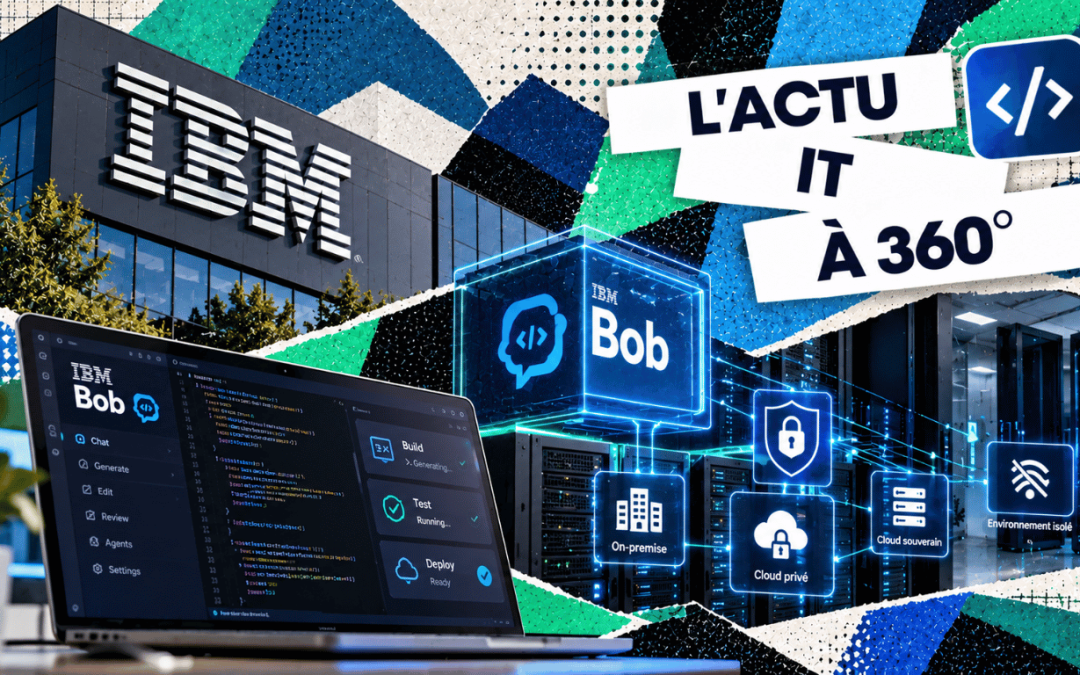
IBM Bob: developing with AI without your code leaving the company
IIBM has announced a self-hosted version of Bob, its agentic development platform, for internal infrastructure, private or sovereign clouds and environments isolated from the internet.[1] This option addresses a concrete obstacle: some applications contain code, data...

HPE is preparing a network that anticipates incidents and automates certain interventions
HPE plans to deploy a Self-Driving Network for the 2027 Ryder Cup, with Wi-Fi 7 and an operations centre bringing together data and AI tools.[1] The stated aim is to monitor usage, adapt the network and move towards autonomous interventions. For businesses, the...
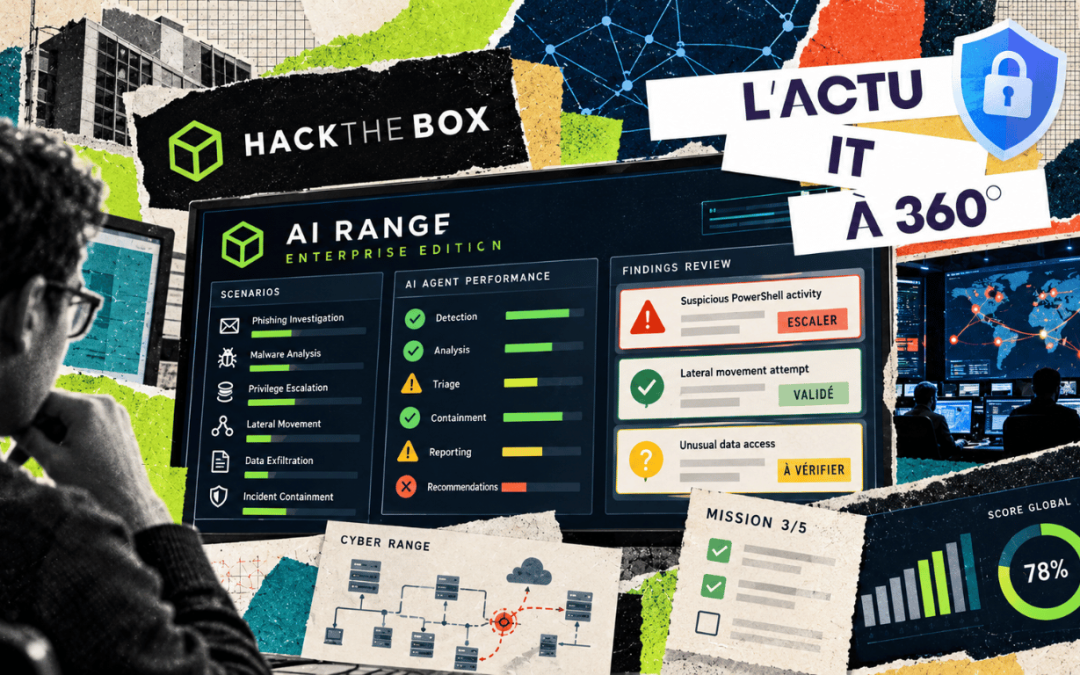
Can your AI agent really defend your company? Hack The Box puts its skills to the test
Hack The Box is launching AI Range Enterprise Edition to let security teams assess their own AI agents on the roles assigned to them.[1] For businesses, the stakes are concrete: having evidence before delegating a task, then checking that this evidence remains valid...

VAST Data wants AI to work with sensitive data in a protected environment
VAST Data has unveiled DataEnclave, a confidential execution capability designed to bring artificial intelligence models closer to companies’ sensitive data. Presented as a preview, it is due to go on sale in the first quarter of 2027.[1] The aim is to make certain...
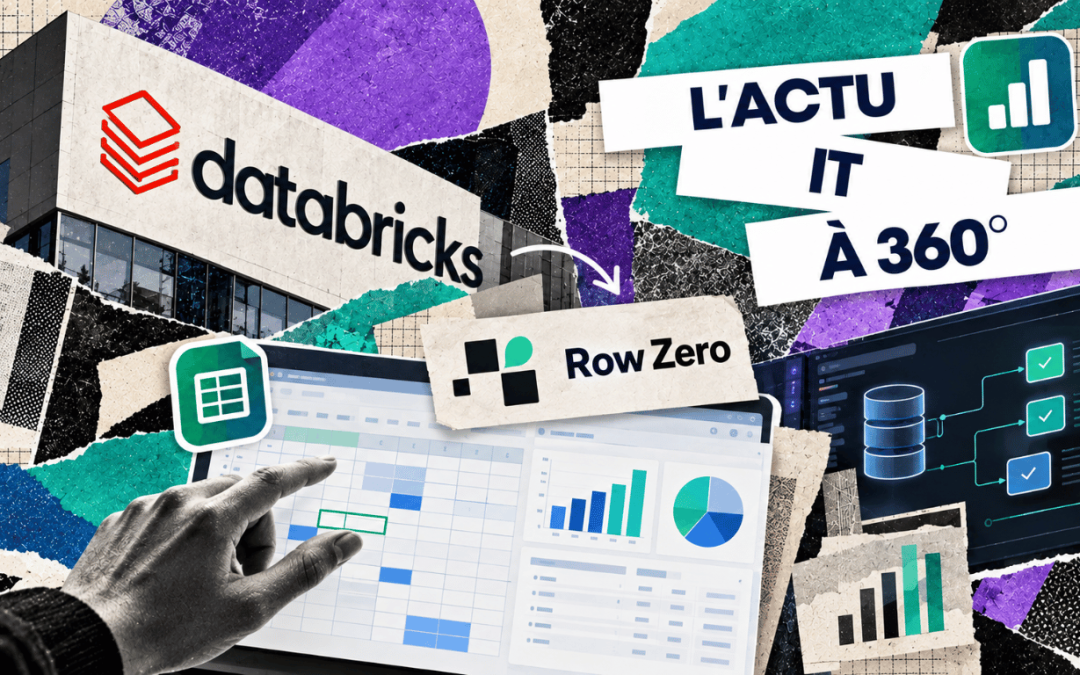
Databricks buys Row Zero to bring spreadsheets closer to governed data
Databricks has announced the acquisition of Row Zero and plans to integrate its spreadsheet experience into Genie.[1] The aim is to let business teams explore data in a familiar interface, with greater control over access and usage. For companies, the challenge is to...
Google Cloud takes its X5 instances to 48 TB for large SAP databases
Google Cloud has announced the general availability of the X5 series, which raises the maximum advertised memory capacity on a single node to 48 TB, compared with 32 TB for X4.[1] Aimed in particular at very large SAP HANA databases, the offering is based on bare...

Cloud Storage: Google automates the detection of anomalies
A rise in reads, cross-region transfers or stored volume can inflate the cloud bill and disrupt applications. With Storage Intelligence advisor, Google offers a view of unusual changes in Cloud Storage, along with leads for investigating them. For businesses, the...
AI voice agents: Oracle details a LiveKit architecture on OCI
Oracle has described an architecture that pairs the LiveKit Agents framework with Oracle Cloud Infrastructure to automate real-time voice calls. The design links telephony, AI models and business services, while placing internal components in private subnets. For...