


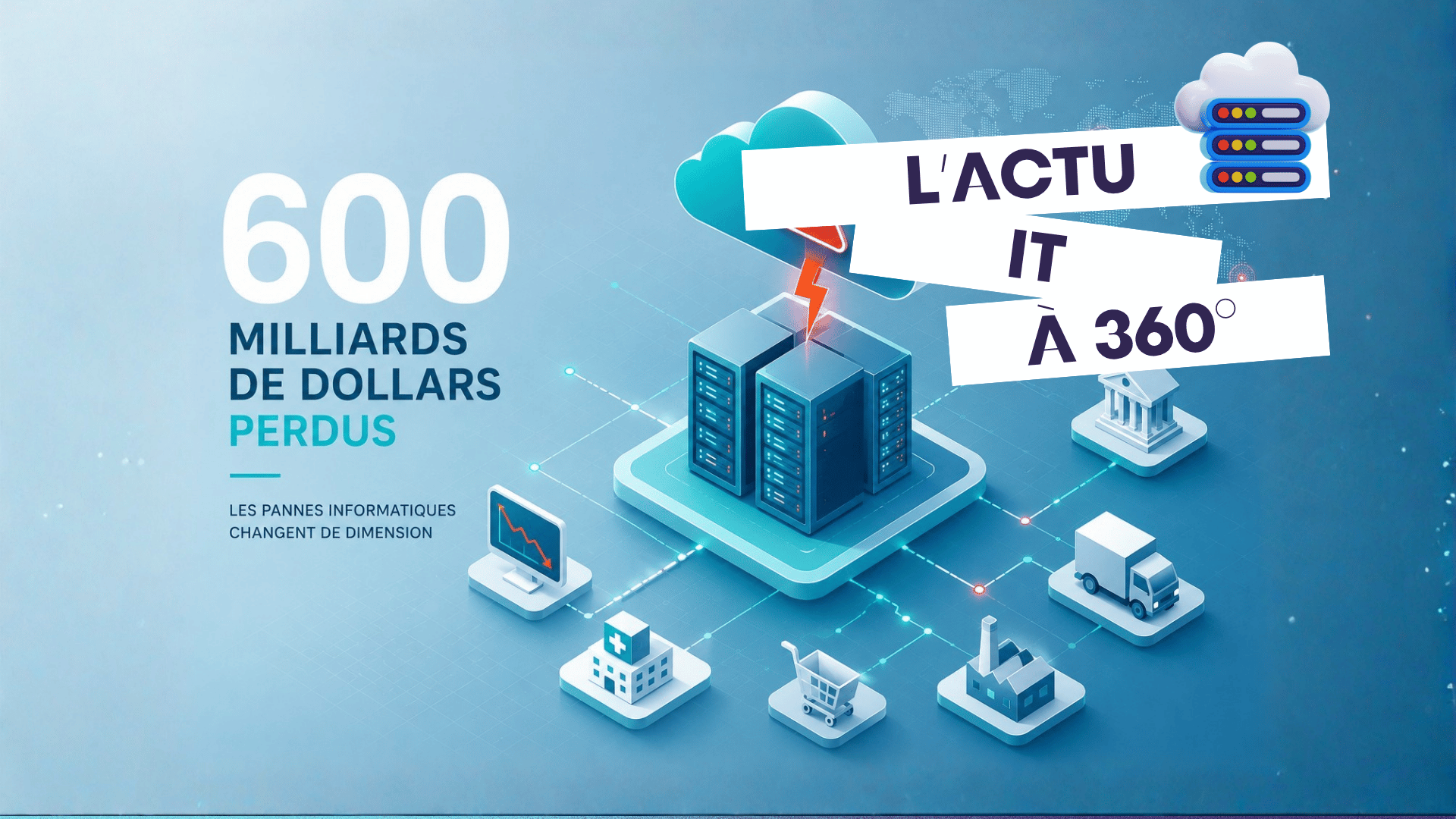
IT outages are becoming a boardroom issue
Long regarded as mere technical incidents, service interruptions are now taking on a whole new dimension. According to a study conducted by Oxford Economics for Splunk, Global 2000 companies suffer an average of 60 downtime incidents a year, at a total cost estimated at $600 billion worldwide. These figures illustrate a new reality: digital resilience has become a strategic issue that extends far beyond IT departments.
A bill reaching record levels
The financial consequences of service interruptions are considerable. The study estimates that each Global 2000 company loses an average of $300 million a year because of system downtime. Each minute of downtime represents nearly €13,000 in losses, or more than €775,000 per hour. The technology and energy sectors are among the most exposed to these risks.
Cyberattacks drive costs even higher
Lost revenue is no longer the only factor to consider. Regulatory fines linked to compliance requirements, particularly under the GDPR or the European DORA regulation, average €44 million per major outage. On top of this come ransoms paid during ransomware attacks, estimated at €35 million on average. These costs are now among the main direct impacts associated with information system downtime.
The impact goes far beyond the technical sphere
The consequences of an outage are not limited to infrastructure. According to the study, nearly 90% of the executives surveyed report an increase in requests to support services and a sharp deterioration in the customer experience after an incident. More than eight out of ten companies say they had to mobilise their teams on a massive scale to restore services, while 81% report losing customers following a major outage.
A direct threat to companies’ reputations
Reputation is also becoming a critical factor. A major outage can take several months to fully restore the trust of customers and partners. The study also observes an average 3.4% fall in share price after a significant IT incident. At a time when businesses are increasingly dependent on digital services, system availability is becoming central to their brand image.
AI helps prevent incidents… but also creates new risks
Faced with this increase in outages, businesses are investing heavily in observability and artificial intelligence. Nearly 72% of ITOps and engineering teams now regard end-to-end observability as a strategic priority. Annual spending on AI to prevent outages averages $24.5 million. However, this automation also brings new challenges: nearly half of the managers surveyed say they have already experienced outages caused by errors in AI-driven automated systems.
Digital resilience is becoming a competitive advantage
In an environment where services must remain accessible at all times, the ability to prevent, detect and quickly fix incidents is becoming a differentiating factor. Companies that invest in infrastructure monitoring, intelligent automation and resilient architectures are better equipped to limit the financial and reputational impact of outages. Digital resilience is no longer just a matter of business continuity; it is becoming a genuine competitive advantage.
Understanding IT resilience is becoming essential
This development highlights a strategic skill: managing infrastructure and digital continuity. Future IT professionals must master observability, cybersecurity, the cloud and disaster recovery mechanisms. As organisations become dependent on digital services, the ability to keep systems available is becoming as important as their performance.
360° IT News — decoding technology to understand the jobs of tomorrow.
Further reading
The increase in service interruptions shows just how critical digital infrastructure has become for businesses. This pressure is pushing technology players to invest heavily in automation, observability and artificial intelligence to prevent incidents before they occur. On a related subject, read our article “Lightwell: IBM and Red Hat tackle the open-source patching headache”, which analyses how AI and automation could speed up the fixing of vulnerabilities and strengthen the resilience of information systems.
References
1. Oxford Economics & Splunk. (2026). The Hidden Cost of Downtime Report.
https://www.splunk.com

Data centres in space: why Nvidia wants to revolutionise the cloud
News in brief At the GTC 2026 conference, Nvidia announced its intention to accelerate the development of artificial intelligence in space, joining an emerging movement around orbital data centres. The company is no longer content to supply chips for satellites; it is...

Claude Marketplace: what Anthropic’s new platform changes for businesses
News in brief Anthropic has just announced Claude Marketplace, a new platform that allows companies to access, share and use artificial intelligence agents based on its Claude model. The aim is no longer just to offer conversational AI, but to create a genuine...
Automated code review: Anthropic’s Claude now analyses developers’ code
News in brief Artificial intelligence continues to transform developers’ work. Anthropic, the company behind the Claude AI model, has just announced new capabilities that allow its assistant to analyse computer code and help developers with their code review...
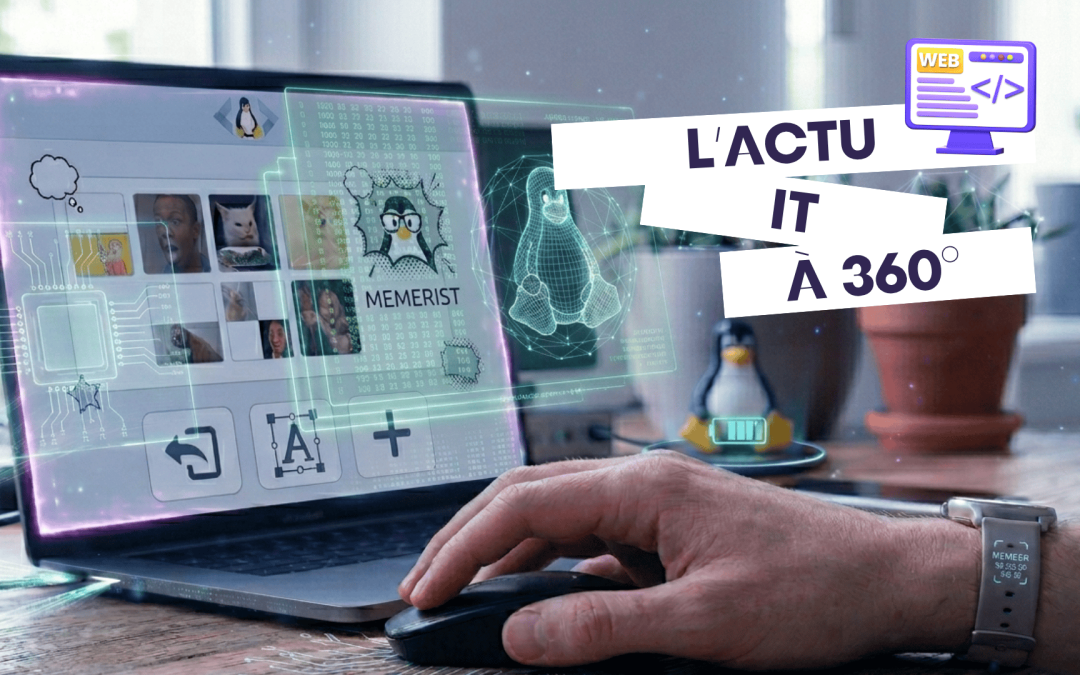
Memerist: the free Linux app for creating memes in seconds
News in brief Creating a meme has become an everyday activity on the internet. Humorous images circulate daily on social networks, forums and messaging apps, often used to comment on the news, share an idea or simply make people laugh. Yet producing a meme quickly is...
Microsoft unveils Microsoft 365 E7: Copilot and AI agents at the heart of its enterprise strategy
News in brief Microsoft recently announced Microsoft 365 E7, a new offering for businesses that places artificial intelligence at the heart of the working environment. This development is part of Microsoft’s overall strategy to transform traditional productivity tools...

Global cyber-espionage: the Salt Typhoon affair shows why cybersecurity is becoming crucial
News in brief A vast cyber-espionage operation called Salt Typhoon has reportedly infiltrated several telecom operators around the world. Hacker groups linked to China are believed to be behind these attacks, which can access sensitive communication infrastructure....

CCCLX wins Bronze Trophy at IT Night 2025!
CCCLX, the 360° IT school, was honored at IT Night 2025 - La Nuit de l'Entreprise Numérique, winning the Bronze Trophy in the Schools / Training category. A fine accolade in the context of this emblematic event for the French digital ecosystem, organized annually...

A revolution in higher education financing by aivancity/CCCLX and Umanity
A concrete solution to democratize access to education for the professions of tomorrow This scheme, the only one of its kind in France, complements a series of measures put in place by aivancity to promote diversity and equitable access to its programs (tuition-free...

White paper: How generative AI is transforming SMEs
White paper: How generative AI is transforming SMEs In a world where technological innovation is redefining the rules of the game, small and medium-sized businesses have never had so much to gain... or lose. Against this ever-changing backdrop, CCCLX unveils its new...

CCCLX: A new IT school dedicated to SMEs and startups is born
On April 28, 2025, CCCLX was officially unveiled at the CCI Paris during a press conference packed with symbols and commitments. The launch was attended by a number of leading personalities: Soumia Malimbum, President of CCI Paris, Alain Martinez, President of CPME...