


IT outages are becoming a boardroom issue
Long regarded as mere technical incidents, service interruptions are now taking on a whole new dimension. According to a study conducted by Oxford Economics for Splunk, Global 2000 companies suffer an average of 60 downtime incidents a year, at a total cost estimated at $600 billion worldwide. These figures illustrate a new reality: digital resilience has become a strategic issue that extends far beyond IT departments.
A bill reaching record levels
The financial consequences of service interruptions are considerable. The study estimates that each Global 2000 company loses an average of $300 million a year because of system downtime. Each minute of downtime represents nearly €13,000 in losses, or more than €775,000 per hour. The technology and energy sectors are among the most exposed to these risks.
Cyberattacks drive costs even higher
Lost revenue is no longer the only factor to consider. Regulatory fines linked to compliance requirements, particularly under the GDPR or the European DORA regulation, average €44 million per major outage. On top of this come ransoms paid during ransomware attacks, estimated at €35 million on average. These costs are now among the main direct impacts associated with information system downtime.
The impact goes far beyond the technical sphere
The consequences of an outage are not limited to infrastructure. According to the study, nearly 90% of the executives surveyed report an increase in requests to support services and a sharp deterioration in the customer experience after an incident. More than eight out of ten companies say they had to mobilise their teams on a massive scale to restore services, while 81% report losing customers following a major outage.
A direct threat to companies’ reputations
Reputation is also becoming a critical factor. A major outage can take several months to fully restore the trust of customers and partners. The study also observes an average 3.4% fall in share price after a significant IT incident. At a time when businesses are increasingly dependent on digital services, system availability is becoming central to their brand image.
AI helps prevent incidents… but also creates new risks
Faced with this increase in outages, businesses are investing heavily in observability and artificial intelligence. Nearly 72% of ITOps and engineering teams now regard end-to-end observability as a strategic priority. Annual spending on AI to prevent outages averages $24.5 million. However, this automation also brings new challenges: nearly half of the managers surveyed say they have already experienced outages caused by errors in AI-driven automated systems.
Digital resilience is becoming a competitive advantage
In an environment where services must remain accessible at all times, the ability to prevent, detect and quickly fix incidents is becoming a differentiating factor. Companies that invest in infrastructure monitoring, intelligent automation and resilient architectures are better equipped to limit the financial and reputational impact of outages. Digital resilience is no longer just a matter of business continuity; it is becoming a genuine competitive advantage.
Understanding IT resilience is becoming essential
This development highlights a strategic skill: managing infrastructure and digital continuity. Future IT professionals must master observability, cybersecurity, the cloud and disaster recovery mechanisms. As organisations become dependent on digital services, the ability to keep systems available is becoming as important as their performance.
360° IT News — decoding technology to understand the jobs of tomorrow.
Further reading
The increase in service interruptions shows just how critical digital infrastructure has become for businesses. This pressure is pushing technology players to invest heavily in automation, observability and artificial intelligence to prevent incidents before they occur. On a related subject, read our article “Lightwell: IBM and Red Hat tackle the open-source patching headache”, which analyses how AI and automation could speed up the fixing of vulnerabilities and strengthen the resilience of information systems.
References
1. Oxford Economics & Splunk. (2026). The Hidden Cost of Downtime Report.
https://www.splunk.com

Data centre boom: Legrand goes on the offensive in China and the UK
Data centres are becoming the heart of the global digital economy Legrand is stepping up its investments in China and the United Kingdom to strengthen its presence in the data centre sector, which has become critical infrastructure for the digital economy. This...

GPT-5.4-Cyber: OpenAI responds to Claude Mythos in the AI cybersecurity battle
A new front line in the artificial intelligence war On 14 April 2026, OpenAI launched GPT-5.4-Cyber, a model specialising in cybersecurity, just days after Anthropic announced Claude Mythos. This timing is no coincidence: it marks an acceleration in the competition...

Claude Mythos: beyond the buzz, what are the real stakes for IT security?
An AI that promises to transform cybersecurity With Claude Mythos, Anthropic is showcasing a new generation of artificial intelligence able to analyse, detect and anticipate cybersecurity threats. At a time when cyberattacks are soaring, with more than 2,200 attacks a...
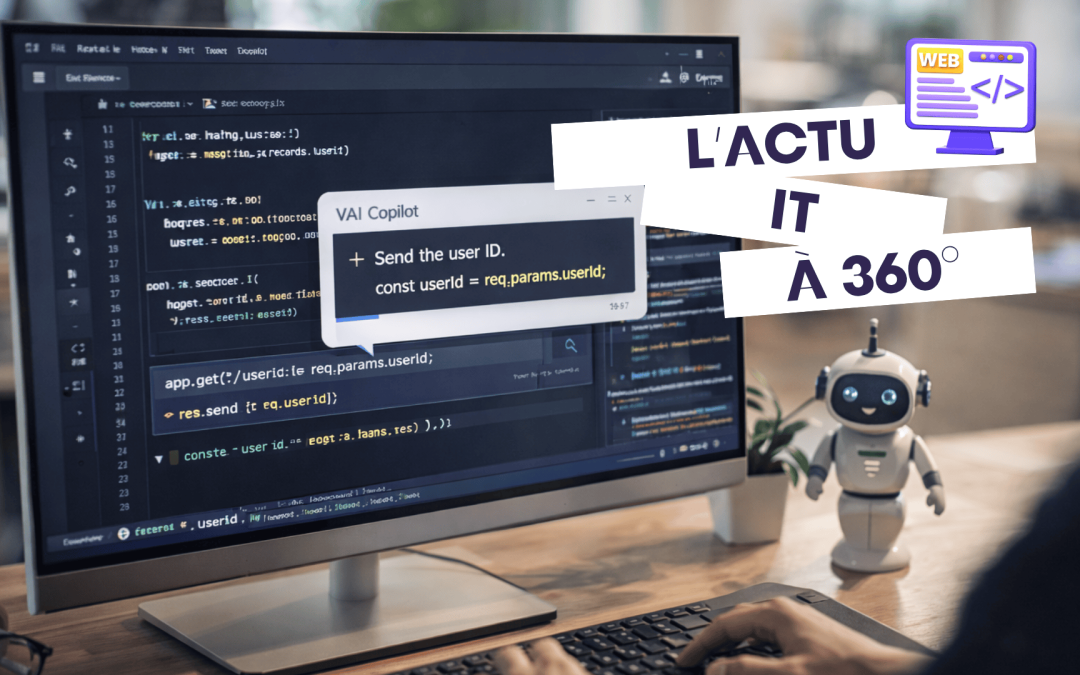
Microsoft reinvents development with AI agents in VS Code
Software development enters the age of agents Microsoft is taking a new step by integrating artificial intelligence agents into Visual Studio Code, with a beta version available via the Insiders channel. This development comes at a time when VS Code is used by more...

In the cloud era, enterprise networks are changing standards
The network is no longer just support: it is becoming a driver of performance For a long time, the enterprise network was regarded as a simple technical infrastructure, often invisible as long as it worked. But with the explosion of the cloud, SaaS applications and...

Windows 11: Microsoft wants to speed up user testing with Insider
Software testing becomes a lever for innovation Microsoft is overhauling its Windows Insider programme, which now brings together more than 10 million testers worldwide, to simplify access to experimental versions of Windows 11 and speed up user feedback. In an...

51,600 satellites: Jeff Bezos steps up the battle for the global internet
News in brief With Project Kuiper, Jeff Bezos is committing Amazon to a major transformation of the world’s internet infrastructure by deploying tens of thousands of satellites in low Earth orbit. The goal is not limited to connecting isolated areas, but to building a...
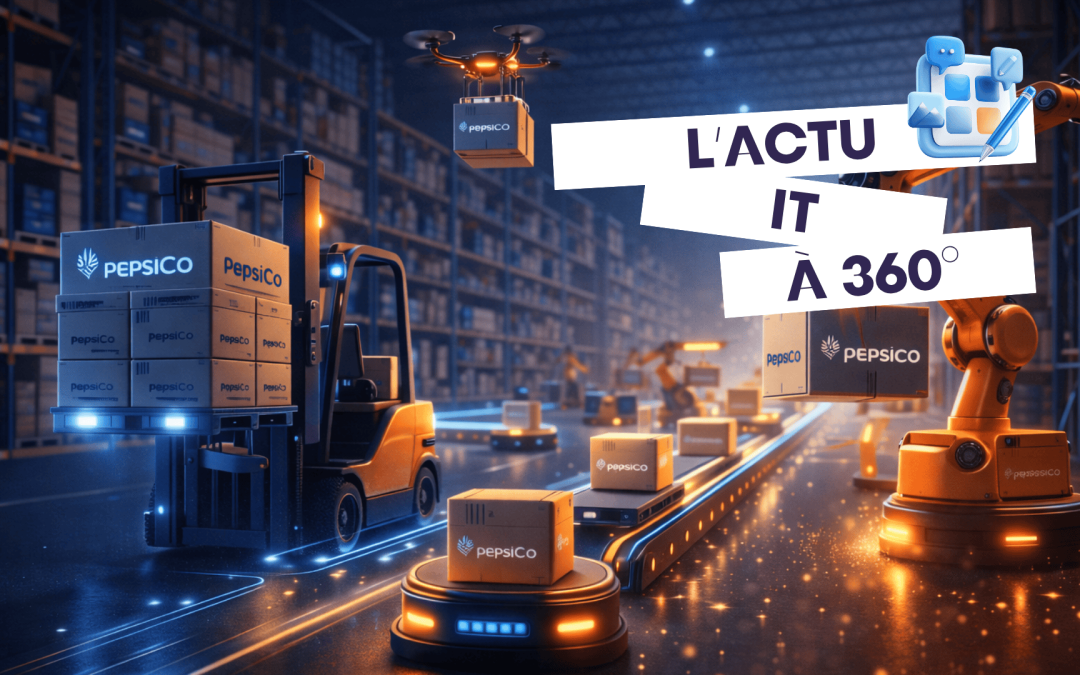
PepsiCo automates its logistics: a turning point for smart warehouses
News in brief PepsiCo France is investing in an automated, multimodal warehouse that combines robotics, digital systems and intelligent management of logistics flows. The aim is no longer simply to store and distribute products, but to turn the warehouse into a...

Windows 11: Microsoft finally relaxes forced updates
News in brief Microsoft is preparing to overhaul the way updates are managed in Windows 11, giving users greater control over their installation, notably by making it easier to postpone them or avoid certain enforced interruptions. This change responds to a...

WeChat goes autonomous AI: Tencent steps up with OpenClaw
News in brief Tencent has just integrated OpenClaw into WeChat, turning the app into far more than a simple communication tool. This development introduces agents capable of carrying out tasks directly from the interface, without going through several applications or...