


Office enters the age of intelligent agents
Microsoft is stepping up its agentic artificial intelligence strategy with the acquisition of Fintool, a start-up specialising in automated financial analysis. Founded in San Francisco by Frenchmen Nicolas Bustamante and Édouard Godfrey, the company develops agents capable of carrying out complex tasks directly in tools such as Excel, Word or PowerPoint. This acquisition illustrates a major transformation: Office is no longer just an office suite, but a platform of intelligent assistants able to act autonomously within professional workflows.
AI no longer just assists, it acts
Until now, the AI tools built into Office were mainly used to summarise, draft or suggest content. With Fintool, Microsoft is taking a new step. The agents developed by the start-up can analyse financial documents, automatically build DCF models in Excel or generate research memos in Word. This development marks the shift from “copilot” AI to “agentic” AI, capable of carrying out complex actions without constant user intervention.
Excel becomes an intelligent financial analysis platform
Fintool’s core technology is based on qualitative analysis of financial data. The tool can read regulatory filings, extract relevant information and produce detailed summaries in a matter of minutes. According to Nicolas Bustamante, the automation of quantitative finance was already well advanced, but qualitative analysis represented the next frontier. By building these capabilities directly into Excel and Office, Microsoft is turning its software into genuine expert platforms able to handle complex data at a level close to that of a human analyst.
A new generation of productivity for businesses
For finance departments and large companies, the potential impact is considerable. Employees will no longer need to use specialised external tools for certain analyses. AI agents will be able to automate time-consuming tasks directly in the software used every day. This approach could shorten analysis times, improve productivity and speed up decision-making. According to Microsoft, more than 400 million people use Microsoft 365 worldwide, which gives this development a massive reach[^1].
Office becomes an intelligent business platform
This acquisition also reveals a broader strategy: verticalising AI by profession. Microsoft no longer just wants to offer general-purpose assistants, but specialised agents able to meet the specific needs of sectors such as finance, law or project management. This approach is gradually turning Office into an intelligent professional platform, able to understand business contexts and automate certain areas of expertise.
Governance and confidentiality issues intensify
Integrating AI agents capable of handling sensitive data nevertheless raises important questions. In the financial sector, regulatory compliance and confidentiality are critical. Microsoft will have to ensure that these systems meet high standards of security and governance. The more autonomous agents become, the more strategic data oversight and control become for companies and CISOs.
Understanding agentic AI becomes essential
This transformation highlights a key skill: artificial intelligence and business workflow automation. IT professionals will need to understand how to integrate AI agents into existing tools, supervise their actions and guarantee the quality of the results produced. It is no longer just about using Office, but about steering systems capable of carrying out complex tasks autonomously.
The end of traditional office software?
With the acquisition of Fintool, Microsoft shows that the future of office software no longer rests solely on word processing or the traditional spreadsheet. Work tools are gradually becoming intelligent platforms able to analyse, decide and automate certain business tasks. For students and future IT professionals, this is a major development. It shows that agentic AI could profoundly transform office work and redefine the way companies use their data.
360° IT News — decoding technology to understand the jobs of tomorrow.
Further reading
The integration of AI agents into Office illustrates a broader trend: professional software is gradually becoming capable of automating complex tasks and acting autonomously. This development also affects development tools and technical environments, where agentic AI is starting to transform everyday workflows. On a related topic, read our article “Microsoft reinvents development with AI agents in VS Code”, which analyses how autonomous artificial intelligence is now being built into the heart of the tools developers use.
References
1. Microsoft. (2025). Microsoft 365 usage statistics.
https://www.microsoft.com
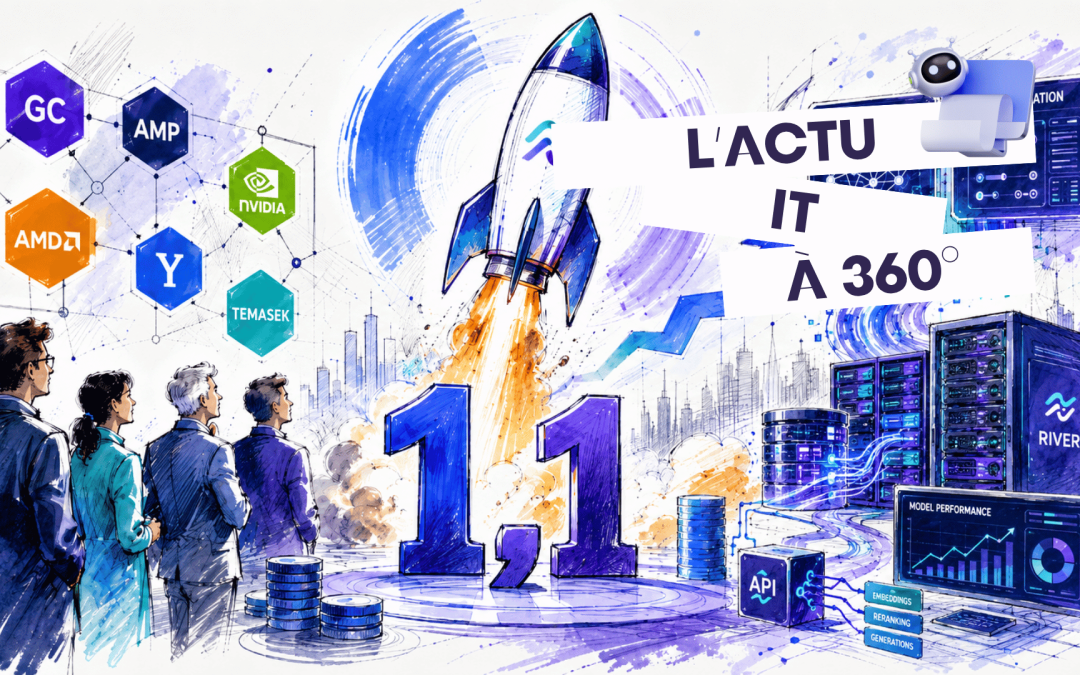
Two months, $1.1 billion: River AI is already exciting investors
A spectacular raise for a start-up barely out of the shadows Two months after emerging from stealth mode, River AI has just completed one of the most spectacular funding rounds of the year in artificial intelligence. The start-up founded by Igor Babuschkin, a former...

AI propels Nokia: data centres are reshaping the networking market
The AI explosion is transforming the infrastructure market Nokia is reaping the full benefits of the rise of artificial intelligence and the proliferation of data centres that comes with it. In the second quarter of 2026, the company’s Network Infrastructure business...

Gemini 3.5 Pro delayed: Google under pressure in the AI race
The race for AI models is speeding up Google is going through a difficult period in the competition over advanced artificial intelligence models. According to several reports in the specialist press, the launch of Gemini 3.5 Pro has reportedly been pushed back by...

Project Glasswing: Anthropic goes on the offensive against software vulnerabilities
A new step for AI applied to cybersecurity Anthropic is pressing ahead with Project Glasswing, an initiative that makes its Claude Mythos Preview model available to specialist cybersecurity players in order to identify and fix vulnerabilities in critical software. The...

Cloud, AI, defence: AWS steps up on every front
AWS makes artificial intelligence a pillar of critical infrastructure At the AWS Summit Washington, D.C. 2026, Amazon Web Services unveiled several developments aimed at government departments, public bodies and critical sectors. The company is strengthening its...

MDASH: the AI helping Microsoft secure Windows
Microsoft hands part of the bug hunt to artificial intelligence Cyberattacks are evolving ever faster, forcing software vendors to detect vulnerabilities before they can even be exploited. To meet this challenge, Microsoft has unveiled MDASH (Microsoft Detection and...

Microsoft speeds up its cybersecurity with AI: defence moves to machine scale
Microsoft wants to regain the upper hand against cyberattacks Cybercriminals are now using artificial intelligence to discover vulnerabilities, automate their attacks and speed up their malicious campaigns. In response, Microsoft is pressing ahead with its Secure...

Free access to Claude Fable 5 extended as Anthropic holds off
A new generation of AI designed for specific uses OpenAI is changing its strategy with the launch of GPT-5.6, a new family of models made up of Sol, Terra and Luna. Rather than offering a single model capable of meeting every need, the company is now betting on a...

OpenAI bets on modular AI with Sol, Terra and Luna
A new generation of AI designed for specific uses OpenAI is changing its strategy with the launch of GPT-5.6, a new family of models made up of Sol, Terra and Luna. Rather than offering a single model capable of meeting every need, the company is now betting on a...

Anthropic’s AI is advancing at a pace that worries cybersecurity specialists
AI models cross a new capability threshold Barely a month after its launch, Claude Mythos Preview is already improving its performance. According to the latest tests published by the UK’s AI Security Institute (AISI), Anthropic’s model now beats its own results from...