


Word becomes an intelligent legal tool
Microsoft is taking a new step by building artificial intelligence specialised in legal analysis directly into Word. The aim is clear: to automate contract review, detect risks and speed up document production. At a time when legal documents account for a significant share of administrative work, this development turns a standard office tool into a genuine business assistant. Today, more than 400 million people use Word worldwide, giving this innovation a potentially massive impact on professional practices1.
From drafting to automatic contract analysis
Until now, Word was mainly used to draft documents. With legal AI, it becomes able to analyse content, identify sensitive clauses and suggest improvements. In practice, the tool can detect inconsistencies, flag legal risks or suggest safer wording. This development is part of a broader trend towards the automation of intellectual tasks, in which AI directly assists users with complex activities.
Automating compliance without calling on experts
For businesses and SMEs, this innovation could save a considerable amount of time. Contract review is often long, costly and dependent on legal experts. Thanks to AI, some tasks can be automated, making it possible to check documents quickly or standardise processes. According to Deloitte, AI tools can reduce the time spent on repetitive legal tasks by up to 30%, improving the overall efficiency of teams2.
A productivity lever… but also a reason for vigilance
While automation brings benefits, it also has its limits. AI can analyse documents and detect anomalies, but it does not replace a legal expert, particularly for complex decisions or specific contexts. Excessive confidence in these tools could lead to errors or poorly assessed risks. Businesses must therefore use these solutions as support, not as a substitute for human expertise.
The document becomes an intelligent, cloud-connected space
The integration of AI into Word is part of a broader transformation of office tools, which are now connected to the cloud and enhanced with advanced analysis capabilities. Documents are no longer static: they are becoming interactive, able to adapt, analyse their content and interact with other systems. This development brings productivity tools closer to intelligent platforms, at the heart of businesses’ digital transformation.
Understanding AI applied to business functions is becoming essential
This transformation highlights a key skill: software and application management, with a strong artificial intelligence dimension. Professionals must understand how these tools work, know how to configure them and interpret their results. It is no longer just a matter of using software, but of managing an intelligent system capable of assisting with complex tasks.
Towards growing automation of intellectual tasks
With this innovation, Microsoft is confirming an underlying trend: automation no longer concerns only technical tasks, but also intellectual activities. Drafting, analysing and validating documents are gradually becoming AI-assisted. For students and future IT professionals, this is a major development. It shows that everyday tools are evolving into intelligent systems capable of augmenting human capabilities, while still requiring supervision and an understanding of their limits.
360° IT News — decoding technology to understand the jobs of tomorrow.
References
1. Microsoft. (2024). Microsoft 365 usage statistics.
https://www.microsoft.com
2. Deloitte. (2023). AI in legal services report.
https://www2.deloitte.com
GitHub Copilot bulks up for business: coding agents come under IT control
Copilot is no longer just there to suggest the next line GitHub Copilot is continuing its transformation. Originally known mainly for completing code in the editor, the tool is now evolving towards agents capable of exploring a project, modifying files, using tools...

PDFs, presentations, audio: Adobe wants to turn Acrobat into a content factory
Acrobat no longer just wants to open your documents For more than thirty years, Acrobat has mainly been used to read, create, edit, sign and share PDFs. Adobe now wants to give it a much broader role. On 9 September 2026, the company announced new capabilities based...

Salesforce plugs Claude into its CRM: Claudeforce prepares for life after the interface
What if the CRM soon no longer needed to be opened? For decades, using a CRM meant navigating between customer records, dashboards, menus and forms. With Claudeforce, Salesforce and Anthropic want to change this logic: rather than forcing users to go into Salesforce...

Kimi K3, Mistral, DeepSeek: Oracle turns OCI into an AI model hub
Oracle wants to make OCI a one-stop shop for AI Oracle is stepping up its efforts in the AI cloud battle by significantly expanding the catalogue of models available in OCI Enterprise AI. On 4 September 2026, the group announced in particular the integration of Kimi...

Agentic Data Cloud: Google rethinks data for the age of AI agents
AI agents are forcing Google to rethink data architecture AI agents promise to search for information, make decisions and act directly within company systems, but this autonomy depends on one essential condition: accessing the right data and, above all, understanding...
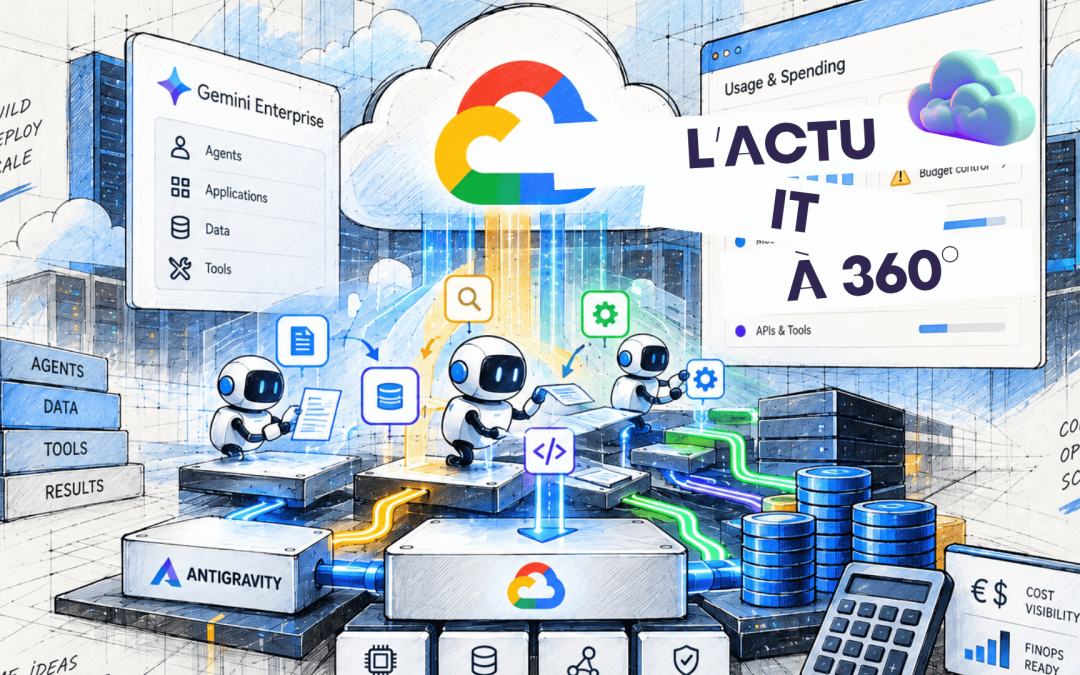
Google Cloud tackles the hidden bill of AI agents
AI agents raise a new problem: how much does a task really cost? As companies move from chatbots to AI agents able to work through multiple steps, the question of cost becomes much more complex. A chatbot generally handles a request and generates an answer, whereas an...
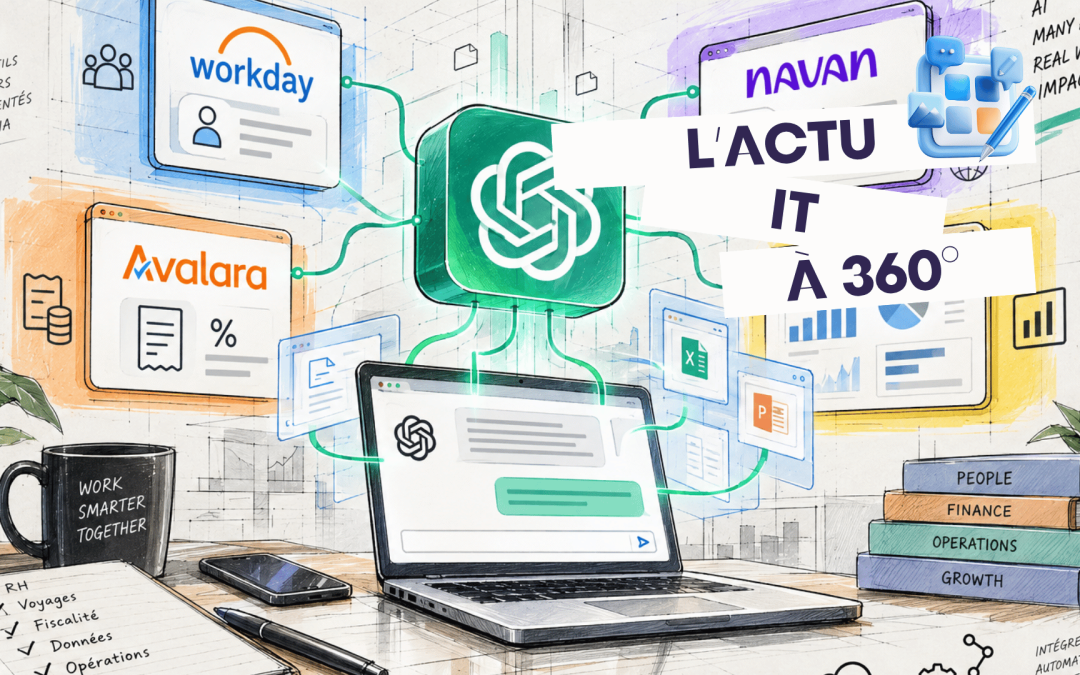
Workday, Navan, Avalara: ChatGPT Work moves into business software
ChatGPT Work is gradually leaving the chat window With GPT-6 Astra, OpenAI is no longer simply trying to improve the quality of ChatGPT’s answers. The company wants to bring its AI closer to the applications in which employees actually work. With the arrival of GPT-6...

From chip to cloud: Groq raises 350 million to scale up
Groq now wants to sell cloud rather than just chips Groq is pursuing a major strategic transformation. Long seen as one of Nvidia’s challengers thanks to its LPUs (Language Processing Units) specialised in artificial intelligence model inference, the group is now...

Muse Code: Meta launches its AI agent to tackle giant codebases
Meta wants to bring AI agents into complex software projects Meta is stepping up its efforts in AI-assisted software development with Muse Code, a new agent designed to work on large codebases, where traditional assistants can quickly lose the context needed to...

Qwen3.8-Max reportedly coded for 16 days without human intervention
Alibaba tests how far an autonomous AI developer can go Alibaba claims to have reached a new milestone in agentic software development with Qwen3.8-Max, its new flagship model launched in early August 2026. In an internal test, the model reportedly worked fully...