


News in brief
PepsiCo France is investing in an automated, multimodal warehouse that combines robotics, digital systems and intelligent management of logistics flows. The aim is no longer simply to store and distribute products, but to turn the warehouse into a genuine operational control centre. Amid strong pressure on lead times, costs and customer satisfaction, logistics is becoming a strategic lever for competitiveness, directly linked to companies’ digital transformation and their ability to adapt quickly to market fluctuations.¹
Less handling, more intelligent orchestration
Thanks to automation, repetitive tasks such as moving pallets or picking orders are handled by automated systems, allowing teams to focus on higher-value tasks. The warehouse now operates as a coordinated system, in which flows are optimised in real time according to priorities, stock levels and orders. This orchestration relies on advanced software, sensors and analytics tools that continuously adjust operations, thereby reducing errors and improving overall productivity.
Speeding up deliveries without increasing costs
For businesses, and SMEs in particular, this development shows that it is possible to handle more volume without a proportional increase in resources. Automation reduces order preparation times, optimises internal routes and limits losses due to human error. As a result, companies can deliver faster while keeping their operating costs under control. In a market where speed and reliability have become essential criteria, this ability to improve logistics performance is becoming a decisive competitive advantage.
Logistics is becoming a data-driven system
One of the major changes lies in the use of data as a management tool. Systems continuously collect and analyse information on flows, stock and performance, making it possible to anticipate needs and optimise operations. This approach turns logistics into a predictive system capable of anticipating stock-outs, adapting resources and taking decisions in real time. It brings supply chain jobs closer to IT jobs, in which data management is becoming central to operational performance.
Managing automated systems, a new IT reality
This transformation highlights a key skill: software and application management in industrial environments. IT professionals must be able to configure complex systems, ensure they run smoothly and guarantee their interoperability with other tools. This requires an understanding of both technical and operational issues, since these systems have a direct impact on production and logistics. IT is thus becoming a central player in on-the-ground operations, rather than a mere support function.
Physical warehouses are becoming digital platforms
With this type of infrastructure, warehouses are evolving into hybrid environments that are both physical and digital. They are becoming platforms capable of adapting to needs in real time, integrating new technologies and connecting different systems to one another. This transformation perfectly illustrates the impact of IT in traditionally industrial sectors. For students and future professionals, it shows that IT jobs are not limited to digital environments, but now extend to all of a company’s activities.
360° IT News — decoding technology to understand the jobs of tomorrow.
References
1. PepsiCo. Logistics and supply chain innovation initiatives.
https://www.pepsico.com
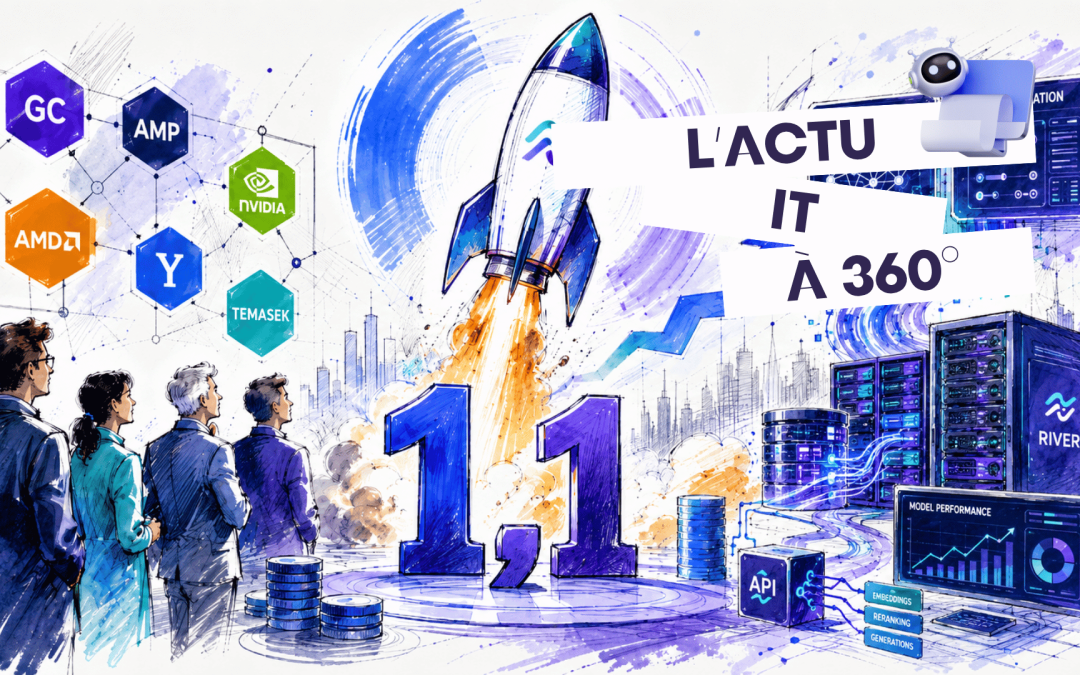
Two months, $1.1 billion: River AI is already exciting investors
A spectacular raise for a start-up barely out of the shadows Two months after emerging from stealth mode, River AI has just completed one of the most spectacular funding rounds of the year in artificial intelligence. The start-up founded by Igor Babuschkin, a former...

AI propels Nokia: data centres are reshaping the networking market
The AI explosion is transforming the infrastructure market Nokia is reaping the full benefits of the rise of artificial intelligence and the proliferation of data centres that comes with it. In the second quarter of 2026, the company’s Network Infrastructure business...

Gemini 3.5 Pro delayed: Google under pressure in the AI race
The race for AI models is speeding up Google is going through a difficult period in the competition over advanced artificial intelligence models. According to several reports in the specialist press, the launch of Gemini 3.5 Pro has reportedly been pushed back by...

Project Glasswing: Anthropic goes on the offensive against software vulnerabilities
A new step for AI applied to cybersecurity Anthropic is pressing ahead with Project Glasswing, an initiative that makes its Claude Mythos Preview model available to specialist cybersecurity players in order to identify and fix vulnerabilities in critical software. The...

Cloud, AI, defence: AWS steps up on every front
AWS makes artificial intelligence a pillar of critical infrastructure At the AWS Summit Washington, D.C. 2026, Amazon Web Services unveiled several developments aimed at government departments, public bodies and critical sectors. The company is strengthening its...

MDASH: the AI helping Microsoft secure Windows
Microsoft hands part of the bug hunt to artificial intelligence Cyberattacks are evolving ever faster, forcing software vendors to detect vulnerabilities before they can even be exploited. To meet this challenge, Microsoft has unveiled MDASH (Microsoft Detection and...

Microsoft speeds up its cybersecurity with AI: defence moves to machine scale
Microsoft wants to regain the upper hand against cyberattacks Cybercriminals are now using artificial intelligence to discover vulnerabilities, automate their attacks and speed up their malicious campaigns. In response, Microsoft is pressing ahead with its Secure...

Free access to Claude Fable 5 extended as Anthropic holds off
A new generation of AI designed for specific uses OpenAI is changing its strategy with the launch of GPT-5.6, a new family of models made up of Sol, Terra and Luna. Rather than offering a single model capable of meeting every need, the company is now betting on a...

OpenAI bets on modular AI with Sol, Terra and Luna
A new generation of AI designed for specific uses OpenAI is changing its strategy with the launch of GPT-5.6, a new family of models made up of Sol, Terra and Luna. Rather than offering a single model capable of meeting every need, the company is now betting on a...

Anthropic’s AI is advancing at a pace that worries cybersecurity specialists
AI models cross a new capability threshold Barely a month after its launch, Claude Mythos Preview is already improving its performance. According to the latest tests published by the UK’s AI Security Institute (AISI), Anthropic’s model now beats its own results from...