


News in brief
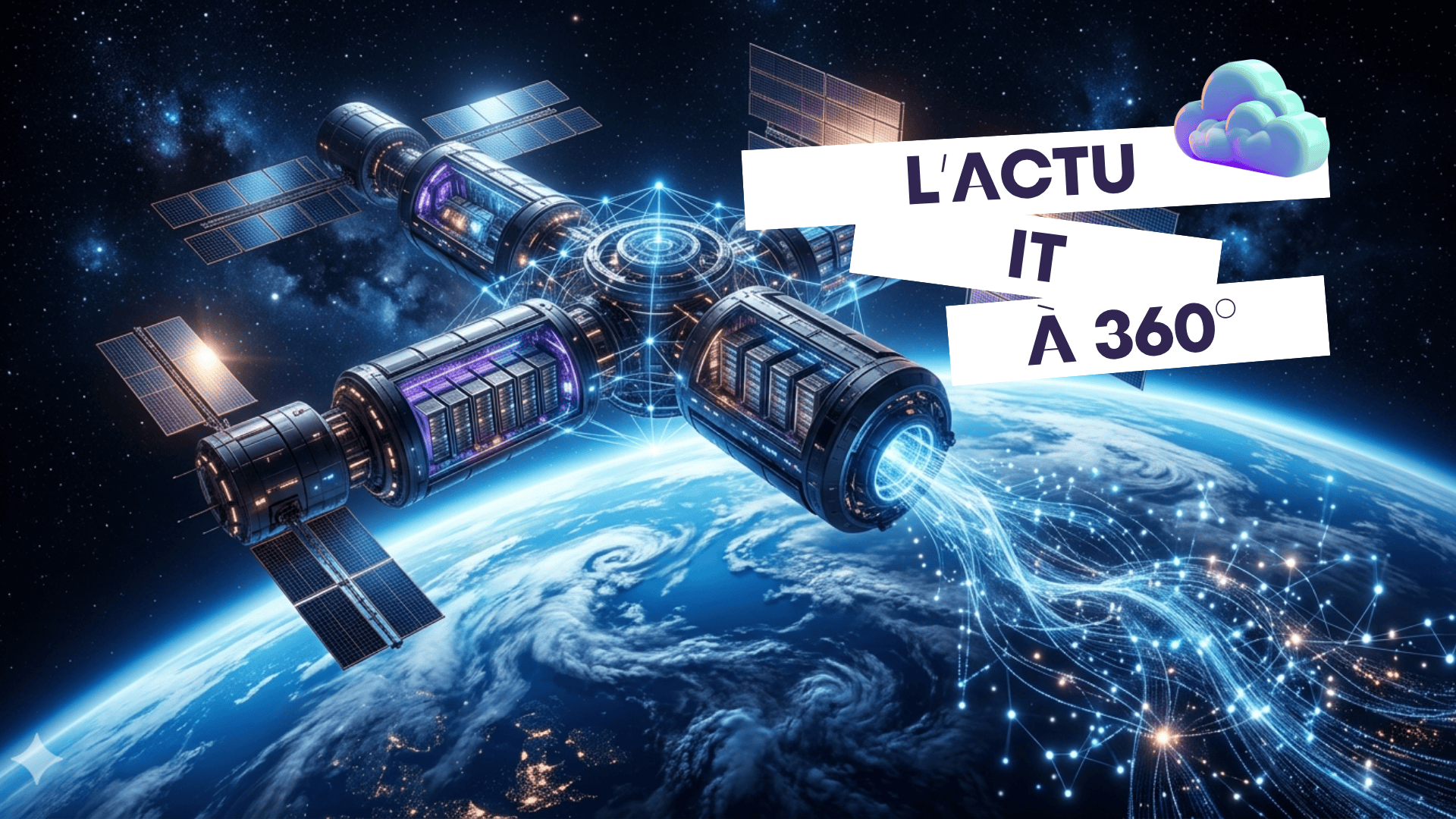
At the GTC 2026 conference, Nvidia announced its intention to accelerate the development of artificial intelligence in space, joining an emerging movement around orbital data centres. The company is no longer content to supply chips for satellites; it is now targeting complete infrastructures capable of processing data directly in orbit. Behind this announcement, the stakes go far beyond technological innovation: the aim is to respond to the explosion in computing needs linked to artificial intelligence and the cloud, while exploring new ways of overcoming the current limits of terrestrial infrastructure.¹
Why the cloud is reaching its limits today
Data centres are at the heart of the digital economy, but they face increasingly severe constraints: massive energy consumption, high infrastructure costs and capacity saturation as artificial intelligence ramps up. By sending part of the computing into space, Nvidia is exploring a radical alternative, where solar energy is abundant and cooling is more natural. The idea is not just to relocate infrastructure, but to transform the way data is processed, in particular by bringing computing closer to data sources such as satellites. This approach would, for example, make it possible to analyse images or data directly in orbit, without going via Earth, reducing delays and improving the overall efficiency of systems.²
Concrete uses that redefine data processing
This development paves the way for new uses, particularly in Earth observation, weather forecasting and disaster management. Today, satellites often send raw data back to Earth for analysis, which can take time and tie up significant resources. With on-board computing capabilities, these systems can directly deliver actionable information, such as detecting an incident or analysing a situation in real time. This shift from “raw data” to “real-time intelligence” profoundly changes the value of data and creates new business models in which information becomes immediately actionable.
Unprecedented computing capacity, without complicating SMEs’ IT
Even though space data centres may seem far removed from SMEs’ concerns, they are part of a broader transformation of the cloud and IT. In the long run, these infrastructures could improve the performance of cloud services, reduce data processing costs and speed up access to critical information. For SMEs and start-ups, this means access to more powerful technologies without having to invest in heavy infrastructure. But it also brings new challenges, particularly in terms of cybersecurity, data management and cloud service integration. Companies will need to understand these developments to take advantage of the opportunities offered by these new architectures.
Mastering tomorrow’s cloud becomes strategic
This news highlights a key skill: cloud computing. As infrastructure evolves, IT professionals need to be able to understand increasingly complex environments, ranging from traditional data centres to distributed, and even space-based, architectures. It is no longer just about managing servers, but about running hybrid systems combining cloud, edge computing and artificial intelligence. This ability to orchestrate infrastructure is becoming essential to support companies’ digital transformation and make full use of new technologies.
A spectacular innovation… but still debated
While space data centres are generating a great deal of interest, they also raise questions. Some experts believe these projects are still a long way from practical large-scale use, particularly because of costs and technical constraints. But beyond their immediate adoption, these initiatives above all show one thing: cloud and artificial intelligence continue to evolve towards ever more distributed and innovative models. For students and future IT professionals, understanding these trends is essential, as they herald the next transformations in digital jobs and skills.
360° IT News — decoding technology to understand the jobs of tomorrow.
References
1. Nvidia. GTC 2026 keynote and AI infrastructure announcements.
https://www.nvidia.com
2. Network World. Nvidia explores AI computing in space and orbital datacenters.
https://www.networkworld.com

Two months, $1.1 billion: River AI is already exciting investors
A spectacular raise for a start-up barely out of the shadows Two months after emerging from stealth mode, River AI has just completed one of the most spectacular funding rounds of the year in artificial intelligence. The start-up founded by Igor Babuschkin, a former...

AI propels Nokia: data centres are reshaping the networking market
The AI explosion is transforming the infrastructure market Nokia is reaping the full benefits of the rise of artificial intelligence and the proliferation of data centres that comes with it. In the second quarter of 2026, the company’s Network Infrastructure business...

Gemini 3.5 Pro delayed: Google under pressure in the AI race
The race for AI models is speeding up Google is going through a difficult period in the competition over advanced artificial intelligence models. According to several reports in the specialist press, the launch of Gemini 3.5 Pro has reportedly been pushed back by...

Project Glasswing: Anthropic goes on the offensive against software vulnerabilities
A new step for AI applied to cybersecurity Anthropic is pressing ahead with Project Glasswing, an initiative that makes its Claude Mythos Preview model available to specialist cybersecurity players in order to identify and fix vulnerabilities in critical software. The...

Cloud, AI, defence: AWS steps up on every front
AWS makes artificial intelligence a pillar of critical infrastructure At the AWS Summit Washington, D.C. 2026, Amazon Web Services unveiled several developments aimed at government departments, public bodies and critical sectors. The company is strengthening its...

MDASH: the AI helping Microsoft secure Windows
Microsoft hands part of the bug hunt to artificial intelligence Cyberattacks are evolving ever faster, forcing software vendors to detect vulnerabilities before they can even be exploited. To meet this challenge, Microsoft has unveiled MDASH (Microsoft Detection and...

Microsoft speeds up its cybersecurity with AI: defence moves to machine scale
Microsoft wants to regain the upper hand against cyberattacks Cybercriminals are now using artificial intelligence to discover vulnerabilities, automate their attacks and speed up their malicious campaigns. In response, Microsoft is pressing ahead with its Secure...

Free access to Claude Fable 5 extended as Anthropic holds off
A new generation of AI designed for specific uses OpenAI is changing its strategy with the launch of GPT-5.6, a new family of models made up of Sol, Terra and Luna. Rather than offering a single model capable of meeting every need, the company is now betting on a...

OpenAI bets on modular AI with Sol, Terra and Luna
A new generation of AI designed for specific uses OpenAI is changing its strategy with the launch of GPT-5.6, a new family of models made up of Sol, Terra and Luna. Rather than offering a single model capable of meeting every need, the company is now betting on a...

Anthropic’s AI is advancing at a pace that worries cybersecurity specialists
AI models cross a new capability threshold Barely a month after its launch, Claude Mythos Preview is already improving its performance. According to the latest tests published by the UK’s AI Security Institute (AISI), Anthropic’s model now beats its own results from...