


News in brief
Artificial intelligence continues to transform developers’ work. Anthropic, the company behind the Claude AI model, has just announced new capabilities that allow its assistant to analyse computer code and help developers with their code review processes.
Code review is an essential stage of software development. It involves rereading code written by a developer in order to detect errors, improve the quality of the program or check that good practice has been followed. With Claude’s new features, this task can now be assisted by artificial intelligence. The tool can examine a program, identify potential problems and suggest improvements. This development illustrates a profound transformation in the world of software development, in which AI tools are gradually becoming assistants capable of working alongside developers. ¹
What is really happening
To understand the significance of this development, one has to look at how code review works in technical teams. In most IT projects, the code produced by a developer must be checked by other team members before being integrated into a piece of software. This step makes it possible to spot bugs, improve code readability and avoid certain security flaws.
However, this process can be long and costly, especially in complex projects. Developers have to analyse hundreds or sometimes thousands of lines of code. This is where artificial intelligence tools are starting to play an important role.
Thanks to advanced language models, Claude is able to understand the structure of a computer program, identify logic errors or suggest optimisations. The AI can, for example, spot inefficient portions of code, flag security issues or propose fixes. It thus acts as an assistant capable of speeding up certain verification tasks.
This approach is part of a wider trend in the technology sector. Many developer tools now incorporate artificial intelligence to automate certain technical tasks. Assistants such as GitHub Copilot and other AI models are already able to help write code. With the arrival of code analysis and review features, these systems are gradually becoming working partners for developers. ²
Why it matters for SMEs
This development does not only concern large technology companies. SMEs and start-ups are also directly affected by these new tools.
Today, digital transformation is pushing many organisations to develop their own applications, websites and digital services. Yet small organisations often have limited resources to maintain the quality and security of their software.
Integrating artificial intelligence tools into development processes can help SMEs improve the quality of their IT projects. An assistant capable of automatically analysing code can detect errors before they become problems in production. This helps reduce maintenance costs and improve the reliability of applications.
These technologies can also speed up the work of technical teams. In a start-up or an SME, developers often have to manage several projects at once. Automating certain tasks such as code review can save them time and allow them to focus on the most creative aspects of development.
But the use of these tools also raises new challenges. Companies must learn to integrate artificial intelligence into their technical processes while keeping human control over important decisions. Code quality, system security and data protection remain key issues in software development.
The IT skill behind this news: Programming and web management
Behind every application, every website and every digital service lies code written by developers. The quality of this code is essential to guarantee the reliability and security of IT systems. Developers must not only know how to program, but also understand good development practice, version control and collaborative methods in software projects.
The integration of artificial intelligence into these processes is gradually changing the way developers work. AI tools can help detect errors, suggest improvements or analyse complex projects. But they do not replace human expertise. IT professionals must still understand how the code works, validate the AI’s recommendations and take the final technical decisions.
For businesses, these skills are becoming strategic. Organisations need developers capable of designing software, maintaining digital infrastructure and working with increasingly advanced technology tools.
At a time when software is at the heart of digital transformation, jobs related to programming, web development and software engineering play a key role in the digital economy.
Why this news matters
The arrival of new code analysis capabilities in Claude shows that artificial intelligence is increasingly being built into the tools developers use. Intelligent assistants no longer simply help write code; they are now starting to take part in the processes of verifying and improving software.
For businesses and developers alike, these technologies represent a significant opportunity. They can improve project quality, speed up development and facilitate collaboration within technical teams.
But this development also underlines the importance of IT skills. Understanding how software works, mastering programming and knowing how to use artificial intelligence tools are becoming essential in digital jobs.
In the years ahead, professionals able to combine technical expertise with an understanding of new technologies will play a key role in the digital transformation of businesses.
360° IT News — decoding technology to understand the jobs of tomorrow.
References
1. Anthropic. Claude AI documentation.
https://www.anthropic.com
2. GitHub. Copilot and AI coding assistants.
https://github.com/features/copilot
GitHub Copilot bulks up for business: coding agents come under IT control
Copilot is no longer just there to suggest the next line GitHub Copilot is continuing its transformation. Originally known mainly for completing code in the editor, the tool is now evolving towards agents capable of exploring a project, modifying files, using tools...

PDFs, presentations, audio: Adobe wants to turn Acrobat into a content factory
Acrobat no longer just wants to open your documents For more than thirty years, Acrobat has mainly been used to read, create, edit, sign and share PDFs. Adobe now wants to give it a much broader role. On 9 September 2026, the company announced new capabilities based...
Salesforce plugs Claude into its CRM: Claudeforce prepares for life after the interface
What if the CRM soon no longer needed to be opened? For decades, using a CRM meant navigating between customer records, dashboards, menus and forms. With Claudeforce, Salesforce and Anthropic want to change this logic: rather than forcing users to go into Salesforce...

Kimi K3, Mistral, DeepSeek: Oracle turns OCI into an AI model hub
Oracle wants to make OCI a one-stop shop for AI Oracle is stepping up its efforts in the AI cloud battle by significantly expanding the catalogue of models available in OCI Enterprise AI. On 4 September 2026, the group announced in particular the integration of Kimi...
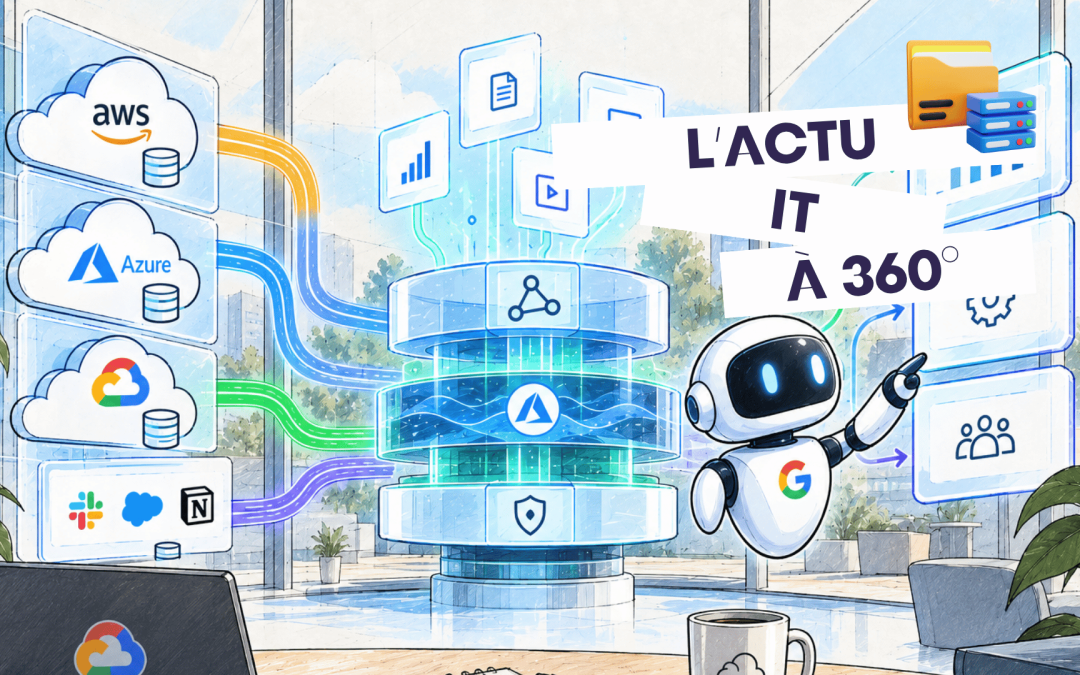
Agentic Data Cloud: Google rethinks data for the age of AI agents
AI agents are forcing Google to rethink data architecture AI agents promise to search for information, make decisions and act directly within company systems, but this autonomy depends on one essential condition: accessing the right data and, above all, understanding...
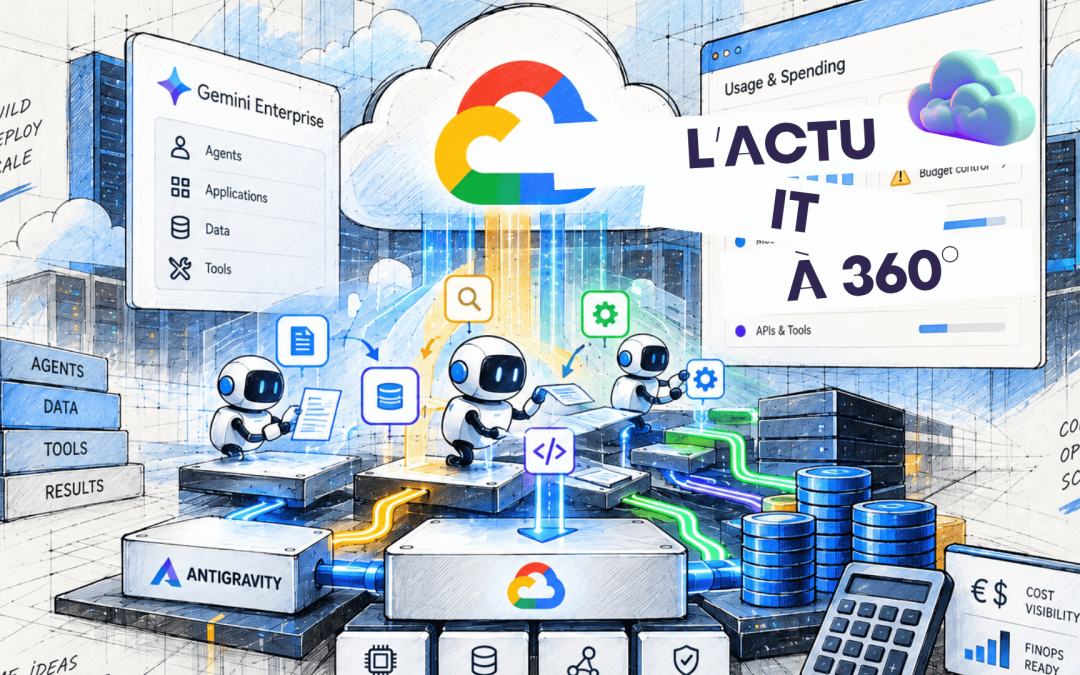
Google Cloud tackles the hidden bill of AI agents
AI agents raise a new problem: how much does a task really cost? As companies move from chatbots to AI agents able to work through multiple steps, the question of cost becomes much more complex. A chatbot generally handles a request and generates an answer, whereas an...
Workday, Navan, Avalara: ChatGPT Work moves into business software
ChatGPT Work is gradually leaving the chat window With GPT-6 Astra, OpenAI is no longer simply trying to improve the quality of ChatGPT’s answers. The company wants to bring its AI closer to the applications in which employees actually work. With the arrival of GPT-6...

From chip to cloud: Groq raises 350 million to scale up
Groq now wants to sell cloud rather than just chips Groq is pursuing a major strategic transformation. Long seen as one of Nvidia’s challengers thanks to its LPUs (Language Processing Units) specialised in artificial intelligence model inference, the group is now...
Muse Code: Meta launches its AI agent to tackle giant codebases
Meta wants to bring AI agents into complex software projects Meta is stepping up its efforts in AI-assisted software development with Muse Code, a new agent designed to work on large codebases, where traditional assistants can quickly lose the context needed to...
Qwen3.8-Max reportedly coded for 16 days without human intervention
Alibaba tests how far an autonomous AI developer can go Alibaba claims to have reached a new milestone in agentic software development with Qwen3.8-Max, its new flagship model launched in early August 2026. In an internal test, the model reportedly worked fully...